
Berlin in Winter: Street Food, History, and Midnight Magic
Berlin in winter is a feast for the senses: street food, history, and New Year’s magic. Three days of wandering, tasting, and reflecting in Germany’s capital.
The cold bites first, sharp and insistent, as I step from the train into Berlin’s night. My breath fogs the air. The city hums, neon and ancient, the TV Tower’s red light blinking above Alexanderplatz. Luggage wheels rattle over cobblestones. Somewhere, a distant choir of laughter and the metallic clang of a tram. I follow the scent of roasting chestnuts and spiced wine, drawn toward the Christmas market’s glow.
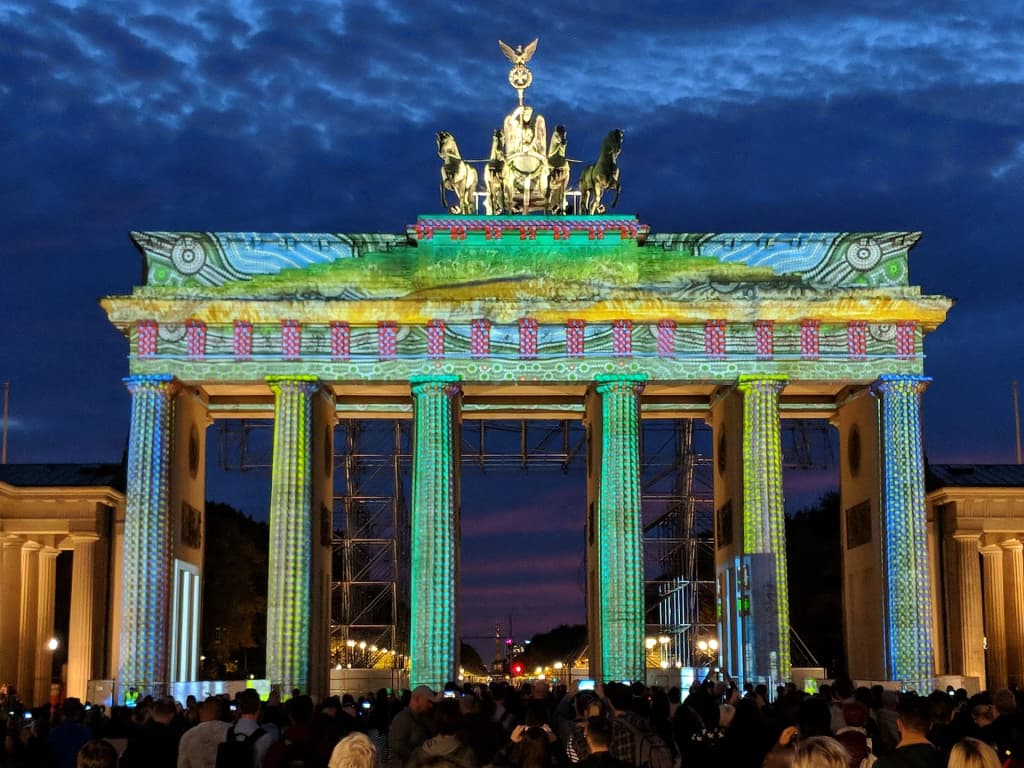
The first taste is sweet and smoky: a sausage, longer than the bun, slathered in curry ketchup. My fingers sting from the cold, but the food is hot, the bread soft. A woman in a red scarf hands me a glass mug of glühwein. “Keep the mug, or bring it back for your deposit,” she says, smiling. The wine is mulled, heavy with cinnamon and citrus, and it warms my chest as I wander between stalls. There are candied nuts, gingerbread hearts, and the low murmur of German and Portuguese, laughter rising in clouds. I try a hunk of käsespätzle—gooey, cheesy, unapologetically rich. “It’s like a hug,” my companion says, and I nod, mouth full, watching the lights flicker on the Brandenburg Gate.
Morning comes late in Berlin’s winter. By 9:30, the city is only just waking, the sky a pale, reluctant blue. I leave the hotel—small, efficient, a bed and a shower and not much else—hair still damp, breath still visible. The TV Tower looms above, a silver needle against the clouds. I walk, hands deep in pockets, past bakeries and kebab shops, the air thick with the smell of yeast and coffee. Breakfast is forgettable, but the city is not.
Alexanderplatz is a rush of bodies and trams, the World Clock spinning time zones in a circle of metal and glass. I pause, watching a group of teenagers pose for photos, their laughter echoing off the concrete. The past is everywhere here: the ghosts of the GDR, the shadow of the Wall. I trace the line of bricks that marks its path, imagining the city split in two, families divided by concrete and fear.
At the Reichstag, I join a line of visitors, passports in hand. Security is brisk, efficient. The glass dome above the parliament glitters, a symbol of transparency. An audio guide clicks on as I climb the spiral ramp, narrating stories of democracy lost and regained. Sunlight pours through the glass, illuminating the chamber below. “You can see the politicians working,” a guide says, gesturing down. “It’s meant to remind them who they serve.”
Checkpoint Charlie is smaller than I expect, a tourist circus of signs and souvenir shops. But the weight of history lingers. “You are leaving the American sector,” the sign warns, in English, Russian, French, and German. I imagine the tension, the fear, the desperate crossings. A man in a Soviet hat poses for photos, but I keep walking, following the Wall’s ghostly trace to the East Side Gallery.
Here, the Wall is canvas. Murals stretch for over a kilometer—bright, angry, hopeful. I find the famous kiss, two leaders locked in a desperate embrace. “My God, help me survive this deadly love,” the caption pleads. Tourists pose, arms outstretched, but I linger, tracing the chipped paint, the layers of history. The wind is sharp, carrying the scent of spray paint and river water. My hands are numb, but I feel awake, alive.
A local artist, bundled in a thick coat, catches my eye. “You like the art?” he asks, his accent thick.
“I do. It feels… alive. Like the city.”
He grins. “Berlin is always changing. The Wall, it used to divide. Now it brings people together.”
Lunch is a pretzel, warm and salty, and a paper cone of fried dough dusted with sugar. I sip coffee from a chipped mug in a café that only takes cash—lesson learned. The metro is easy, if not cheap: €3.50 for a single ride, or €9.90 for a day pass. I watch the city blur past, graffiti and gray apartment blocks, the occasional flash of green park.
The Memorial to the Murdered Jews of Europe is a field of concrete stelae, cold and silent. I walk between them, the city noise fading, the sky pressing down. The blocks rise and fall, disorienting, solemn. A sign asks for respect—no climbing, no silly photos. I put my camera away. The silence is heavy, but necessary.
Nearby, the Brandenburg Gate stands tall, its columns lit gold in the late afternoon. Runners gather for a New Year’s race, their breath steaming in the cold. “Vai do Brasil!” someone shouts, and I laugh, reminded of home. The sun sets early—by 4:30, the city is dusk, streetlights flickering on, the promise of night ahead.
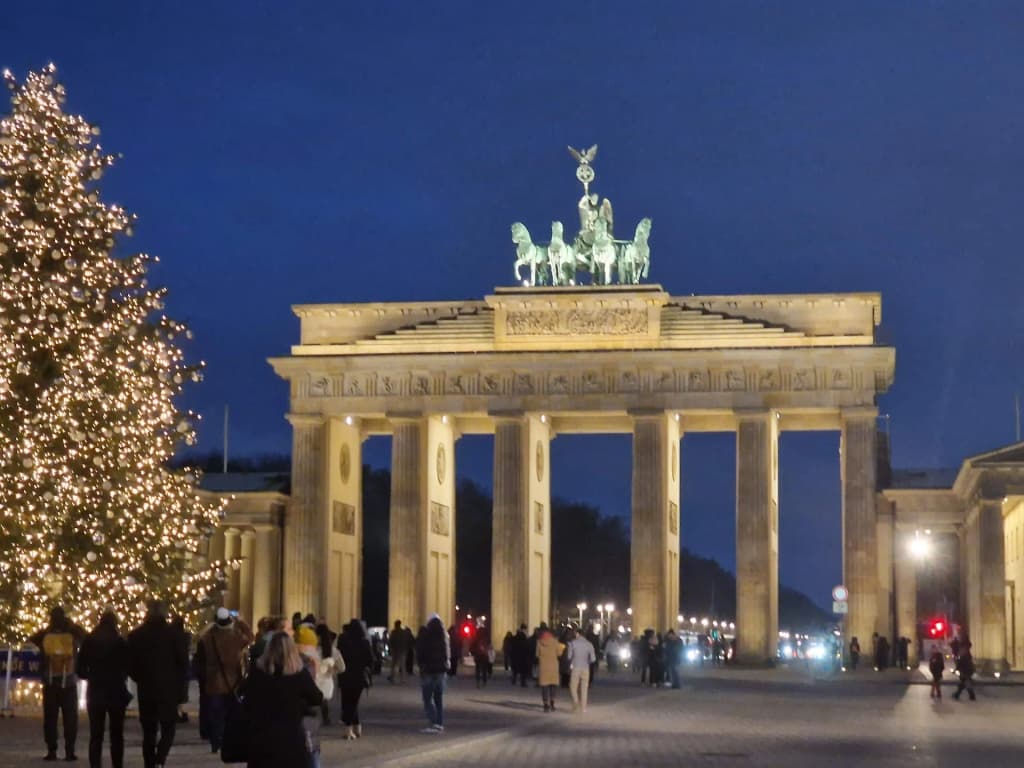
New Year’s Eve at the Brandenburg Gate is chaos and celebration. Security lines snake through the Tiergarten, music thumps from distant speakers, and the crowd is a sea of hats and scarves. I clutch my ticket—€10, bought months ago—and shuffle forward, feet numb, heart racing. Midnight comes in a burst of fireworks, the sky ablaze with color. Strangers hug, champagne corks pop, and for a moment, the cold is forgotten.
Later, in a wood-paneled restaurant, I thaw over plates of pork knuckle and potato salad, the air thick with the smell of roasting meat and beer. Water is pricier than wine, so I raise a glass of Riesling instead. The apple strudel arrives warm, dusted with sugar, a pool of vanilla cream on the side. I eat slowly, savoring each bite, the taste of winter and celebration.
Berlin lingers. The city is not always easy—there are moments of unease, odd encounters in the metro, the sharp edge of history never far away. But it is alive, layered, endlessly fascinating. I leave with cold fingers, a full heart, and the sense that I have only scratched the surface. The train pulls away, and the city fades into gray and gold, memory and promise, waiting for another return.
More Photos
More Adventures
 $120 - $350/day 2-3 days
 Disneyland Paris Strategy: Ride Hacks & Coaster Secrets
Think you know Disney? Think again. Discover the underground secrets, massive coasters, and insider hacks to conquer Disneyland Paris like a pro.
 $200 - $500/day 2-3 days
 Conquer Disneyland California: The Ultimate 2-Park Guide
Think Disneyland is just a walk in the park? Think again. Get the ultimate battle plan for dominating Disneyland and California Adventure. Skip the lines.
 $100 - $300/day 1-3 days
 Escape the Airport: Conquer Your Luanda Layover
Think a layover in Luanda means killing time at the airport? Think again. Discover the fortress, island sunsets, and the ultimate Angolan adventure.
 $150 - $350/day 1 days
 Conquer Disneyland Paris: 2 Parks in 1 Brutal Day
Think you can't conquer both Disneyland Paris parks in a single day? Think again. Here is the ruthless, high-energy strategy to dominate every major ride.