
A Practical Guide to Buenos Aires: Budgets, Transit & Beef
Maximize your Buenos Aires budget with our practical guide. Get exact costs, transit strategies, steakhouse rankings, and a step-by-step itinerary.
Welcome to your strategic Buenos Aires blueprint. I have mapped out exactly how to navigate this European-inspired South American capital, from scoring the most advantageous exchange rates to landing a table at Latin America's top steakhouses. Grab your notebook, because we are optimizing every hour and dollar of your trip to ensure maximum value and zero wasted time.
Quick Facts for Your Buenos Aires Blueprint
Before we dive into the daily logistics, here are the baseline metrics you need to plan your trip effectively:
- Recommended Duration: 5 to 7 days (allows for 4 city days + 2 day trips)
- Daily Budget: $45 - $120 USD per person (highly dependent on your dining choices and exchange rate strategy)
- Best Time to Visit: October to December (Spring) or March to May (Fall) for ideal 65°F-75°F walking weather
- Entry Requirements: A valid Passport (or RG for Mercosur citizens). No health declarations or mandatory insurance are required, though a comprehensive travel policy is my baseline recommendation.
Mastering the Logistics: Money & Transport
Buenos Aires requires a specific approach to logistics. If you handle your money and transit incorrectly, you will bleed time and budget.
The Cash Strategy Because of Argentina's fluctuating exchange rates, many travelers utilize Western Union to access the highly favorable "Blue Rate."
Pro Tip: Bring a dedicated, secure crossbody bag for cash. When you withdraw money via Western Union, you will often receive thick stacks of 1,000-peso bills. A standard wallet will not close.
The SUBE Card System To use public transit (buses, subways, and commuter trains), you absolutely must have a SUBE card.
- Locate a designated kiosk (often found right inside train or subway stations).
- Purchase the physical card.
- Load it with cash. An initial load of 1,000 pesos is a safe start.
- Tap to ride. The commuter train from Tigre back to Buenos Aires costs the equivalent of under $1 USD.
Neighborhood Breakdown: Where to Invest Your Time
Buenos Aires is massive. Grouping your activities by neighborhood is critical to avoid spending half your day in transit.
Microcentro & San Telmo (History & Culture)
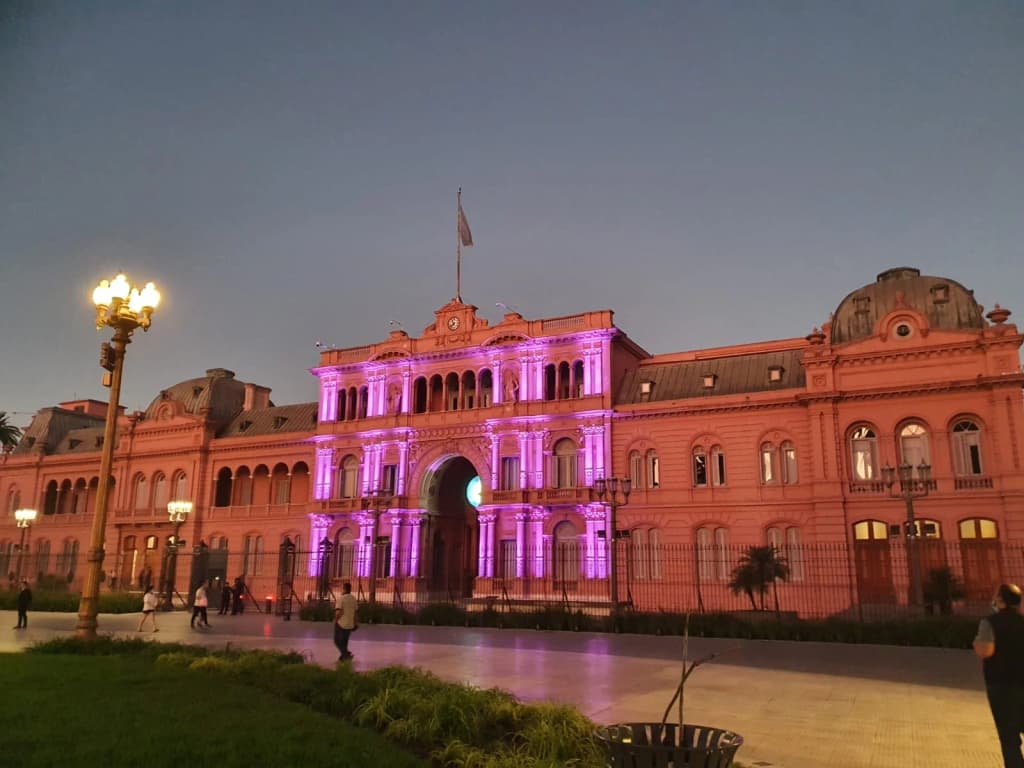
Start your trip at Plaza de Mayo. Here you will find the Casa Rosada (the presidential palace famously painted with a mix that legend says included cow's blood), the Banco de la Nación, and the Catedral Metropolitana (featuring 12 distinct pillars representing the apostles).
Walk south to San Telmo, specifically the Mercado San Telmo. It is a highly active hub of antiques and local food stalls. Grab an empanada (the meat with cumin is incredibly juicy) or a classic Choripán (sausage sandwich).
⚠️ Watch Out: The famous Choripán stall in San Telmo has very limited seating. If you are traveling with kids or a stroller, utilize their dedicated seated area rather than fighting for counter space.
Puerto Madero (Modern Waterfront)
This is the modernized, upscale dock area. You will find the Puente de la Mujer (an architectural bridge designed to look like a couple dancing tango) and the Fragata Sarmiento museum ship. It is also an excellent hub for evening entertainment. We booked a VIP package at Madero Tango here, which included a front-row view, a full three-course dinner, and unlimited wine.
Recoleta & Palermo (Parks & Elegance)
Recoleta feels identical to Paris, especially along Arroyo Street.
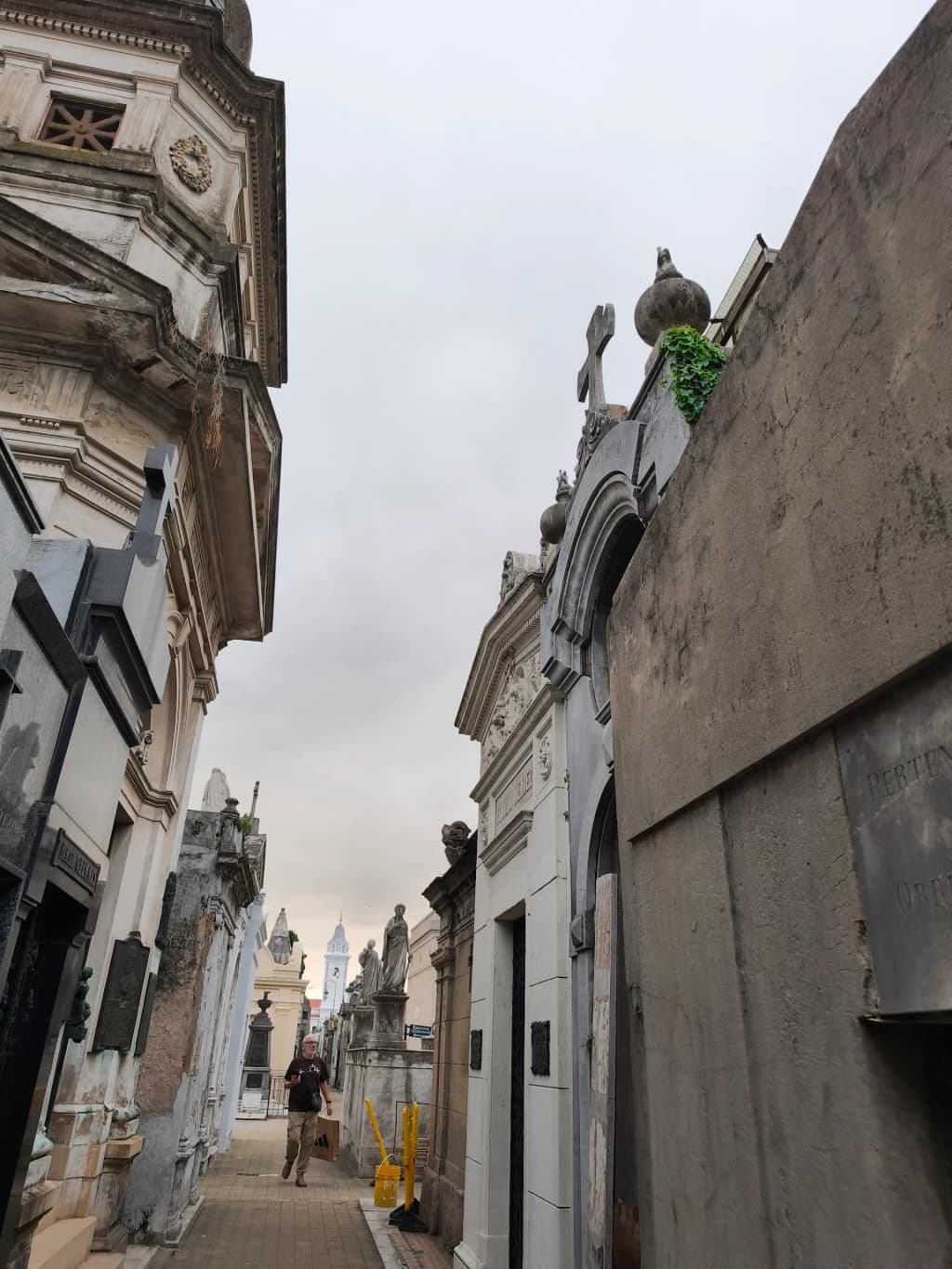
Strategic Itinerary Block for Recoleta:
- Recoleta Cemetery: A massive open-air museum of spectacular mausoleums, including the resting place of Eva Perón. Note: Entry requires a credit card; cash is not accepted.
- Floralis Genérica: A 23-meter, 18-ton metallic flower that opens and closes with the sun.
- Torre Monumental: Pay the ~500 pesos to ride the elevator to the 6th floor for panoramic views of the Retiro train station.
In Palermo, prioritize the green spaces. The Jardín Japonés (entry is roughly 416 pesos) is impeccably maintained, and the sprawling El Rosedal park is where locals spend their afternoons sunbathing and drinking mate.
The Ultimate Buenos Aires Steakhouse Matrix
Argentine beef is legendary, but the dining experiences vary wildly. Here is my exact breakdown of where to eat, based on your budget and vibe preferences:
Restaurant Neighborhood Vibe & Style Specific Cut to Order Est. Cost Don Julio Palermo World-class, upscale Ojo de Bife (Ribeye) $$$$ La Cabrera Palermo Premium, excellent service Bife de Mariposa $$$ Parrilla Peña Microcentro Classic Bodegón, no-frills Shared Ojo de Bife $$ Siga La Vaca Puerto Madero All-you-can-eat Buffet Anything off the grill $$Dining Field Notes:
- Don Julio: Ranked the best in Latin America. The Ojo de Bife is incredibly tender, though you may find it slightly under-salted (a common trait in Argentine preparation). Book months in advance, or show up early to ask for a cancellation table.
- La Cabrera: Exceptional hospitality. They served us sparkling water and wine while we waited, and the Bife de Mariposa was perfectly cooked to order.
- Parrilla Peña: No fancy knives, no air conditioning, but absolute culinary perfection. Portions are massive; one Ojo de Bife easily feeds two people.
Strategic Day Trips: Tigre and Campanópolis
Do not spend your entire week inside the city grid. I recommend allocating two days for excursions:
1. The Tigre Delta (Half Day) Take a 2-hour scenic boat ride up to Tigre (tourist boats leave right from Puerto Madero). Once there, explore the Mercado de Frutos. Grab a chicken and guacamole sandwich at Havana café, followed by their legendary Dulce de Leche gelato. To get back to the city, use your SUBE card on the commuter train—it takes 45 minutes and costs under $1 USD.
2. Campanópolis (Half Day) Located 30km outside the city, this is a bizarre and fascinating medieval village built entirely from recycled materials by Antonio Campana. It is a surreal architectural playground that requires a pre-booked transfer (I highly recommend using a local operator like Real Turismo to handle the logistics).
Common Mistakes to Avoid
Let's ensure your trip is seamless by dodging these common tourist traps:
- Drinking the Tap Water: The local tap water has a heavy mineral content and a strange taste that often upsets foreign stomachs. Budget $2-3 USD daily for bottled water (ask for agua sin gas for still, or agua con gas for sparkling).
- Arriving at Caminito at Noon: The colorful houses of La Boca are highly photogenic (painted with leftover ship paint), but the alleys get shoulder-to-shoulder by 11:00 AM. Arrive by 8:30 AM to get clean photos without the crowds.
- Skipping the Pizza: Everyone talks about the steak, but Buenos Aires pizza is an institution. Go to Pizzería Güerrin (open since 1932) and order a slice of "Fugazzeta"—a thick, doughy masterpiece loaded with a mountain of cheese and onions, completely devoid of tomato sauce.
Next Steps for Your Plan
Buenos Aires rewards the prepared traveler. Your immediate next steps are to check your passport expiration, download the Western Union app to set up your profile, and secure your reservation at Don Julio. Stick to this blueprint, keep your SUBE card loaded, and you will experience the absolute best of Argentina's capital without wasting a single dollar.
More Photos
More Adventures
 $60 - $120/day 4-5 days
 Buenos Aires Itinerary: A Practical 5-Day Planning Guide
Plan the perfect Buenos Aires trip with this meticulous guide. Discover exact costs, walkable neighborhood routes, and budget optimization tips for Argentina.
 $50 - $200/day 3-5 days
 Buenos Aires Travel Guide: The 21% Tax Hack & Itinerary
Plan your Buenos Aires trip with this meticulous logistical guide. Learn the 21% hotel tax hack, airport transfer costs, and neighborhood sightseeing routes.
 $150 - $400/day 5-7 days
 Neon, Wind, and Concrete: Six Days in the Belly of New York
From three-dollar pizza slices to doors-off helicopter flights over Manhattan, discover the sensory extremes of New York City in a six-day immersive journey.
 $85 - $250/day 4-7 days
 Paris Travel Guide: Budget Hacks, Routes & Photo Spots
Plan your Paris trip with this meticulous guide. Discover $7.50 authentic meals, optimized walking routes, and strategies to skip massive museum lines.