
A Journey to Campos do Jordão: Finding Brazil's Alpine Soul
Experience the mountain culture of Campos do Jordão, Brazil's highest city. Discover cherry blossoms, historic railways, and cozy alpine gastronomy.
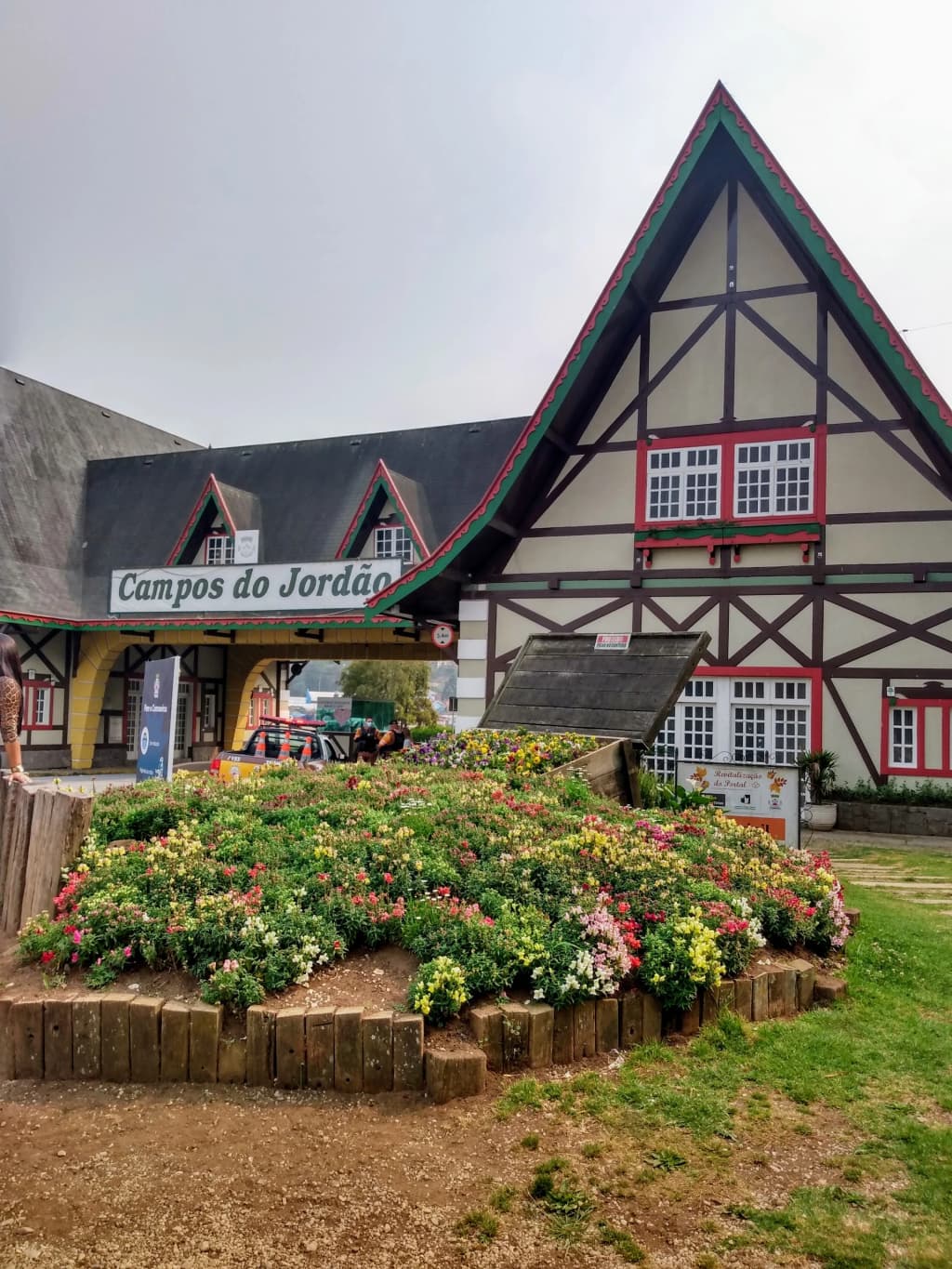
The engine strains against the steep incline of the Serra da Mantiqueira, whining as the altitude climbs. The air pouring through the cracked car window shifts abruptly. Gone is the heavy, sticky humidity of the Brazilian lowlands. In its place is something sharp and biting, carrying the distinct scent of damp earth, wild ferns, and towering pine. We reach the Portal de Campos do Jordão—1,628 meters up, making this the highest city in Brazil. The grand alpine-style gateway, built with heavy wooden beams and steep, pitched roofs, feels like a border crossing to another continent entirely. A massive digital thermometer flashes 8°C, drawing crowds of shivering Brazilians who eagerly pose for photos. Their breath hangs in small, fleeting clouds. It is a striking contrast to the tropical image of the country, a fierce, authentic winter hiding in the mountains.
The cold is a constant companion here, but it brings a specific, raw energy to the landscape. I wander into the Parque da Cerejeira, where over a hundred thousand square meters of gardens are currently erupting in a violent, beautiful shade of pink. It is August, the absolute peak of the cherry blossom season. The branches hang heavy with delicate, translucent flowers. I take a zigzagging dirt path up toward a wooden viewpoint, the soil soft and fragrant under my boots. From the top, the entire park spreads out like a woven pink carpet against the dark green of the Mantiqueira mountains. A cold breeze shakes the canopy, sending a shower of pale petals spiraling down into a large koi pond below. At the center of it all sits a massive bronze statue of Buddha, a quiet nod to the Japanese community that helped cultivate this floral spectacle.
"You came at the exact right time," an older man says, sweeping fallen petals from the stone path. His thick wool sweater looks like it has seen a dozen hard winters.
"August?" I ask, pulling my jacket tighter around my chest to block the wind.
"Exactly. The winter bites, but it gives us this," he replies, gesturing to the canopy of pink above us. "In a few weeks, it's all green again. You have to catch the beauty while it's freezing."
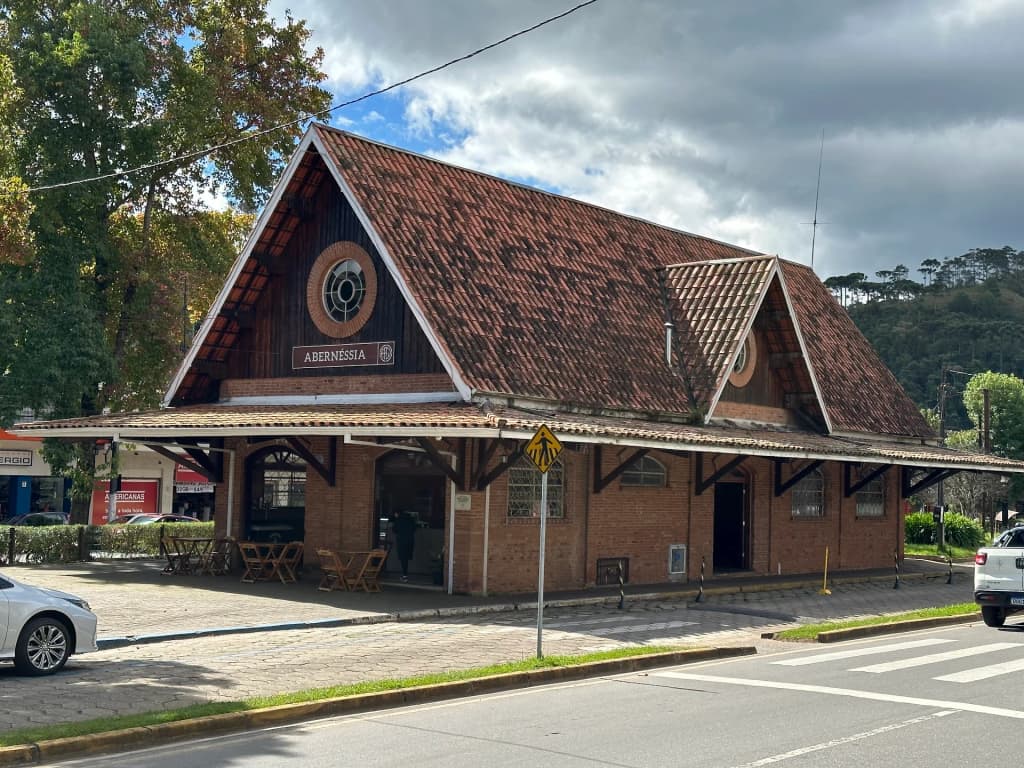
That freezing, pure air is exactly what built this city. I walk toward the Estação Emílio Ribas, the historic railway station that anchors the town. The smell of old iron, creosote, and roasted pine nuts—pinhão—fills the air around the tracks. More than a century ago, this railway was not for tourists seeking artisan chocolate and fondue. It was a desperate lifeline for tuberculosis patients. Visionary doctors like Emílio Ribas believed the pure, thin air of these high mountains held miraculous healing properties. Today, the steam trains still hiss and chug along the tracks, carrying visitors through the dense pine forests. The legacy of those early health seekers lingers in the deep, clean breaths you instinctively take while walking the wooden platforms. The rhythmic clank of metal on metal echoes off the valley walls.
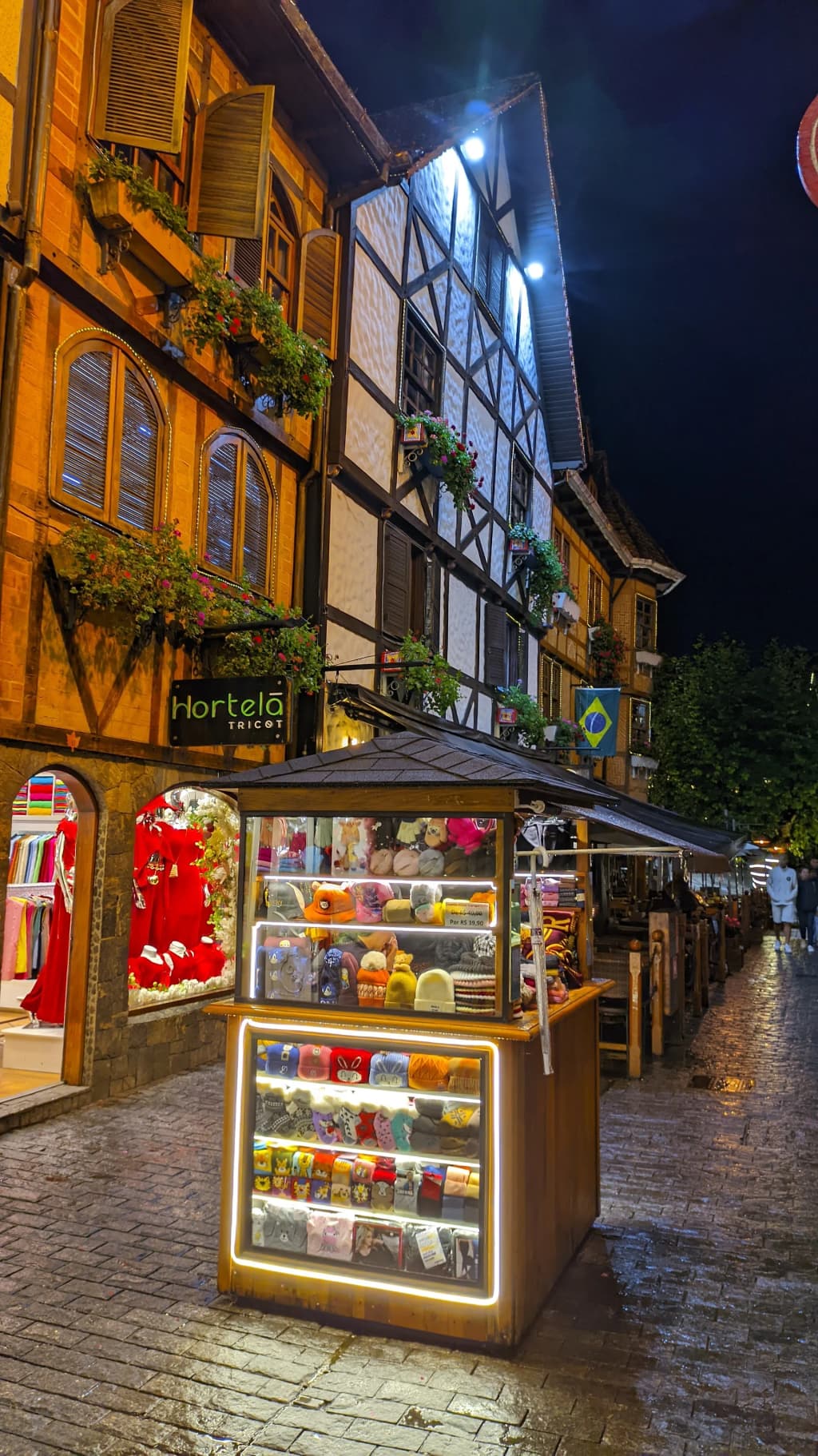
As the sun dips behind the mountains, the town's energy shifts entirely to Vila Capivari, the illuminated heart of Campos do Jordão. The streets, closed to cars, glow under a canopy of string lights and decorative umbrellas suspended in the night sky. The smell of woodsmoke from countless chimneys mixes with the rich, heavy scent of melting cheese, dark chocolate, and roasting meats. I wander past the Swiss Gallery, where shop windows display endless rows of truffles and thick wool sweaters, catching those who arrived underestimating the mountain chill.
I find a table at an Italian spot along the main promenade. Heavy wool blankets are draped over the chairs for diners braving the outdoor patio. A golden retriever wearing a tiny bomber jacket sleeps soundly beneath the table next to mine, a quiet nod to the city's deeply pet-friendly culture. A waiter pours a robust Brunello di Montalcino, the dark wine warming the blood before a plate of perfectly rich, slow-cooked Angus beef arrives. After dinner, the night practically demands fondue. It is a ritual here. I find myself later dipping fresh strawberries into a bubbling pot of dark chocolate at a nearby café, the sweetness cutting perfectly through the bitter cold of the night air. It is a place that demands indulgence, where the cold justifies every heavy, beautiful calorie.
The next morning at the pousada, the grass outside my window is dusted with a fine, sparkling layer of white frost. I walk across the rustic wooden floorboards of my room, the mountain aesthetic of exposed stone and timber making the space feel like a secluded cabin. I wrap my hands around a steaming mug of hot chocolate in the dining room, looking out through the glass at a dense grove of towering Araucaria trees. These ancient, umbrella-like pines drop the seeds that locals harvest for the afternoon snacks, a cycle of nature that feels wonderfully untouched by the bustling tourist center just down the road. The quiet of the morning is profound, broken only by the soft murmur of other guests and the crackle of a fireplace in the common room. Campos do Jordão might wear the costume of a Swiss village, but in these quiet, frosty moments, it reveals its true self. It is a sanctuary of altitude and resilience, a place where the air cleanses the lungs and the cold demands that you slow down, pull your coat tight, and simply stay a little longer.
More Photos

More Adventures
 $40 - $100/day 3-4 days
 Campos do Jordão Itinerary: Budget Guide & Hiking Logistics
Plan a practical trip to Campos do Jordão, Brazil's highest city. Get exact costs for state parks, hiking Pedra do Baú, and budget-friendly dining.
 $50 - $150/day 1-2 days
 Conquer the Serra Verde Express: Brazil's Wildest Train
Ditch the tourist traps and ride the Serra Verde Express from Curitiba to Morretes. Discover ticket tips, seating secrets, and the best Barreado.
 $40 - $80/day 3-5 days
 Into the Wild: Surviving Roraima's Macuxi Territory
Skip the tourist traps. Plunge into the raw culture of the Macuxi tribe in Roraima, Brazil. Experience fire-hot stews, sacred rituals, and wild borders.
 $100 - $250/day 3-7 days
 Beyond the Turnstiles: An Orlando Summer Sabbatical
Escape the Orlando theme park crowds and discover the sensory magic of Celebration, the Mall at Millenia, and the neon-soaked shores of Universal CityWalk.