
China's Alien Landscapes: Where Physics Goes to Die
Forget the Great Wall. Discover the side of China that defies logic, from floating mountains to blood-red rivers. This is adventure at its most extreme.
You think you know China. The Great Wall. The Forbidden City. The crowds of Beijing.
Think again.
There is a version of this country that looks like it was ripped from a sci-fi novel. Mountains that float. Rivers that bleed red. Villages swallowed whole by nature. It is immense. It is extreme. And it is absolutely terrifying.
For centuries, these places were off-limits. Too remote. Too dangerous. But humans are stubborn. We dug tunnels through sheer cliffs. We strapped glass bridges over the abyss. We found a way.
Ready to leave the tour bus behind? Good. Let's get lost.
Gravity is Optional Here
If you have a fear of heights, stop reading. China's geology doesn't care about your comfort zone.
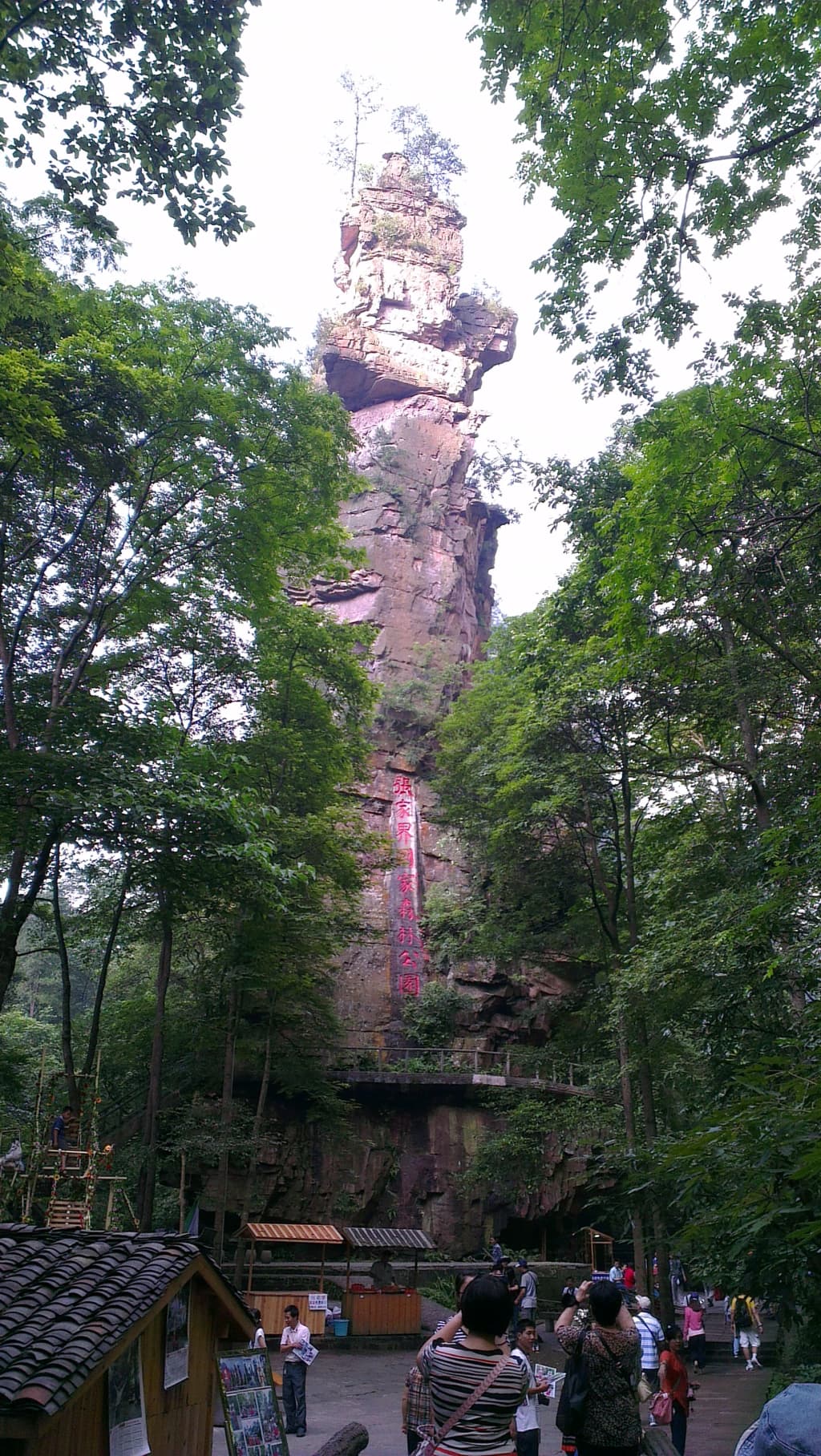
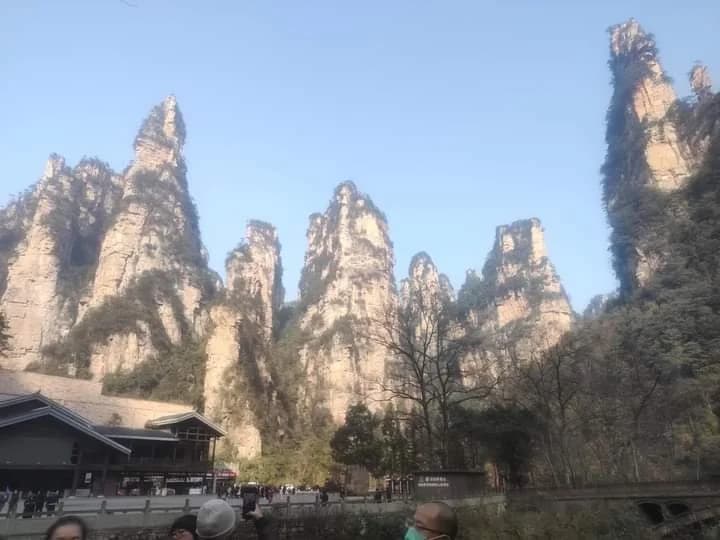
Take Wulingyuan. This isn't just a park. It's a forest of stone.
Over 3,000 sandstone pillars shoot up from the jungle floor. Some tower 400 meters into the sky. They look like they're floating. Clouds swirl around the bases, cutting them off from the earth. You stand there, looking up, and your brain refuses to process it.
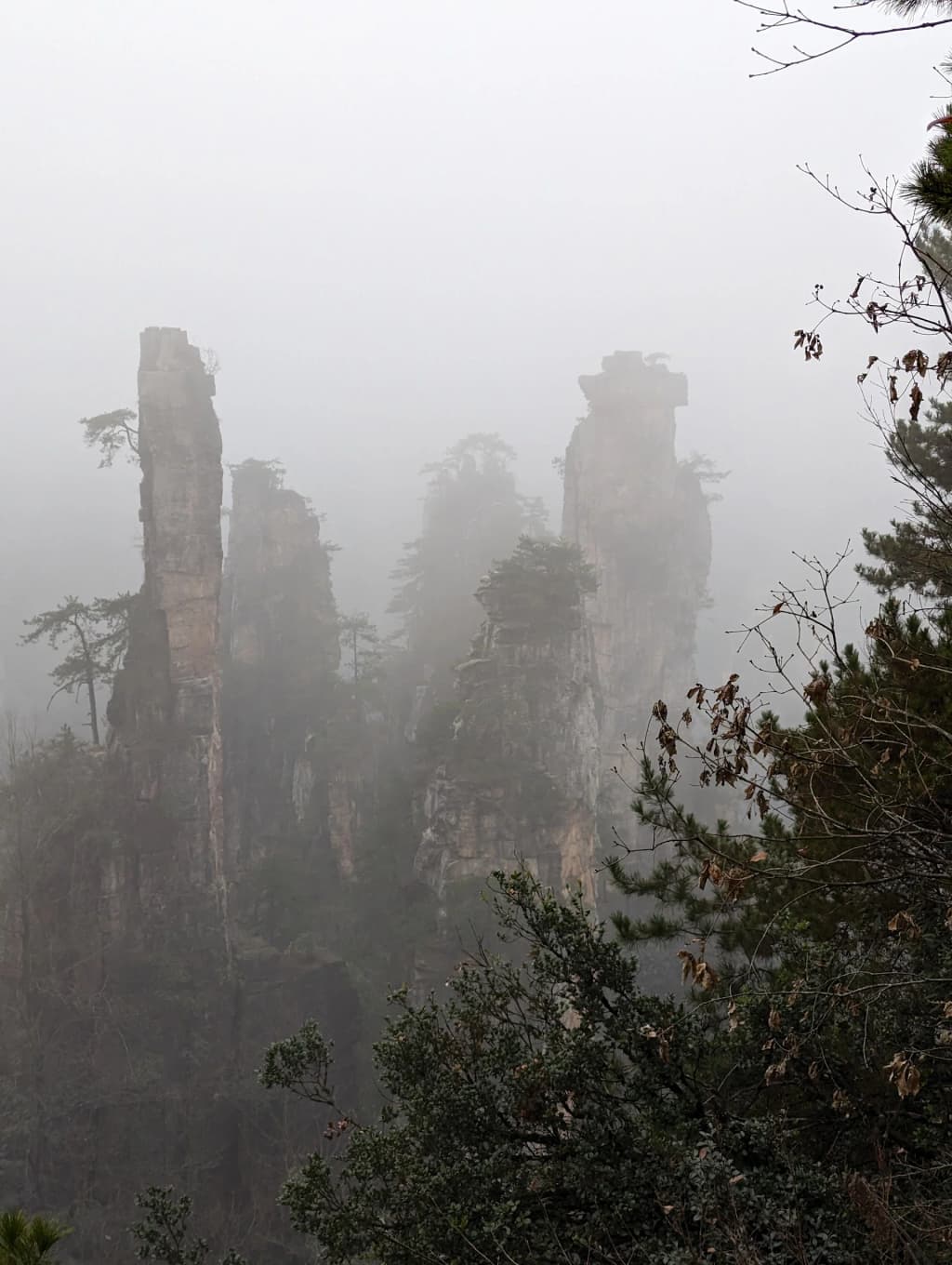
Nature carved these pillars over millions of years. Erosion stripped away the soft rock, leaving only these defiant towers standing. It’s haunting.
But if looking up isn't enough, try looking down. At Shiniuzhai, they built a glass bridge 180 meters above the valley floor. You walk on transparency. The void opens up directly beneath your boots. Every step requires a leap of faith.
Want something sketchier? Mount Hua. The plank walk.
It’s wooden boards bolted into a vertical cliff face. You clip a safety harness to a wire and shuffle along. Below you? Nothing but air. Hundreds of meters of it. It’s arguably the most dangerous hike in the world. And it is exhilarating.
Then there is Fanjingshan. A lonely spire of rock that splits at the summit. Two temples sit on top, connected by a narrow stone bridge. To get there, you climb thousands of steps carved right into the vertical face. Why build there? Because it was hard. Because the struggle made it sacred.
Technicolor Nightmares and Dreams
Forget green forests and blue oceans. China’s color palette is on acid.
Go to Panjin in Liaoning. The beach isn't sand. It’s blood red. A rare weed takes over the saline wetlands, turning the entire horizon into a crimson carpet every autumn. It looks apocalyptic. It’s actually perfectly natural.
Or head to the coast of Fujian for the "Blue Tears." Bioluminescent organisms light up the waves. Kick the water, and it glows electric blue. It’s like wading through neon.
In the desert, things get even weirder. The Aiken Spring is called the "Devil's Eye." It’s a geothermal vent surrounded by sulfur and iron deposits. Bright reds and yellows form concentric rings around a dark pupil. It stares right back at you.
And the Rainbow Mountains of Danxia? They look painted. Stripes of orange, yellow, and violet rock stretch across the valley. It’s rust. Iron oxide layers exposed by erosion. But standing there, it feels like a glitch in the simulation.
Don't Miss
The plank walk at Mt. Hua. The neon glow of the Blue Tears in Pingtan. The suicide drive through Guoliang Tunnel. The ivy-choked ruins of Houtouwan.
Carved by Obsession
Sometimes the landscape is the enemy. And sometimes, people refuse to lose.
Look at the Guoliang Tunnel. This village was a prison, cut off by cliffs. In the 1970s, thirteen locals picked up hammers. No heavy machinery. No engineers. Just grit.
They hand-carved a tunnel through the mountain. It took five years. It’s rough, narrow, and terrifying to drive. Windows are just holes blasted in the cliff side. One wrong turn and you're gone. It’s pure, unfiltered human stubbornness.
Or the Hanging Temple of Datong. It clings to the side of a precipice, held up by oak beams inserted into the rock. It’s been there for 1,500 years. It shouldn't exist. It defies gravity, flooding, and time.
The Silence of the Sands
Get away from the people. Go to the emptiness.
The Taklamakan Desert is called the "Place of No Return." It is an ocean of shifting sand. But even here, we built a highway. 500 kilometers across the dunes. They planted a "Green Wall" of vegetation just to keep the road from being swallowed. It’s a ribbon of asphalt in a dead world.
Further out, in the Gobi, wind sculpts the Yardang formations. Towers of rock that scream when the wind blows. They call it the Ghost City. No one lives there. No one ever did. It’s a labyrinth of stone and silence.
The Challenge
China is not easy. It’s crowded, it’s loud, and it’s vast. But if you stick to the cities, you miss the point.
The real magic is in the edges. In the sinkholes of Xiaozhai that create their own weather. In the emerald salt lakes of Mangya. In the ghost villages like Houtouwan where nature has reclaimed every single house.
Pack your bags. Leave the itinerary behind. Go find the places that make you feel small.
The world is stranger than you think. Go see it.
More Photos
More Adventures
 $30 - $60/day 3-5 days
 Skip the Beach: The Mystical Quartz Mountain of São Thomé
Trade the beach for the mountains. Explore São Thomé das Letras, Brazil's off-grid quartz town. Dive into waterfalls, dark caves, and defy gravity.
 $50 - $150/day 1-2 days
 Conquer the Serra Verde Express: Brazil's Wildest Train
Ditch the tourist traps and ride the Serra Verde Express from Curitiba to Morretes. Discover ticket tips, seating secrets, and the best Barreado.
 $40 - $80/day 3-5 days
 Into the Wild: Surviving Roraima's Macuxi Territory
Skip the tourist traps. Plunge into the raw culture of the Macuxi tribe in Roraima, Brazil. Experience fire-hot stews, sacred rituals, and wild borders.
 $150 - $300/day 3-5 days
 Conquer the Ice: A Raw Guide to Perito Moreno Glacier
Skip the tourist traps. Rent a car, brave the wild Patagonian weather, and trek across the jagged, electric-blue ice of the Perito Moreno Glacier.