
Ciudad del Este Shopping Guide: A Cross-Border Journey
Immerse yourself in the chaotic beauty of Ciudad del Este. From luxury perfumes to Korean skincare, navigate Paraguay's ultimate shopping destination.
The roar of two-stroke engines and the heavy, humid scent of the Paraná River hit you before your boots even clear the bridge. It is barely seven in the morning, but Ciudad del Este is already awake and restless. The sun, a pale orange disc cutting through the early mist, illuminates an endless concrete maze of neon signs and tangled power lines. Vendors are rolling up the metal grates of their stalls, the metallic clatter echoing down the narrow alleys. You have to arrive this early. The city operates on its own accelerated clock. By two or three in the afternoon, the heavy wooden doors and steel shutters of these street shops will already be locked tight.
I step off the chaotic pavement and push through the heavy glass doors of Elegância Perfumes. The transition is violent and immediate. The aggressive humidity of the Paraguayan morning vanishes, replaced by a wall of crisp, hyper-conditioned air and the intoxicating blend of a thousand luxury fragrances. The second floor is a quiet sanctuary of glass and mirrored ceilings. I trace my fingers over the cool, heavy glass of a Chanel Chance bottle. It is a hundred and twenty-seven dollars here—a fraction of the thirteen hundred Brazilian Reais it would cost just across the river.
"You are looking for the French classics, but the world is changing," the vendor says, stepping out from behind a tower of golden boxes. Her eyes are sharp, her smile knowing.
"I am a creature of habit," I admit, setting the green bottle down.
She shakes her head and slides a small, dark bottle across the counter. "Try the Arabic blends. They are what everyone wants now. They linger longer on the skin."
She sprays a tester strip and hands it to me. It smells of deep oud, crushed roses, and something smoky and sweet. I buy the Chanel, but I also buy the Arabic dupe of Delina for fourteen dollars. She smiles as she bags them, a silent acknowledgment that the city always convinces you to leave with more than you planned.
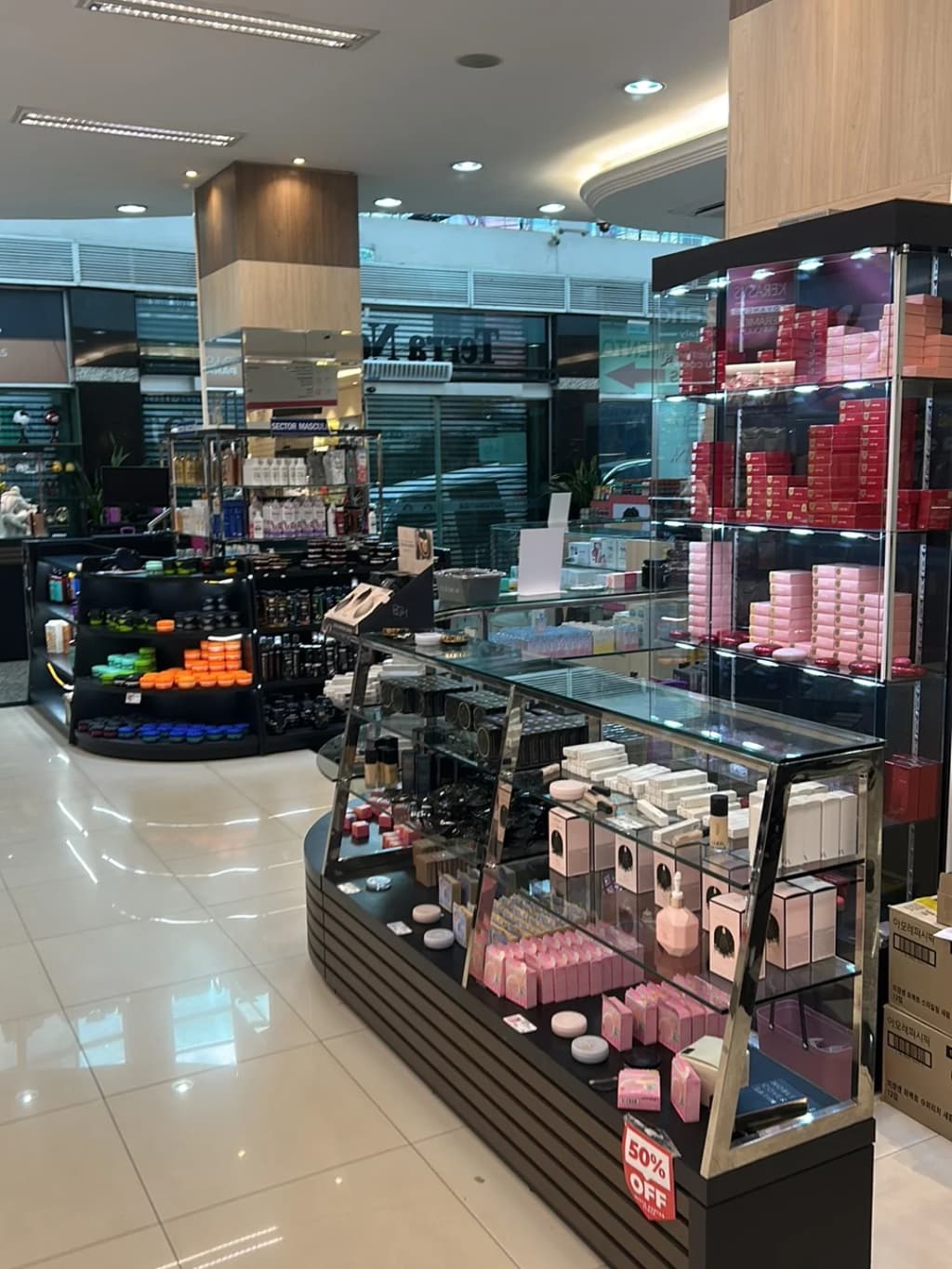
The pursuit of beauty takes me deeper into the city's commercial veins, specifically to Shopping Terra Nova. My friend in Foz do Iguaçu swore by this place, and stepping inside, I understand why. It is a sterile, brilliantly lit temple dedicated entirely to Korean skincare. The shelves are lined with pastel-colored boxes and minimalist glass droppers. I sit in front of a futuristic machine that maps the topography of my face, analyzing my skin with terrifying precision. A soft-spoken attendant points to a screen, explaining my hydration levels in rapid Spanish.
Armed with the results, I wander the aisles, dropping vials into my basket. A bottle of Madagascar Centella ampoule, cool and viscous, costs thirty dollars for a large hundred-milliliter bottle—a steal compared to the inflated prices back home. I gather Elizavecca hair treatments, Anua cleansing oils that smell faintly of herbs, and a Medicube Niacinamide serum. The textures are fascinating, ranging from watery essences to rich, velvety creams. I even pick up a sleek, high-tech LED booster mask from a brand called MC Cube. It promises the skin of a newborn, and holding the smooth, heavy device in my hands, I am almost inclined to believe the marketing.
Survival in Ciudad del Este requires strategy. The sheer volume of people, the cacophony of Guaraní, Spanish, and Portuguese blending into a singular street dialect, can wear you down. We find our refuge at Shopping Del Este, a modern fortress located conveniently close to the customs checkpoint.
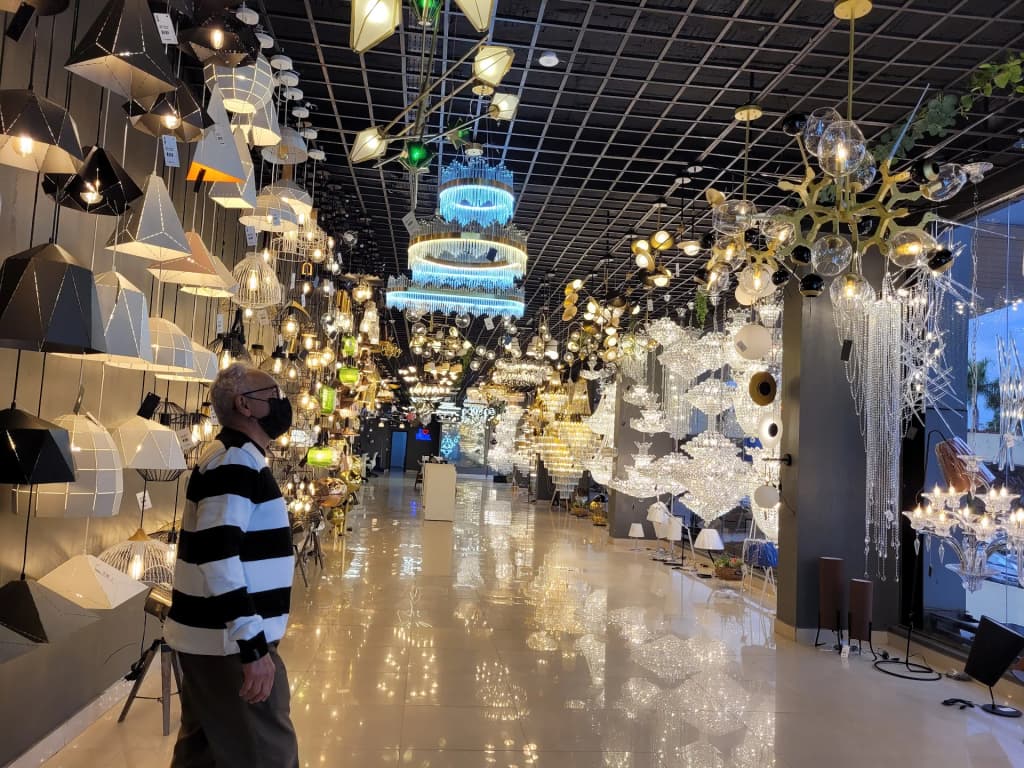
Parking here is a calculated move. The lot allows you to bypass the worst of the border traffic when it is time to leave. There is a quiet rhythm to the transactions inside. At a sleek store called New Zone, I hand over a stack of crisp Brazilian Reais to buy a pack of Apple AirTags for seventy-nine dollars. Paying in physical currency is the unspoken rule of the border—it secures the best exchange rate, bypassing the hefty fees and poor conversions of credit cards and digital Pix transfers. The cashier stamps my receipt with a heavy thud. Because I spent over fifty dollars, my parking ticket is validated. It is a small victory, but here, you celebrate the minor triumphs.
Down the street at Nissei, the atmosphere shifts from cosmetics to silicon and circuitry. The air smells of fresh cardboard and warm electronics. I watch a man carefully inspect a Garmin smartwatch, turning the eighty-dollar piece of machinery over in his hands as if weighing gold. The price disparity between here and Brazil is staggering, turning these crowded aisles into a treasure hunter's paradise.
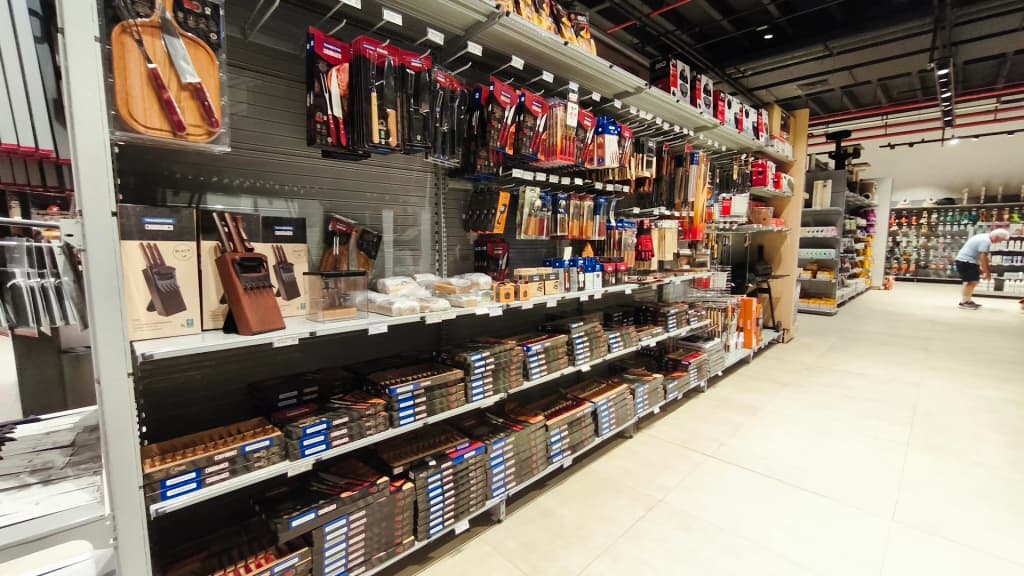
By midday, the heat outside is oppressive, baking the asphalt and amplifying the scent of roasting meat from the street carts. We retreat into the sprawling, multi-story behemoth that is Shopping China. It is less of a store and more of an enclosed, air-conditioned ecosystem. Families navigate massive carts through aisles of imported toys, electronics, and clothing.
The food court on the top floor is a sensory collision. The rich, spiced aroma of Middle Eastern shawarma fights with the greasy, comforting smell of American-style burgers. We sit at a small table, surrounded by the hum of hundreds of conversations and the clatter of plastic trays. The languages blur together—Portuguese, Spanish, Arabic, and Guaraní—creating a soundtrack unique to this border town. My bag is heavy with an Alexa Kids speaker and cat-ear headphones that light up in neon colors. Nearby, the imported chocolate section stretches out like a sugary mirage—Swiss Milka bars and rich Belgian truffles stacked high under the fluorescent lights.
The walk back toward the Friendship Bridge is always slower than the arrival. The bags dig into my palms, heavy with glass bottles, electronics, and tubes of rare serums. The afternoon sun casts long, jagged shadows across the congested streets. Motorcycles weave through the stalled traffic, their engines whining like angry hornets.
I run through the mental arithmetic of my purchases, ensuring I am safely under the strict five-hundred-dollar per person customs quota. The limit is non-transferable, a hard line drawn by the border guards waiting on the Brazilian side. As I step onto the bridge, the river breeze catches me, cool and smelling of damp earth. I look back at the skyline of Ciudad del Este. It is chaotic, exhausting, and completely unapologetic. You do not just come here to buy things. You come here to immerse yourself in the relentless, beating heart of a city that exists entirely on its own terms.
More Photos

More Adventures
 $50 - $150/day 7-14 days
 Traveling Brazil with the Wise Card: A Frictionless Journey
Experience the freedom of traveling through Brazil with the Wise card. Learn how to navigate exchange rates, avoid hidden fees, and pay like a local.
 $100 - $200/day 4-7 days
 How to Save $160+ in Gramado: The Prime Gourmet App Guide
Learn exactly how to use the Prime Gourmet app in Gramado and Canela to cut your dining and theme park costs by 50%. Exact prices and ROI breakdown included.
 $150 - $400/day 5-7 days
 Punta Cana Budget & Resort Guide: A Data-Driven Itinerary
Plan your Punta Cana trip with exact costs, all-inclusive resort comparisons, high-ROI excursion prices, and a breakdown of local tipping etiquette.
 $200 - $500/day 2-3 days
 Conquer Disneyland California: The Ultimate 2-Park Guide
Think Disneyland is just a walk in the park? Think again. Get the ultimate battle plan for dominating Disneyland and California Adventure. Skip the lines.