
Iceland Guesthouses: The Meticulous Budget Travel Guide
Master Iceland's self-service guesthouses to save hundreds on your trip. Get step-by-step check-in guides, shared kitchen tips, and budget breakdowns.
Iceland is notoriously expensive, but your nightly accommodation does not have to drain your entire travel fund. In this guide, I will show you exactly how to use self-service guesthouses to drastically cut your costs while traveling through one of the world's priciest countries. You will learn the mechanics of the self-check-in process, how to maximize shared kitchens, and the exact steps to save hundreds of dollars on your trip.
Quick Facts
- Best Time to Visit: May to September (expect 15 to 20 hours of daylight for extended driving)
- Budget Range: $120 to $250 USD per person, per day (covering accommodation, gas, and groceries)
- Duration Needed: 7 to 10 days to properly navigate the South Coast and Snæfellsnes Peninsula without rushing
What Exactly is an Icelandic Guesthouse?
If you translate it literally, it means "guest house," but in Iceland, these accommodations function in a highly specific, streamlined way. They are incredibly common and represent the single most cost-effective way to sleep in a real bed in the Land of Fire and Ice.
Many of these properties are former standard hotels or large residential buildings converted into self-service accommodations. Because there is no full-time staff on-site—meaning no receptionist, no bellhop, and no concierge—the operational costs are significantly lower. Those savings are passed directly to you, the traveler.
When you arrive at a typical Icelandic guesthouse, you will find:
- Unlocked main entrances: The front door to the main building is almost always left unlocked 24/7. There is no security gate or main keypad to enter the lobby.
- Informational signage: Where a reception desk used to be, you will find clear, printed signs detailing emergency contact numbers, Wi-Fi passwords, and quiet hours (usually 10:00 PM to 7:00 AM).
- Cozy common areas: These spaces often feature large windows, comfortable seating, and communal dining tables. Thanks to Iceland's cheap geothermal energy, these rooms are consistently heated to a comfortable 70°F (21°C) year-round.
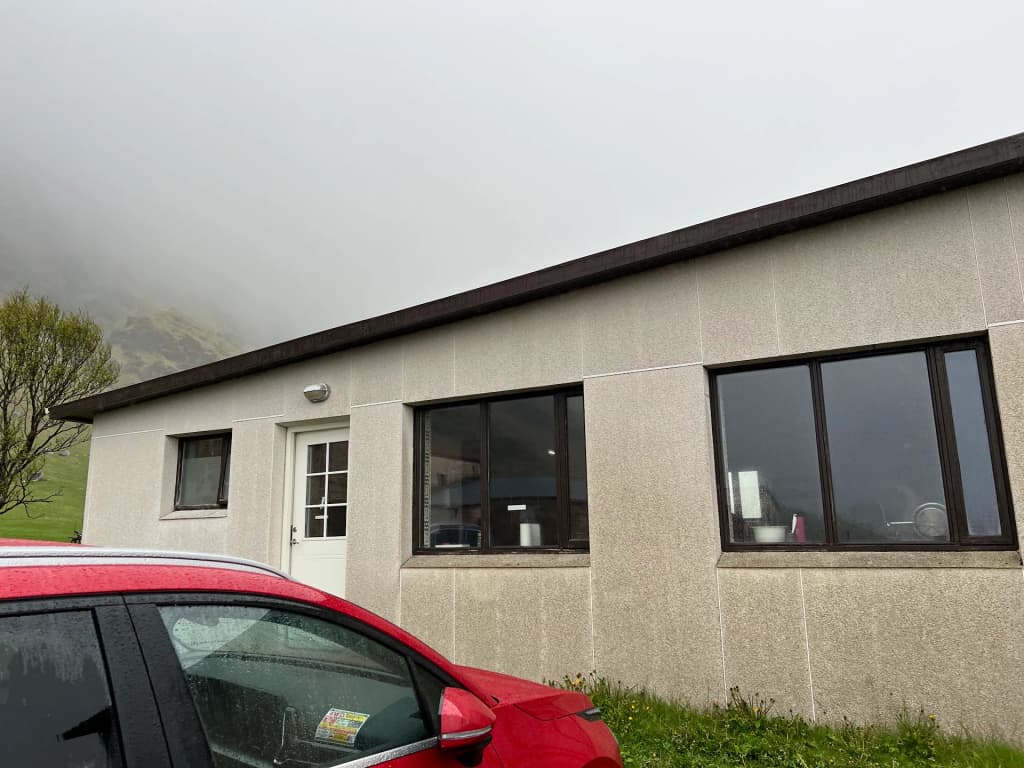
⚠️ Watch Out: Because there is no reception desk, you cannot drop your bags off early or leave them after checkout. Plan your rental car logistics accordingly, and never leave visible luggage in your vehicle at popular tourist trailheads.
The 5-Step Self Check-In Process
The most anxiety-inducing part of a guesthouse for first-time visitors is the lack of a front desk. Do not worry—the process is highly methodical, entirely standardized, and easy to execute if you are prepared.
Here is exactly how the check-in sequence works:
- Check your email 48 hours prior: Between 24 and 48 hours before your 3:00 PM check-in time, the property management will email you a specific room number and a 4-digit PIN code.
- Enter the building: Park your car and walk through the unlocked main entrance.
- Locate your room: Follow the hallway signage to find your designated room number. Most guesthouses have between 8 and 15 rooms.
- Access the lockbox: Right next to your bedroom door, you will find a small, mechanical lockbox. Enter your 4-digit PIN and pull down the release lever.
- Retrieve your key: Open the box, take out your physical room key, and let yourself in.
When it is time for your 10:00 AM or 11:00 AM checkout, you simply lock your door and drop the key back into the lockbox or a designated "checkout basket" by the front door.
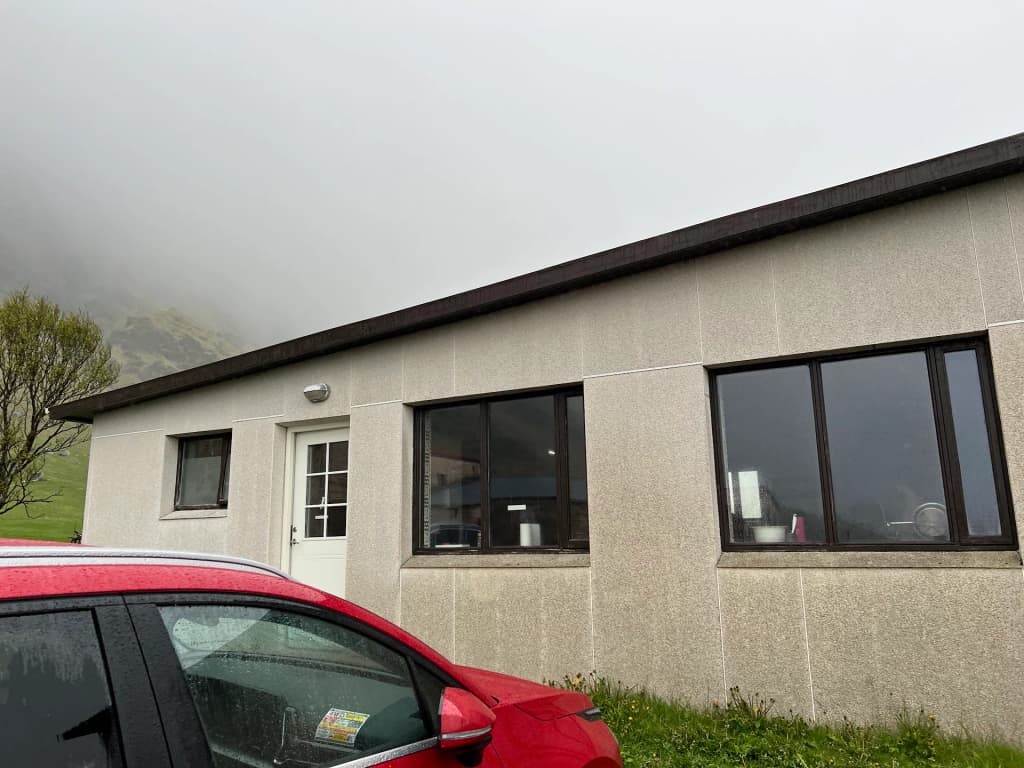
Pro Tip: Take a screenshot of your check-in email before you leave your previous accommodation in the morning. Cell service drops frequently in rural areas like the East Fjords, and you do not want to be locked out of your room because your email app will not load.
Maximizing the Shared Kitchen (Your Biggest Budget Saver)
The defining feature—and the absolute biggest financial advantage—of an Icelandic guesthouse is the shared kitchen. Eating at a standard sit-down restaurant in Iceland will easily cost $30 to $50 USD per person for a basic meal. By utilizing the guesthouse kitchen for breakfast and dinner, you can slash your daily food budget by up to 70%.
These kitchens are meticulously organized and fully equipped. You do not need to pack any travel utensils, camping stoves, or cooking gear.
What you will typically find:
- Multiple cooking stations: To accommodate several guests simultaneously, kitchens usually feature 2 to 3 sinks, multiple electric stovetops, and several microwaves.
- Standard appliances: Toasters, kettles, and drip coffee machines are standard.
- Ample seating: Large dining tables with plenty of chairs ensure you are not eating dinner sitting on your bed.
- Organized refrigeration: The shared fridge is strictly divided. You will find specific shelves or plastic bins assigned to your room number.
Pro Tip: Stop at a Bónus or Krónan supermarket between 10:00 AM and 6:00 PM. Buy a $3 USD box of pasta, a $4 USD jar of sauce, and some $5 USD skyr (Icelandic yogurt). You will feed two people for $12 USD instead of spending $80 USD at a local restaurant.
Accommodation Cost Comparison
To put the financial value into perspective, here is a breakdown of typical summer (peak season) accommodation costs in Iceland for two adults:
Accommodation Type Avg. Cost/Night Food Facilities Best For Guesthouse $100 - $150 Full shared kitchen Budget & Mid-range travelers Standard Hotel $250 - $400 None (Restaurant only) Comfort seekers Campervan $180 - $250* Basic camp stove Flexible adventurers(Note: Campervan costs do not include the mandatory $15 to $25 USD nightly campsite fees required by Icelandic law).
As the data shows, a guesthouse provides the physical comfort of a hotel at a price point closer to a campervan, with the added financial benefit of a full kitchen.
Common Mistakes to Avoid
To ensure your guesthouse experience is seamless, avoid these common traveler errors:
- Arriving hungry with no groceries: Rural guesthouses are often located 20 to 30 kilometers from the nearest town. If you arrive at 8:00 PM expecting to pop out for dinner, you will find the local grocery stores closed. Always buy your evening groceries by 4:00 PM.
- Leaving a mess in the kitchen: There is no maid service to clean up your dinner dishes. You are strictly expected to wash, dry, and put away every pot, pan, and plate you use immediately after your meal.
- Forgetting your room key inside: Because the bedroom doors often lock automatically when pulled shut, it is incredibly easy to lock yourself out when walking down the hall to the shared bathroom. Always keep your key in your pocket.
- Forgetting shower shoes: Since you will likely be sharing a bathroom with 3 to 4 other rooms, packing a cheap pair of rubber flip-flops for the shower is a practical necessity.
Next Steps for Your Iceland Trip
Staying in a guesthouse is a practical, comfortable, and highly efficient way to travel through Iceland. You get the warmth of a real bed, the utility of a full kitchen, and the independence of a self-guided itinerary.
To get started on your meticulous trip planning, follow these steps:
- Map out your daily driving route, capping your travel at 200 to 250 kilometers per day to allow for sightseeing.
- Identify the specific towns or regions you will end up in each evening (e.g., Vík, Höfn, Egilsstaðir).
- Book your guesthouses 4 to 6 months in advance. The best-priced rooms under $130 USD sell out rapidly for the June-August peak season.
With a little methodical planning and a strategic trip to the grocery store, you will be navigating Iceland's accommodation scene like a seasoned budget expert.
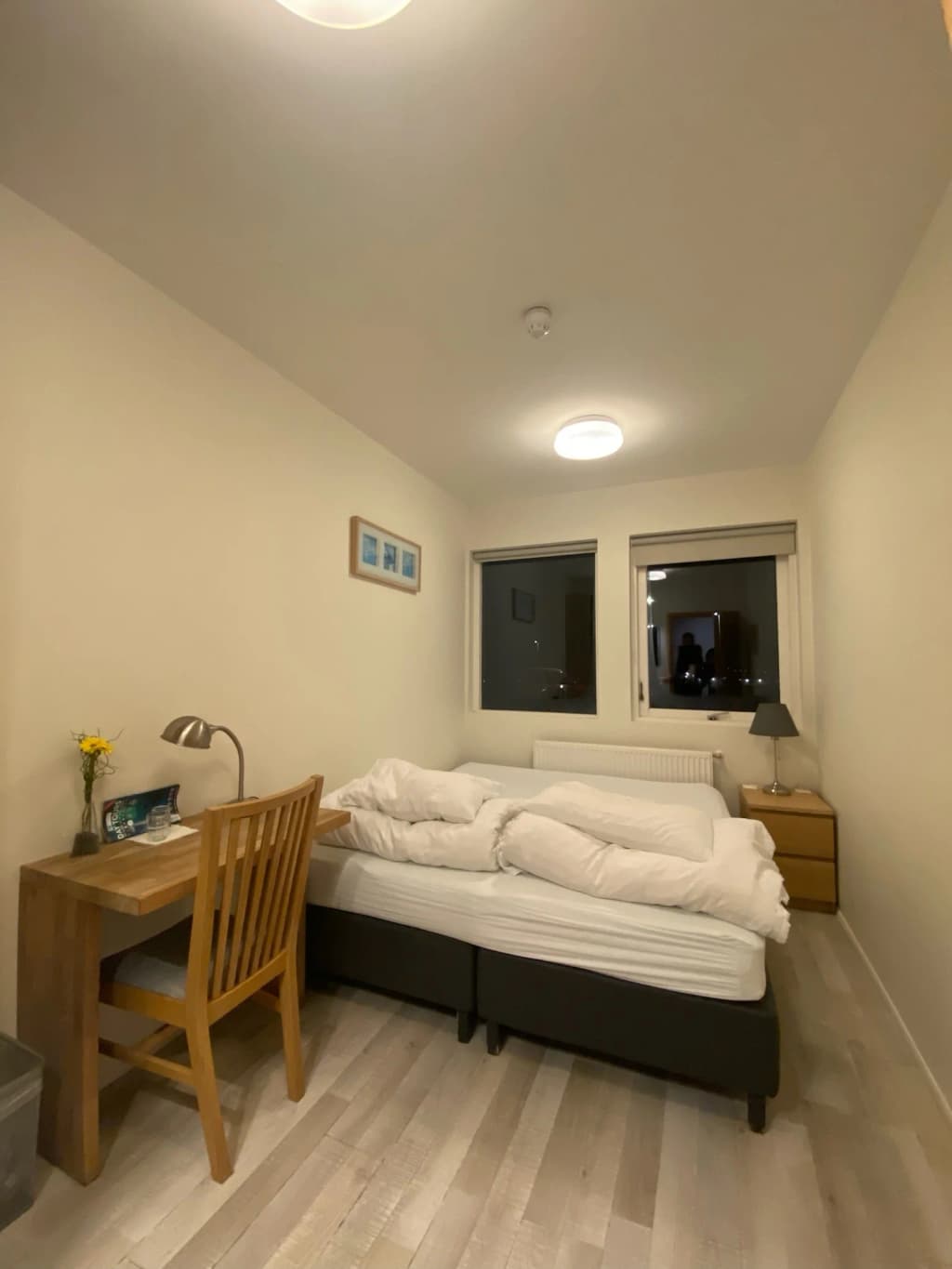
More Photos
More Adventures
 $60 - $150/day 7-14 days
 Ditch London: Why Cardiff is Your Next Great UK Adventure
Skip the London tourist traps. Head west to Cardiff, Wales, for an authentic, gritty, and completely immersive solo travel and language experience.
 $50 - $120/day 3-5 days
 Forget the Postcards: Dive Into the Chaos of Naples
Think you know Italy? Think again. Discover the raw energy, unapologetic street food, and beautiful chaos of Naples in this ultimate travel guide.
 $150 - $350/day 3-6 days
 Surfing the Crowds: Finding Value at Universal's Surfside Inn
Discover the immersive comfort, clever room designs, and invaluable early park perks of staying at Universal's Endless Summer Resort – Surfside Inn and Suites.
 $80 - $150/day 2-3 days
 Conquer Cardiff: Castles, Gritty Pubs, and Welsh Secrets
Skip London and conquer Cardiff. Discover medieval castles, massive rugby stadiums, gritty pubs, and Victorian arcades in this ultimate Welsh adventure.