
Macapá Travel: Finding the Middle of the World
Journey to Macapá, Brazil. Discover the massive Fortaleza de São José, stand on the Equator at Marco Zero, and experience rich Amazonian river culture.
The aroma hits you before the sweat even has a chance to bead on your forehead. Rich, yellow broth, the unmistakable earthy scent of palm oil, and plump shrimp steaming in the heavy air. I am sitting at the crowded Feira do Sabor in Macapá, spooning vatapá into my mouth. It is only seven in the morning. It took five hours of flying, with a long layover in the sterile halls of Brasília, to reach this remote northern capital from the south of Brazil. But tasting this complex, fiery dish as the city wakes up, you immediately know you have arrived somewhere entirely different. Time and temperature simply operate on their own terms here at the edge of the Amazon.
"You have to understand the river to understand us," Kátia says, wiping her brow. She is a local guide with a warm, knowing smile that easily outshines the equatorial sun. We are walking through the Museu Sacaca, an open-air sanctuary shaded by towering native trees that filter the harsh, blinding daylight into pools of dappled gold. The crunch of dry leaves underfoot mixes with the distant calls of tropical birds.
I run my hand along the weathered, splintering wood of a regatão, the traditional trading boats that once served as floating markets for isolated riverside communities. The timber feels rough and ancient under my fingertips.
"Did they just sell food?" I ask, leaning in to inspect the hollowed hull.
"Everything," she laughs, her voice echoing slightly in the quiet clearing. "They even had radios to announce their arrival. You would hear the crackle of the broadcast over the water, skipping across the river, and everyone knew it was time to gather on the banks to trade."
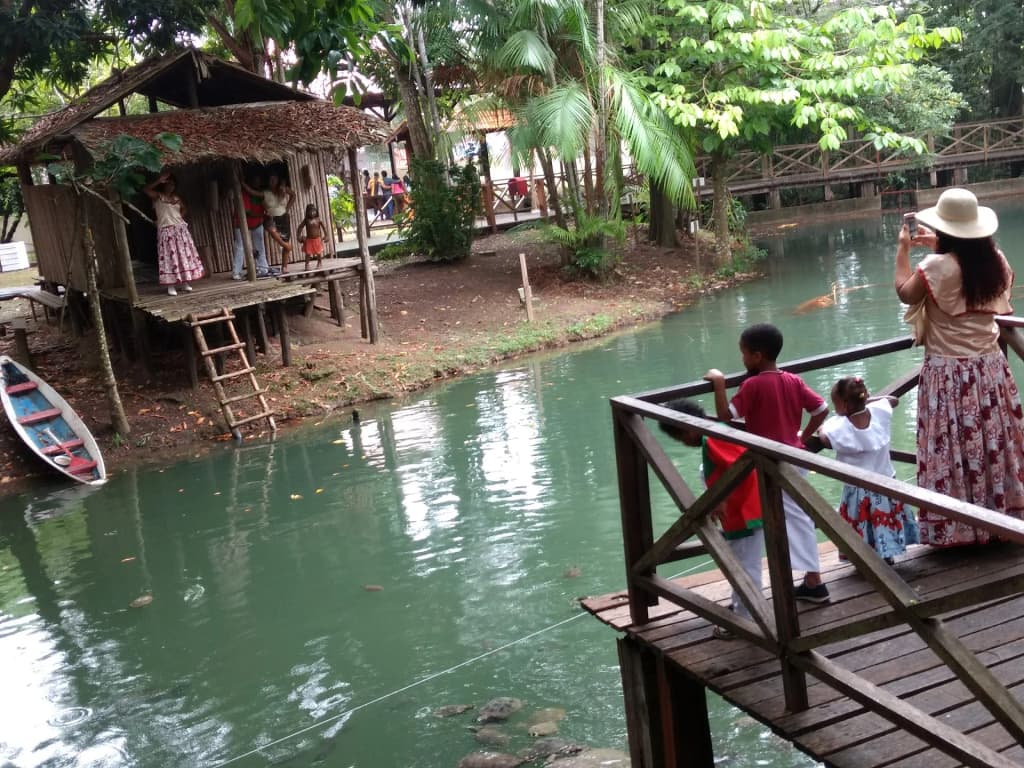
I wander past replicas of indigenous dwellings, each ethnic group's architecture distinct and purposeful. Some huts are perfectly round, hugging the earth, while others are towering and angular, built on stilts to survive the floodwaters. The smell of dried palm fronds and damp soil grounds the history in something profoundly tangible. It is not a museum trapped behind glass; it is a living, breathing reflection of the people who figured out how to thrive in one of the most demanding environments on earth.
By mid-morning, the sun is blinding, reflecting sharply off the pavement as we drive toward the Marco Zero monument. I stand with my right foot in the Southern Hemisphere and my left in the Northern Hemisphere. The Equator is just a painted line on the concrete, radiating heat through the soles of my shoes, but there is a strange, childlike thrill in physically straddling the globe.
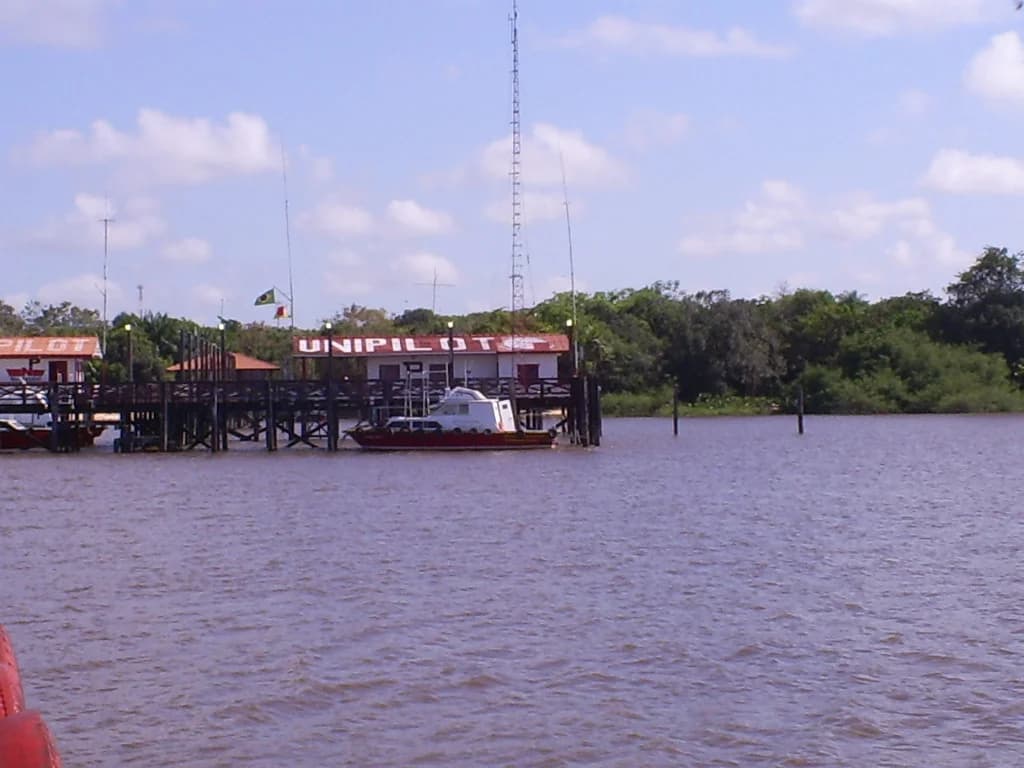
Just down the road, the local football stadium takes this geographic quirk to its logical, brilliant extreme. The midfield line is the Equator itself. In the first half, you defend the South; in the second, you defend the North.
But the real, raw sport happens down by the river. At the Orla de Macapá, the shifting tide of the Amazon River dictates the rules of play. When the water recedes, it leaves behind a massive, slick expanse of dark, glistening mud. Where outsiders might see an impassable obstacle, locals see a perfect pitch. Up to a hundred and thirty teams—all proudly named after local fish—compete in the famous mud football championship. I stand by the railing, listening to the squelch of bare feet and the roaring laughter of kids sliding through the muck, their bodies completely coated in the thick, wet earth of the Amazon.
To escape the midday heat, which is aggressively pushing past thirty degrees Celsius, we take refuge inside the Casa do Artesão. The air inside is still, smelling faintly of dried coconut shell and polished wood. Long tables are covered in intricate, handmade jewelry. I pick up a heavy, deep-purple necklace. The beads are perfectly smooth and surprisingly cool against my skin.
"Açaí seeds," the vendor explains, noticing my quiet fascination.
"They feel like polished stone," I observe.
She nods proudly. "We use everything the forest gives us. Nothing is wasted."
Here, açaí is not just a trendy smoothie bowl blended with sugary syrups. It is the lifeblood of the region, consumed savory with fried fish and coarse farinha, and its remnants are meticulously transformed into art. The deep, dark hues of the seeds carry the exact color of the fruit that sustains the entire state of Amapá.
By early afternoon, the heat is absolute and unforgiving. We are staying at the Hotel Atalanta, and while the Fortaleza de São José de Macapá is technically only a twenty-minute walk away, the relentless sun makes the five-minute Uber ride a strict necessity. The few reais spent are worth the brief, glorious blast of vehicular air conditioning before stepping back out into the furnace.
The fortress looms on the left bank of the Amazon River, a sprawling thirty-thousand-square-meter behemoth of stone and mortar. Construction began in 1764, taking eighteen years of grueling labor to complete. I walk along the massive star-shaped ramparts, running my fingers over the rusted, pitted iron of the antique cannons that point out toward the water. The wind off the river provides a sudden, merciful breeze, carrying the scent of fresh water and distant rain. The river stretches out so incredibly wide here that it feels exactly like looking at the ocean.
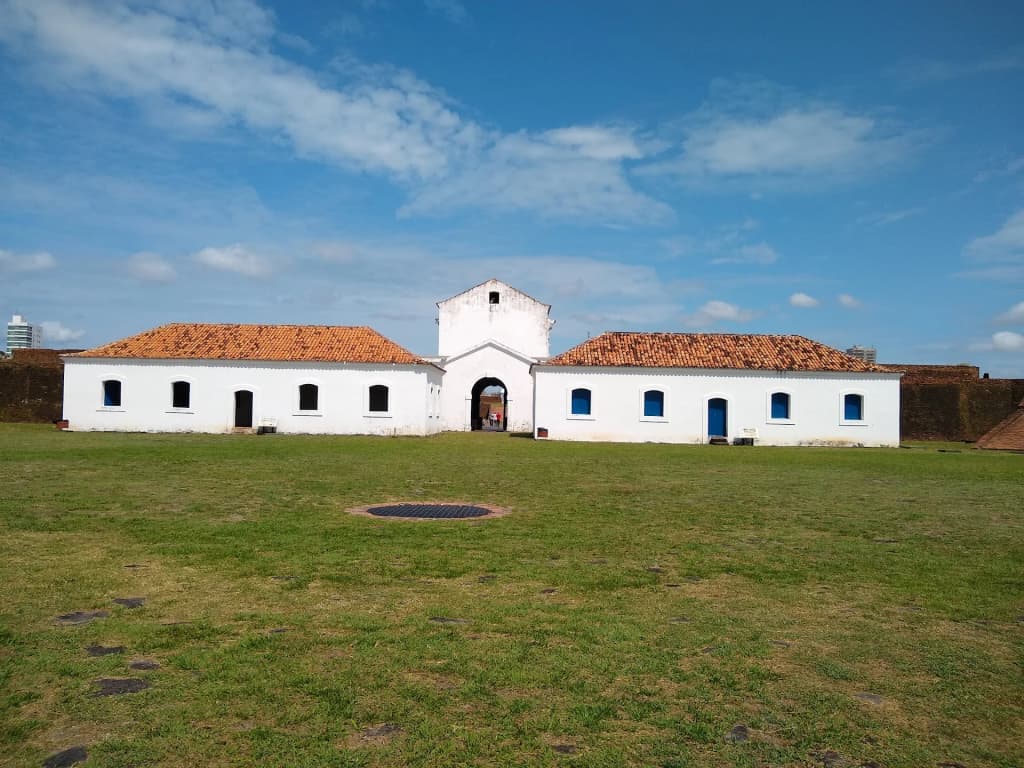
The irony of this massive military installation is that it never saw a single battle. It sat here for centuries, perfectly preserved, waiting for an invasion that simply never came. Today, it stands not as a weapon of war, but as a silent watcher over the muddy, churning waters, its immaculate preservation securing its status as a national heritage site.
The sky begins to bruise purple and brilliant orange as the day finally surrenders. I retreat to a nearby shopping mall, a purely modern indulgence sought entirely for the air conditioning, to cool down my core temperature before dinner. As I sit with a condensation-beaded glass of iced coffee, I think about this city severed by the Equator. Macapá is a place of beautiful, striking contradictions—a towering fortress without a war, a stadium split evenly between hemispheres, and a mighty river that turns into a muddy playground. You don't just visit the middle of the world; you feel it, thick and warm and unforgettable, long after you have moved on.
More Photos
More Adventures
 $60 - $120/day 4-5 days
 Buenos Aires Itinerary: A Practical 5-Day Planning Guide
Plan the perfect Buenos Aires trip with this meticulous guide. Discover exact costs, walkable neighborhood routes, and budget optimization tips for Argentina.
 $40 - $100/day 3-5 days
 Skip Rio: Why Brazil's Smallest State is Your Next Big Adventure
Forget the massive crowds. Dive into Sergipe, Brazil's smallest state, for raw wildlife, UNESCO heritage, and mind-blowing untold culinary history.
 $50 - $120/day 2-4 days
 Into the Sertão: Outlaws, Canyons, and the Real Brazil
Skip the crowded beaches. Dive into Brazil's Sertão to explore the emerald Xingó Canyons, hike the unforgiving Caatinga, and trace the footsteps of outlaws.
 $40 - $90/day 2-4 days
 Skip the Beach: The Ultimate Itabaiana Road Trip
Trade the beach for the rugged heart of Sergipe. Discover wood-fired sweets, sustainable cashew co-ops, and rescued birds of prey in Itabaiana.