
Miami’s Cinematic Pulse: Sun, Art, and Pride on South Beach
Step into Miami’s sunlit rhythm: white sands, street art, Cuban flavors, and the electric joy of Pride. A sensory journey through the city’s vibrant heart.
The elevator doors open to a hush of cool air and the faint scent of chlorine. I step out, towel slung over my shoulder, and the city unfurls below—glass towers catching the morning sun, the bay glinting like a secret. The pool is empty at this hour, a long blue ribbon edged by manicured grass and the distant silhouette of a Ferris wheel. Somewhere, a gull cries. I lean on the railing, coffee in hand, and watch the city wake up. Miami’s heat is already rising, thick and promising, but for now, there’s only the hush and the slow, golden light.
Just across the street, Bayside Marketplace is stirring. Vendors roll up metal shutters, the scent of fried dough and brewing coffee drifting over the water. The Ferris wheel stands silent, waiting for the first riders. I wander through the open-air corridors, past souvenir stalls and a green park where joggers move in slow, determined loops. The city’s pulse is gentle here, the air tinged with salt and the low hum of Spanish and English blending together. Miami is bilingual in every sense—signs, conversations, even the music leaking from shopfronts. I fumble through my own patchwork of languages, and no one minds. Here, everyone is from somewhere else.
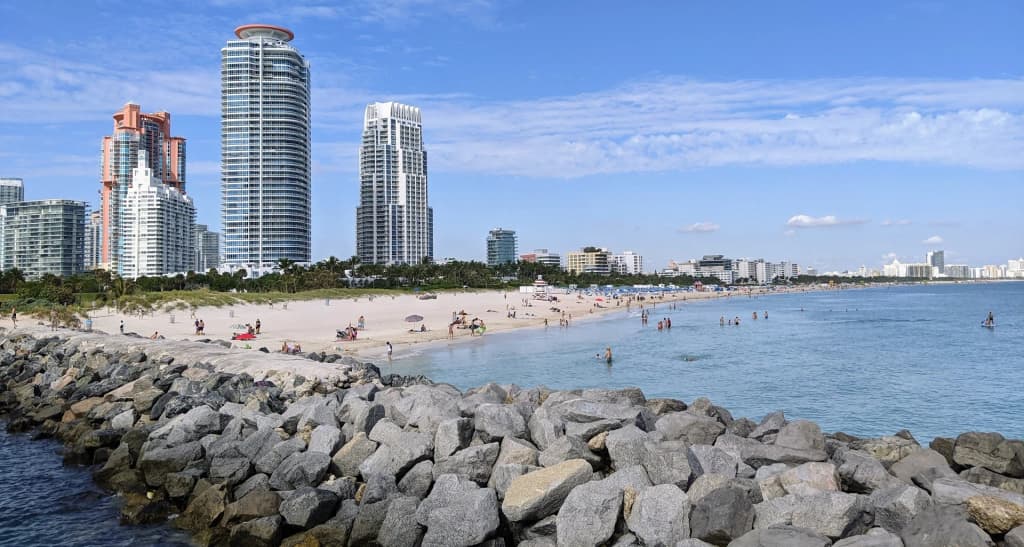
South Beach is a different kind of awakening. The wind is up, whipping the turquoise water into whitecaps, and the sand is cool beneath my feet. Rainbow flags flutter from lifeguard towers, and a group of friends pose for photos, laughter carried away by the breeze. I walk down to 12th Street, where the heart of Miami’s LGBTQ+ community beats loudest. The air is electric, anticipation building for the coming Pride weekend. “You’re here for the parade?” a woman asks, her sunglasses reflecting the sky. I nod, grinning. “Wouldn’t miss it.” She points to the painted lifeguard stand, its stripes vivid against the stormy sky. “That’s the best spot for photos. Everyone comes here.”
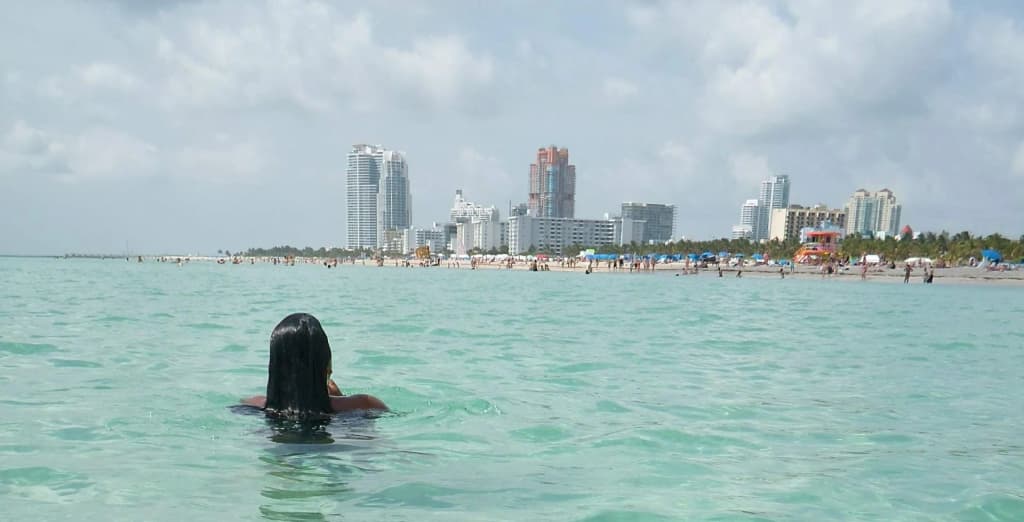
The beach is wild today, the water too rough for swimming, but the energy is undimmed. I watch as a couple wades in, shrieking at the cold, and then retreat to the soft grass of Lummus Park. Palm trees sway overhead, and workers set up tents for the weekend’s festivities. The city is preparing, everywhere you look—rainbow banners, sound checks, the scent of sunscreen and anticipation.
Art, here, is not confined to galleries. In Wynwood, the streets themselves are the canvas. I join a guided tour, our group trailing behind a local artist who gestures at a wall splashed with color. “This one’s by a Brazilian,” he says, tracing the lines of capoeira dancers. “He projected the design first, then painted over it. That’s why it’s so perfect.” The air smells of spray paint and strong coffee. Music thumps from a nearby café, and the sun bakes the concrete. Wynwood Walls is a riot of murals—faces, animals, wild geometry—each one a story, a shout, a memory. We duck into a French-inspired café for brunch, the glass case gleaming with pastries. I order eggs benedict and a tart so sweet it makes my teeth ache. The chef, a wiry man with a Gallic shrug, grins as he hands over my plate. “Brunch all day, every day. That’s Miami.”
Downtown, the Vizcaya Museum and Gardens is a world apart. Renaissance columns, marble staircases, and gardens clipped into impossible shapes. The air is heavy with the scent of jasmine and old stone. I join a tour, our guide’s voice echoing through the grand halls. “James Deering wanted a palace,” she says, “so he brought Europe here—ceilings from Tuscany, doors from France.” Sunlight slants through stained glass, painting the floor in colors. Outside, the bay laps quietly at the steps, and the gardens stretch toward the water, formal and wild at once. I lose myself among the hedges, the hush broken only by the distant call of a boat horn.
Oleta River State Park is a different Miami—mangroves, silence, the slap of a paddle against clear water. I join a group for a kayak tour, our guide handing out life jackets with a practiced smile. “Stay close to the mangroves,” she says. “That’s where the baby sharks hide.” The river is glassy, the air thick with the scent of salt and green things. We paddle past tangled roots, the city a distant memory. On a sandy island, we beach our kayaks and wade into water that is startlingly clear, cool but not cold. “Not too many crocodiles today,” the guide jokes, and someone laughs nervously. The sun is high, the world is quiet, and for a moment, Miami feels like a secret.
Night falls, and the city shifts. On Collins Avenue, the Greystone Hotel glows with art deco curves and the promise of rooftop parties. My room is a study in contrasts—historic bones, modern lines, a bottle of sparkling wine waiting on the table. Downstairs, the bar hums with conversation, and outside, the ocean is a dark, restless presence. I slip out to Ocean Drive, where pastel facades glow under neon and the air is thick with music and the scent of grilled seafood. At Palace, the drag brunch is in full swing—queens in sequins, laughter, the clink of mimosas. “You’re not from here,” a performer teases, lips painted the color of sunrise. “No,” I admit, “but I wish I was.” She winks, tossing a feathered boa over my shoulder. “Then stay longer.”
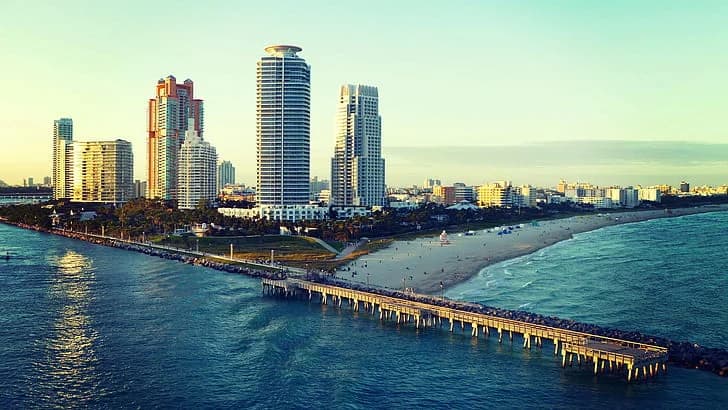
Pride weekend is a crescendo—floats rolling down Ocean Drive, music pulsing from every corner, the crowd a sea of color and joy. The festival spills onto the sand, stages rising against the blue, drag queens and dancers and families waving flags. The air tastes of salt and sugar, the sun relentless, the city alive in every sense. At night, the parties move to rooftops and hidden bars in Wynwood, where the drinks are strong and the laughter spills into the street. I find myself at a new LGBT+ bar, the walls pulsing with light, the bartender sliding a mojito across the counter. “To Miami,” he says, raising his glass. “To Miami,” I echo, and the city answers with a thousand voices.
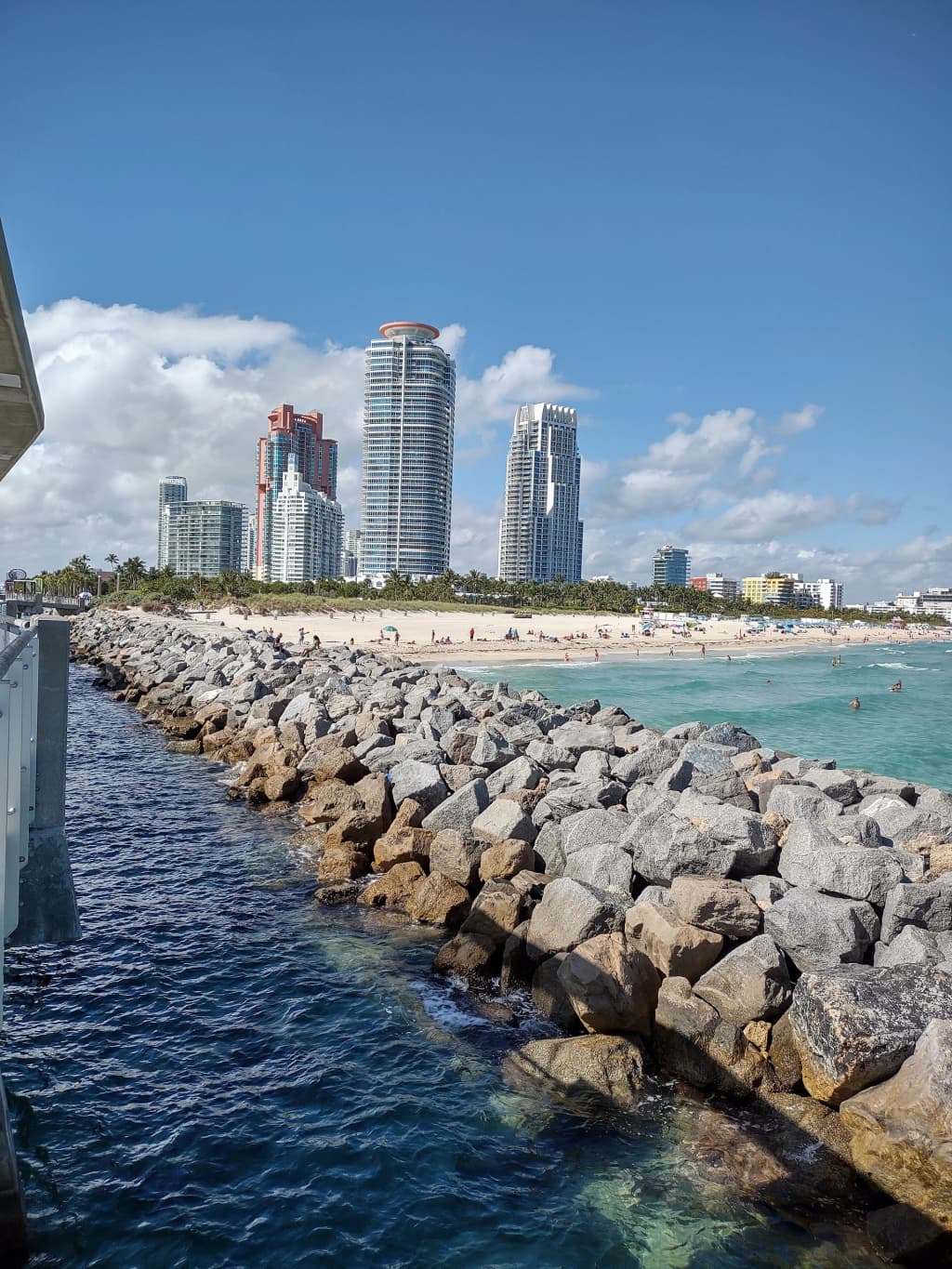
On my last morning, I walk the beach alone. The sand is cool, the water impossibly blue, and the city behind me hums with possibility. Miami is not just a place—it’s a feeling, a rhythm, a promise of sun and art and endless reinvention. I watch the waves break, the sky brightening, and think: I could stay longer. Maybe I will.
More Photos
More Adventures
 $150 - $300/day 1-2 days
 Conquer Epcot: The Ultimate High-Speed Global Gauntlet
Think Epcot is a slow stroll? Think again. It's a high-speed, globe-trotting gauntlet. Hack the rides, taste the world, and push your limits in Orlando.
 $100 - $300/day 1-3 days
 Escape the Airport: Conquer Your Luanda Layover
Think a layover in Luanda means killing time at the airport? Think again. Discover the fortress, island sunsets, and the ultimate Angolan adventure.
 $120 - $350/day 2-3 days
 Disneyland Paris Strategy: Ride Hacks & Coaster Secrets
Think you know Disney? Think again. Discover the underground secrets, massive coasters, and insider hacks to conquer Disneyland Paris like a pro.
 $150 - $350/day 3-6 days
 Finding the Quiet Magic Between Orlando's Theme Parks
Explore the sensory landscape of Orlando beyond the theme parks, from the bustling aisles of the Character Warehouse to a rainy evening at Disney Springs.