
Beyond the Turnpike: A Sensory Journey Across Pennsylvania
Experience Pennsylvania through a sensory lens, from the sizzling food carts of Philadelphia and Gettysburg's solemn fields to the reborn steel of Pittsburgh.
The sizzle of ribeye on a flat-top grill hits you first. It is a loud, aggressive sound, followed immediately by the heavy scent of caramelized onions and melting cheese that cuts through the exhaust of passing city buses.
"Whiz or provolone?" the man in the faded Eagles hat barks at me. He doesn't look up from his spatulas, which are moving in a rhythmic, metallic blur against the black iron.
I tell him provolone. He nods approvingly, sliding a heavy sandwich wrapped in tight silver foil across the counter. "Good choice. Eat it while it's burning your hands."
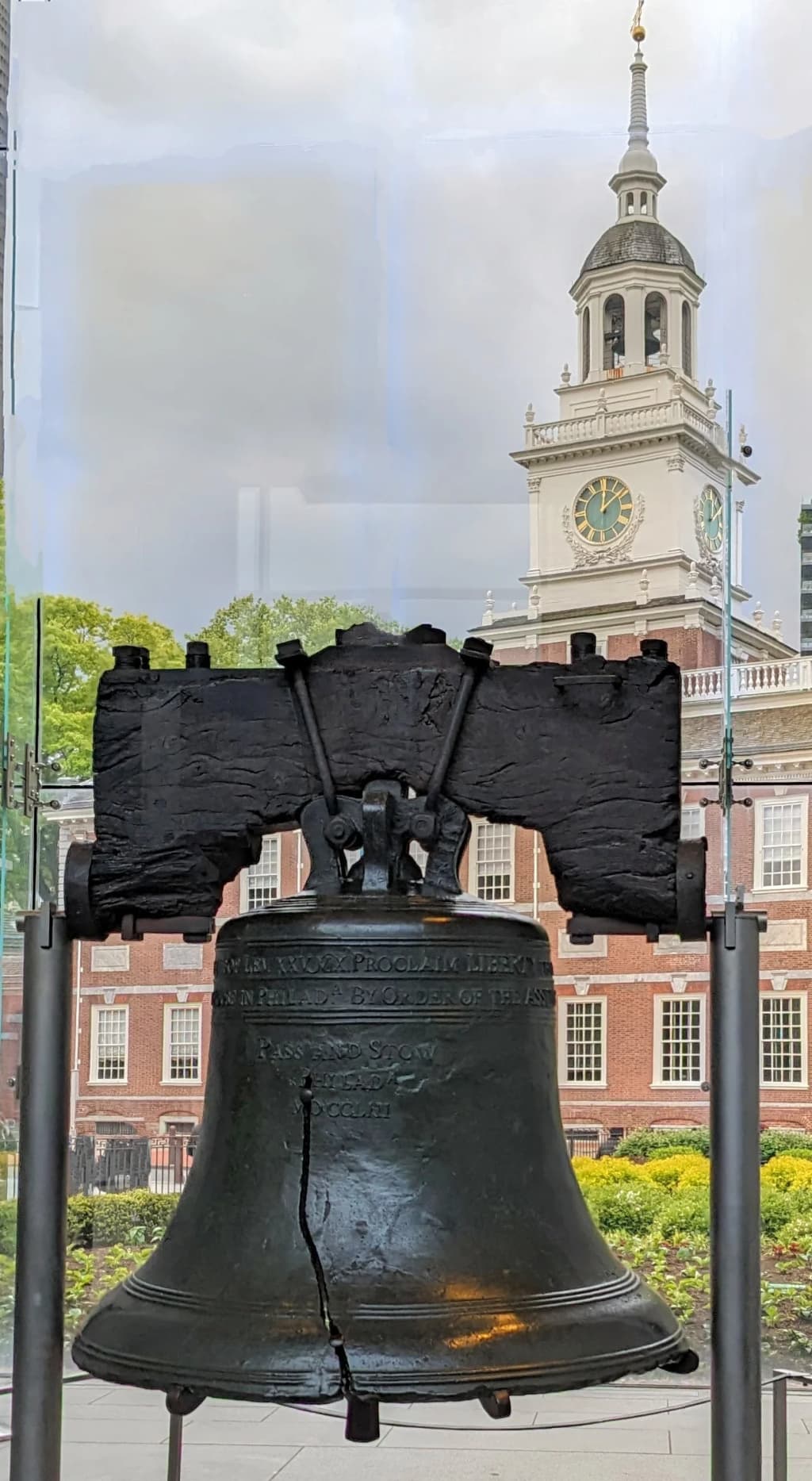
I step back onto the sidewalk, the heat seeping through the foil and warming my palms against the crisp October chill. This is Philadelphia, a city that doesn't bother with pretension. I eat leaning against a brick wall, the sharp, salty bite of the sandwich grounding me in the exact moment. Walking off the heavy, glorious lunch, I head down cobblestone streets toward the historic district. The afternoon light hits the red brick of Independence Hall perfectly, casting long shadows across the courtyard. I bypassed the long morning queues by grabbing a reserved ticket online for a single dollar the night before, stepping right into the room where the country was born. Not far away, the bronze of the Liberty Bell sits in quiet dignity, its famous crack running like a jagged scar down its side, cool to the imagination if not the touch.
The city concrete softens into rolling green hills as I drive west into Lancaster County. The rhythmic clip-clop of horse hooves on asphalt echoes through the damp morning air, a sound that feels entirely out of time. A black buggy passes, the driver raising a single finger from the reins in a silent, stoic greeting. The scent of woodsmoke and damp earth hangs heavy in this pocket of Pennsylvania Dutch Country.
At a roadside farm stand, a woman in a crisp white bonnet arranges jars of dark, spiced apple butter with practiced precision.
"Made it yesterday," she says, her voice carrying a soft, melodic lilt. "Goes best on warm bread. Don't put it on toast, it ruins the texture."
I buy a jar and a slice of sticky, molasses-rich shoofly pie that tastes like pure, unhurried comfort. Just an hour north, the air shifts entirely. In Dauphin County, the breeze literally smells of cocoa. Hershey is a town where the streetlights are shaped like chocolate kisses. It sounds like a tourist gimmick, but wandering through the local museums and the Chocolate World, you feel the earnest history of dairy farmers and candy makers who built an empire from milk and sugar. The sweetness of the air sticks to your clothes long after you leave, a phantom dessert following you down the highway.
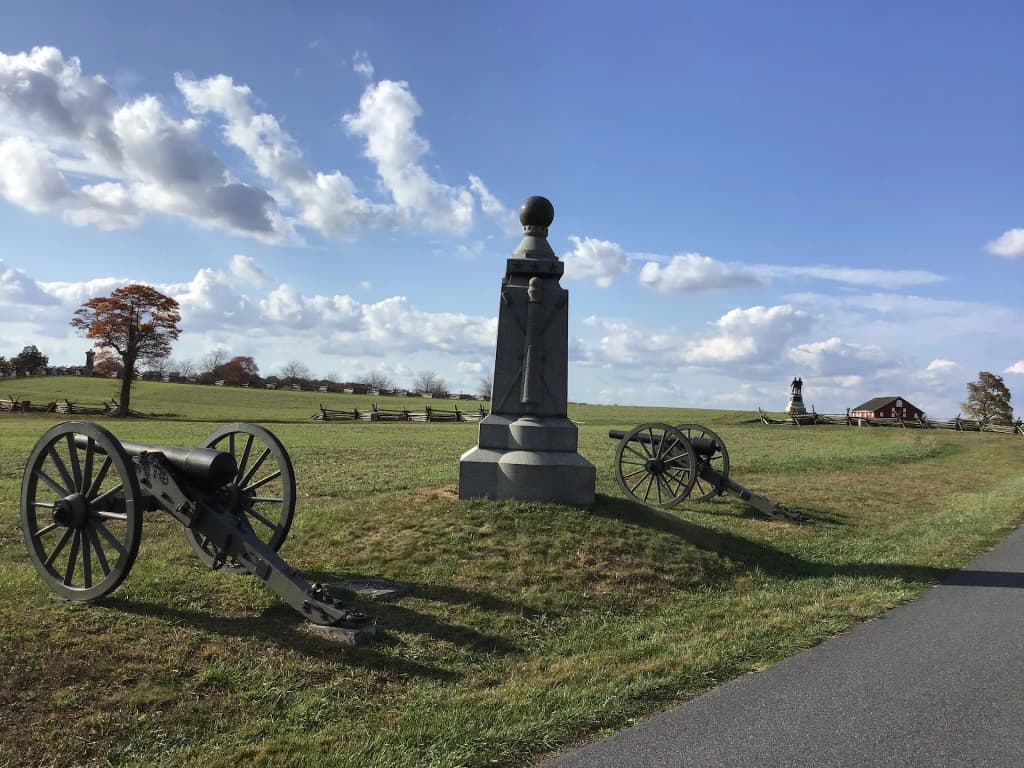
Further west, the sweet air fades into something heavier, something deeply solemn. The wind moves through the tall grass at Gettysburg National Military Park with a low, rushing sound. It is hard to reconcile the sheer brutality of July 1863 with the agonizingly beautiful green fields rolling out before me under a bruised autumn sky.
I touch the rough, sun-warmed stone of a monument, feeling the grit of the granite beneath my fingertips. Inside the Jennie Wade House—the home of the only civilian casualty of the battle—the old floorboards creak underfoot, whispering stories of a town caught in the crossfire. You don't just learn about the Civil War at the Heritage Center here; you feel its lingering ghost in the stillness of the Pennsylvania evening, in the sudden drop of temperature as the sun dips below the tree line.
The eastern edge of the state holds its own quiet secrets. At the Delaware Water Gap, the river carves a decisive, shimmering path between Pennsylvania and New Jersey. I rent a bicycle and pedal down the Old Mill Road. The air smells of crushed autumn leaves and damp earth, the lush hemlock forests providing a deep, cooling shade against the midday sun. I stop at Millbrook Village, where the nineteenth-century buildings sit preserved in time.
A volunteer in period clothing nods as I pass. "Quiet today," he observes, sweeping a wooden porch with a stiff-bristled broom. "Just the way the river likes it."
I listen to the distant rush of the water, a constant, soothing white noise that follows me back to the trail, my tires crunching softly against the packed dirt.
There are other ghosts in Pennsylvania, though of a much more recent vintage. The drive to Centralia feels like a descent. The pungent smell of sulfur hits the back of my throat before I even park the car. Since 1962, an underground coal mine fire has burned beneath this near-ghost town. I walk down a highway completely reclaimed by weeds and bright, chaotic graffiti. Wisps of white smoke curl up from deep cracks in the asphalt, twisting into the cold air. The silence is absolute, broken only by the crunch of my boots on broken pavement. It is eerie and strangely beautiful, a stark reminder of nature's relentless patience.
To wash the sulfur from my senses, I head toward Ricketts Glen State Park. Here, the air is thick with the scent of pine and the cool, atomized mist of falling water. The Falls Trail System is a muddy, magnificent trek. I hear the roar of the water long before I see it, tumbling over ancient rock ledges. I plunge my hands into the freezing stream, the icy shock sending a jolt of pure adrenaline through my system. Later, I sit on the sandy beach of Lake Jean, watching the water ripple gently in the fading light, my muscles aching in the best possible way.
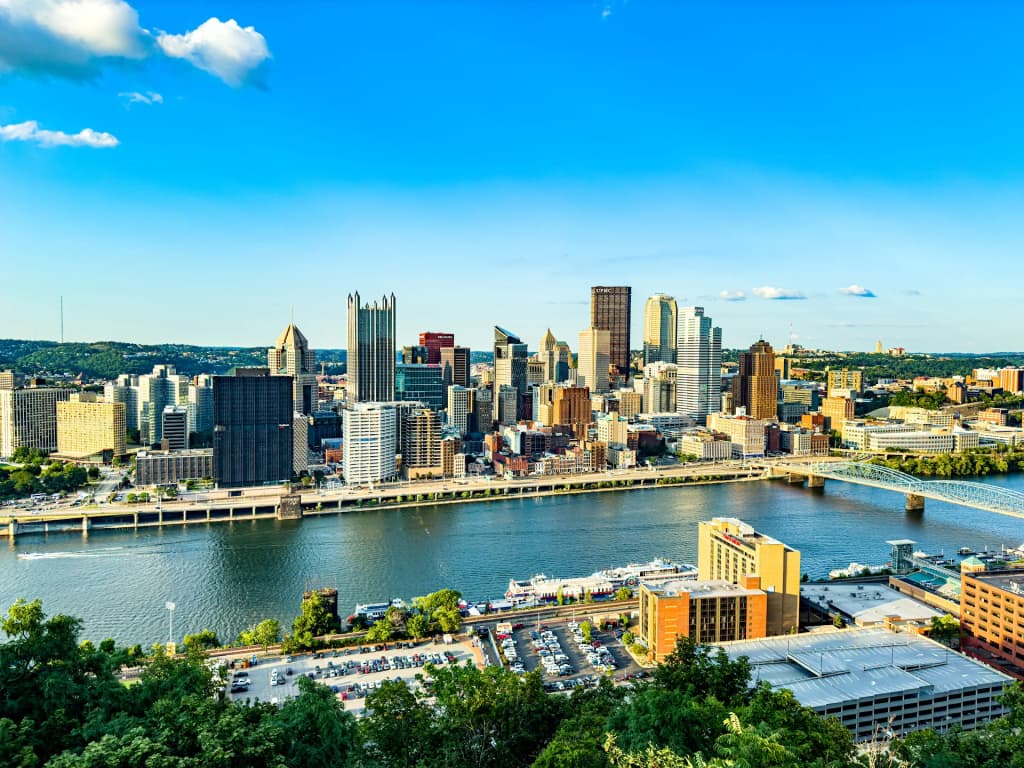
The journey culminates where three rivers collide. Pittsburgh rises from the water like a monument to American resilience. Once choked with the smog of steel mills, the city now gleams under the late afternoon sun. I stand at Point State Park in the heart of downtown, listening to the gentle lap of the rivers against the concrete walkways, the massive U.S. Steel Tower stretching into the blue sky above.
I find my way to a dimly lit pub housed in an old warehouse. A local bartender slides a cold, hazy craft IPA across the worn wood, the condensation dampening my fingers.
"First time in the Steel City?" he asks, wiping down the brass taps.
I nod, taking a sip that tastes of bright citrus and pine.
"People always think of the rust," he laughs, gesturing out the window toward the hills. "They don't realize how green it is here."
He is right. The hills rise sharply from the water, a deep emerald framing the downtown skyline.
My road ends further north, where the state touches the vast, inland sea of Lake Erie at Presque Isle State Park. The sand is cool and damp beneath my bare feet. I watch the sun dip below the watery horizon, painting the sky in bruised purples and brilliant oranges. The waves rhythmically crash against the shore, sounding almost like an ocean. Pennsylvania is a state of profound layers—of peeling paint and polished steel, of solemn battlefields and roaring waterfalls, of sweet chocolate and sulfurous smoke. You just have to be willing to drive the distance to peel them back.
More Photos
More Adventures
 $150 - $400/day 5-10 days
 Ditch the Textbook: Conquer the Wild Side of Massachusetts
Think you know Massachusetts? Think again. From the rugged peaks of the Berkshires to the untamed shores of Cape Cod, it's time to conquer the Bay State.
 $200 - $450/day 1-3 days
 Beyond the Louvre: Finding Magic in Disneyland Paris
Step off the train from central Paris and into a world where classic Disney magic meets French romance, complete with a sleeping dragon and nighttime drones.
 $200 - $500/day 2-4 days
 Disneyland Paris: The Darker, Faster Rides You Need to Try
Think you know Disney? Think again. Discover the fire-breathing dragon, pitch-black coasters, and intense rides exclusive to Disneyland Paris.
 $80 - $200/day 5-7 days
 Conquer Cusco: The Ultimate High-Altitude Adventure
Push your limits in Cusco. From the dizzying heights of Machu Picchu to the brutal treks of the Sacred Valley, here is how you conquer the Andes.