
From Ashes to the Sea: A Journey to Pompeii and Sorrento
Experience an emotional 12-hour journey from Rome to the frozen ruins of Pompeii and the sun-drenched cliffs of Sorrento in this immersive travel narrative.
The chill of the Roman morning still clings to the cobblestones, a damp, heavy coolness that settles in your bones. The smell hits you first—sharp, bitter espresso drifting from a nearby cafe, mixing with the faint, metallic exhaust of early morning traffic and the wet earth of the Villa Borghese gardens just above us. Here at Piazza del Popolo, just opposite the Leonardo da Vinci museum, the city hasn't quite woken up yet. Pigeons coo softly near the fountains, and the sky is a bruised, pre-dawn purple. I find my group easily, a small gathering of sleepy-eyed travelers waiting beneath the towering Egyptian obelisk. We board a sleek, air-conditioned bus, the heavy doors hissing shut behind us, instantly sealing away the awakening noise of the capital. The roughly one hundred and sixty dollars I paid for this excursion—a twelve-hour journey from dawn to dusk—feels entirely abstract right now. All that matters is the plush, reclining seat, the low hum of the engine, and the promise of the deep south.
For three hours, the Italian countryside rolls past the tinted glass like a slow-moving film. We leave behind the dense, terracotta-roofed sprawl of Rome, trading it for sweeping green valleys, rows of umbrella pines, and distant stone farmhouses that look as though they haven't changed in centuries. The low, steady hum of the engine and the cool, filtered air inside the cabin create a cocoon of comfort against the rising heat outside. I drift in and out of sleep until the landscape begins to shift dramatically. The earth grows darker, richer, turning a deep volcanic brown, and the horizon is suddenly dominated by a brooding, undeniable presence.
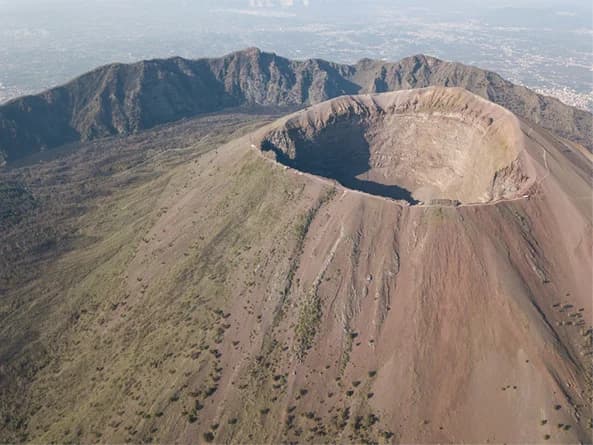
Mount Vesuvius doesn't look like a killer today. It looks peaceful, bathed in the hazy, soft morning light, but its shadow stretches long and heavy over the Campanian plains. We pull into the parking lot, the loud crunch of gravel under the heavy bus tires signaling our arrival. Stepping outside, the heat is immediate and absolute. It smells of dry, baked earth, old dust, and the faint, metallic tang of minerals baking in the sun.
There is a massive, winding queue at the entrance to the archaeological park, a line of tourists already baking under the relentless southern Italian sun. I feel a profound wave of relief as our guide, a deeply tanned local named Giuseppe with a booming voice, waves a stack of passes in the air. Because the skip-the-line tickets were folded into the cost of our journey, we bypass the wait entirely, stepping straight off the modern pavement and into the year 79 AD.
Walking into Pompeii is a visceral shock to the system. You expect a curated museum, but you get a ghost town stripped bare by nature. The ancient basalt paving stones are uneven and deeply grooved beneath my boots, worn down by thousands of years of heavy chariot wheels and sandals. Giuseppe speaks passionately, his voice carrying over the crunch of our footsteps, switching effortlessly between Spanish, English, and Portuguese to accommodate everyone in our small group. He points out the peeling frescoes in the luxurious villas, the deep Pompeian reds and rich ochres somehow surviving the suffocating ash that buried them.
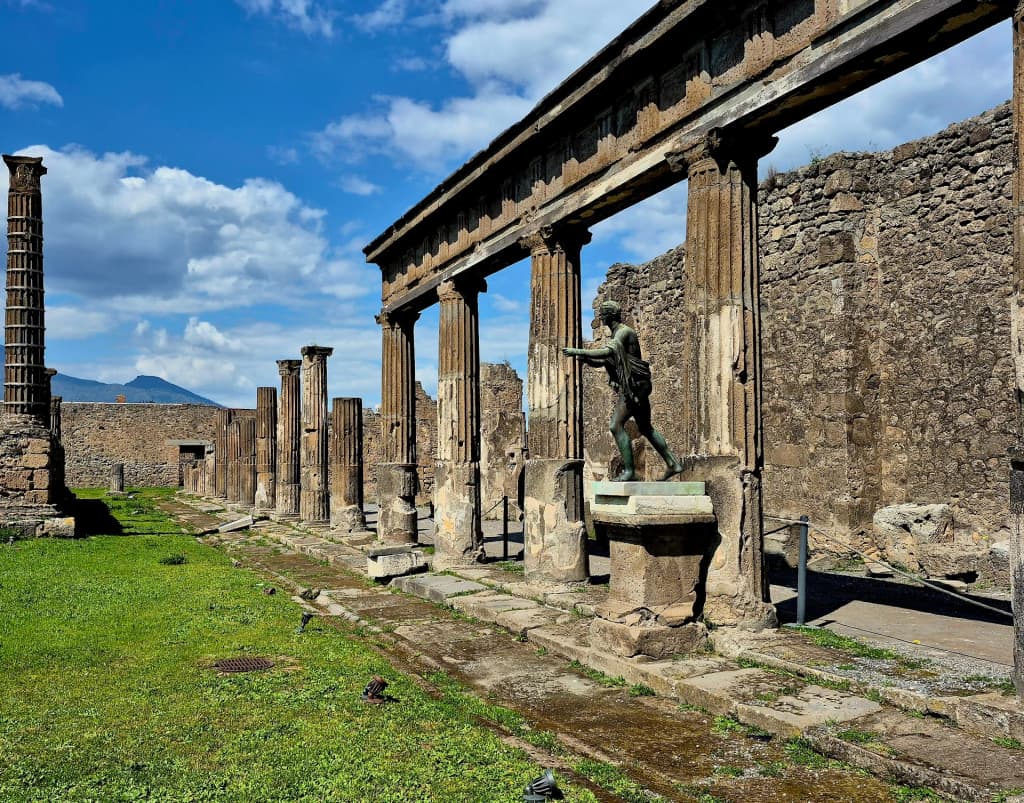
The air here feels incredibly heavy, thick with a profound silence that not even the constant chatter of passing tour groups can fully pierce. We walk for an hour and a half through the sprawling forum, stepping past the crumbling brick ovens of ancient bakeries and the grand, sweeping stone tiers of the theaters. The dust coats our ankles, a fine, pale powder that feels like ground history. Then, we reach the plaster casts.
They are huddled in glass cases, the exact negative spaces left by bodies buried under superheated volcanic ash. You can see the heavy folds of their tunics, the expressions of sheer terror, the way they curled into themselves or reached for loved ones in their final, suffocating moments. It is devastatingly intimate, a sudden intrusion into the most private and horrific moment of these ancient lives.
"It is heavy, no?" Giuseppe says softly, noticing me lingering by a cast of a family huddled together against a ruined wall.
"It feels like we shouldn't be looking at them," I admit, staring down at the rough volcanic dust coating my shoes. "Like we are intruding."
He nods slowly, his dark eyes scanning the ruined walls of the courtyard. "But if we do not look, they disappear entirely. We are keeping them alive by remembering. History is not always beautiful, my friend. Sometimes, it is just a warning."
By the time we leave Pompeii, my chest feels as heavy as the basalt stones we've been walking on. But Italy is a country of profound, dizzying contrasts, and the second half of our day is deliberately designed to pull us back into the light. We board the bus, brushing the ancient dust from our clothes, and drive further south toward the Gulf of Naples. The winding road hugs the coastline, and soon the claustrophobic, gray memory of the ancient city is replaced by the dazzling, impossible blue of the Mediterranean Sea.
Sorrento clings to the sheer limestone cliffs like a colorful afterthought, defying gravity and logic. As we step off the bus, the air here smells completely different—it is a heady, intoxicating mix of sea salt, blooming white jasmine, and the sharp, bright zest of giant Amalfi lemons warming in the afternoon sun. We are given an hour of free time to wander the narrow, winding alleys of the historic center.
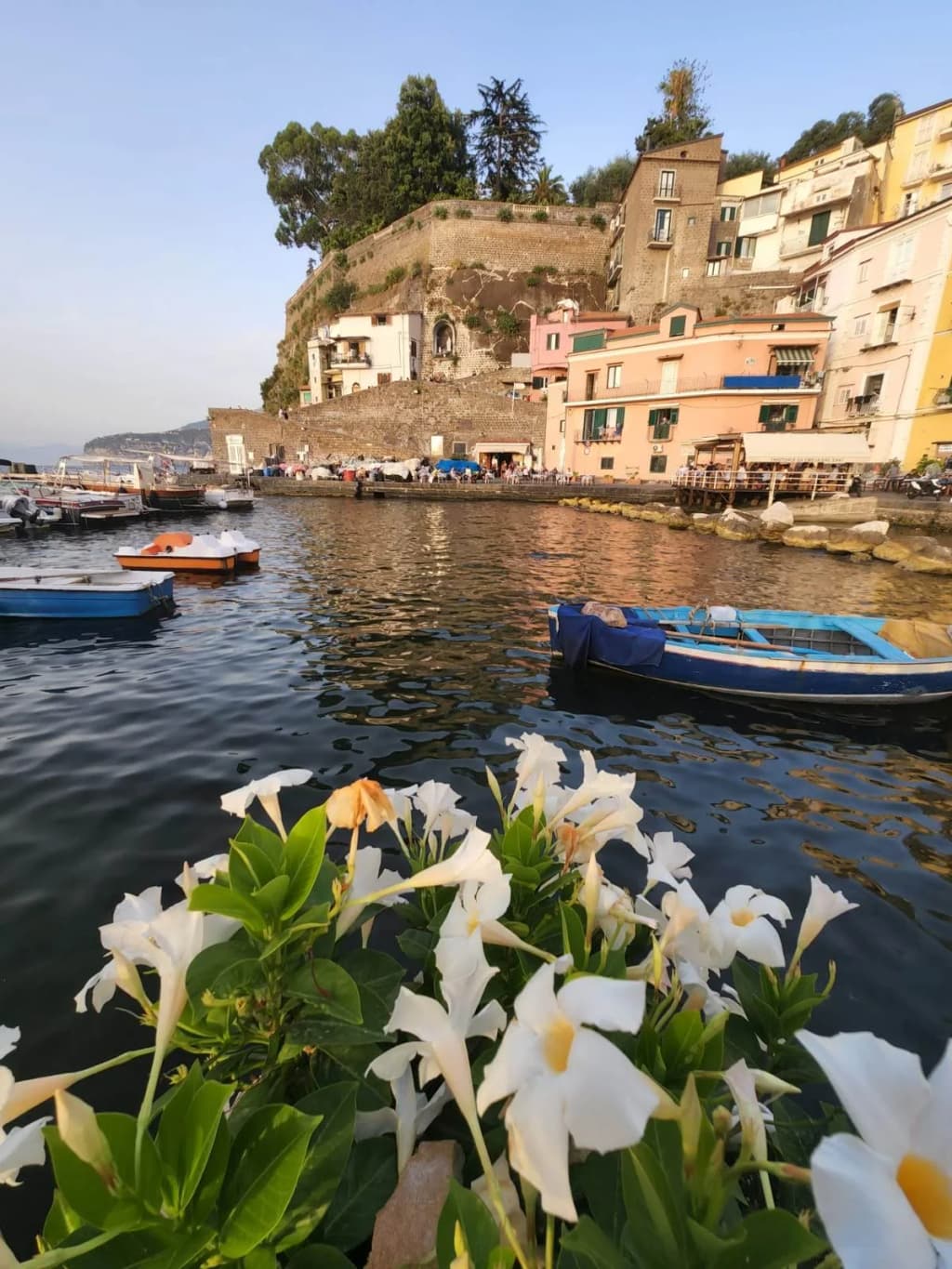
The town is a sensory overload in the best possible way. Bright, hand-painted ceramics spill out of shop doorways, catching and fracturing the afternoon sun. The sound of clinking wine glasses and boisterous Italian laughter drifts from the shaded patios of seaside trattorias. I wander away from the main square and duck into a small shop dedicated entirely to limoncello, the cramped walls lined from floor to ceiling with glowing yellow bottles that look like captured sunlight.
"You look like you need to taste the sun," the shopkeeper says. She is an older woman with deep laugh lines around her eyes and flour dusting her apron, holding out a tiny ceramic cup filled with a bright, opaque yellow liquid.
"After Pompeii, I think I do," I reply, taking the chilled cup from her hands.
She smiles, her English heavily accented but warm and inviting. "Then drink. The past is for learning, but Sorrento is for living."
The liquid is ice-cold, sharp, and brilliantly sweet, burning a pleasant trail down my throat. It tastes like pure summer. I thank her, buy a small bottle, and walk out to the edge of the public gardens, looking down at the turquoise water crashing against the jagged rocks far below. The profound contrast of the day settles over me. From the frozen, ashen silence of a city stopped in time, to the loud, sun-drenched beauty of the coast.
We board the bus as the sun begins to dip low over the water, painting the sky in bruised shades of purple, gold, and fiery orange. The drive back to Rome is quiet, almost meditative. Most of the group is asleep, lulled by the gentle rocking of the highway and the deep exhaustion of a day spent traveling across centuries. I watch the Italian countryside fade into darkness, thinking about the gray ash and the yellow lemons, the sudden tragedy of the past and the stubborn resilience of the present. It is a long, demanding journey, but as the distant, warm lights of Rome finally appear on the horizon, I know I wouldn't have spent this day any other way.
More Photos
More Adventures
 $45 - $125/day 3-4 days
 4 Days in Salvador: A Practical Itinerary & Budget Guide
Plan your trip to Salvador, Brazil with this strategic 4-day itinerary. Discover exact costs, Uber logistics, safety tips, and street food recommendations.
 $50 - $150/day 3-5 days
 Abu Dhabi Travel Guide: Skip Dubai for the Real UAE
Think Abu Dhabi is just Dubai's sleepy sibling? Think again. Discover the real UAE with authentic street food, bustling fish markets, and raw culture.
 $30 - $70/day 4-7 days
 Istanbul Unleashed: Master the Chaos and Devour the City
Skip the tourist traps. Master the chaos, devour authentic street food, and navigate the wild frontier of Europe and Asia with this bold Istanbul guide.
 $100 - $250/day 3-5 days
 How to Visit the Pantheon in Rome: New Ticket Rules Guide
Master the new Pantheon entry rules in Rome. Learn how to secure advance tickets, skip the massive queues, and perfectly time your 60-minute visit.