
San Andres Island: How to Escape the Tourist Traps
Skip the crowded duty-free malls. Here's how to actually experience the real San Andres Island, from quieter beaches to golf cart road trips.
Hey. Look, I'm going to shoot straight with you about San Andres. You've probably seen the drone shots on Instagram—the famous "Sea of Seven Colors," the white sand, the palm trees. It looks like absolute untouched Caribbean paradise.
But then you fly in, step out of the airport, and boom: you're hit with a wall of humidity, thousands of zooming scooters, and a main town that feels like a giant, chaotic duty-free shopping mall. A lot of travelers panic on day one. They wonder if they've made a huge mistake.
You haven't. You just need to know how to navigate it. The magic of San Andres is absolutely still there, you just have to work a tiny bit harder to find it than simply walking out of your resort lobby. Let's get into it.
El Centro & Spratt Bight (The Loud Part)
El Centro is the main town at the north end of the island. It's where 90% of the hotels are, where the clubs are, and where everyone goes to buy cheap liquor and perfume.
Bordering all of this is Spratt Bight, the main beach. Is it the prettiest beach? No. Is it the cleanest? Also no. But it's where everyone hangs out, and it has this undeniable, chaotic energy. You'll hear five different reggaeton tracks blasting from different speakers, locals hawking Coco Locos, and families just having the absolute best time.
It's fun for an afternoon of people-watching, but please, do not spend your entire vacation sitting on Spratt Bight. It's the equivalent of going to New York and only hanging out in Times Square. Get your bearings, grab a cheap beer, and then get ready to leave town.
Johnny Cay / Cayo Sucre (The Famous Spot)
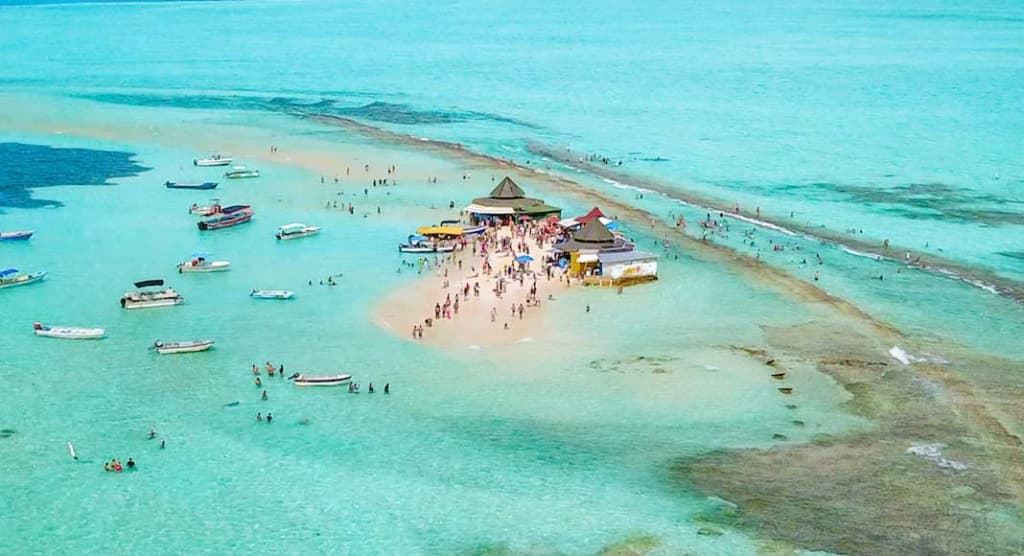
If you look out from Spratt Bight, you'll see a little island with a cluster of palm trees. That's Johnny Cay (also known as Cayo Sucre). It's the most famous day trip in San Andres.
Skip: The standard 10 AM group boat tour. You'll be herded onto a boat like cattle, dropped on the island right as 3,000 other people arrive, and you'll spend the whole day fighting for a square foot of sand while paying premium prices for mediocre fried fish.
Instead: Head down to the marina early (like, 8 AM early) and negotiate a private lancha (small boat) to take you over before the crowds hit, or go after 2 PM when the massive tour groups are packing up to leave. The island itself is actually stunning—you just need to catch it when it's breathing.
San Luis & The East Coast (The Chill Part)
Real talk: The main town is heavily influenced by mainland Colombia, but San Andres historically belongs to the Raizal people. They have their own culture, they speak an English-based Creole, and to see how people actually live here, you need to head south to San Luis.
San Luis is a neighborhood on the eastern side of the island, and it feels like stepping onto an entirely different planet. The concrete hotels disappear, replaced by traditional, brightly painted wooden Caribbean houses. The vibe slows way down. Reggae replaces reggaeton.
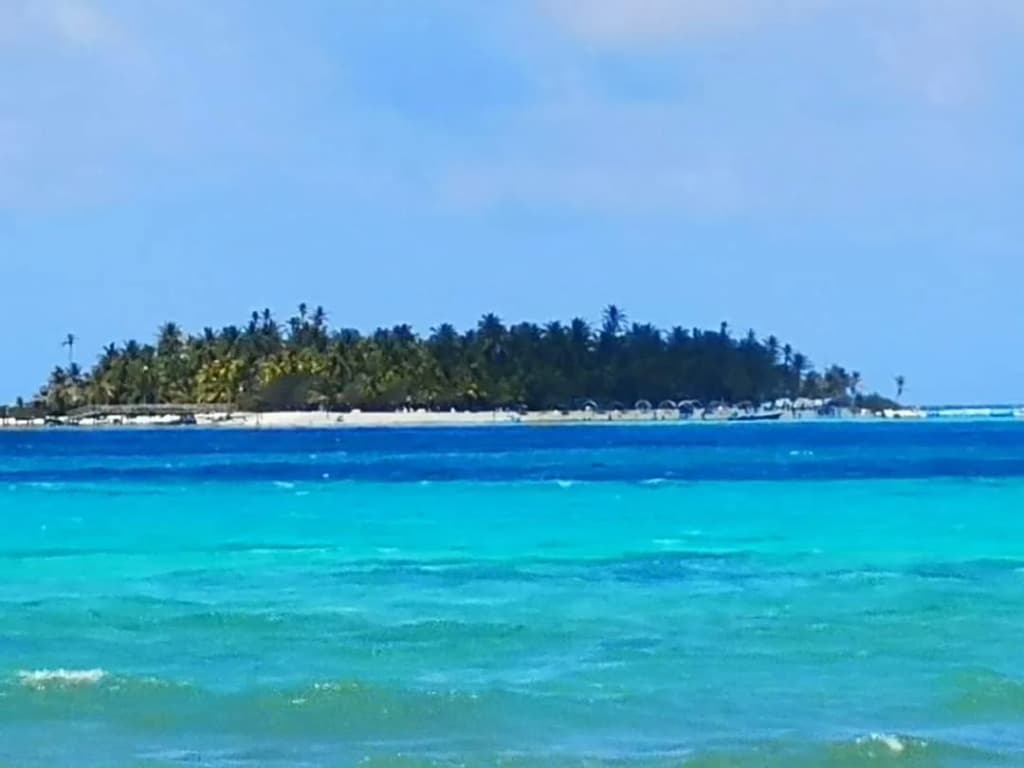
This is where you'll find Rocky Cay. It's a tiny little islet sitting off the coast, and the water is so shallow you can actually wade out to it from the main beach. The beach here is way better than Spratt Bight. Grab a spot at one of the local beach shacks, order a Rondón (a traditional Raizal stew made with fish, coconut milk, plantains, and dumplings that will knock you out for a nap), and just chill.
The West Coast (The Wild Part)
The west coast of San Andres doesn't really have sandy beaches. Instead, it's a rugged coastline of sharp coral and crashing waves, and it's low-key the best part of the island.
To do this right, you need to rent a "mula" (a golf cart). They rent them everywhere in El Centro. Yes, they're kind of pricey. Yes, they top out at about 15 miles per hour. But renting one and driving the loop around the island is non-negotiable.
Cruise down the west coast. Stop at La Piscinita or West View—they're basically natural swimming pools carved into the coral where you can cliff jump and snorkel. Will there be other tourists? Sure. But the water is impossibly clear, and you can literally buy bread from local kids to feed the swarms of tropical fish.
Drive until you find a random roadside shack playing music, pull your golf cart over, and watch the sunset with a cold Aguila beer. It's the ultimate San Andres experience.
The Logistics (What Nobody Tells You)
Let's get into the less glamorous stuff, because you need to know what you're walking into.
First, the tourist card. You have to buy a tourist entry card before you board your flight to San Andres. They sell them at the gate in Bogota, Medellin, or Cartagena. It costs about $30-$35 USD depending on the exchange rate. Keep this piece of paper like it's your passport, because if you lose it, they will make you buy another one to leave the island.
Second, the infrastructure. Look, San Andres is remote. The WiFi is notoriously terrible. Power outages happen. Fresh water is a precious commodity, so don't be surprised if your shower pressure is a little weak. Embrace the disconnection.
Finally, the traffic. The locals ride scooters like they're in a Mad Max movie. If you rent a golf cart or a moped, keep your head on a swivel, stay to the right, and let the locals pass you. Will Google Maps betray you when trying to find a specific restaurant in La Loma (the neighborhood on the big hill in the middle of the island)? 100%. Is getting slightly lost part of the charm? Absolutely.
If you only do one thing: Skip the all-inclusive resort buffet. Rent a golf cart for the day, grab a foam cooler, and drive the loop around the island. Stop at the west coast at sunset. Bring a cold Aguila beer. Trust me.
Catch you later.
More Photos
More Adventures
 $50 - $150/day 3-5 days
 Edge of the World: Surviving Brazil's Wildest Border
Forget the crowded beaches. Head to Amapá. Discover untouched Amazon jungle, wild river rapids, and the mind-bending border where Brazil meets Europe.
 $150 - $350/day 3-5 days
 Surviving the Juma Reserve: Piranhas, Predators, and Pitch-Black Waters
Ditch the resorts. Dive into the raw Amazon. Fish for piranhas, swim in murky depths, and spot caimans in the dark waters of the Juma Reserve.
 $75 - $250/day 7-14 days
 The Ultimate Month-by-Month International Travel Guide
Stop gambling with your PTO. Discover the exact best (and worst) international destinations for every month of the year to optimize budget and weather.
 $100 - $300/day 1-3 days
 Escape the Airport: Conquer Your Luanda Layover
Think a layover in Luanda means killing time at the airport? Think again. Discover the fortress, island sunsets, and the ultimate Angolan adventure.