
Leaving Pavement Behind: The Sand-Swept Soul of Jericoacoara
Explore the wind-sculpted beauty of Jericoacoara. Discover Lagoa do Paraíso, the accidental Buraco Azul, and the bare-foot charm of Brazil's sandy village.
The engine of the 4x4 groans as it bites into the deep, shifting sands. We are five hours removed from the concrete sprawl of Fortaleza, having departed at three in the morning under a heavy cover of darkness. Now, the asphalt simply vanishes, replaced by a sprawling canvas of white dunes and rugged, sun-baked scrub brush. I am intensely grateful I paid the thirty-real preservation tax online during the long highway stretch; the line at the Jijoca checkpoint stretches long and dusty under the relentless morning sun. Those who didn't plan ahead are standing in the glare, swatting at flies, while our driver shifts into low gear and plunges us deeper into the wild.
He navigates the unmarked, labyrinthine dirt tracks with the casual indifference of someone who reads the dunes like street signs. The East Side tour, a sprawling route that costs around two hundred reais, is the only practical way to decipher this landscape. The jolt and sway of the vehicle finally cease at the edge of Lagoa do Paraíso. The name—Paradise Lagoon—feels heavy-handed until you actually step out of the truck and feel the soft, powdery earth beneath your feet.
The water is a glassy expanse of pale turquoise, so clear you can count the ripples in the white sand beneath. Dotted along the shallows are the famous wooden posts suspending woven hammocks just inches above the water. I wade in, the cool water shocking my travel-weary legs back to life. The scent of charcoal smoke, garlic, and grilling fish drifts over from the sprawling waterfront restaurant. There is no rush here, just the gentle lapping of the lagoon and the distant splash of a kayak paddle. You can rent one for forty reais to glide across the surface for half an hour, but the true veteran move is simply claiming an empty hammock and letting the water lap at your back.
I wander back to the restaurant deck, where a waiter is already organizing the day's reservations.
"You want to order lunch now?" he asks, wiping down a wooden table.
"It's only nine in the morning," I say, laughing.
He doesn't smile, just taps his notepad. "This is your longest stop. By noon, everyone will want food at the exact same time. Order the fish now, swim, and it will be waiting for you."
I take his advice, a small surrender to the rhythm of the place.
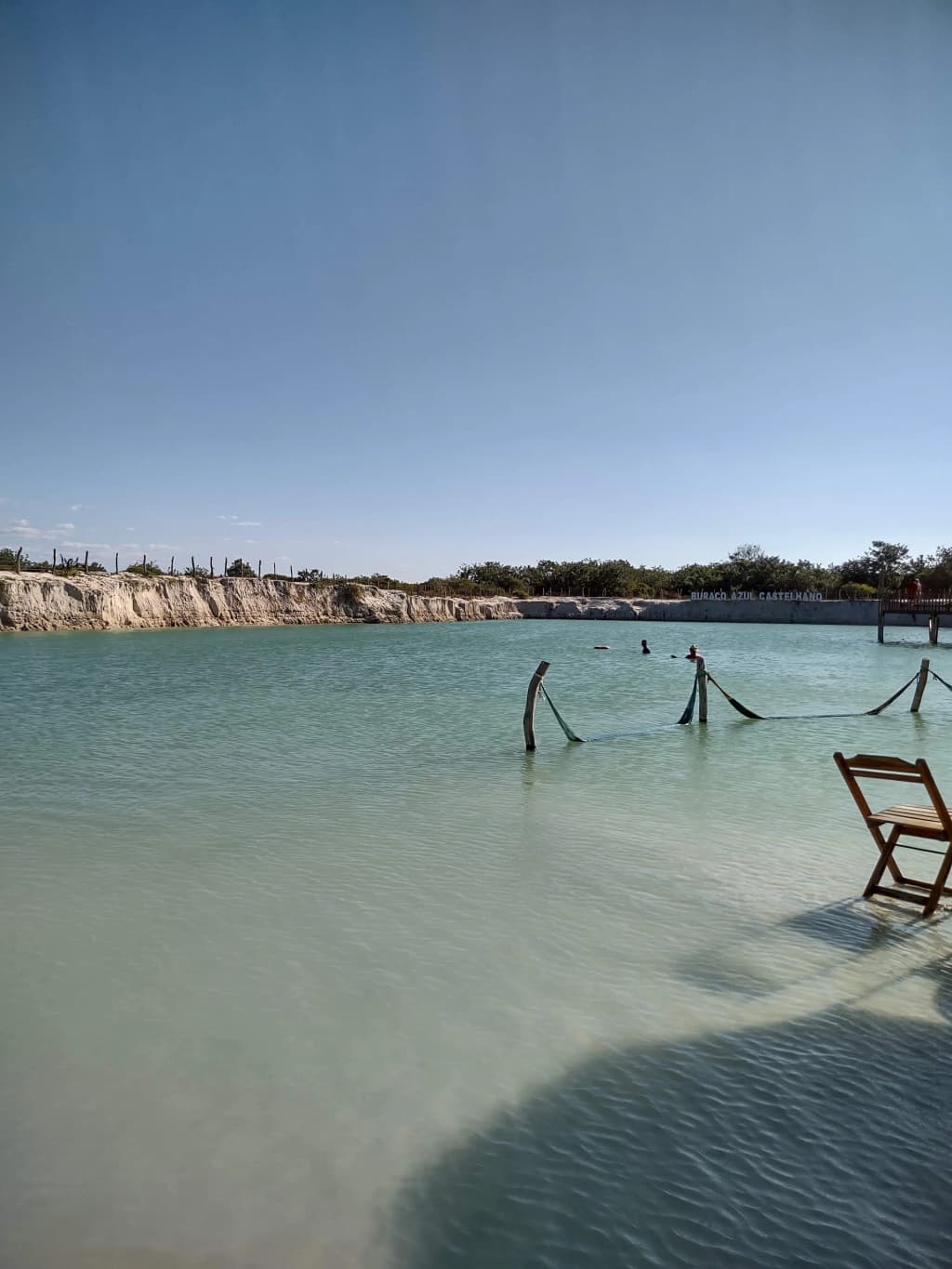
The landscape shifts dramatically as we push onward. The serene lagoons give way to harsher, wind-battered terrain. When we pull up to Buraco Azul—the Blue Hole—the color of the water is so violently cyan it looks artificial, like a melted blue popsicle poured into the red earth.
"It was just an excavation site for building materials," our driver tells me, leaning against the dusty hood of the Toyota as I stare down at the water. "Then the heavy rains came a few years ago. The water flooded the hole, mixed with the limestone in the soil, and stayed this color."
"A beautiful accident," I say, shielding my eyes from the glare off the water.
He laughs, a low rumble over the howling wind. "The best things in Jeri usually are. The landowner saw a flooded ditch and turned it into a goldmine."
At twenty reais, the entry fee feels like a small token for a swim in an accidental oasis. The water is deep and refreshing, a stark contrast to the arid dust surrounding it. We stay for an hour, floating in the vivid blue, before the wind drives us back to the truck.
That same relentless wind is the architect of our next stop: the Árvore da Preguiça. The "Sloth Tree" looks exactly as the name suggests—a weary mangrove completely bent over, resting its trunk along the sand. It hasn't fallen; it has simply yielded to the constant, heavy gales that sweep across the Ceará coastline. Standing next to it, the wind whips fine sand against my calves, a sharp, stinging reminder of the elements that govern this corner of Brazil.
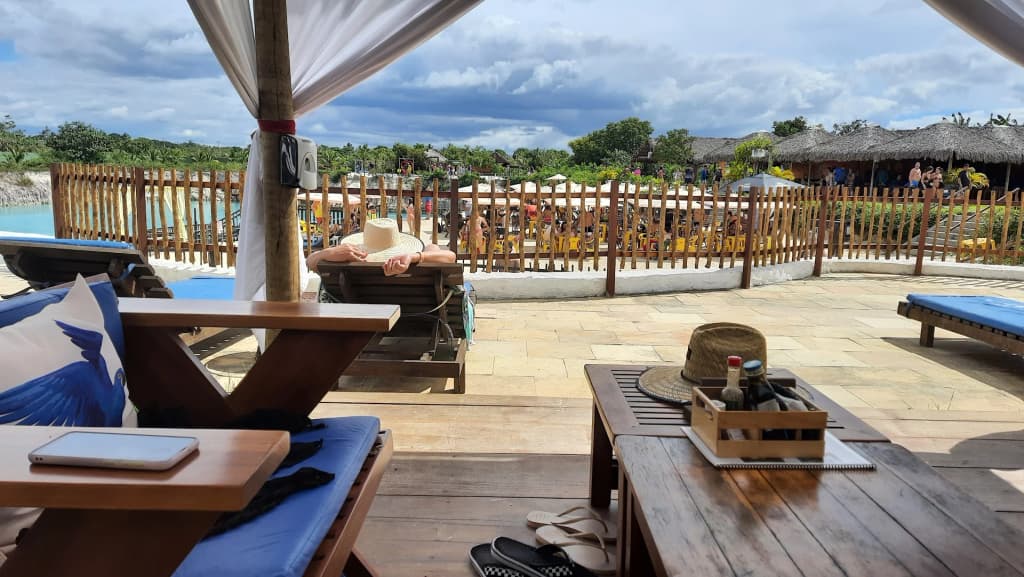
The sheer distance between these natural monuments means hours spent bouncing in the back of the 4x4. By the time we approach the trailhead for Pedra Furada—the iconic arched rock on the coast—the exhaustion of the 3 AM departure catches up with me. The guide offers the choice: hike the dusty trail to the rock, or head straight into the village to drop our bags. The allure of a hot shower wins. The rock will have to wait for tomorrow.
Arriving in the center of Jericoacoara is a sudden, jarring immersion into "pé na areia" culture. There is no pavement. None. The streets are literal extensions of the beach, deep drifts of soft white sand lined with low-slung buildings, colorful boutiques, and rustic pousadas. I step out of the truck and my sneakers immediately sink.
I watch a woman in an elegant evening dress casually carrying her high heels in one hand, navigating the sandy alleyway in bare feet. I quickly strip off my own socks and shoes, tossing them into my bag. For the next few days, a pair of simple flip-flops will be the absolute maximum footwear required. It is profoundly grounding, this forced physical connection to the earth beneath you.
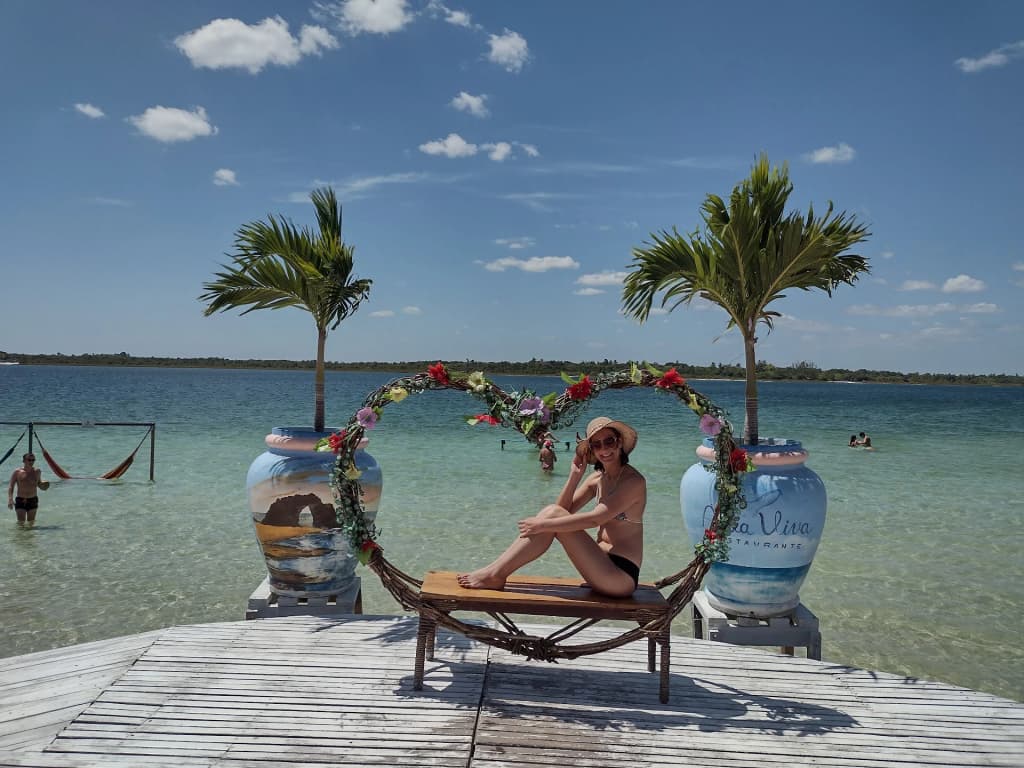
Late afternoon brings a mass migration. As the sun begins its descent, the entire village seems to wander toward the Duna do Pôr do Sol, the towering sand dune that flanks the ocean. The climb is a slow, burning trudge through deep sand. At the summit, the wind is ferocious.
Locals will tell you that the winds here roar continuously until December, making it a mecca for kite surfers but a slight nuisance for those trying to keep sand out of their cameras. If the gale-force breezes bother you, coming after January offers a calmer atmosphere. But right now, standing on the crest of the dune, the wind feels like an essential part of the wild magic. The sun melts into the ocean, casting the entire dune in deep, bruised shades of orange and violet.
When night falls, the village transforms. The sandy streets are lit only by the warm, amber glow of storefronts and low-hanging string lights. The atmosphere is intimate, almost like a secret coastal enclave that the rest of the world hasn't quite figured out how to pave over yet.
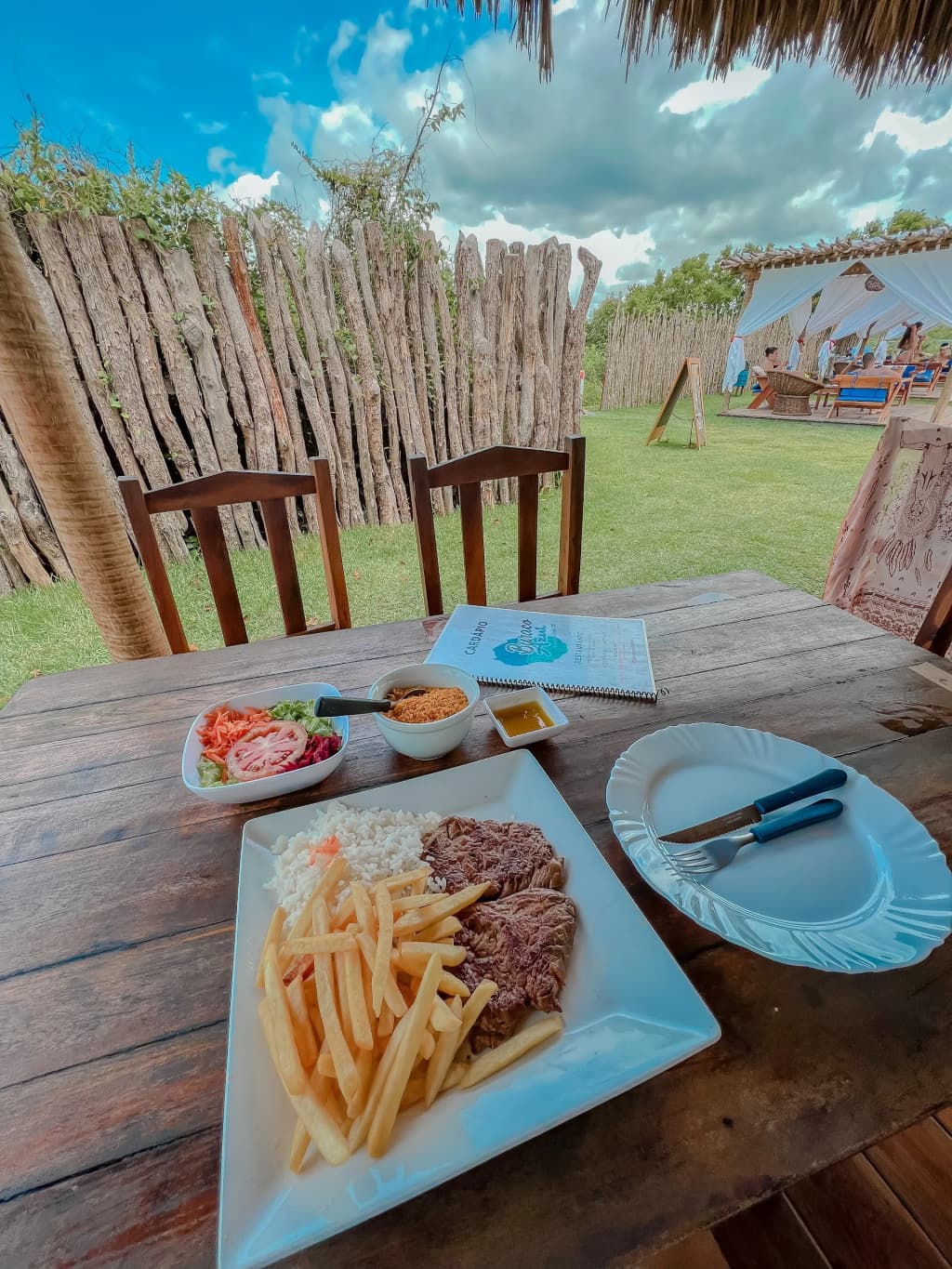
I find a table at Jerizando, a local restaurant tucked away off the main sandy thoroughfare. The menu is a love letter to the sea, offering incredible value in a town that can quickly become expensive. I order a moqueca, the rich, coconut-milk-laced fish stew bubbling in a clay pot. The scent of dendê oil, garlic, and fresh cilantro fills the night air. I take a bite, the complex, savory broth warming me from the inside out.
Sitting there, digging my bare toes deeper into the cool sand beneath the table, I realize that Jericoacoara’s true luxury isn't found in high-end resorts or exclusive tours. It’s found in the friction. The bumpy roads, the howling wind, the sand that gets into absolutely everything—it all forces you to slow down, to strip away the armor of modern travel, and to simply exist at the edge of the world.
More Photos
More Adventures
 $60 - $150/day 4-7 days
 Fortaleza Unleashed: The Ultimate High-Octane Coastal Guide
Skip the resort chairs. Discover Fortaleza's towering red cliffs, high-speed dune buggy rides, and relentless kitesurfing winds. Get ready to sweat.
 $50 - $150/day 1-3 days
 Conquer Canoa Quebrada: Buggies, Ziplines & Red Cliffs
Skip the lazy beach days. Discover the adrenaline-fueled shores of Canoa Quebrada with dune buggies, massive ziplines, and electric local night markets.
 $50 - $150/day 2-4 days
 Skip Fortaleza: Why Cumbuco is Brazil's Ultimate Playground
Ditch the crowded beaches. Cumbuco offers raw, wind-whipped adventure just outside Fortaleza. Discover jet skis, buggy tours, and world-class kitesurfing.
 $50 - $150/day 3-5 days
 Survive the Sun: Conquering Brazil's Wild Jericoacoara
Skip the tourist traps. Hike the rugged coast to Pedra Furada, party at Alchymist Beach Club, and feast at Na Casa Dela. Your Jericoacoara adventure guide.