
Concrete and Canvas: 3 Days Inside São Paulo's Rhythm
Experience São Paulo's sensory extremes, from the floating art of MASP and the aromatic Mercadão to a car-free Sunday on Avenida Paulista.
The heat radiates from the asphalt, thirty-two degrees of pure, unfiltered Brazilian sun. But nobody on Avenida Paulista seems to care. It is Sunday, and the city’s infamous traffic has been banished. In its place flows a rushing river of humanity. Skateboards clatter against the pavement, a DJ's bass thumps from a makeshift street-corner stage, and the sweet, charred scent of street food rises into the clear sky. I wipe a bead of sweat from my forehead and step into the current. This is São Paulo breathing out.
We find refuge from the midday glare at the Sesc viewpoint. Access requires a bit of foresight—you have to book your time slot on their app well in advance—but the effort dissolves the moment you step up to the glass. The city stretches out in an endless ocean of concrete and glass. We secure a small table and order a slice of sourdough toast piled high with pumpkin cream, cheese, and cilantro pesto. It costs barely anything, yet tastes like a revelation. The crunch of the crust, the earthy sweetness of the pumpkin, the distant hum of the avenue below. It is the perfect anchor before diving back into the madness.
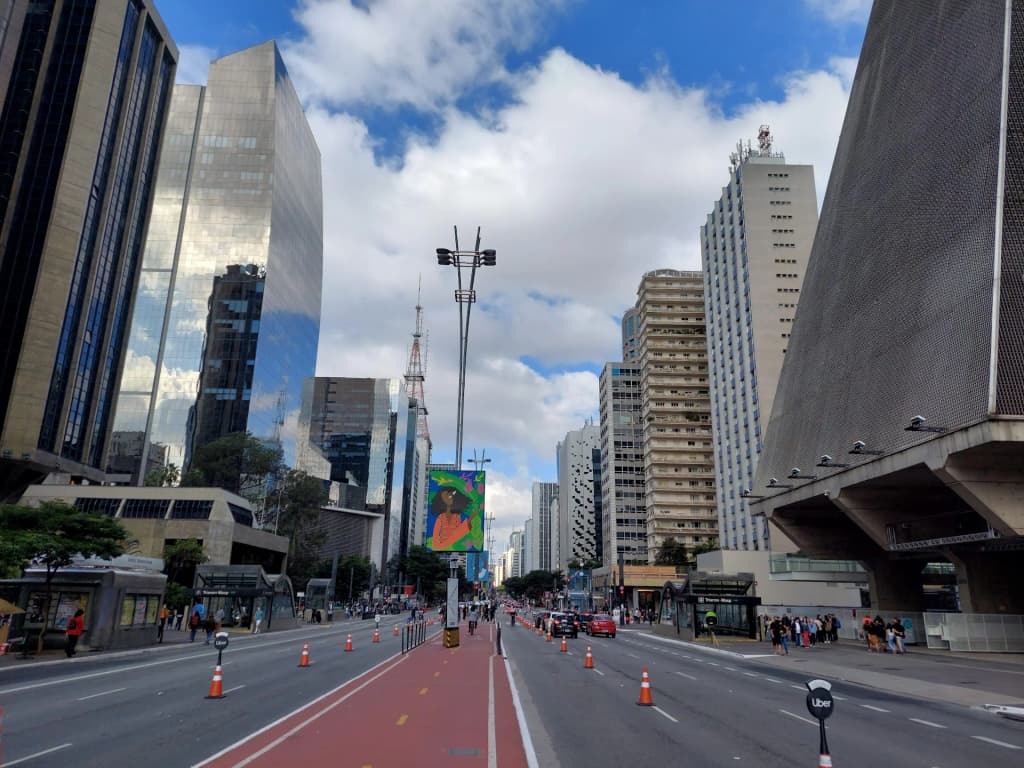
Walking down Paulista is an exercise in architectural whiplash. One moment you are standing before the Casa das Rosas, a preserved twentieth-century mansion where the scent of blooming roses hangs heavy in the humid air, and the next, you are staring at Japan House. Its minimalist facade is constructed entirely of imported Japanese wood, pieced together without a single nail. Inside, the air conditioning hits my skin like a sudden autumn breeze. The space is a sanctuary of silence and natural elements, offering a profound contrast to the kinetic energy just beyond its doors.
We drift down the avenue, keeping a watchful eye on our belongings. Locals had warned us to keep our phones tucked away, and despite the heavy police presence on nearly every corner, the unpredictable energy of the street demands respect. But the art here demands your attention. At the Itaú Cultural, we climb the famous Brasiliana staircase, its walls bursting with hand-painted flora and fauna from centuries past, cataloging a wilder Brazil before the lens of a camera ever existed.
The red concrete pillars of the Museum of Art of São Paulo, or MASP, dominate the skyline like a brutalist temple. Lina Bo Bardi’s architectural masterpiece suspends the entire building in the air, creating a massive, shaded plaza underneath where locals gather to escape the sun. We bypass the ticket line, having secured our passes online days ago—though I make a mental note that entry is entirely free on Tuesdays.
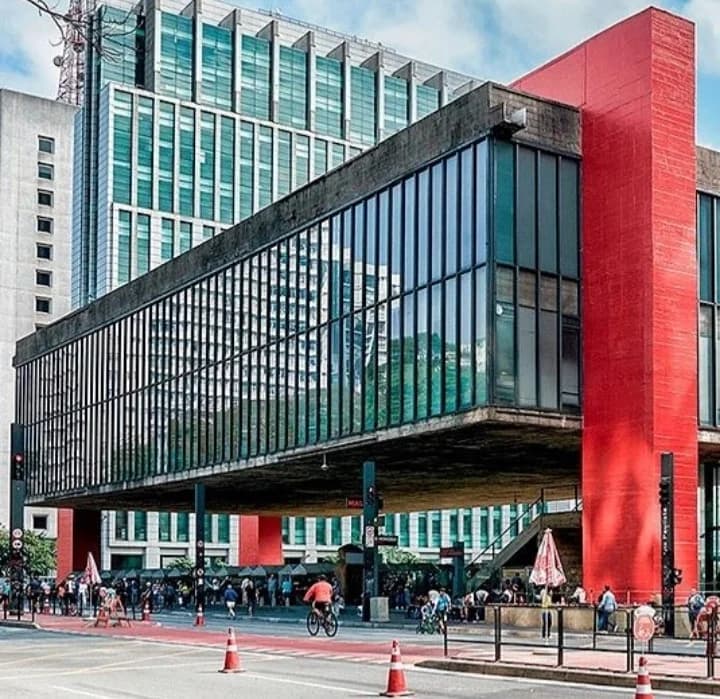
Security is tight. After a metal detector and bag check, we step into the main gallery. The visual impact is staggering. The walls are completely bare. Instead, works by Van Gogh, Monet, and Picasso are mounted on transparent glass easels fixed to the floor. The paintings appear to float in mid-air. I wander through the maze of floating canvases, occasionally brushing shoulders with other mesmerized visitors. It feels less like viewing a gallery and more like walking through a forest of suspended genius.
By the next morning, the concrete begins to feel heavy, so we seek out the city's sprawling green expanse. Ibirapuera Park spans over a million square meters, an oasis of manicured lawns, shimmering lakes, and modernist pavilions. We enter through Gate Four, drawn by the rows of rental bicycles. For eighteen reais an hour, we secure our bikes and join the steady stream of joggers and cyclists navigating the paved trails. The wind whips through my hair, offering a brief, glorious respite from the tropical heat.
Hunger eventually drives us to Bottega Bernacca, a charming Italian restaurant operating right inside the park. We sit on the covered terrace, the lush greenery framing our table. I order the Cacio e Pepe with bottarga.
"You've had bottarga before?" the waiter asks, pausing with his grater over my steaming bowl of pasta. "Never," I admit, watching the amber flakes fall. "But I trust you." He smiles, a warm, knowing expression. "It is the caviar of the sea. Strong, but you will not forget it. Enjoy."
He is right. The first bite is an explosion of sharp pecorino cheese, fiery black pepper, and the deeply savory, briny punch of the cured fish roe. The pasta is perfectly al dente, offering a satisfying resistance against my teeth. It is a masterpiece of a meal, eaten while watching the city slow down beneath the shade of ancient trees.
You cannot understand São Paulo without acknowledging its grit. We venture into the historic center, arriving at Praça da Sé. The Metropolitan Cathedral looms overhead, its neo-gothic spires piercing the sky. Right in front of it lies the Marco Zero, the geographic center from which all highways in the state are measured. Yet, the grandeur is tempered by a palpable sense of abandonment. Closed storefronts and a heavy transient population give the area a raw, edgy atmosphere. I keep my camera close to my chest, absorbing the heavy, complex reality of the city's core. We had hoped to visit the nearby Museu do Ipiranga and its surrounding independence gardens, but Mondays in São Paulo mean closed doors for nearly all museums.
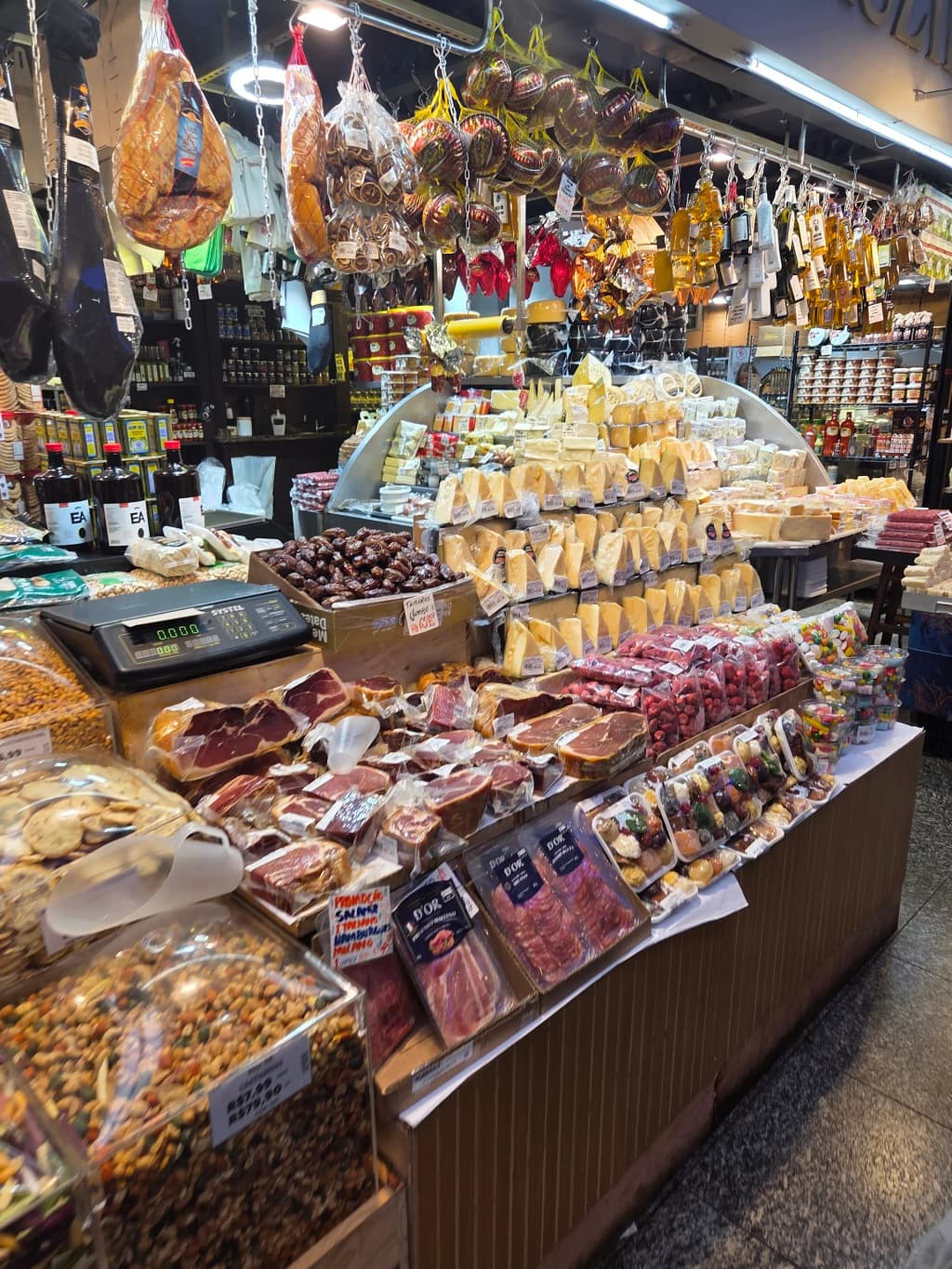
Instead, we dive into the sensory overload of the Mercado Municipal. The Mercadão is a cavernous hall of stained glass and shouting vendors. The air is thick with competing aromas: sweet tropical fruits, sharp aged cheeses, and the pungent, unmistakable scent of salted cod.
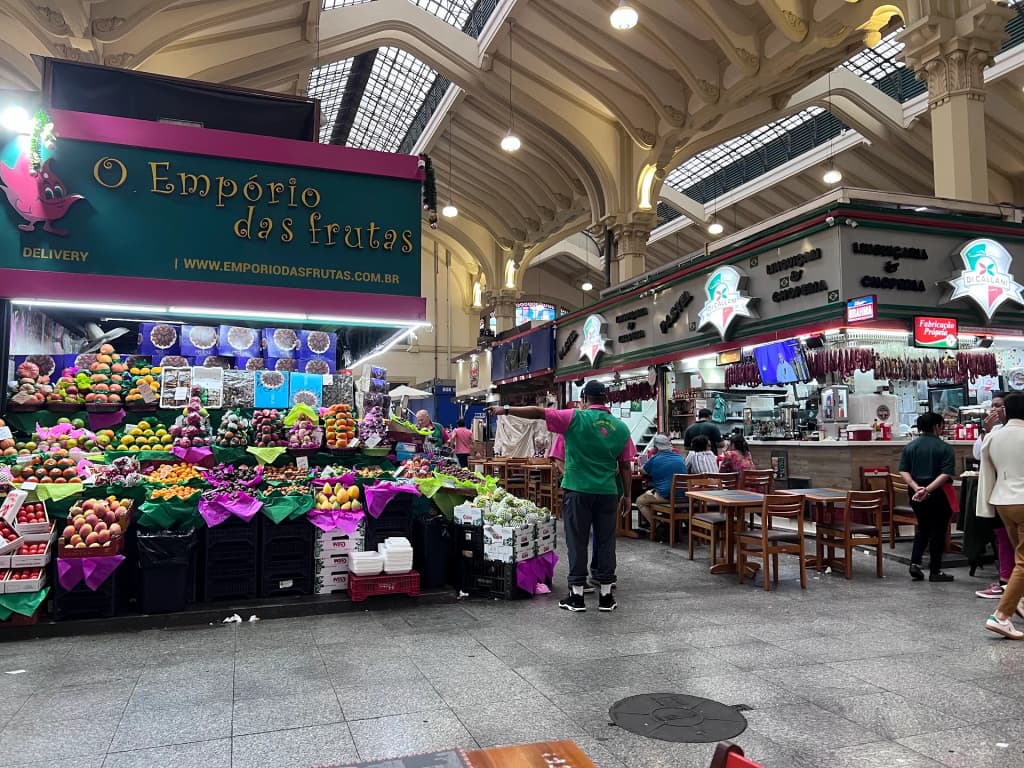
We navigate the crowded aisles, heading straight for the mezzanine. The mission is singular: the legendary mortadella sandwich at Hocca Bar. When it arrives, it is a towering, absurd mountain of thinly sliced, warm, smoked meat, oozing with melted provolone cheese, all barely contained within a crusty French roll. I take a bite. The crunch of the bread gives way to the rich, salty fat of the meat and the sharp tang of the cheese. It is messy, indulgent, and utterly perfect. We wash it down with bites of a golden, deep-fried cod pastel, its crispy shell shattering to reveal a steaming, flavorful filling.
Our final morning finds us in the sleek, manicured district of Faria Lima, the city’s modern financial heart. The contrast is jarring. Gone is the grit of the center and the bohemian pulse of Paulista. Here, towering glass skyscrapers reflect the morning sun, and the streets are lined with pristine trees. We sit down for breakfast at Ça-Va Café, slicing into perfectly flaky croissants and pain au chocolat that shatter into buttery shards on the plate.
I sip my coffee, the bitter roast cutting through the sweet pastry, and watch the city rush by outside the window. São Paulo is not a city that hands you its charm on a silver platter. It demands your energy, challenges your senses, and overwhelms you with its sheer scale. But if you lean into the noise, if you let yourself float among the suspended canvases and lose yourself in the chaotic markets, you find a rhythm that is impossible to replicate anywhere else. You don't just visit São Paulo. You survive it, you consume it, and eventually, you realize you don't want to leave.
More Photos
More Adventures
 $60 - $120/day 4-5 days
 Buenos Aires Itinerary: A Practical 5-Day Planning Guide
Plan the perfect Buenos Aires trip with this meticulous guide. Discover exact costs, walkable neighborhood routes, and budget optimization tips for Argentina.
 $40 - $100/day 3-5 days
 Skip Rio: Why Brazil's Smallest State is Your Next Big Adventure
Forget the massive crowds. Dive into Sergipe, Brazil's smallest state, for raw wildlife, UNESCO heritage, and mind-blowing untold culinary history.
 $50 - $120/day 2-4 days
 Into the Sertão: Outlaws, Canyons, and the Real Brazil
Skip the crowded beaches. Dive into Brazil's Sertão to explore the emerald Xingó Canyons, hike the unforgiving Caatinga, and trace the footsteps of outlaws.
 $40 - $90/day 2-4 days
 Skip the Beach: The Ultimate Itabaiana Road Trip
Trade the beach for the rugged heart of Sergipe. Discover wood-fired sweets, sustainable cashew co-ops, and rescued birds of prey in Itabaiana.