
Sardinia: A Study in Emerald and Living Stone
Beyond the superyachts of Porto Cervo lies a Sardinia of ancient stone and Catalan history. A curated guide to the Costa Smeralda, La Maddalena, and beyond.
There is a scent in Sardinia that defies bottling—a heady, herbaceous collision of myrtle, sun-baked granite, and the saline sharpness of the Mediterranean. It greets you the moment you step onto the tarmac and lingers long after you depart. To view this island merely as Italy’s beach playground is to misunderstand its character entirely. Sardinia is a continent unto itself, a place of visceral contrasts where the manicured luxury of the Costa Smeralda sits in fascinating tension with a wild, prehistoric interior that feels utterly indifferent to the passage of time.
From the wind-sculpted cliffs of Cala Luna to the yacht-lined quays of Porto Cervo, this is a destination that demands engagement. It is not for the passive observer. It is for those who understand that true luxury lies not just in the thread count of the linens, but in the exclusivity of the experience—in the silence of a private cove at dawn, or the taste of a wine produced from vines that struggle against the salt air.
Defined by Design: The Costa Smeralda
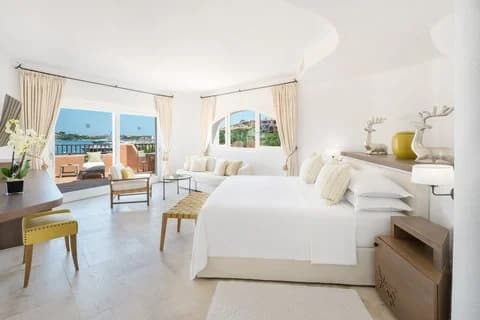
In the 1960s, Prince Karim Aga Khan IV looked upon a stretch of wild, granite coastline in the northeast and saw a canvas. What emerged was the Costa Smeralda—twenty kilometers of coastline that redefined Mediterranean glamour. Yet, what makes this region exceptional is not the glitz, but the restraint. The architecture here does not compete with nature; it bows to it. Architects like Jacques Couëlle and Luigi Vietti designed low-slung villas that disappear into the maquis, carved from the very rock that defines the island.
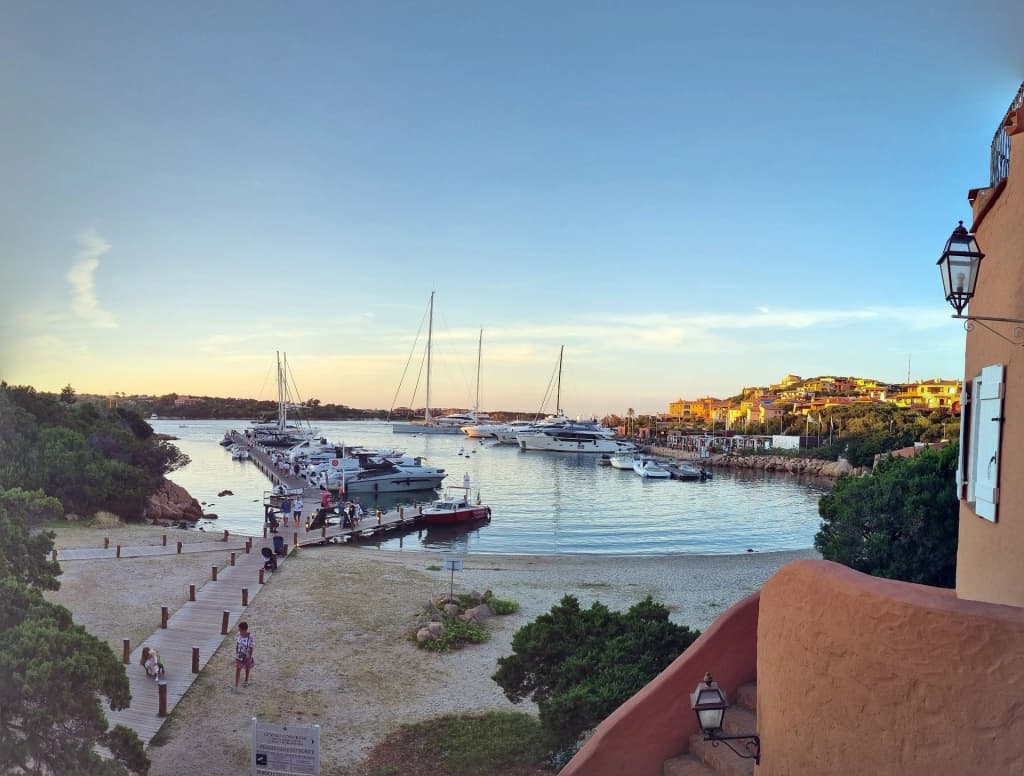
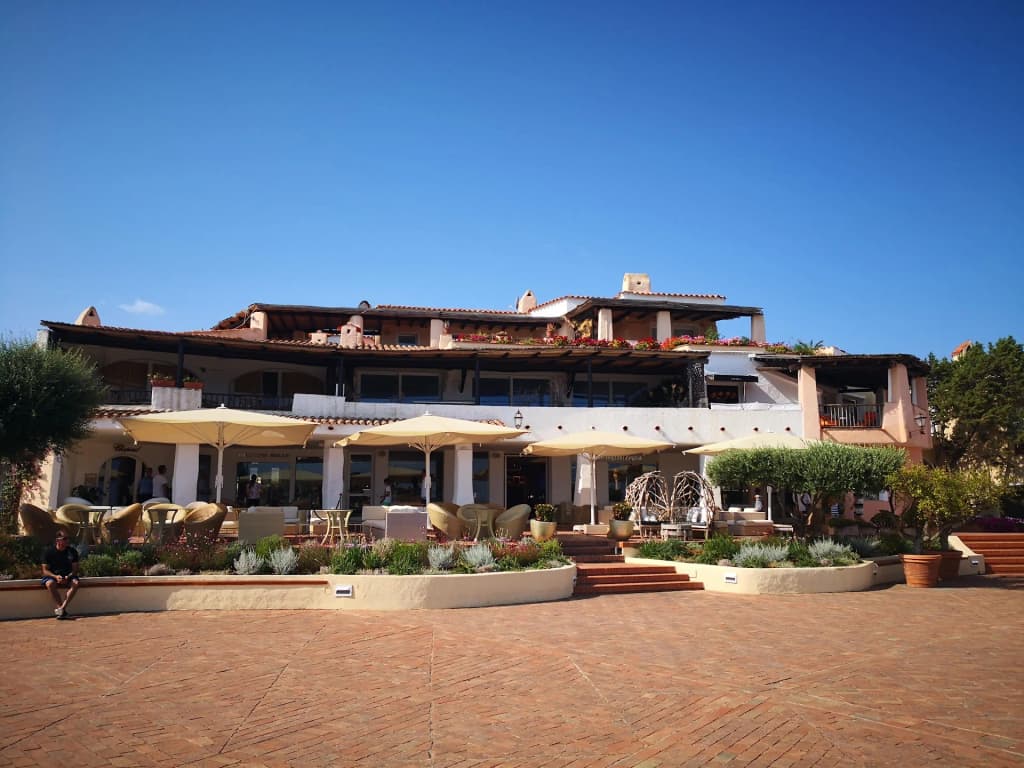
Porto Cervo serves as the beating heart of this experiment. While it functions as a stage for the global elite—a place where the promenade serves as an impromptu runway—the discerning eye will appreciate the village’s layout, designed to mimic the organic complexity of a traditional fishing hamlet. It is a labyrinth of high-end boutiques and terraces, yes, but it is also a masterclass in urban planning.
For those seeking the quintessential Costa Smeralda experience, the beaches of Principe and Liscia Ruja offer sands of impossible whiteness. However, the true insider knows that the magic lies in the quiet coves accessible only by water. It is an environment of profound tranquility, interrupted only by the chime of halyards against masts.
Sanctuary in the Archipelago
Just off the coast, the La Maddalena Archipelago offers a different frequency of silence. Comprising seven main islands and countless islets, this national park is a UNESCO World Heritage site that merits serious attention. The water here possesses a clarity that rivals the Maldives, shifting from turquoise to deep indigo, a spectrum of blues that feels almost surreal.
While the main island of La Maddalena buzzes with life, the true allure lies in the uninhabited reaches of Spargi and Budelli. The latter, famous for its Spiaggia Rosa (Pink Beach), is a protected sanctuary where nature is allowed to breathe. Access is strictly regulated to preserve the microscopic coral fragments that give the sand its hue. To sail through these waters is to navigate a world stripped of the superfluous. It is elemental, raw, and utterly captivating.
Cities of Stone and Salt
Sardinia’s cities are palimpsests of conquest, wearing their history in layers of stone. Cagliari, the capital in the south, is a vertical city. The historic Castello district sits high above the sea, a maze of medieval alleyways and sun-bleached piazzas. The discerning traveler will spend a morning at the San Benedetto market—a riot of sensory input—before retreating to the Molentargius park to witness the surreal tableau of pink flamingos against the skyline.
To the northwest lies Alghero, a city that dreams in Catalan. Known as "Barceloneta," its heritage is preserved in the language, the gothic architecture, and the formidable sea walls that have guarded the city for centuries. Walking the ramparts at sunset, with the amber light hitting the Cathedral of Santa Maria, one feels the heavy, romantic weight of history. It is a place of profound character, where the rough-hewn cobblestones tell stories of resilience.
The Architecture of Nature
For those willing to trade comfort for awe, the eastern coast offers the island’s most dramatic landscapes. Cala Luna and Cala Goloritzé are not merely beaches; they are cathedrals of limestone. Accessing Cala Goloritzé requires a trek of an hour—a pilgrimage through a canyon of ancient oaks and white rock. The effort ensures that the crowds remain thin, preserving the sanctity of the place. The beach itself, dominated by a towering stone arch and the famous needle rock, feels like the edge of the world.
On the western coast, the town of Bosa offers a colorful counterpoint. Situated on the banks of the Temo River, its pastel-colored houses stack up the hillside toward the Malaspina Castle. It is intimate, authentic, and famous for its Malvasia wine—a golden nectar that tastes of apricots and the sea. Nearby, Sant'Antioco provides a glimpse into a slower, more traditional way of life, where the sea is not a backdrop for leisure, but the source of life itself.
The Details
Logistics While the island is expansive, renting a car is non-negotiable for those who wish to escape the resort perimeter. However, for the archipelago and the hidden coves of the Gulf of Orosei, a private charter is the only civilized way to travel. I recommend a gommone (rigid inflatable boat) with a skipper for the day to access the shallowest, most brilliant pools.
Dining Sardinian cuisine is a distinct entity from Italian. Seek out agriturismos like Su Gologone for the authentic porceddu (roast suckling pig) served near the open fire. In Porto Cervo, the dining is international and refined; reservations are essential, often weeks in advance for prime sunset tables at places like Il Pescatore.
When to Go The discerning traveler avoids August entirely. The heat is oppressive and the crowds detract from the majesty of the landscape. Late May, June, and September offer the perfect balance of warm waters and solitude. The light in late September is particularly golden, ideal for photography.
Sardinia is an investment—of time, of money, and of spirit. But for those who engage with it on its own terms, it offers a richness that is increasingly rare in the modern world.
More Photos
More Adventures
 $40 - $150/day 20-30 days
 Conquer Thailand: The Ultimate 20-Day Blueprint
Skip the tourist traps. Grab your backpack. This is your high-energy, no-BS guide to dominating Thailand in 20 days. Get ready to sweat.
 $100 - $350/day 5-7 days
 Ditch Your Shoes: The Ultimate Jericoacoara Adventure Guide
Skip the tourist traps. Rent an ATV, dive into Buraco Azul, and taste the wild side of Jericoacoara. Your ultimate adventure guide to Brazil's sandy paradise.
 $100 - $350/day 2-4 days
 Conquer Lima: The Ultimate Peru Coastal Capital Guide
Think Lima is just a stopover? Think again. Experience Miraflores cliffside views, pre-Inca history, and the best culinary scene in South America.
 $80 - $200/day 3-7 days
 Skip the Resorts: The Raw, Unfiltered Algarve Coastline
Forget lazy beach days. Hike rock tunnels, brave freezing waters, and explore secret caves along the rugged edge of Portugal's Algarve coast.