
Sunrise Over Marrakech: Senses, Stories, and the Red City
From the call of birds in Palmerai to the hum of Medina, Marrakech is a city of color, ritual, and surprise. Join me for a sensory journey through its heart.
The birds are louder than the city. That’s the first surprise. I stand on the terrace of our hotel in Palmerai, the early sun painting the walls a soft, impossible pink, and the air is thick with the sound of a hundred feathered voices. Somewhere below, a fountain gurgles. The scent of orange blossom drifts up, mingling with the faintest trace of mint tea. My fingers brush the cool, carved stone of the balustrade. “Listen,” my sister-in-law whispers, “it’s like an orchestra.”
We are in Marrakech for the first time, a short flight from Portugal but a world away. The hotel is a small oasis, all tiled courtyards and heavy wooden doors, each room a different color, a different mood. My own is washed in gold, sunlight pouring through the windows. There’s a plate of coconut sweets on the table—beijinhos, as we call them in Brazil. I bite into one, the sugar melting on my tongue, and laugh as my nephew tries to steal another. “Gostei,” he grins, mouth full.
At breakfast, the ritual is as important as the food. Dates, a soft-boiled egg, a bowl of warm, milky soup. “You eat the date first, for sweetness,” the waiter explains, “then the soup, then the egg.” The flavors are gentle, almost shy. Mint tea arrives in a silver pot, poured high so it foams. “You must never refuse mint tea,” our guide says, “it’s a sign of friendship.”
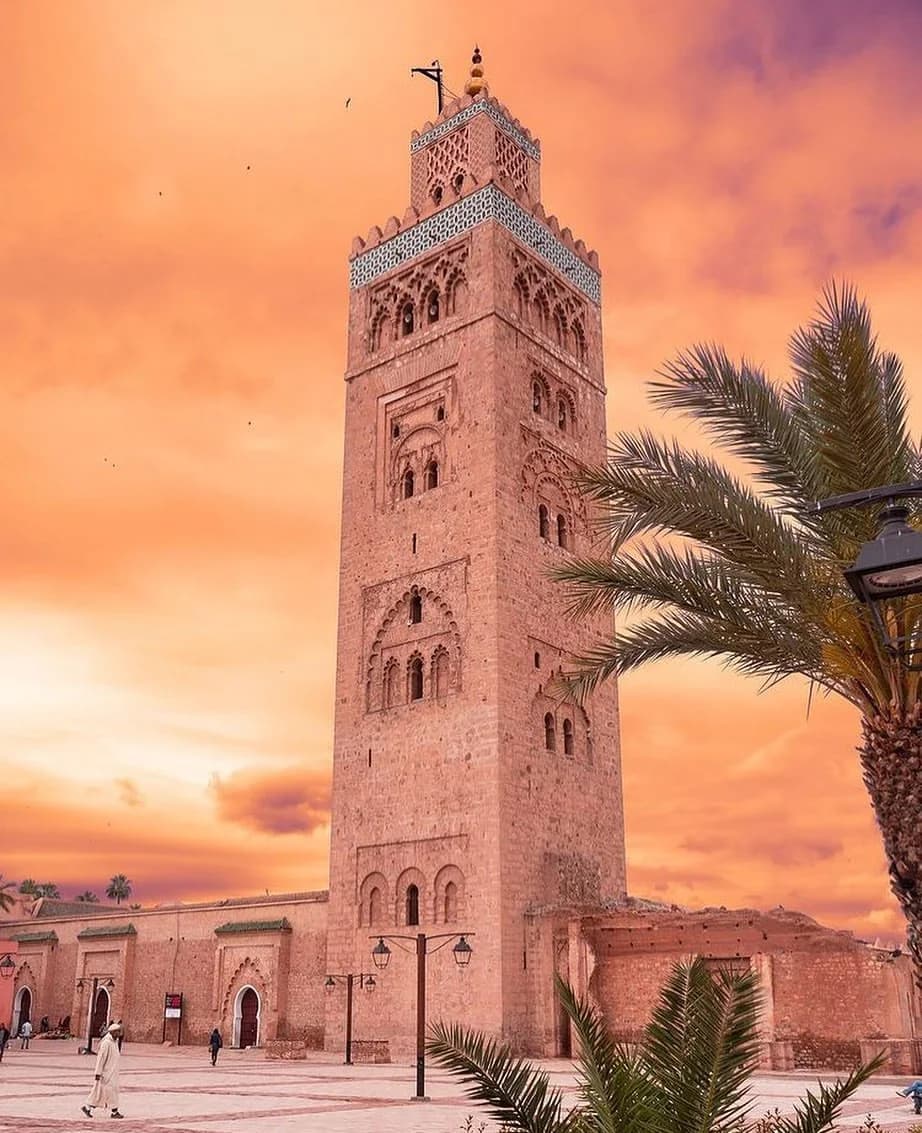
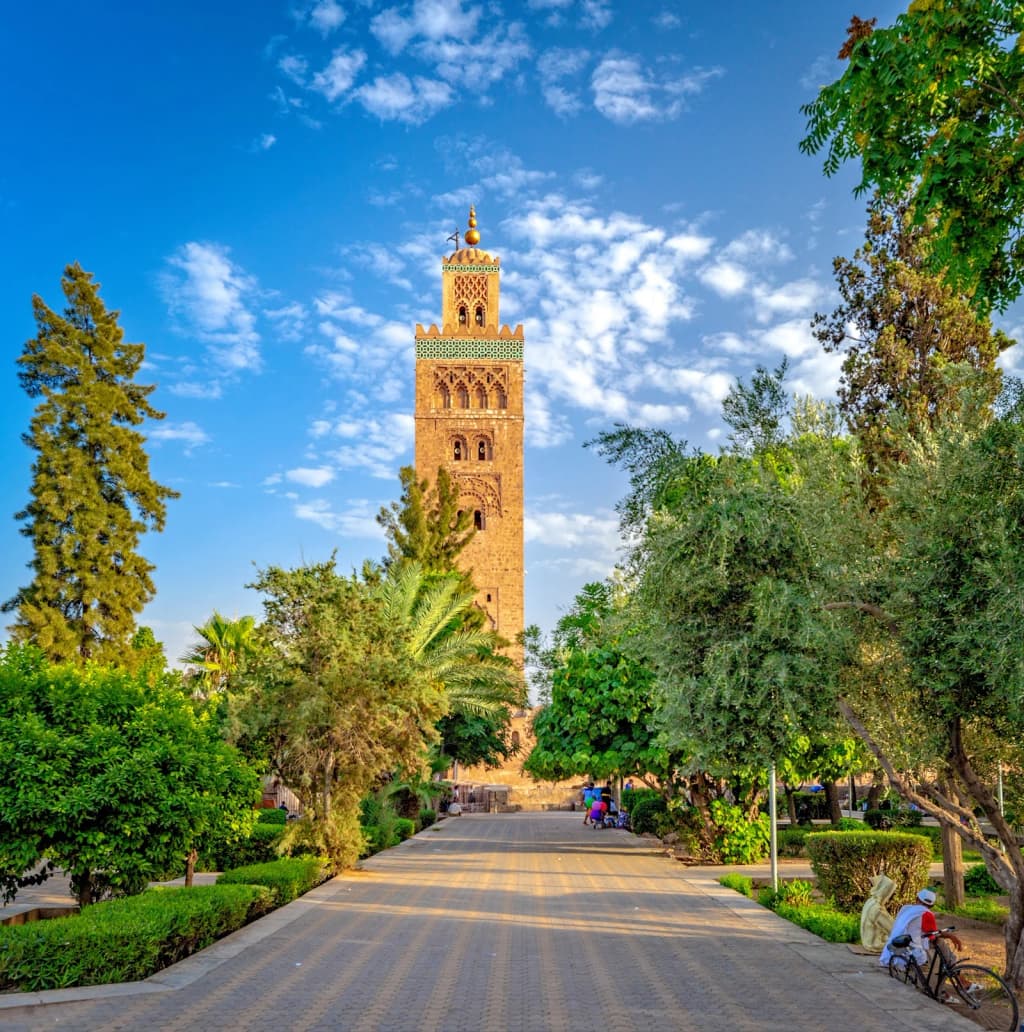
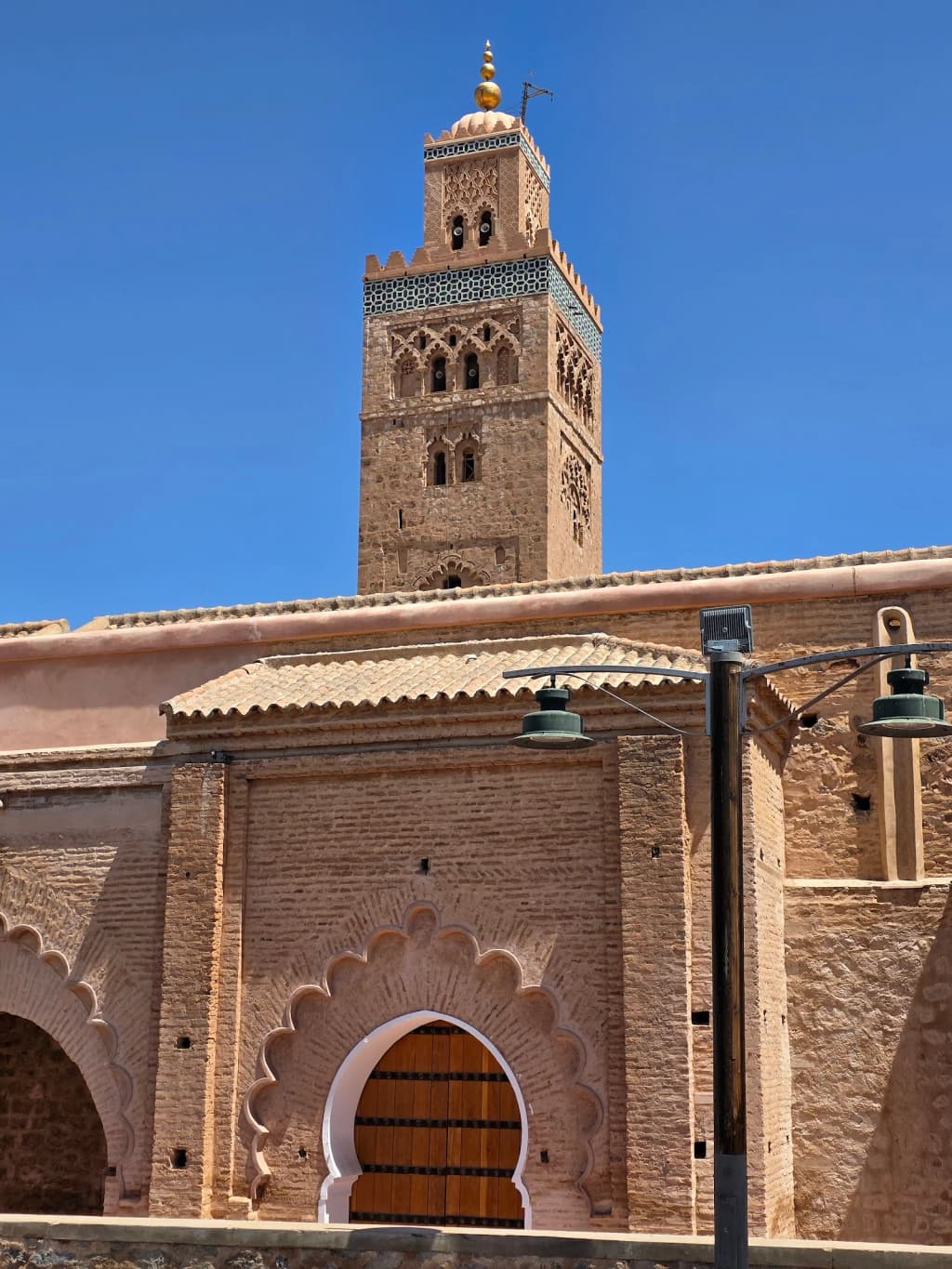
The city outside is waking up. We pile into a van, laughter bouncing off the windows, and head for the Medina. The old city is a labyrinth of narrow lanes, ochre walls, and the constant, thrilling chaos of scooters, donkeys, and people. The Koutoubia Mosque rises above it all, its minaret a beacon since the 12th century. “You can see it from anywhere,” our guide says, pride in his voice. “It’s the heart of Marrakech.”
We dodge motorcycles and slip through ancient doorways into riads—hidden gardens, cool and green, where the noise of the city falls away. “Riad means garden,” my sister-in-law tells me, running her hand over a mosaic fountain. “It’s like stepping into another world.”
The souks are a riot of color and sound. Spices piled in pyramids, leather slippers in every shade, the sharp tang of tanned hides and the sweetness of rosewater. Cats dart between stalls. “You must bargain,” a shopkeeper laughs, pressing a brass lamp into my hands. “If you don’t, you haven’t really shopped.”
We emerge into Jemaa el-Fnaa, the city’s great square, alive with snake charmers, orange juice vendors, and the hypnotic beat of drums. The air is thick with smoke from grills, the scent of cumin and lamb. “This is the real Marrakech,” our guide says, gesturing at the swirl of people. “It’s always changing, always alive.”
Before dawn, we drive out to the edge of the city. The desert is still, the sky a deep indigo. Hot air balloons wait, their colors ghostly in the half-light. We sip sweet coffee in a canvas tent, hands wrapped around the warmth. “Ready?” the pilot grins, and suddenly we are rising, the ground falling away, the city unfurling beneath us in shades of red and gold.
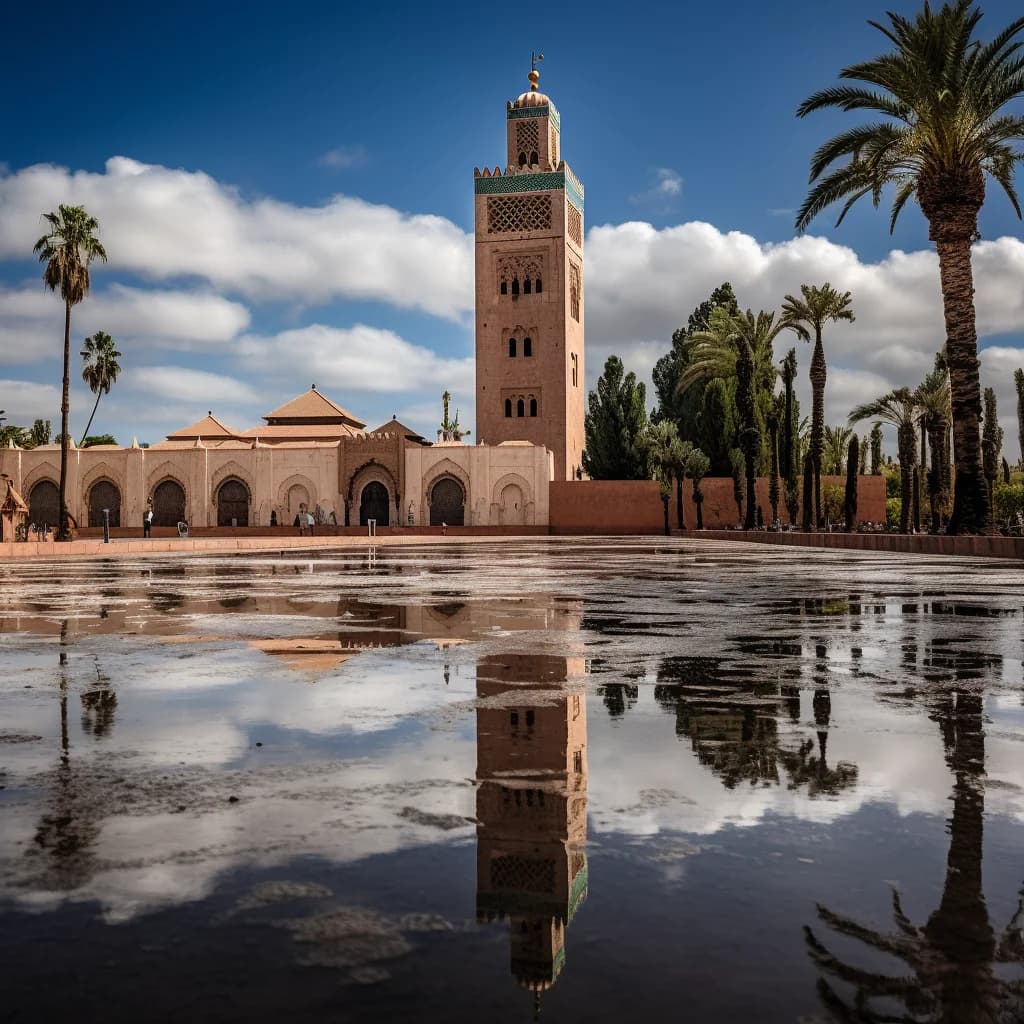
“Look,” my brother says, pointing. The Koutoubia’s minaret glows in the morning light, the Medina a patchwork of rooftops. I feel the wind on my face, the hush of altitude. The pilot hands me a certificate, my name written in looping Arabic script. “For luck,” he says.
Lunch is in a palace of gardens and fountains, the kind of place where time slows. We eat under olive trees, laughter echoing off marble. The food is meant for sharing—tagines fragrant with saffron and preserved lemon, couscous as light as air. “You must come back,” the waiter insists, “next time, bring more friends.”
Evenings are for music and stories. One night, we dine in a riad, the pool reflecting lantern light, the air thick with the scent of jasmine. Musicians play, dancers whirl, and the food keeps coming—spiced lamb, sweet pastries, endless mint tea. “No diets on holiday,” my sister-in-law laughs, piling my plate high. I don’t protest.
On our last night, we find ourselves in a smaller hotel, more home than palace, the kind of place where the owner greets you by name. The décor is heavy with velvet and brass, a little French, a little Berber. “You like Marrakech?” he asks, pouring another glass of wine. “Very much,” I say, and I mean it.
Marrakech is a city of rituals—tea poured high, bargaining in the souks, the call to prayer echoing at sunset. It is a city of color, of gardens hidden behind plain doors, of laughter and music and the constant, surprising kindness of strangers. I leave with the taste of mint on my tongue, the sound of birds in my ears, and the feeling that I have only just begun to understand the heart of the Red City.
More Adventures
 $100 - $300/day 1-3 days
 Escape the Airport: Conquer Your Luanda Layover
Think a layover in Luanda means killing time at the airport? Think again. Discover the fortress, island sunsets, and the ultimate Angolan adventure.
 $150 - $300/day 1-2 days
 Conquer Epcot: The Ultimate High-Speed Global Gauntlet
Think Epcot is a slow stroll? Think again. It's a high-speed, globe-trotting gauntlet. Hack the rides, taste the world, and push your limits in Orlando.
 $120 - $350/day 2-3 days
 Disneyland Paris Strategy: Ride Hacks & Coaster Secrets
Think you know Disney? Think again. Discover the underground secrets, massive coasters, and insider hacks to conquer Disneyland Paris like a pro.
 $100 - $250/day 3-7 days
 Beyond the Turnstiles: An Orlando Summer Sabbatical
Escape the Orlando theme park crowds and discover the sensory magic of Celebration, the Mall at Millenia, and the neon-soaked shores of Universal CityWalk.