
Surviving Chernobyl: Why the Invisible Threat is the Deadliest
Think you understand danger? Step into the Chernobyl Exclusion Zone. Discover why the invisible threat of radiation makes this the ultimate travel challenge.
Think you understand danger? Think again. Welcome to the Chernobyl Exclusion Zone.
This isn't your typical adventure. The threat here isn't a crumbling bridge or a wild predator. It is entirely invisible.
You step off the heavily regulated tour bus. The air feels completely normal. The sprawling ruins of Pripyat look quiet and frozen in time.
But your dosimeter tells a violently different story. That frantic clicking sound? It's your only lifeline.
Crossing the Line
Getting here isn't a walk in the park. You don't just wander in. You pass through heavily guarded military checkpoints.
Passport checks. Strict dress codes. Long sleeves and closed-toe shoes only.
The military guards aren't smiling. They know exactly what lies beyond the gate. They live on the edge of the world's worst nuclear disaster.
Cross that threshold and the world changes. The silence is deafening. Nature has completely swallowed the Soviet concrete.
Don't let the peaceful green canopy fool you. The danger hasn't left. It just sank into the soil.

Trust the Geiger
Radiation refuses to play by normal rules. It doesn't blanket the earth in an even, predictable layer. It hides in the shadows.
Hold your yellow meter right in front of your chest. It reads a perfectly safe, baseline level. You feel confident.
Stretch your arm out just two feet to the left. Suddenly, the digital numbers spike aggressively. From a baseline one to a screaming ten in a single heartbeat.
Look around for a glowing green rock. You won't find one. There is nothing but dead leaves and broken glass.
Your guide gives you the chilling truth. You are standing right next to a severe radioactive hotspot.
You can't taste the radiation. You can't smell it. You can't feel it burning your skin.
That is what makes this place so incredibly unnerving. Your senses are completely useless. You are entirely dependent on a plastic box from the 1980s.
When the dosimeter goes quiet, you breathe a sigh of relief. But you never fully relax. The zone is always watching.
The Wind's Deadly Map
When Reactor Four blew its lid in 1986, the fallout didn't just drop straight down. It rode the chaotic gusts of the night wind.
The radiation painted a wildly unpredictable map of destruction. It clung to specific surfaces while completely bypassing others.
You might be standing on perfectly safe, decontaminated asphalt. But that decaying tree right next to your shoulder? It soaked up a lethal dose decades ago.
It remains a heavily localized hotspot today. A microscopic minefield waiting for a careless boot.
This is why you never wander off the designated path. You follow the guide. Every single step.
The Post-Apocalyptic Wilderness
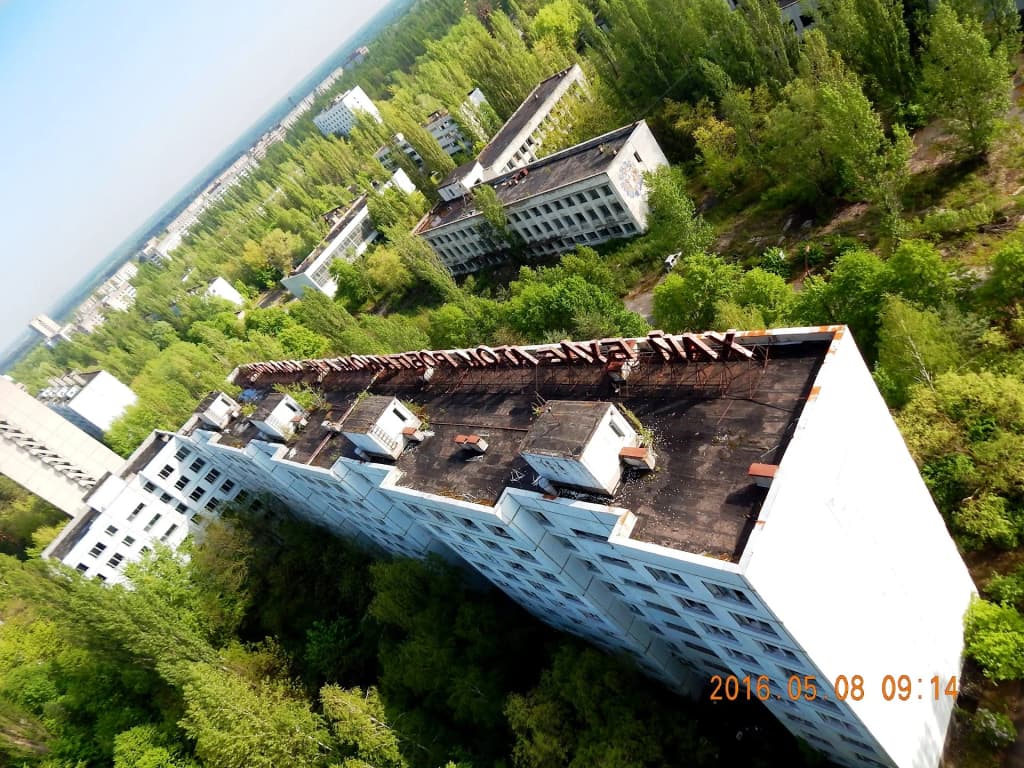
The sheer scale of the Exclusion Zone is mind-boggling. It is roughly the size of Luxembourg.
Entire villages were wiped off the map. Homes were bulldozed and buried under thick layers of dirt. Nature quickly reclaimed whatever was left standing.
Today, wolves and wild horses roam freely through the overgrown streets. It is a true post-apocalyptic wilderness.
Cute But Lethal
Then there are the locals. Not the stubborn human resettlers. The dogs.
Generations of descendants of abandoned pets still roam the zone. They are absolutely everywhere.
They trot up to your tour group with wagging tails. They look like the most adorable, heartbreaking strays on planet earth.
Do not touch them. Keep your hands jammed deep in your pockets. Take a huge step back.
Guides warn you about this before you even pass the military checkpoint. These animals run wild through highly contaminated brush.
They dig deep in the irradiated soil. They roll in the radioactive dust of the infamous Red Forest.
They look incredibly cute. But they are wandering radioactive bombs. Petting them transfers that invisible, lethal dust straight to your bare hands.
The Tourist Trap
Tourists never listen to the warnings. They never, ever do.
Picture this. It's the very first stop on the tour inside the zone. The group is still adjusting to the eerie vibe of the wasteland.
A scruffy little pup wags its tail and approaches. The entire bus lets out a collective, sickening "aww."
People immediately reach out. They start petting the dog. They scratch it behind the ears with bare hands.
You stand back and watch in absolute horror. Your jaw hits the floor.
Nobody paid a single ounce of attention to the briefing.
You are now surrounded by oblivious people who just covered their hands in nuclear fallout. They will eat their packed lunches with those exact same hands later.
It is a terrifying wake-up call. The zone does not forgive human stupidity.
Don't Miss
The eerie silence of the abandoned bumper cars in the Pripyat amusement park. The massive, rusting Duga radar looming ominously over the pine forest. That chilling moment your dosimeter starts screaming as you drive past the Red Forest.
Ready to Face the Invisible?
This place is not a dark tourism theme park. It is a massive, decaying graveyard of human hubris.
It demands your absolute respect. It demands your unwavering attention from the moment you enter until you pass the final radiation scanner on the way out.
Keep your hands to yourself. Watch every single step you take. Trust the frantic clicking of your meter over your own lying eyes.
Are you brave enough to walk the invisible line? Book the ticket. Pack your courage. Face the zone.
More Photos
More Adventures
 $50 - $150/day 3-5 days
 Edge of the World: Surviving Brazil's Wildest Border
Forget the crowded beaches. Head to Amapá. Discover untouched Amazon jungle, wild river rapids, and the mind-bending border where Brazil meets Europe.
 $40 - $80/day 3-5 days
 Into the Wild: Surviving Roraima's Macuxi Territory
Skip the tourist traps. Plunge into the raw culture of the Macuxi tribe in Roraima, Brazil. Experience fire-hot stews, sacred rituals, and wild borders.
 $100 - $300/day 1-3 days
 Escape the Airport: Conquer Your Luanda Layover
Think a layover in Luanda means killing time at the airport? Think again. Discover the fortress, island sunsets, and the ultimate Angolan adventure.
 $120 - $350/day 2-3 days
 Disneyland Paris Strategy: Ride Hacks & Coaster Secrets
Think you know Disney? Think again. Discover the underground secrets, massive coasters, and insider hacks to conquer Disneyland Paris like a pro.