
Lost Tickets and Sugarcane Nights: Arriving in San Juan
From a vanished boarding pass in Brazil to the humid, rhythmic streets of San Juan, experience the chaotic beauty of travel and Puerto Rican cultural pride.
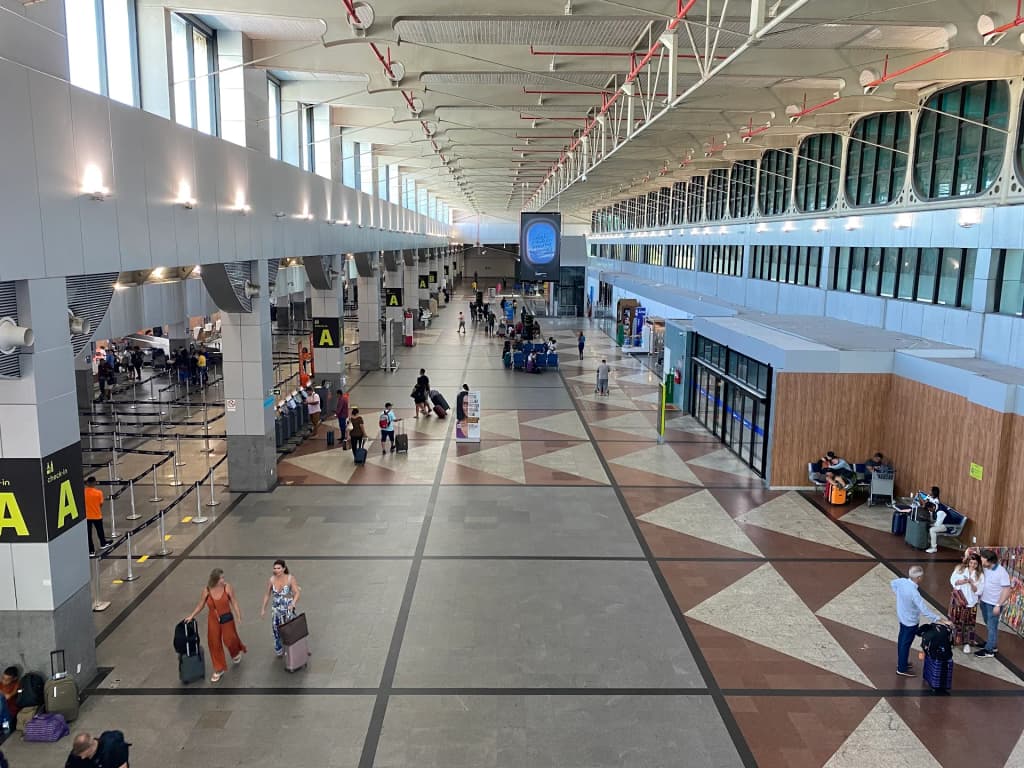
The smell hits you first—industrial floor wax and the faint, metallic tang of my own rising panic. The fluorescent lights of Salvador International Airport hum a low, indifferent note. My phone screen glares back at me, entirely blank where my boarding pass should be. A bead of sweat traces the line of my spine, soaking into the cotton of my shirt. I had done everything right—arrived an hour and ten minutes early, checked in online, selected my seat—and yet, the digital ether has swallowed my ticket to the Caribbean. I am standing in the restricted area, my luggage heavy against my leg, watching the minutes bleed away while the Copa Airlines desk sits agonizingly empty.
"I know who you are," a voice says.
I look up to see an airline agent, out of breath, his tie slightly askew. He had been running.
"I'm just trying to get to Puerto Rico," I tell him, my voice tight. "But the system wiped my pass, and there's no record of it."
He waves a hand, dismissing my anxiety with that unmistakable Bahian warmth. "We have people running for you right now, my friend. Don't worry. The system is blind, but we are not. We will get you on that plane."
There is a reason I have always believed I was Bahian in a past life. They possess a fierce, kinetic empathy. Within minutes, a small team has mobilized, bypassing the digital glitch, printing a physical ticket, and handing it to me with a reassuring slap on the shoulder. I am sprinting toward Gate 110—naturally, the furthest one in the terminal—my lungs burning, but I am moving. The chaos of the departure dissolves the moment I cross the threshold of the aircraft.
The cabin of the 737 hums with the sound of settling passengers. I sink into my seat, a recliner that falls painfully short of the lie-flat bed I had envisioned. We are bound for a six-hour crossing to Panama City before connecting to San Juan. The business class here feels like a relic from a decade ago—synthetic blankets you have to explicitly request, a meager pillow that feels like stuffed paper, and a distinct lack of glamour. The airline seems to reserve its true luxury for flights out of major hubs like Rio or São Paulo, leaving these regional connections with a downgraded experience.
But as I watch the coastline of Brazil fall away beneath the clouds, I do the math in my head, and the frustration dissolves into the sterile cabin air. I secured this passage through a miles broker, a shadowy but brilliant secondary market where you trade cash for someone else's accumulated points. I transferred the equivalent of a few hundred dollars via a quick mobile payment, securing two hundred and seventeen thousand miles. It turned a wildly expensive international fare into a bargain. When you navigate the invisible economy of airline points, you learn to forgive a substandard pillow.
The flight attendants roll the carts down the aisle, and the smell of roasted chicken and warm bread fills the cabin. The food is surprisingly rich, tasting of sharp garlic and earthy herbs. Despite the cramped quarters and the rough fabric of the seat, the low, steady vibration of the engines lulls me into a deep, dreamless sleep over the Amazon.
The connection in Panama is a blur of duty-free perfume, echoing announcements, and a quick splash of cold water on my face in a brightly lit lounge bathroom. By the time we begin our final descent into the Caribbean, my adrenaline has leveled out into a quiet, thrumming anticipation.
We touch down, and the air inside the Luis Muñoz Marín International Airport immediately feels different. It is a strange, fascinating friction of worlds. You pass through United States border control—the stern faces, the uniform efficiency, the unsmiling officers who ask how long you intend to stay without demanding to see a hotel reservation—but the soul of the building is entirely something else.
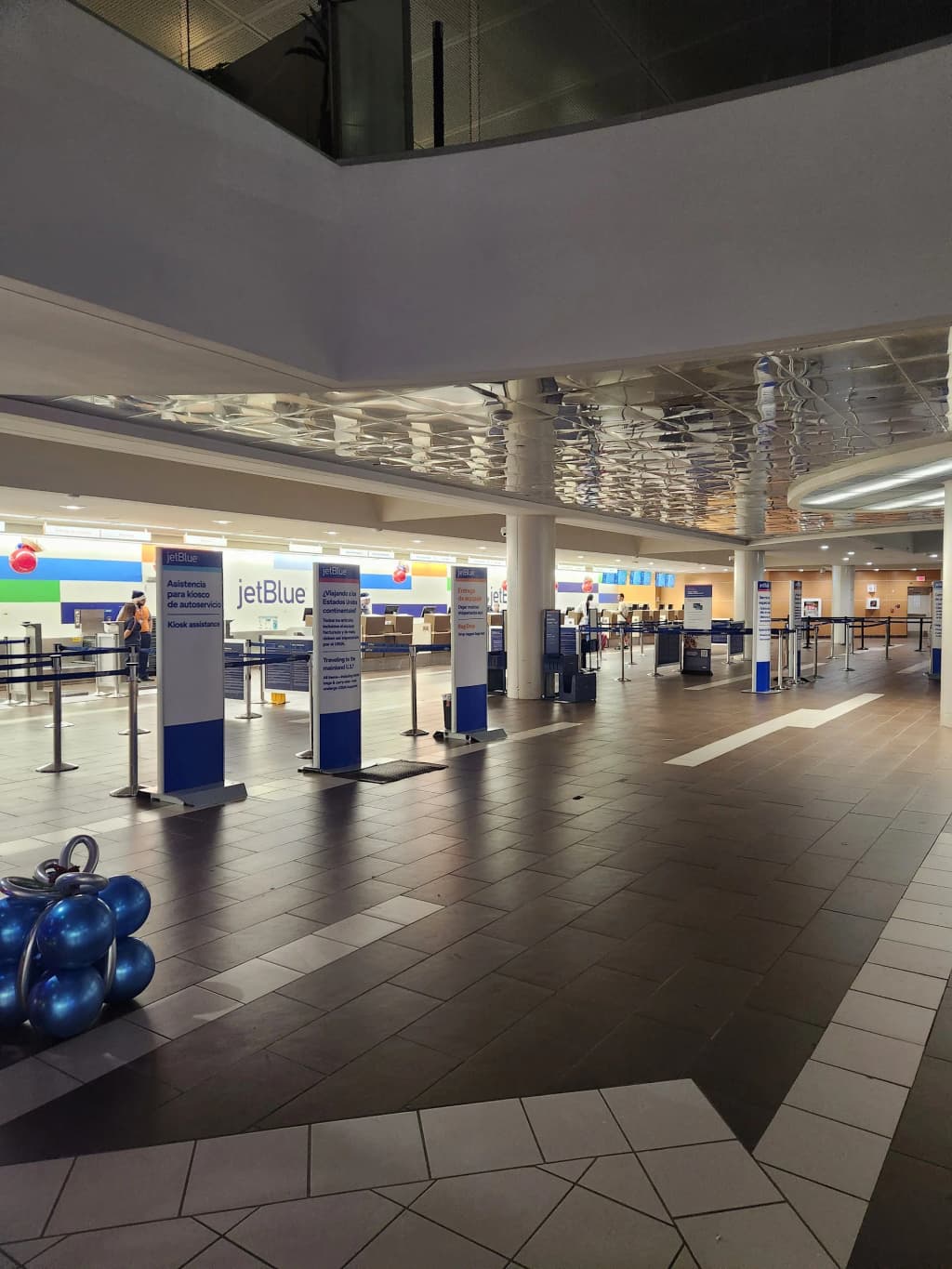
Walking through the terminal, the walls practically vibrate with legacy. The names of reggaeton legends and salsa icons gaze down from the architecture. Daddy Yankee, Bad Bunny—these aren't just pop stars here; they are pillars of a fierce cultural resistance. You can hear the rapid, melodic cadence of Puerto Rican Spanish echoing from the cafes, a sound that feels like music even when they are just calling out coffee orders. The island pulses with a protective pride, a collective determination to remain undeniably Puerto Rican and resist becoming merely a tropical playground for the mainland, even as low-cost carriers from the States flood the gates with vacationers.
The heavy glass doors of the arrivals hall slide open, and the Caribbean heat hits me like a physical weight. It smells of salt, damp earth, and the faint, sweet tang of exhaust. Puerto Rico is the undisputed rum capital of the world, and you can almost taste the ghost of crushed sugarcane hanging in the humidity.
I hail a ride to my hotel, a towering property I managed to book entirely on points, turning a three-thousand-dollar weekend into a fraction of the cost. The air conditioning in the car blasts freezing air against my damp forehead, a jarring contrast to the heavy, tropical night pressing against the windows.
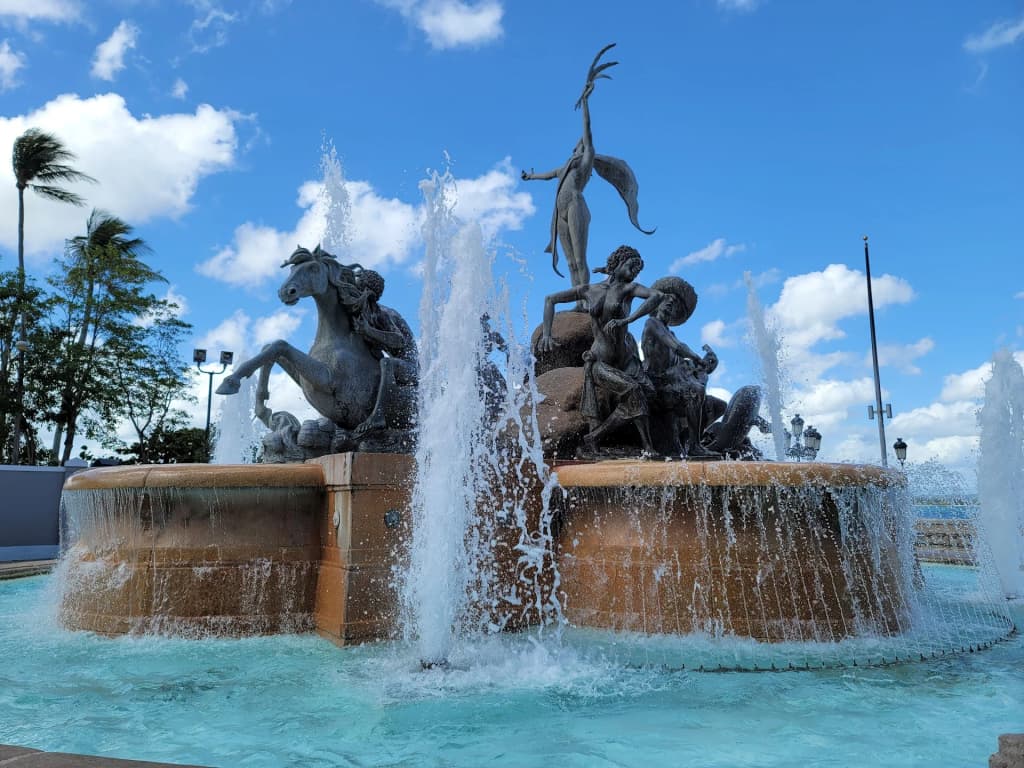
But the logistics of travel, the miles, the points, the frantic sprints through foreign terminals—it all fades the moment I step out onto the pavement of the city. The island is loud, unapologetic, and fiercely alive. Music bleeds from an open car window, mixing with the sound of waves crashing somewhere in the dark, unseen distance. I stand on the corner, letting the warm wind pull at my shirt, realizing that the chaotic sprint through the Salvador airport was a small price to pay. The journey is always messy, a tangle of lost digital passes and synthetic airline pillows, but the arrival—standing here in the humid, beating heart of the Caribbean—is always exactly where you are meant to be.
More Photos
More Adventures
 $45 - $125/day 3-4 days
 4 Days in Salvador: A Practical Itinerary & Budget Guide
Plan your trip to Salvador, Brazil with this strategic 4-day itinerary. Discover exact costs, Uber logistics, safety tips, and street food recommendations.
 $50 - $150/day 3-5 days
 Abu Dhabi Travel Guide: Skip Dubai for the Real UAE
Think Abu Dhabi is just Dubai's sleepy sibling? Think again. Discover the real UAE with authentic street food, bustling fish markets, and raw culture.
 $30 - $80/day 10-21 days
 Why Thailand Will Completely Ruin Your Future Travels
Think you know travel? Think again. From $6 massages to cinematic beaches and epic street food, Thailand sets the bar impossibly high. Go get ruined.
 $150 - $250/day 1-2 days
 From Ashes to the Sea: A Journey to Pompeii and Sorrento
Experience an emotional 12-hour journey from Rome to the frozen ruins of Pompeii and the sun-drenched cliffs of Sorrento in this immersive travel narrative.