
Barcelona: Where Stone Dreams Meet the Sea
A sensory journey through Barcelona's Gothic shadows and Modernist light. Discover Gaudí's architecture, local tapas rituals, and the city's coastal soul.
The smell hits you first. It is a complex layering of charcoal smoke, garlic, salt air, and something sweet you can't quite name—perhaps the scent of old stone baking in the Mediterranean sun. I am standing in the middle of the Barri Gòtic, the Gothic Quarter, where the streets are so narrow that the sunlight only touches the cobblestones for an hour a day. The shadows here have weight.
A motorbike buzzes past, the sound ricocheting against medieval walls that have stood since the Romans laid the first bricks. Here, history isn't behind glass; it is the rough texture under your fingertips as you trail your hand along a wall. I wander aimlessly, letting the labyrinth pull me in until I spill out onto Las Ramblas. The contrast is jarring. The silence of the stone alleyways is instantly replaced by a roar of languages, street performers, and the clinking of glasses. I drift toward the Boqueria Market, where the colors of fresh fruit and hanging jamón are so intense they almost hurt my eyes. It is chaotic, yes, but it is a chaos that feels like a heartbeat.
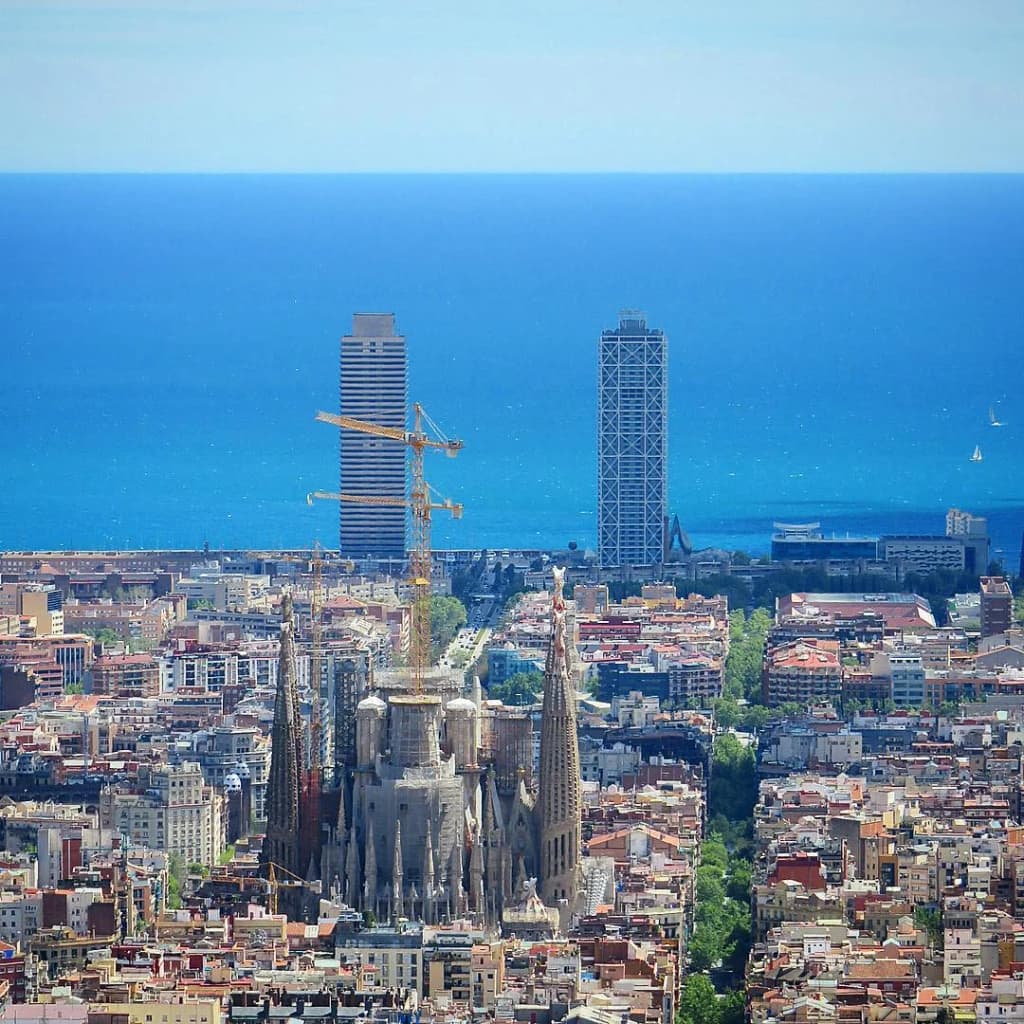
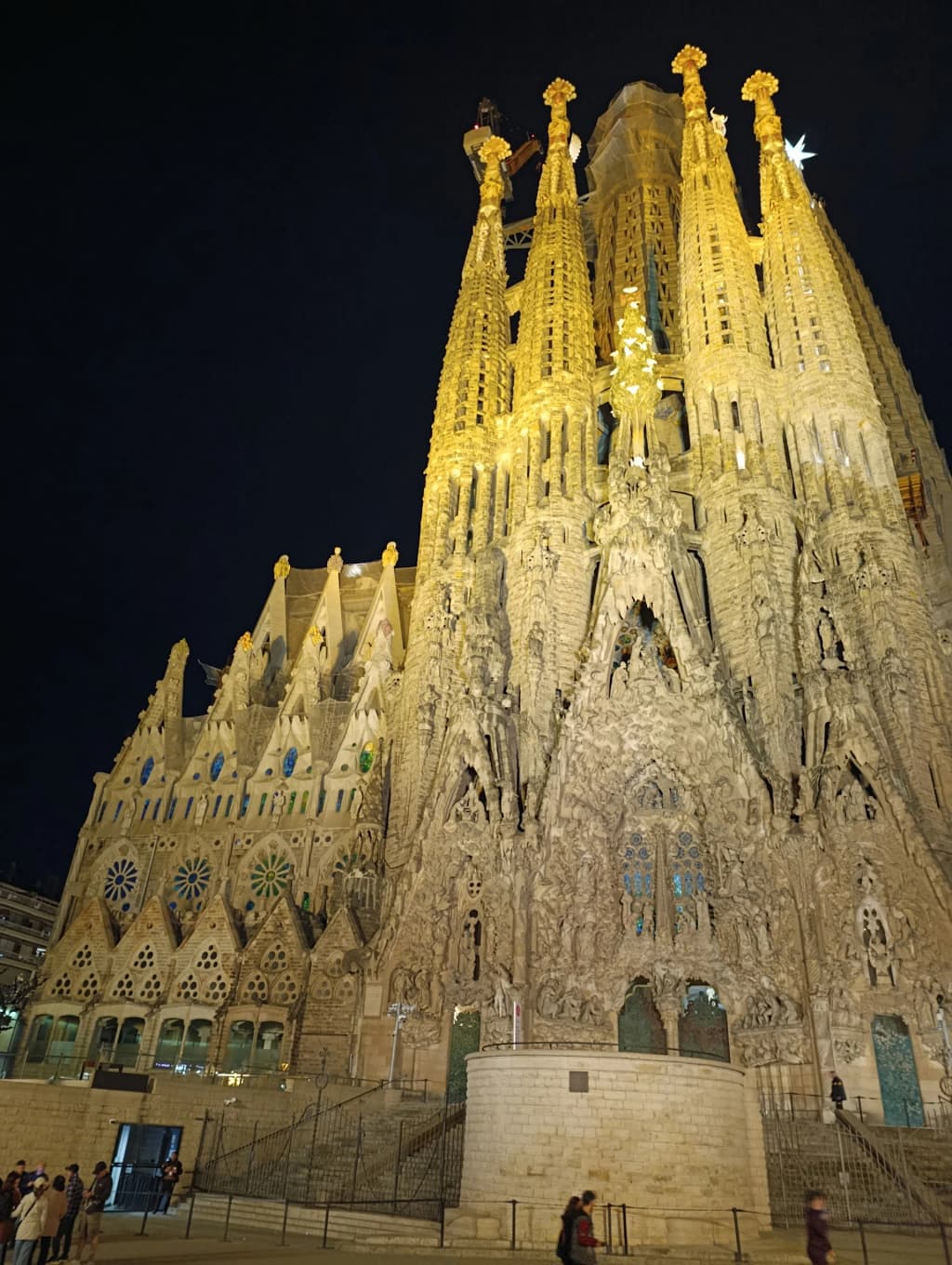
If the Gothic Quarter is Barcelona’s history, then the Eixample district is its fever dream. I arrive at the Basílica de la Sagrada Família just as the morning light begins to pierce the eastern facade. Photographs do not prepare you for the scale of it. It does not look built; it looks grown, like a coral reef rising from the pavement.
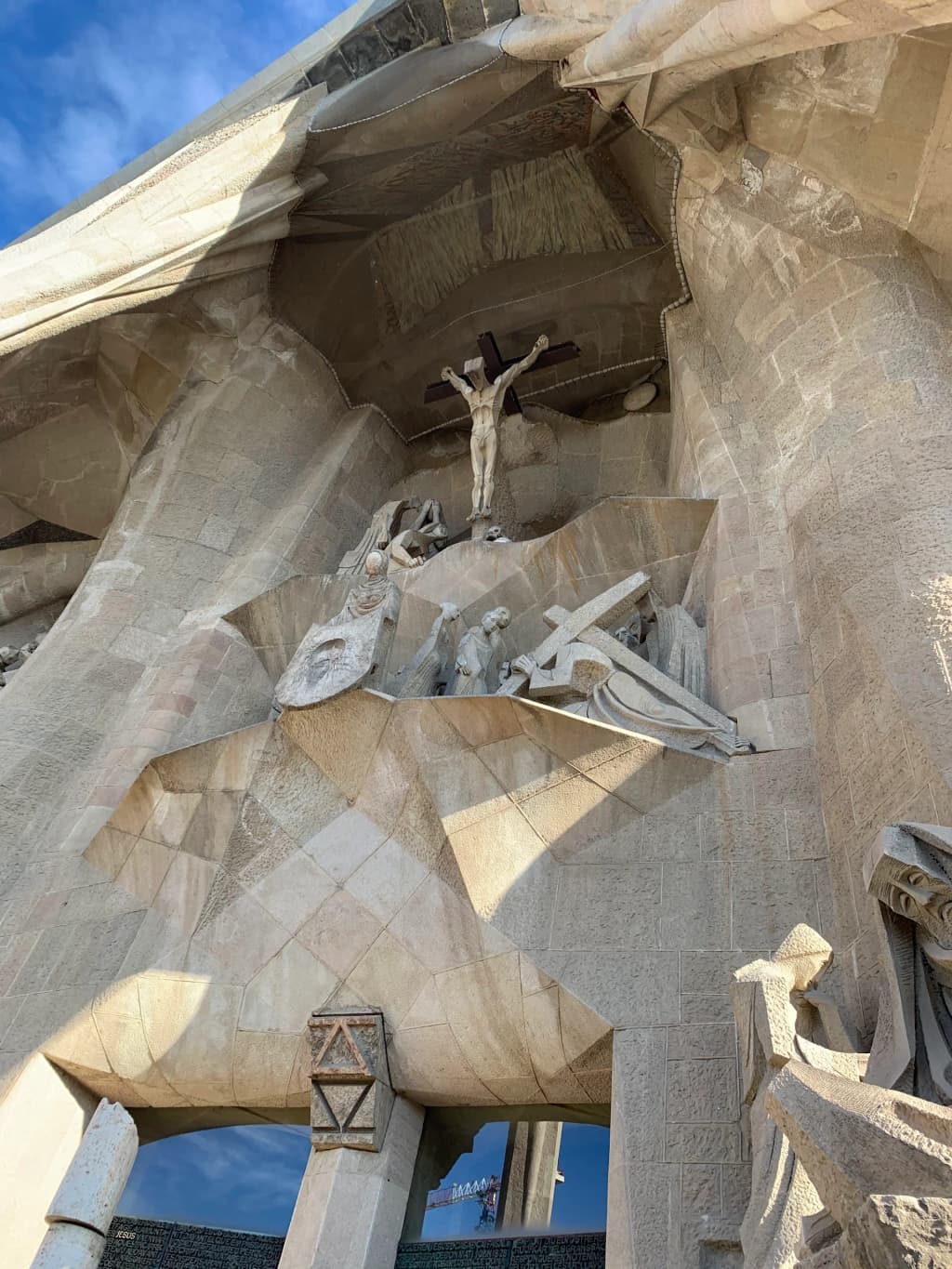
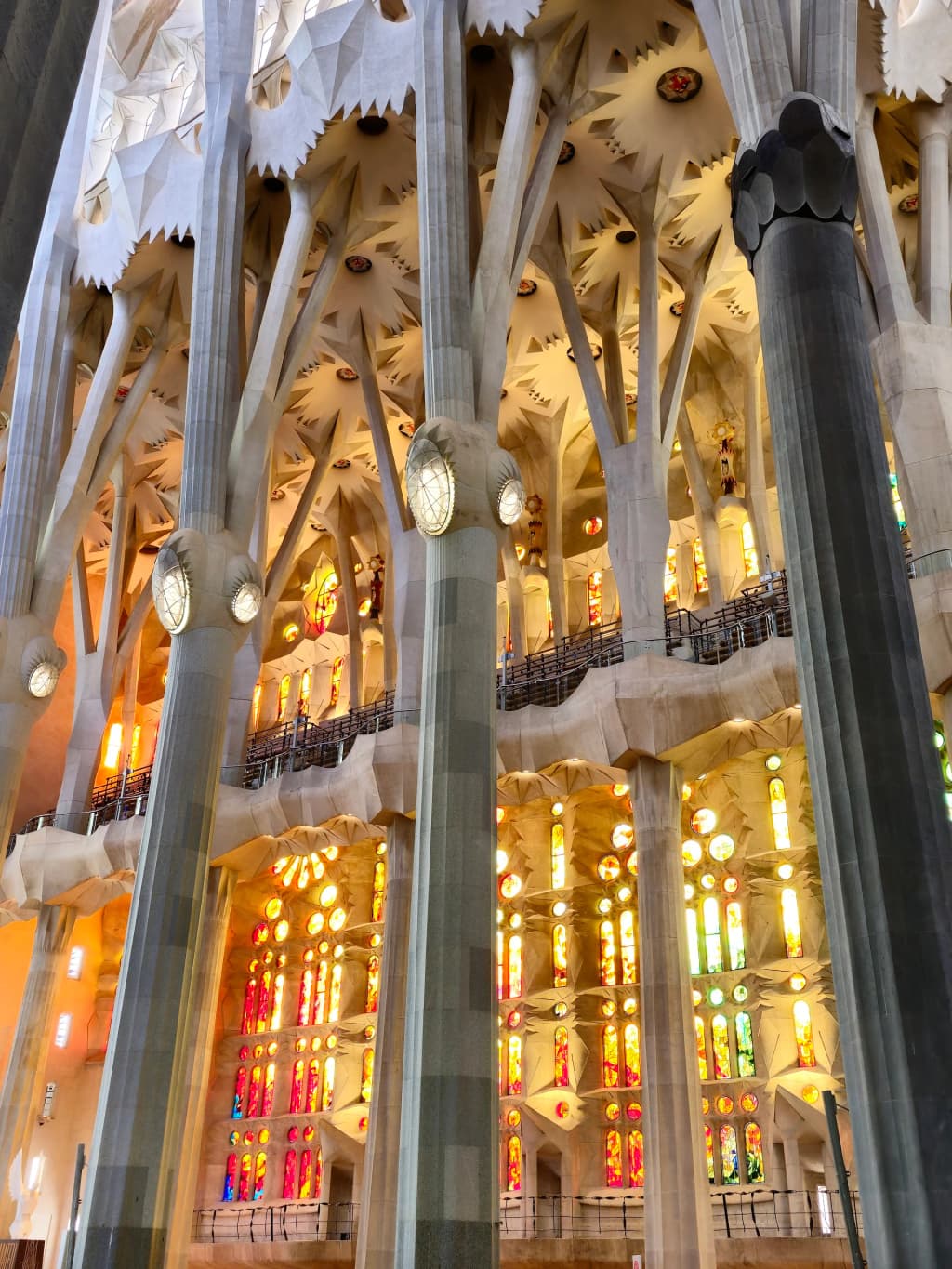
I watch a family of four get turned away at the gate, their faces falling when the guard tells them there are no tickets left for today, or even tomorrow. It is a crucial lesson here: spontaneity is romantic, but not when it comes to Antoni Gaudí. I clutch the ticket I booked weeks ago on my phone—spending the extra ten euros for tower access—and step inside. The noise of the city vanishes. The interior is a forest of stone columns branching out into a ceiling that mimics a canopy of leaves. The stained glass paints the floor in pools of red, blue, and green light. It feels less like a church and more like a spiritual spaceship. Up in the towers, the wind whips my hair, offering a view that stretches all the way to the shimmering sea.
The influence of Gaudí bleeds into the streets like watercolor. Walking down the Passeig de Gràcia, the architecture shifts from regal to radical. I stop in front of Casa Batlló. Its facade looks like dragon scales and bones, shimmering in iridescent blues and purples. A few blocks away stands La Pedrera, or Casa Milà, its stone front undulating like a heavy curtain.
"You must choose," a woman next to me says. She is older, stylish in that effortless Catalan way, holding the leash of a small terrier. She notices me checking the prices on my phone.
"They are expensive," I admit. The entry fees hover around thirty euros each, a steep price for architecture.
She shrugs, adjusting her scarf. "If you have the money, see both. But if you must pick one? Go to Batlló. It is the dream inside a house. Milà is architecture; Batlló is poetry."
I take her advice. Inside, the house flows. There are no straight lines, only curves and light. Later, I take the metro north to Park Güell. It requires a dedicated afternoon, away from the city center. The heat is drier here, the dust kicking up as I walk past the famous mosaic lizard. It’s a playful space, a garden city that never quite happened, but now serves as a balcony over Barcelona. I sit on the serpentine bench, the ceramic tiles warming my back, and watch the sun begin its slow descent.
By 2:00 PM, my stomach is growling, but the locals are only just starting to think about lunch. I find my way to a crowded spot called La Paradeta. It’s a seafood market masquerading as a restaurant. You point at the crabs, the mussels, the prawns still twitching on the ice, and they cook them for you right there. It’s loud, messy, and incredibly fresh. The bill is surprisingly reasonable, far less than the white-tablecloth traps near the port.
Later in the evening—much later, as the sun dips low—the true ritual begins. I squeeze into a bar near El Born. There is no menu, just platters of patatas bravas, croquettes, and pan con tomate lining the counter.
"A glass of vermouth?" the bartender asks. He doesn't wait for an answer, sliding a tumbler of dark, herbal liquid toward me over the worn wood.
"Is this dinner?" I ask, eyeing the small plates.
He laughs, cutting a slice of Iberian ham with surgical precision. "No, my friend. Dinner is a destination. Tapas is the journey. You eat a little here, you drink a little there. You keep moving."
To understand the geography of this place, you must go up. I take the cable car from the port to Montjuïc. The cabin sways gently, suspending me between the blue Mediterranean and the sprawling metropolis. Below, the city looks like a grid of heavy blocks, sliced open by the wide avenues.
At the top, the castle stands guard, a reminder of the city's turbulent past. But the mood today is light. I walk down toward the National Art Museum, where the Magic Fountain prepares for its evening show. It sounds like a cliché—a light and water show—but when the music swells and the water dances in color against the night sky, cynicism dissolves. It is hard not to feel a swell of emotion standing there with strangers.
For those with energy left, the night is far from over. Down at the Barceloneta beach, clubs like Opium and Shoko transform the boardwalk. The bass thumps in time with the crashing waves. The drinks are pricey—fifteen, twenty euros—but you are paying for the atmosphere of dancing on the edge of the continent.
Before I leave, I take a train out of the city. Just an hour away, the jagged peaks of Montserrat slice the sky. It is a stark contrast to the humidity of the coast. The monastery clings to the rock face, silent and imposing. It is the perfect counterweight to the frantic energy of Las Ramblas.
Barcelona leaves you tired. It is a city that demands you walk its lengths, climb its towers, and stay awake until dawn. As I sit on the train back, watching the Catalan countryside blur into the urban sprawl, I realize I haven't just visited a city; I have participated in it. The garlic, the salt, and the stone are now part of me.
More Photos
More Adventures
 $120 - $350/day 2-3 days
 Disneyland Paris Strategy: Ride Hacks & Coaster Secrets
Think you know Disney? Think again. Discover the underground secrets, massive coasters, and insider hacks to conquer Disneyland Paris like a pro.
 $40 - $120/day 3-5 days
 A Sensory Walking Tour Through Central Buenos Aires
Experience the historic heart of Buenos Aires on a sensory walking tour. Taste medialunas at Café Tortoni and explore the bustling San Telmo Market.
 $150 - $350/day 1 days
 Conquer Disneyland Paris: 2 Parks in 1 Brutal Day
Think you can't conquer both Disneyland Paris parks in a single day? Think again. Here is the ruthless, high-energy strategy to dominate every major ride.
 $200 - $450/day 1-2 days
 Chasing the Magic: An Immersive Day Inside the Kingdom
Experience the sensory overload and quiet corners of Magic Kingdom, from sunrise coaster rides to peaceful escapes across the Seven Seas Lagoon.