
A Sensory Walking Tour Through Central Buenos Aires
Experience the historic heart of Buenos Aires on a sensory walking tour. Taste medialunas at Café Tortoni and explore the bustling San Telmo Market.
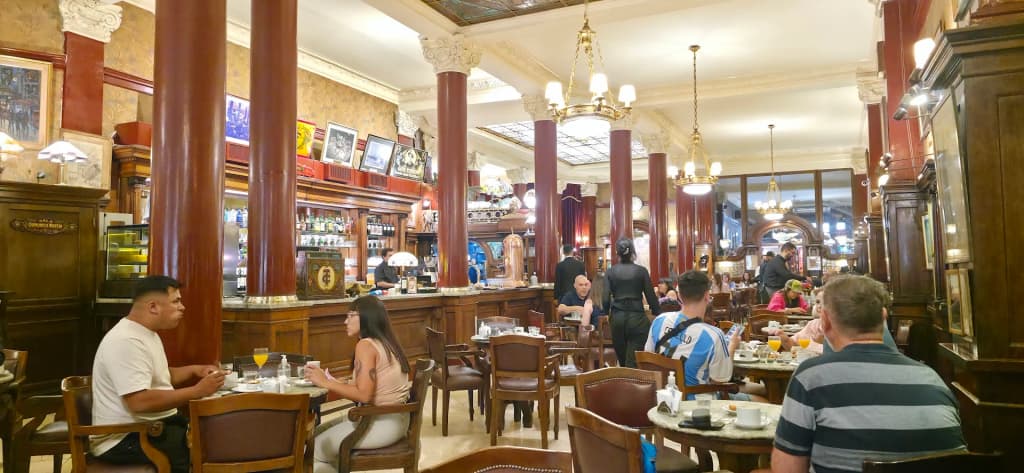
The smell hits you first—dark roasted coffee, aged oak, and a faint, sweet trace of vanilla that feels distinctly like the nineteenth century. Pushing through the heavy wooden doors of Café Tortoni, founded in 1858, you are instantly swallowed by a choreographed morning rush. Waistcoated waiters balance silver trays of steaming cortados and warm, sticky medialunas, moving with practiced grace. I secure a small marble-topped table just as the clock strikes eight, successfully beating the line that is already beginning to snake down the pavement of Avenida de Mayo. Overhead, a stained glass ceiling casts a warm, kaleidoscopic glow across the mahogany-paneled walls, illuminating dozens of historic oil paintings. The clinking of silver spoons against porcelain creates a rhythmic soundtrack, replacing the tango chords that once echoed in the back rooms. I let the sweet, flaky pastry melt on my tongue, washing it down with a sip of bitter, dark coffee, grounding myself in the elegant heart of the Argentine capital.
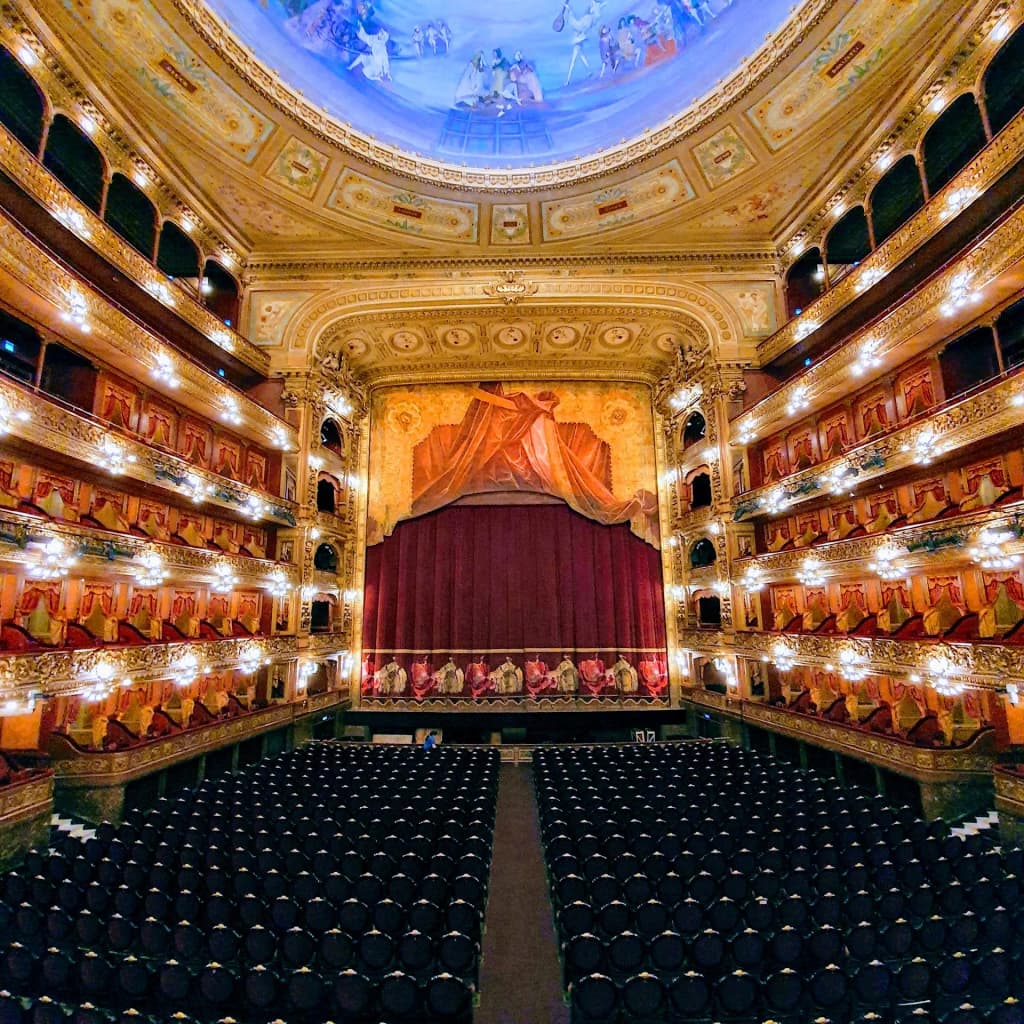
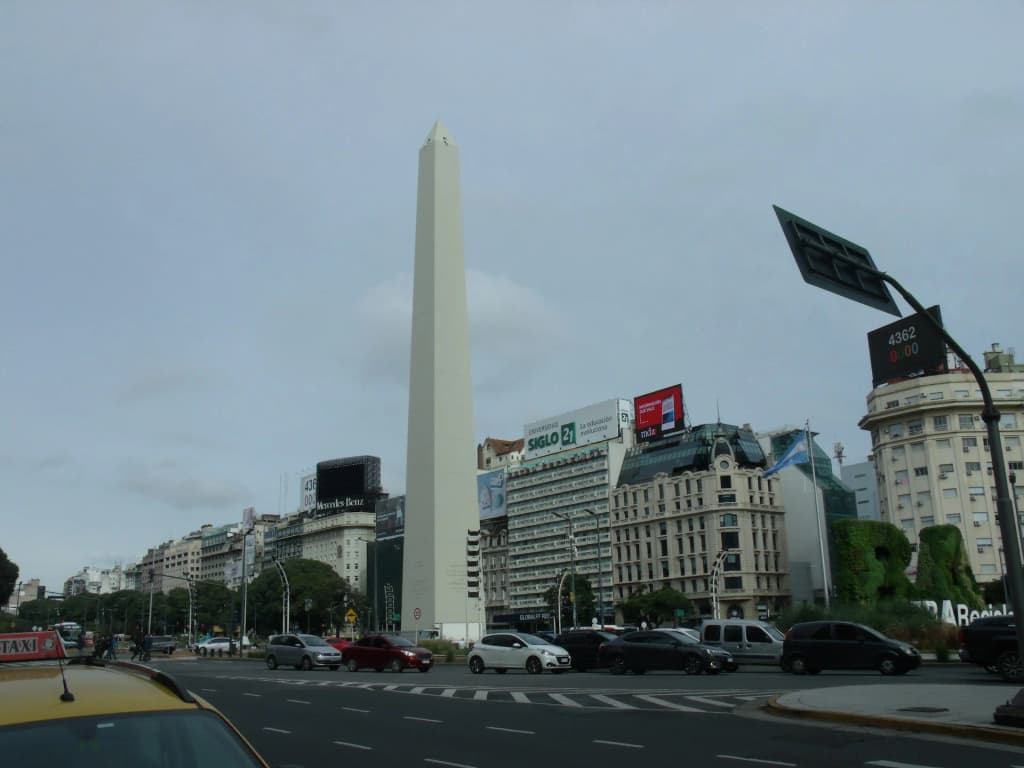
Stepping back out into the morning air, the contrast is jarring. The delicate Art Nouveau quiet shatters against the roaring heartbeat of Avenida 9 de Julio. At 140 meters wide, crossing this avenue feels less like a pedestrian chore and more like an urban expedition. Cars blur past in a chaotic symphony of revving engines and distant sirens, the smell of exhaust mingling with the crisp morning breeze. Anchoring this vast sea of asphalt is the Obelisk, a 60-meter concrete needle piercing the pale blue sky. Erected in 1936, it stands as a polarizing yet undeniable symbol of the city. I follow the flow of the crowds down the avenue until the grand, imposing facade of Teatro Colón comes into view. The heavy doors are strictly guarded, but I learn that access to its legendary acoustics is granted through guided tours. At roughly ten dollars for fifty minutes of pure architectural splendor, walking through its opulent, velvet-lined halls feels like a stolen privilege.
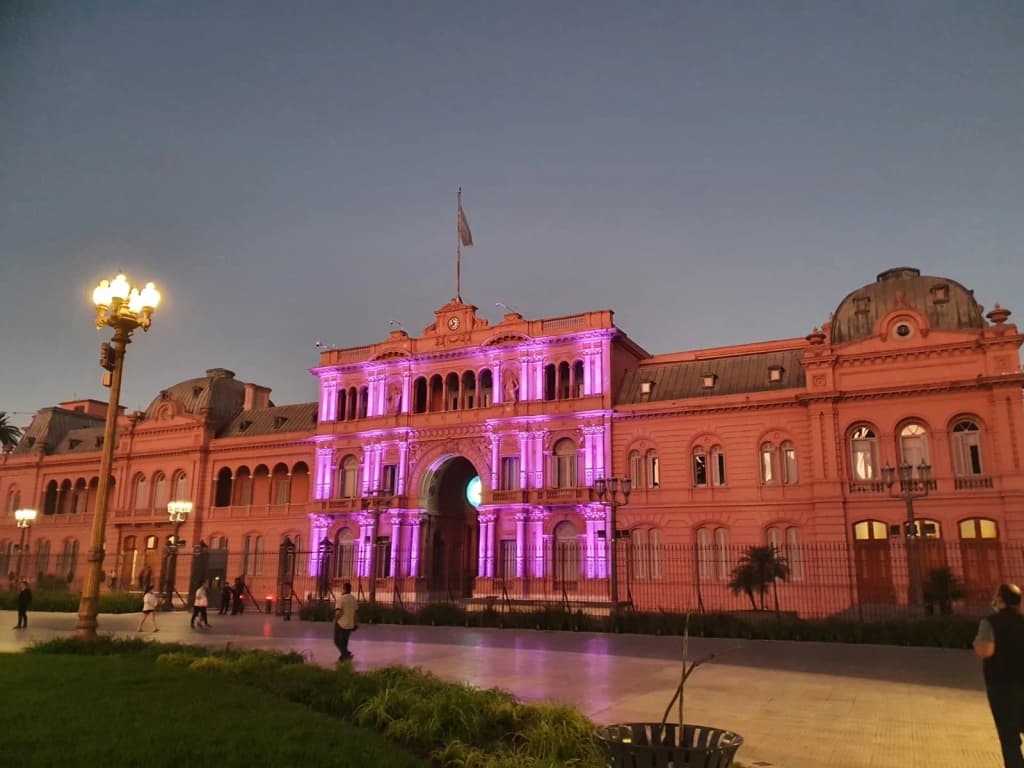
The city shifts its mood again as I wander down Calle Florida. This pedestrian street is a lush corridor of flower stalls and towering trees, slicing neatly through the commercial district. I duck into Galerías Pacífico, where the chaotic street noise is instantly replaced by the hushed, echoing footsteps of luxury shoppers. But the real treasure is above. I tip my head back, mesmerized by the magnificent Beaux-Arts dome, its intricate murals depicting swirling, romanticized allegories of art and history. It is a cathedral of commerce, but my true destination lies further south. Approaching Plaza de Mayo, the political epicenter of Argentina, the air grows heavier, steeped in centuries of revolution. The Casa Rosada dominates the eastern edge, its famous pink facade glowing softly in the afternoon sun.
"Cow's blood and lime," an older man next to me murmurs, noticing my prolonged stare at the presidential palace.
"Excuse me?" I ask, turning to him.
"That is how they made the pink paint in the old days," he smiles, adjusting his flat cap. "A very practical solution for a very grand building."
Across the square, the Catedral Metropolitana looks entirely out of place, its twelve massive columns resembling a Greek temple rather than a traditional Catholic church. Inside, the air is cool against my skin, thick with the scent of melting wax and old stone. It is quiet here, a profound stillness where Pope Francis once led mass for two decades. I linger near the mausoleum of General San Martín, watching as visitors pay silent respects to the hero of South American independence. But Buenos Aires is a city that refuses to stay quiet for long. I walk further south, feeling the smooth pavement give way to the uneven, ankle-testing cobblestones of San Telmo. The bohemian soul of the city reveals itself in faded colonial facades and the sweet, caramelized scent of dulce de leche drifting from corner bakeries. A line of laughing tourists wraps around a street corner, all waiting to snap a photo with a small, 80-centimeter statue of Mafalda, the beloved comic strip philosopher who sits perpetually frozen on her bench.
My stomach rumbles, a low protest against the miles of walking. The San Telmo Market is a cavernous iron structure buzzing with the chaotic energy of haggling antique dealers and sizzling grills. I weave past stalls overflowing with vintage leather jackets and tarnished silver cutlery, following the intoxicating smell of woodsmoke and roasting meat. I find an empty stool at a traditional parilla tucked deep inside the market's labyrinth.
"You look like you've walked across the whole city," the man behind the counter says, tossing a damp rag over his shoulder.
"Close to it," I laugh, rubbing my tired legs. "What do you recommend to bring me back to life?"
He grins, pointing a pair of long iron tongs at the glowing coals. "The asado de tira. Eight hundred and fifty grams. You will not leave hungry."
He isn't lying. When the heavy wooden board arrives, piled high with a massive cut of short ribs and a mountain of golden, salt-dusted fries, it is a carnivore's dream. The meat is charred and crispy on the outside, incredibly tender within, and seasoned only with coarse salt. At just around twenty-five dollars for a feast that easily feeds three, it is proof of the generous, unpretentious spirit of the Argentine table.
The afternoon bleeds into evening, and I take a brief subway ride up to Palermo to walk off the heavy lunch. Distrito Arcos, a sleek open-air outlet built into an old railway station, offers a surprisingly tranquil shopping experience under the fading twilight. But my night is destined to end back in the center, at a place that feels untouched by time. El Cuartito has been serving pizza since 1934, and the line spilling out the door confirms its enduring legacy. The walls inside are a chaotic mosaic of vintage sports posters, signed football jerseys, and faded photographs. I sink my teeth into a slice of their famous fugazzeta—a thick, crispy crust drowning under a mountain of bubbling mozzarella and sweet, charred onions. The loud, joyous chatter of families and friends bouncing off the tiled walls is the perfect soundtrack to the end of the day. Buenos Aires does not just show you its history; it pulls out a chair, pours you a glass, and insists that you taste it.
More Photos
More Adventures
 $120 - $350/day 2-3 days
 Disneyland Paris Strategy: Ride Hacks & Coaster Secrets
Think you know Disney? Think again. Discover the underground secrets, massive coasters, and insider hacks to conquer Disneyland Paris like a pro.
 $200 - $500/day 2-3 days
 Conquer Disneyland California: The Ultimate 2-Park Guide
Think Disneyland is just a walk in the park? Think again. Get the ultimate battle plan for dominating Disneyland and California Adventure. Skip the lines.
 $150 - $350/day 1 days
 Conquer Disneyland Paris: 2 Parks in 1 Brutal Day
Think you can't conquer both Disneyland Paris parks in a single day? Think again. Here is the ruthless, high-energy strategy to dominate every major ride.
 $50 - $120/day 4-7 days
 Sensory Buenos Aires: Smoke, Stone, and Neon Lights
Immerse yourself in Buenos Aires. Experience the contrasts from the smoky grills of San Telmo to the neon-drenched pizzerias of Avenida Corrientes.