
Chasing the True Aegean: Affordable Greek Island Hopping
Trade the expensive crowds of Santorini for the authentic charm of Naxos, Paros, Crete, and the Ionian islands. A sensory guide to affordable Greece.
The smell hits you first. Charcoal smoke, roasting garlic, and the salty tang of the Aegean wind carrying the promise of something ancient. The old man behind the grill doesn't look up as he flips a skewer of pork souvlaki, his hands moving with the hypnotic rhythm of someone who has done this for fifty years. You won't find this quiet, unpretentious rhythm in the crowded, glossy alleys of Santorini or Mykonos anymore. There, the air smells of expensive sunscreen and the exhaust of luxury transfers. Here, on the island of Naxos, the air just smells like Greece.
I sit on a woven wicker chair that wobbles slightly on the uneven cobblestones, watching the evening light turn the whitewashed walls the color of warm honey. For so long, the travel world has been obsessed with a very narrow, very expensive slice of the Cyclades. But if you take a short, hour-and-a-half ferry ride from the chaos of Mykonos, or a quick thirty-minute flight from Athens, the world changes. The frantic energy dissipates. The prices plummet. Suddenly, instead of parting with a hundred and thirty euros for a basic room, you are handing over seventy euros for a sun-drenched, family-run guesthouse where the morning coffee is strong, dark, and included.
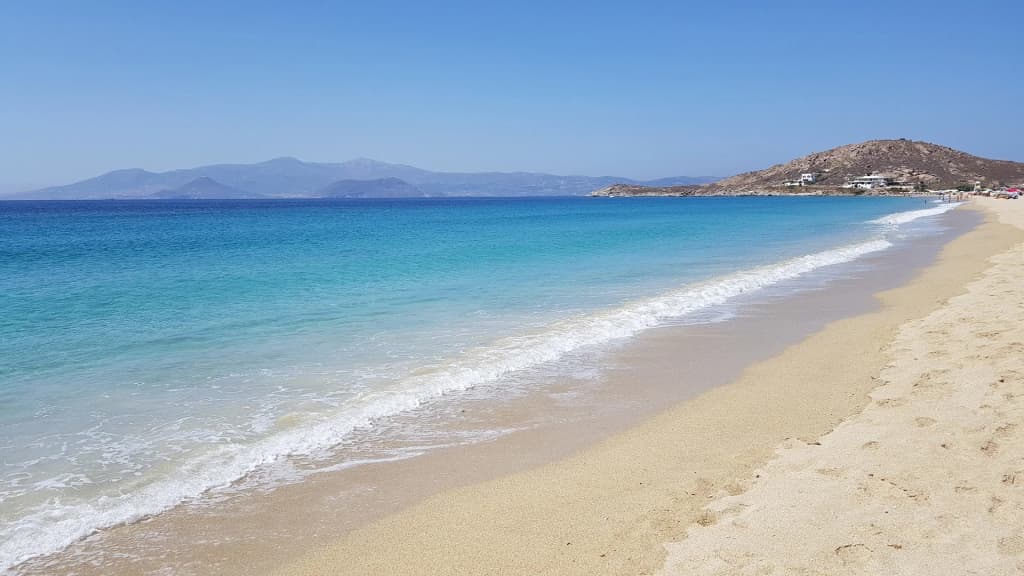
Naxos is the largest of the Cyclades group, and it feels like a place where people actually live, not just a stage set for summer visitors. You can easily lose four or five days here, wandering through the historic center, tasting sharp local cheeses that bite back, and finding stretches of sand where the only sound is the rhythmic crash of the waves against the shore.
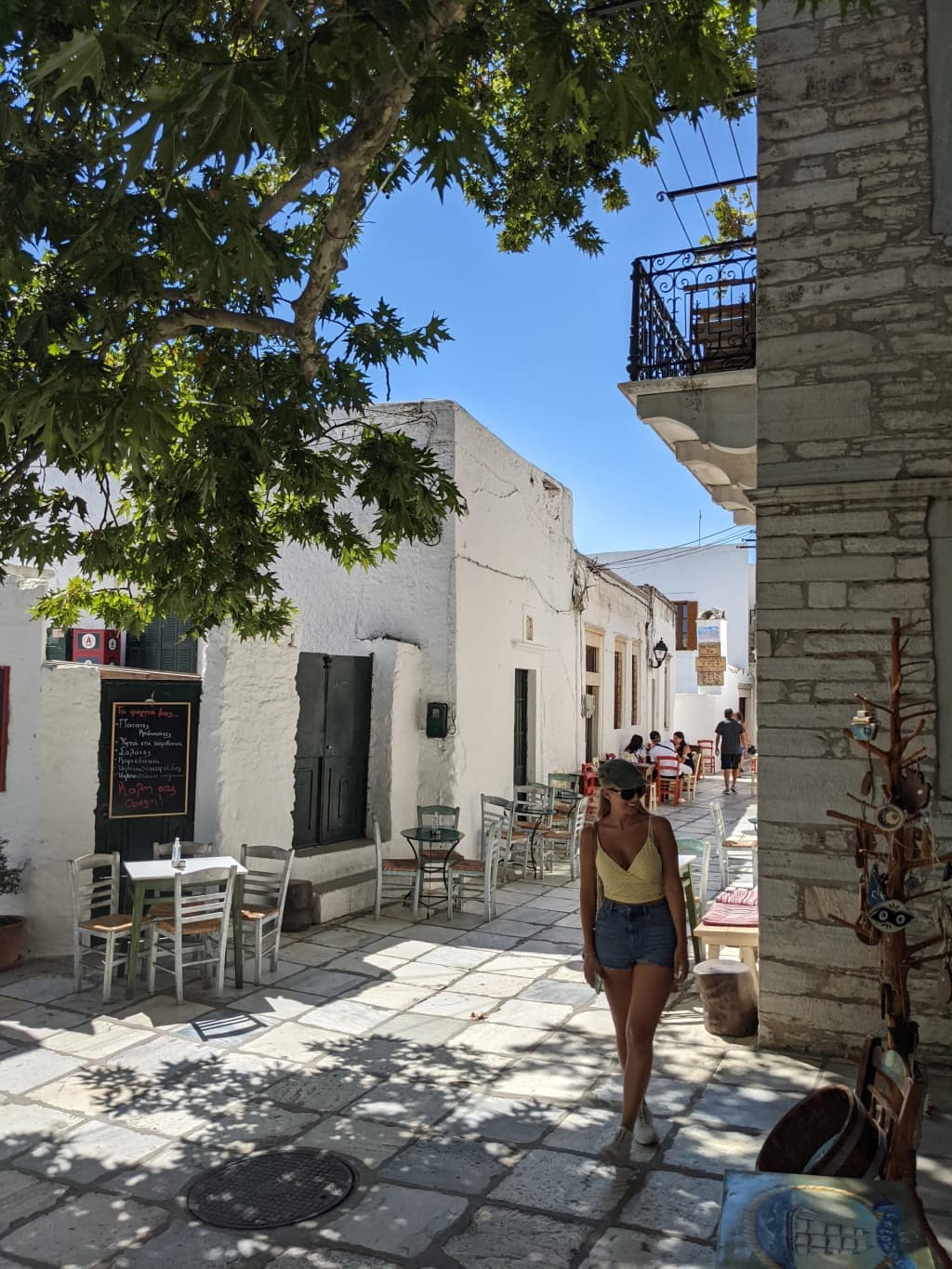
The heavy blast of the ferry horn vibrates right through the deck plates, a deep, resonant hum that signals another departure. The journey to neighboring Paros is barely a breath, a short maritime hop across water so intensely blue it looks artificial. Paros is smaller than Naxos, a compact labyrinth of pristine white alleys and climbing bougainvillea that bleeds brilliant magenta against the stark walls.
I wander away from the port, letting the narrow streets dictate my path until I find a small taverna tucked beneath a canopy of heavy grapevines. The shade is immediately cool against my sun-baked skin, a welcome relief from the midday glare.
"You are looking for the famous sunset?" the taverna owner asks, wiping down a wooden table with a damp cloth.
"I'm just looking for a quiet place to eat," I admit, pulling out a chair.
He smiles, his eyes crinkling at the corners as he pours a small glass of cloudy, anise-scented ouzo. "Then you are on the right island. The sunset is free here, and the food actually tastes like the earth it came from. Stay a few days. You will see."
He isn't wrong. Paros captures that quintessential Greek island dream—the one that draws millions to the Mediterranean—but it offers it without the velvet ropes and minimum spends. It is the perfect place to linger for two or three days, letting the slow pace of island life seep into your bones, tasting rich, grassy olive oil and tomatoes that burst with concentrated summer heat.
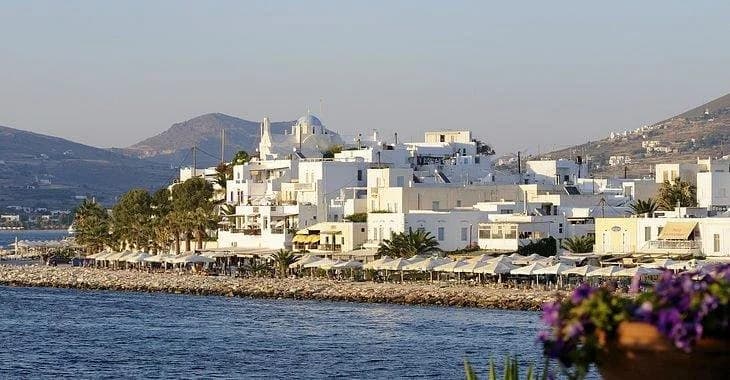
If the Cyclades are a delicate necklace of white pearls, Crete is a heavy, rugged gemstone all its own. The scale of the island is staggering. You don't just visit Crete; you traverse it.
I grip the steering wheel of my rental car, feeling the vibration of the tires over the uneven asphalt. The road twists and turns like a coiled snake along the coastal cliffs. To survive Crete, you need a car. The distances are vast, and the landscape demands exploration. I see tourists attempting these mountain switchbacks on rented scooters, their knuckles white, battling the chaotic, unwritten rules of Greek island traffic—the sudden honking, the blind curves, the sheer drop-offs. It is a dangerous game. A reliable car, which costs surprisingly less to rent here than in most of Western Europe, is your sanctuary and your ticket to freedom.
The dry, herbaceous scent of wild thyme and sage blows through the open windows as I navigate the hour-long drive toward the western coast. My destination is Balos, and later, the pink sands of Elafonissi. These are some of the most dramatic beaches on earth, wild and untamed, lacking the manicured beach clubs of the north.
Spending six days in Crete completely balances the budget of an extended Greek journey. Everything here—from the taverna dinners of slow-roasted lamb to the family-owned hotels—costs a fraction of what you would spend on the famous caldera. I calculate the receipts in my head over a plate of dakos, the rusks softening in olive oil and crushed tomatoes, realizing I am spending barely forty percent of what a day in Santorini demands. When it is finally time to leave, the massive airport offers a cheap, hour-long flight back to Athens, a seamless return to the mainland.
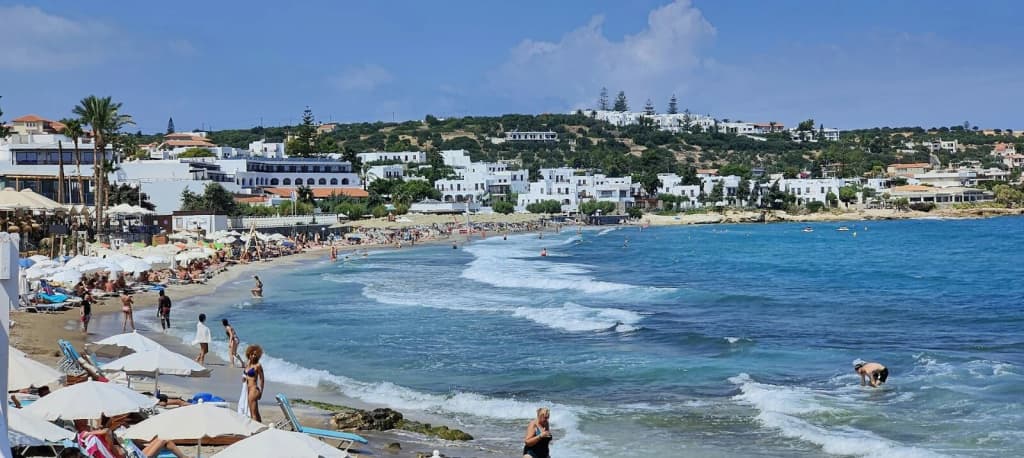
But the Aegean is not the only sea that embraces Greece. If you look westward, toward the Ionian Sea, the color palette shifts entirely. The arid, sun-bleached rocks of the Cyclades give way to explosive, lush greenery.
The Ionian islands—Zakynthos, Corfu, Kefalonia—are a different kind of magic, often overlooked by first-time visitors fixated on the classic white-and-blue imagery. In Zakynthos, the sheer, rust-colored cliffs drop vertically into water so clear it looks like liquid glass, cradling the rusting, skeletal remains of a shipwreck on Navagio Beach. You have to take a small boat to reach it, feeling the cold salt spray on your face and hearing the violent churning of the motor beneath you.
Corfu offers sweeping, Italian-influenced architecture and long stretches of sand, while Kefalonia remains one of the most visually stunning and affordable islands in the entire country. These islands require a dedicated journey, a commitment to exploring the greener, cooler side of the Greek maritime world.
I stand on the edge of a cliff as the evening light begins to fade, watching a solitary fishing boat carve a white scar across the darkening water. The wind is picking up, cooling the sweat on the back of my neck. Travel, at its core, is about finding the spaces where the world still feels raw and real. You can pay a premium to stand shoulder-to-shoulder with a thousand strangers to watch a famous sunset, or you can take a ferry a little further down the line, rent a small car, and find a sunset that belongs entirely to you.
More Photos
More Adventures
 $150 - $400/day 5-7 days
 Punta Cana Budget & Resort Guide: A Data-Driven Itinerary
Plan your Punta Cana trip with exact costs, all-inclusive resort comparisons, high-ROI excursion prices, and a breakdown of local tipping etiquette.
 $1310 - $1520/day 7 days
 Punta Cana Trip Cost: A 7-Day Budget Breakdown
Discover exactly how much a 7-day trip to Punta Cana costs. We compare all-inclusive resorts versus DIY travel with a dollar-by-dollar breakdown.
 $40 - $80/day 2-4 days
 Boa Vista: Exploring the Amazon's Fan-Shaped Frontier City
Experience the unexpected beauty of Boa Vista, Roraima. Discover Macuxi indigenous crafts, the unique Lavrado biome, and sunset boat tours on the Rio Branco.
 $150 - $350/day 3-4 days
 Trancoso Travel Guide: 3-Day Itinerary & Budget Breakdown
Plan a practical 3-day trip to Trancoso, Brazil. Discover the best beaches, UTV tours to Praia do Espelho, and exact costs to optimize your travel budget.