
Mist, Timber, and Time: Finding the Soul of Canela
Experience the raw beauty of Canela, Brazil. Discover roaring waterfalls, century-old timber homes, and authentic gaucho culture in the Serra Gaúcha.
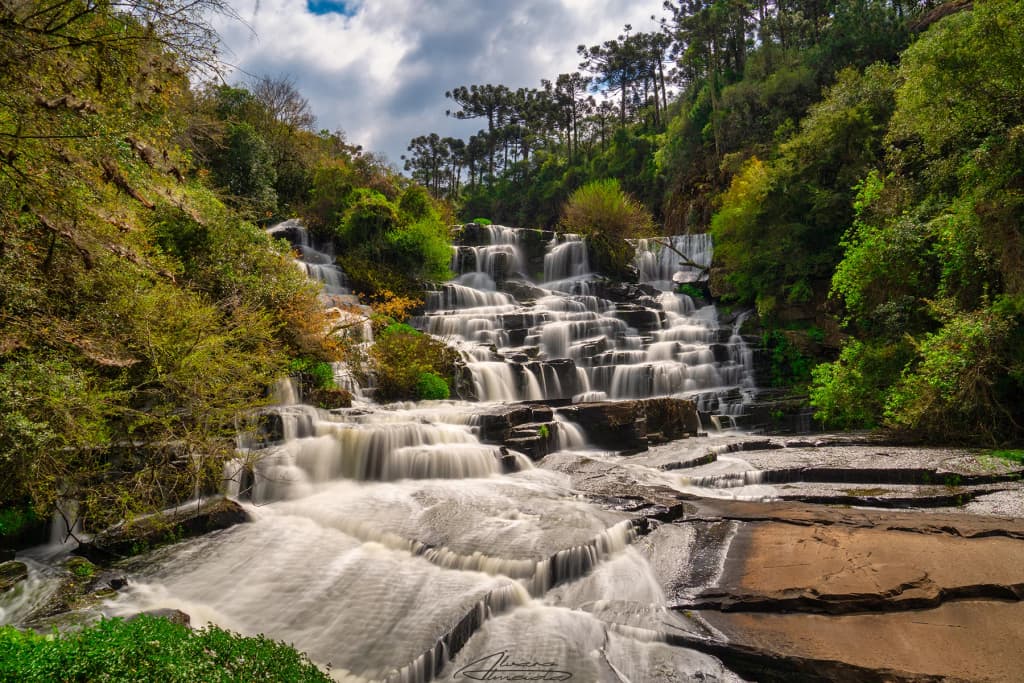
The mist clings to your skin before you even hear the roar. We bounce along a rutted dirt path in the back of a 4x4 with Brocker Turismo, the scent of damp earth and crushed pine needles filling the crisp morning air. The guide cuts the engine, and suddenly, the sound is deafening. We step out into a world painted entirely in shades of emerald and white. This is the valley floor, the absolute base of the Cascata do Caracol. The water plunges one hundred and thirty-one meters from the cliffs above, hitting the rocks with a violence that sends a permanent cloud of freezing spray into the air. A perfect, vivid rainbow arcs across the basin. You can visit the main park up top, arriving right when the heavy iron gates open at nine to catch the morning sun hitting the falls, but standing down here, drenched and staring up at the sheer force of nature, you feel the true pulse of the Serra Gaúcha.
The cold mountain air eventually drives you indoors, seeking warmth. The scent hits you the moment you push open the heavy wooden door of Castelinho Caracol: woodsmoke, old pine, and the sharp, sweet aroma of baking apples. The house is a masterpiece of pioneer engineering, built entirely of Araucaria wood without a single iron nail. The floorboards creak softly underfoot as I wander toward the kitchen, where the heat of a wood-burning stove radiates outward.
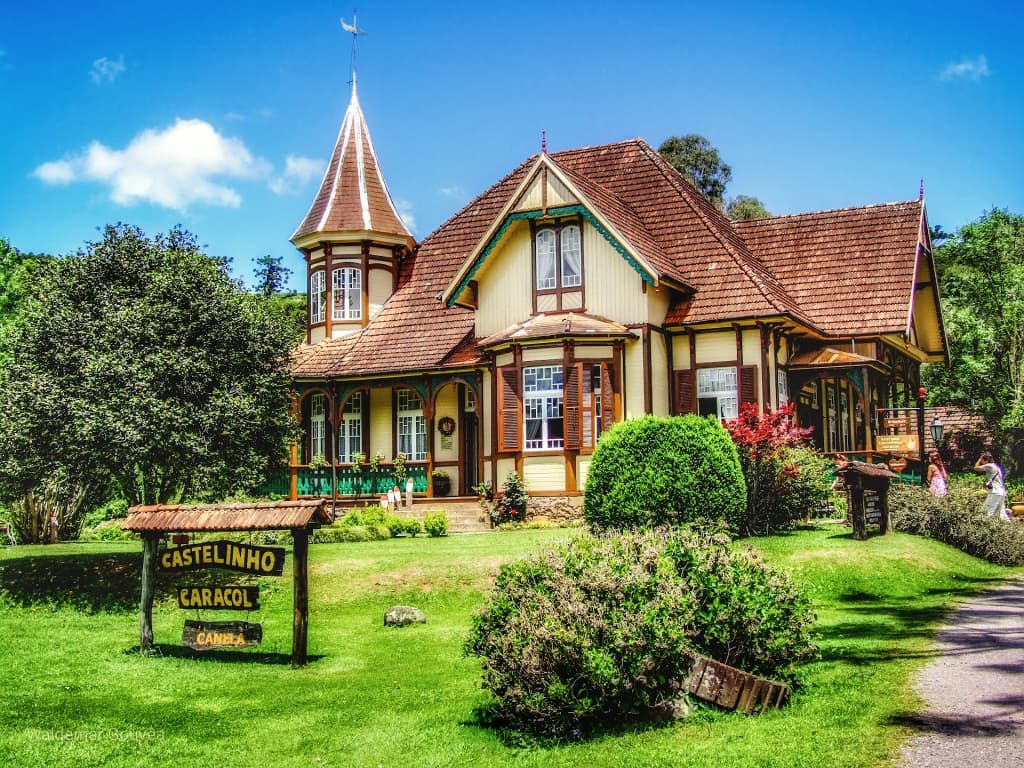
"You're looking at the joints," a woman says, wiping her flour-dusted hands on a linen apron. She has kind, tired eyes and a smile that suggests she has welcomed thousands of strangers into this exact room.
"It's incredible," I say, tracing a perfectly flushed wooden peg in the doorframe. "It feels like it grew out of the earth."
"I am the great-granddaughter of the man who built it," she tells me, her voice swelling with quiet pride. "My great-grandfather cut the Araucaria and left it in the river out back for six months to cure, then dried it in the shade for another six. It took a year just to prepare the wood before a single wall was raised."
She slides a plate across the worn wooden counter. On it rests a thick slice of apple strudel, the pastry impossibly flaky, alongside a steaming mug of apple tea. She explains that the recipe is ninety years old, the dough made entirely without sugar. The sweetness comes only from the fruit itself. I take a bite. It tastes like history, warm and complex, melting on the tongue while the tartness of the tea cuts through the richness of the fresh cream poured over the top.
Canela is a town built on intersections. Long before the tourists arrived, this was a resting place for the tropeiros, the drovers who moved cattle across the vast southern plains. They would gather under a massive cinnamon tree—a canela—right in what is now the central square, Praça João Corrêa. The tree is gone, but the town that took its name still feels like a place where journeys converge.
Walking through the center, the quiet hum of the Estação Campos de Canella fills the air. It’s an old train station reborn beneath a sweeping glass roof, alive with the clinking of coffee cups and the low murmur of Portuguese. A few miles away, the industrial past of the world is preserved in miniature at Mundo a Vapor. The air there smells of machine oil and steam. Tiny pistons pump and miniature whistles shriek, including a perfect working replica of the smallest paper factory in the world. It is a whimsical nod to the steam-powered era that helped tame these wild mountains.
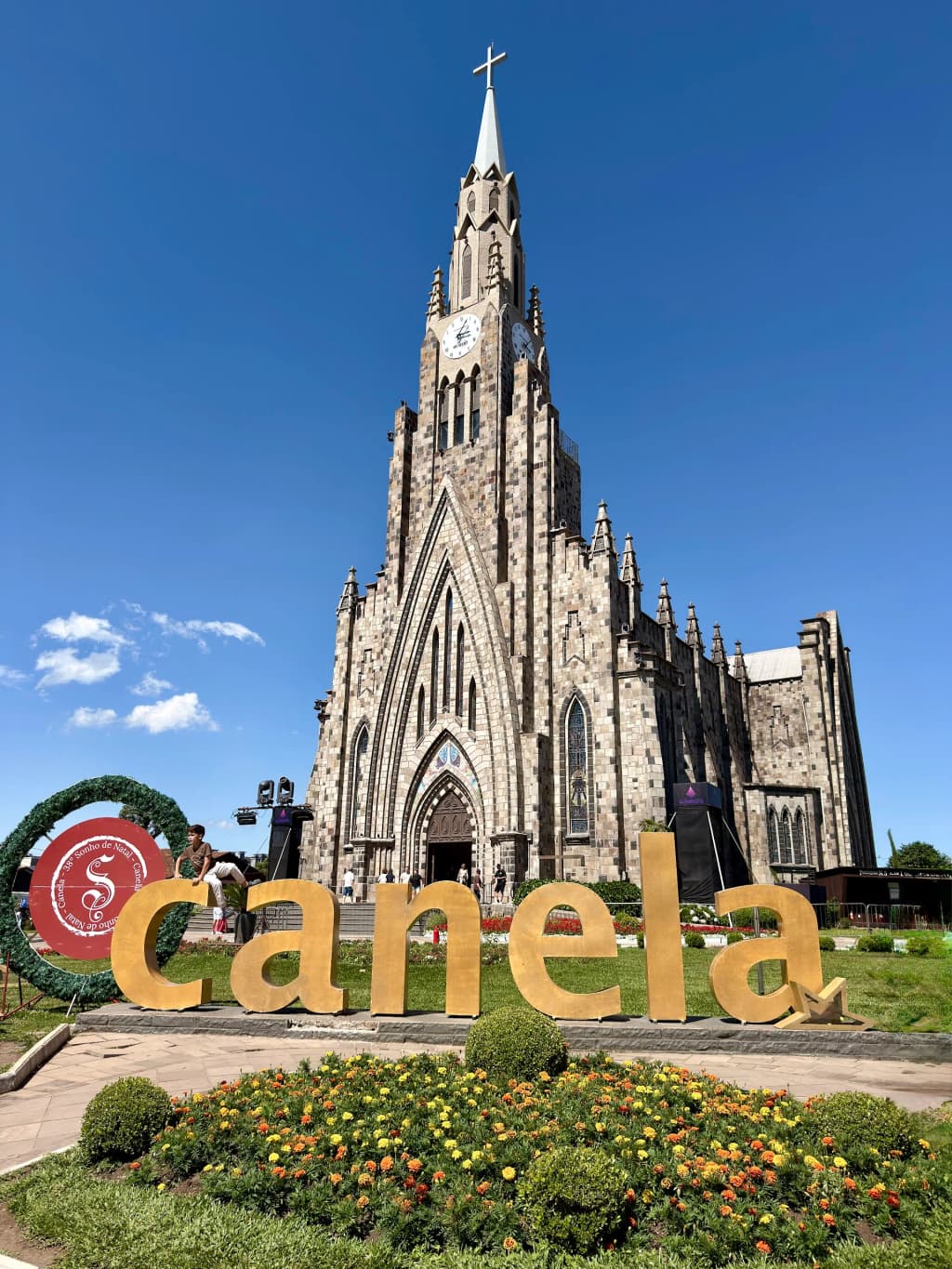
As daylight fades, the temperature plummets, biting at your cheeks. The Cathedral of Stone rises from the heart of the city, its imposing Gothic spires piercing the darkening sky. When night falls, the basalt facade is bathed in a shifting, colorful light show, drawing crowds who stand shivering but mesmerized in the plaza.
But the real warmth of a Serra Gaúcha night is found around the fire. At Garfo e Bombacha, the heat of the massive churrasco grills hits you like a physical force. The air is thick with the savory smoke of roasting meats and the rhythmic, stomping beats of traditional gaucho dancers. Waiters slice sizzling cuts of beef directly onto your plate, pairing it with rich, comforting bowls of capeletti soup. Or perhaps you find yourself climbing the one hundred and thirty-seven narrow stone steps to the top of the Farol brewery's tower, a thirty-meter basalt monolith. Standing on the windy observation deck, you watch the sun dip below the horizon, painting the towns of Gramado and Caxias do Sul in bruised purples and burnt oranges, before descending to a feast of heavy German goulash and a cold, dark pint of craft cacao beer.
The next morning demands a different kind of elevation. The drive out to the Vale da Ferradura—the Horseshoe Valley—winds through dense pine forests until the land simply drops away. Skyglass Canela is a marvel of glass and steel jutting out over the abyss. Stepping onto the transparent floor, three hundred and sixty meters above the winding river, requires a deep breath and a deliberate silencing of your primal instincts.
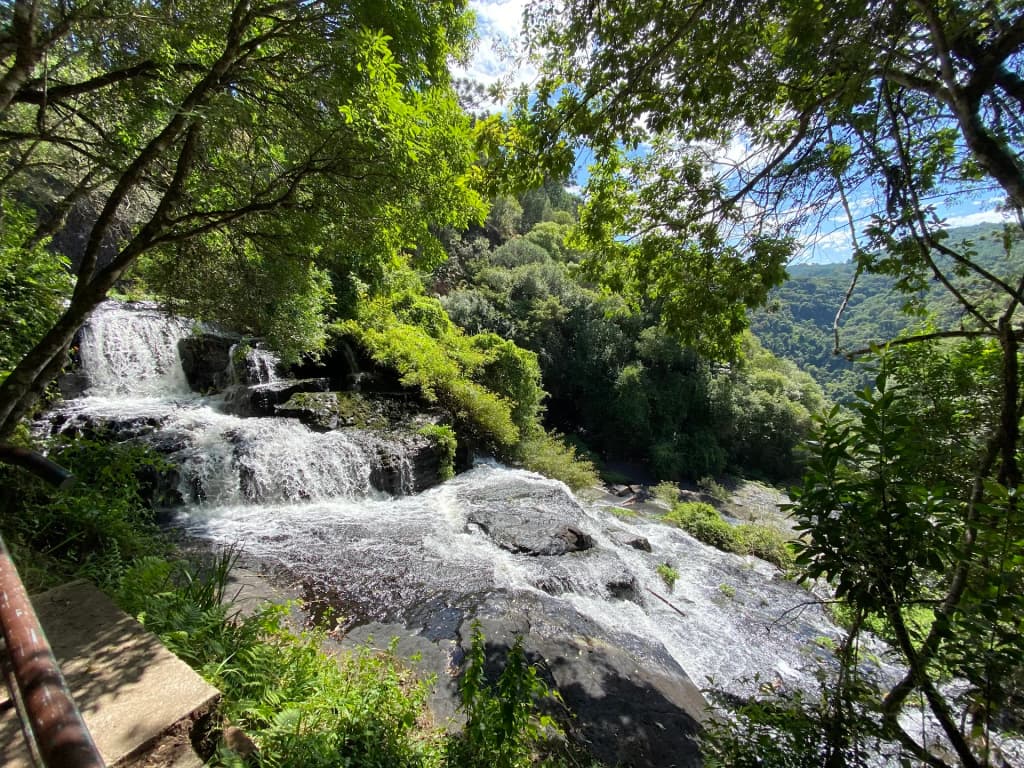
The glass is cold through my socks. I look down. The river is a tiny ribbon of silver cutting through the endless green canopy. For a moment, my stomach lurches, but as I force my gaze outward to the horizon, the fear dissolves into absolute awe. The wind howls up the canyon walls, carrying the faint, distant roar of unseen waterfalls. You feel incredibly small up here, suspended between the sky and the earth.
Not all monuments in Canela stand proud. Deep in the woods, far from the polished alpine facades of the town center, lie the ruins of the Palace Casino. Construction began in 1939, a grand vision of glamour and wealth for the summer crowds. But in 1945, the government banned gambling, and the workers simply laid down their tools and walked away.
I wander through the skeletal remains of the grand halls. There are no roofs, no windows. Thick vines wrap around the crumbling concrete pillars, and massive ferns have claimed what would have been the ballroom floor. It is eerily quiet, save for the wind rustling the leaves and the distant call of a mountain bird. It is a beautiful, melancholic place. Nature always wins in the end, reclaiming whatever ambition man leaves behind.
Sitting on a moss-covered chunk of masonry, the late afternoon sun filtering through the canopy, you realize that this is the true essence of Canela. It is not just the European architecture or the sweet apple pastries. It is the raw, untamed nature that surrounds it, the roaring waterfalls, the endless pines, and the deep, fertile earth that holds it all together. You don't just visit this part of Brazil; you feel it in your bones.
More Photos
More Adventures
 $50 - $150/day 1-2 days
 Conquer the Serra Verde Express: Brazil's Wildest Train
Ditch the tourist traps and ride the Serra Verde Express from Curitiba to Morretes. Discover ticket tips, seating secrets, and the best Barreado.
 $150 - $300/day 1-2 days
 Conquer Epcot: The Ultimate High-Speed Global Gauntlet
Think Epcot is a slow stroll? Think again. It's a high-speed, globe-trotting gauntlet. Hack the rides, taste the world, and push your limits in Orlando.
 $40 - $100/day 3-4 days
 Campos do Jordão Itinerary: Budget Guide & Hiking Logistics
Plan a practical trip to Campos do Jordão, Brazil's highest city. Get exact costs for state parks, hiking Pedra do Baú, and budget-friendly dining.
 $50 - $120/day 3-5 days
 Chasing Echoes and Gold Dust in Tiradentes, Brazil
Experience Tiradentes, Brazil through a sensory journey of colonial architecture, deep-rooted history, and the rich culinary traditions of Minas Gerais.