
Cartagena: Heat, Stone, and the Rhythm of the Walls
A narrative journey through Cartagena's walled city, the tunnels of Castillo San Felipe, and the sensory overload of Getsemani. Practical tips woven into a story of heat and history.
The heat presses against my skin like a heavy, wet towel. I am standing near the Clock Tower, already defeated by the humidity, when a flash of yellow and red cuts through the grey stone. She balances a basin of fruit on her head with the grace of a dancer, her dress bright enough to hurt my eyes in the midday sun. She is a Palenquera, one of the women who have become the living, breathing icons of this city.
"You are melting," she says. It is not a question. She shifts the basin effortlessly, the tropical fruit smelling of sugar and fermentation.
"I am," I admit, wiping my forehead with a damp sleeve. "How do you stand it?"
She laughs, a deep, chesty sound that rises above the traffic noise. "We are made of fire here. You are made of ice cream."
She sells me a slice of pineapple, and I pay for the photo. It feels less like a transaction and more like an admission fee to the atmosphere of the street. I walk along the top of the murallas—the massive stone fortifications that wrap around the old city. Below me, the Caribbean Sea slams against the rocks, sending up a spray of salt that mixes with the thick scent of frying arepas drifting from the vendors below. The air is thick, carrying the weight of centuries.
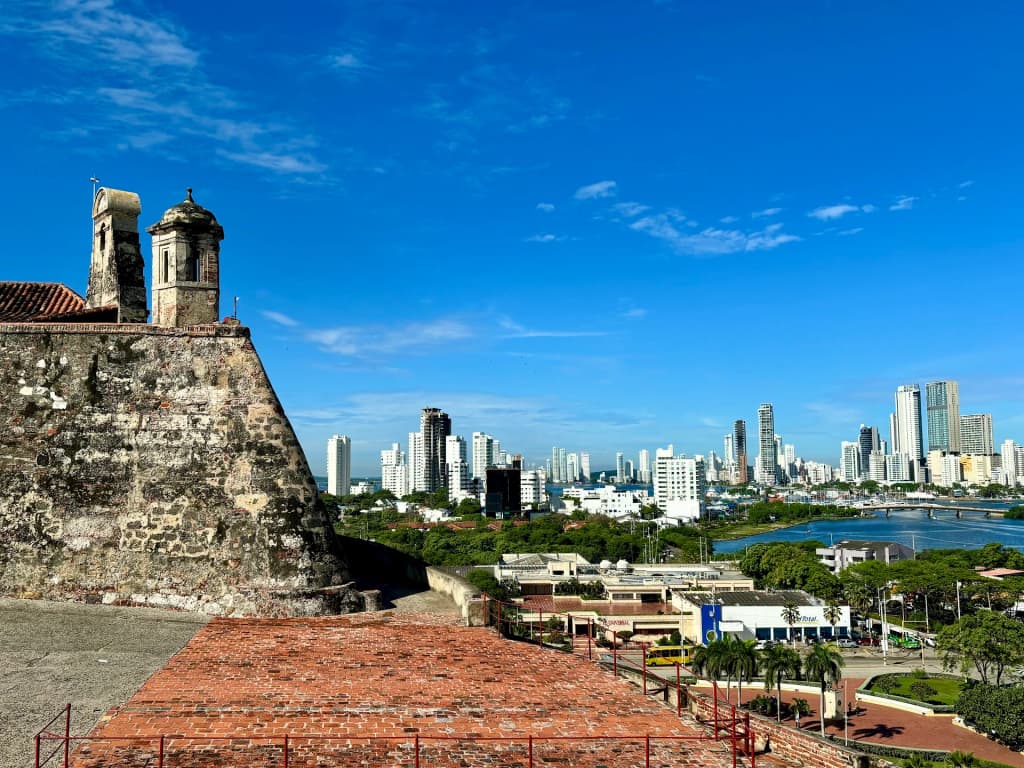
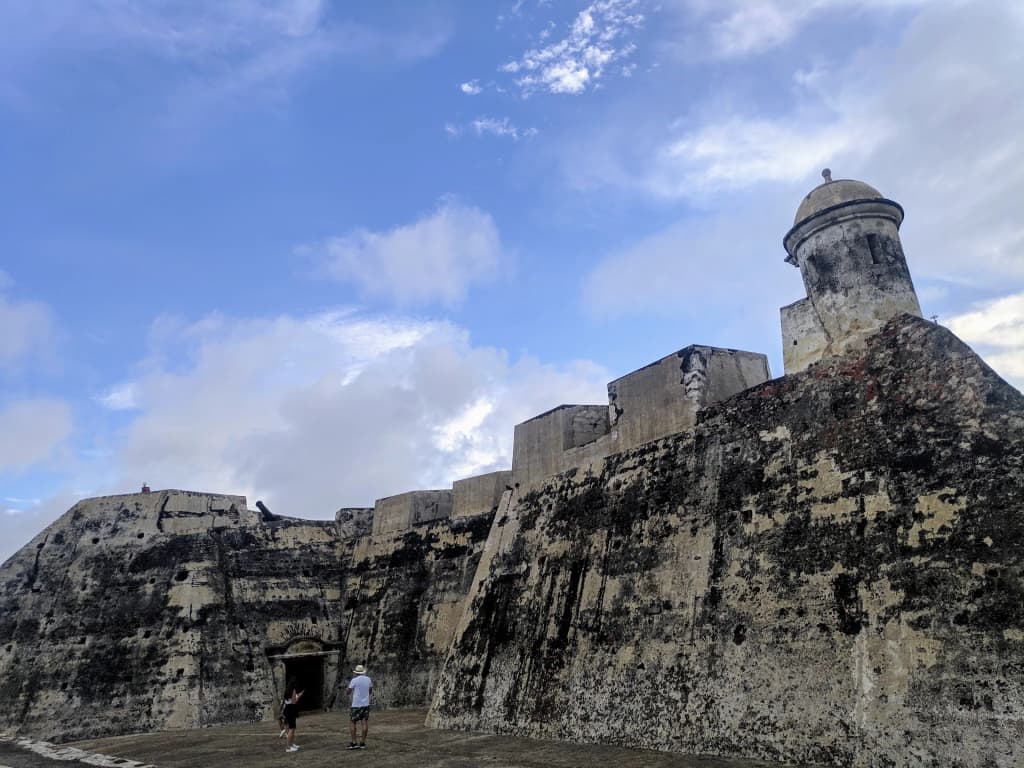
If the walled city is the heart of Cartagena, the Castillo San Felipe de Barajas is its clenched fist. I take a taxi to the base of the hill, grateful for the five minutes of air conditioning. The fortress looms above, a geometric monster of stone designed to break the spirits of pirates and empires alike.
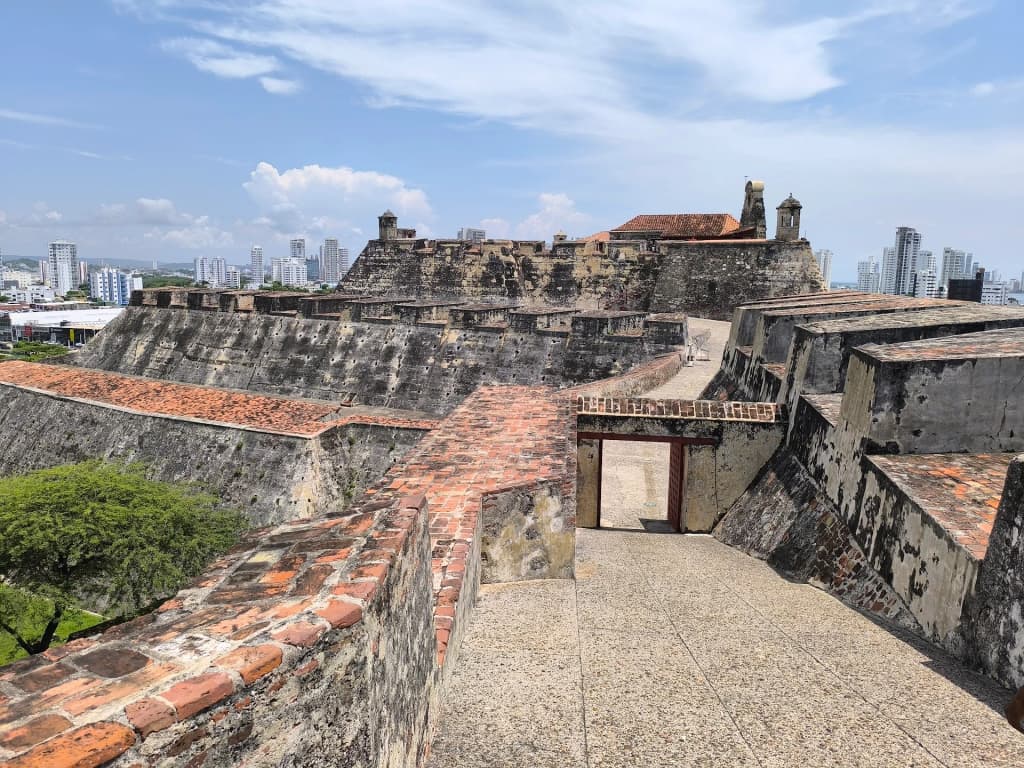
I pay the entrance fee—about 25,000 pesos, a small price for walking through history—and begin the climb. The sun is relentless up here. It bakes the limestone until the heat radiates through the soles of my shoes. I seek refuge in the tunnels. These subterranean passages were built to confuse invaders, a complex network where sound travels in strange ways.
Inside, the air instantly cools, smelling of damp earth and old wars. It is quiet, a stark contrast to the chaotic horns of the city below.
"Watch your head," a guide whispers to a group ahead of me. "The Spanish soldiers were not tall men."
I run my hand along the rough wall. You can feel the age here, not as a number in a guidebook, but as a physical presence. This structure is a survivor.
By early afternoon, the humidity demands a pause. I retreat to the walled city and find the door to Café San Alberto. Locals tell me this is the most awarded coffee in Colombia, and the claim seems plausible the moment I step inside. The aroma is complex—chocolate, nuts, and something floral that I can't quite place.
The barista pours a slow drip with surgical precision. I take a sip. It is smooth, lacking the bitterness that haunts cheaper brews. It wakes me up, shaking off the lethargy of the midday sun.
Energized, I leave the polished colonial streets for Getsemani. If the old town is a museum, Getsemani is a living room. It is grittier, louder, and undeniably alive. Graffiti covers the crumbling plaster walls—murals telling stories of resistance, joy, and the Afro-Colombian roots of this coast. Music bleeds out from open doorways. Salsa, champeta, reggaeton.
I stop for lunch at San Valentin. The menu is a dizzying array of seafood, but I settle for fresh fish and the drink everyone insists I try: limonada de coco. It arrives frothy and white. The first sip is a revelation—the sharp tartness of the lime perfectly cutting the rich creaminess of the coconut. It might be the most refreshing thing I have ever tasted.
As the afternoon stretches into evening, the city's rhythm shifts. I make my way back to the walls, specifically to Café del Mar. It is crowded. It is expensive. The music is a constant, thumping house beat that vibrates in your chest. But when you find a spot by the railing and look west, the crowds disappear.
The sun begins its descent into the Caribbean. The sky turns a bruised purple, then a fiery orange. Down in the bay, I see the silhouettes of catamarans gliding across the water, their white sails catching the last of the light. I make a mental note to book one for tomorrow; seeing the city from the water seems like the only perspective I'm missing.
The air cools, just slightly. The streetlights flicker on, casting long shadows against the cathedral and the museums. Cartagena doesn't sleep; it just changes its tempo. I lean back against the warm stone, the cold condensation of a drink in my hand, watching the night reclaim the city.
More Photos
More Adventures
 $100 - $300/day 1-3 days
 Escape the Airport: Conquer Your Luanda Layover
Think a layover in Luanda means killing time at the airport? Think again. Discover the fortress, island sunsets, and the ultimate Angolan adventure.
 $50 - $150/day 3-5 days
 Tango, Steak, and Rivalries: A Buenos Aires Story
Experience the soul of Buenos Aires. From the colorful streets of Caminito to the modern elegance of Puerto Madero, discover where to eat, walk, and explore.
 $150 - $300/day 1-2 days
 Conquer Epcot: The Ultimate High-Speed Global Gauntlet
Think Epcot is a slow stroll? Think again. It's a high-speed, globe-trotting gauntlet. Hack the rides, taste the world, and push your limits in Orlando.
 $50 - $150/day 1-2 days
 Conquer the Serra Verde Express: Brazil's Wildest Train
Ditch the tourist traps and ride the Serra Verde Express from Curitiba to Morretes. Discover ticket tips, seating secrets, and the best Barreado.