
Chicago Travel Guide: Steel, Soul, and Deep Dish Pizza
Wander through Chicago's towering skyscrapers, taste authentic deep-dish pizza, and experience the soulful jazz that warms this Midwestern metropolis.
The wind hits you the moment you step out of the station. It is a sharp, unforgiving blast off Lake Michigan that smells of wet asphalt, exhaust, and the sweet, smoky aroma of roasting almonds from a nearby street cart. I pull my heavy wool coat tighter, but the cold here in Chicago is something you do not just feel—you wear it like a second skin. Yet, as I look up at the towering canyons of steel and glass, the chill fades into a deep, quiet awe. This is a metropolis that quite literally rose from its own ashes. In 1871, a devastating fire wiped out a third of the city, leaving nothing but scorched earth and smoke. Instead of surrendering to the ruin, Chicago became the site of one of the greatest urban reconstruction efforts in American history. It inaugurated a new era of modern architecture, birthing the world's very first skyscraper. Walking these grid-like streets feels less like navigating a city and more like wandering through a masterclass in human resilience, where every iron beam and terra cotta facade tells a story of survival.
The heavy wooden door of the diner swings shut behind me, instantly silencing the metallic roar of the L train passing overhead. Inside, the air is thick, warm, and heavy with the scent of melting mozzarella, roasting garlic, and the lingering sweetness of caramel popcorn from a shop down the block. I slide into a cracked leather booth just as a waitress sets down a massive, blackened cast-iron pan in front of the man at the next table.
"You're looking at it wrong," the man says, catching my stare and pointing a thick finger at the bubbling mountain of chunky tomato sauce and golden, butter-soaked crust.
"It's intimidating," I admit, watching the steam curl into the neon-lit air of the dining room.
He laughs, a deep, rumbling sound that briefly drowns out the faint jazz playing over the diner's speakers. "It is not just a pizza, my friend. It is a commitment. You will need a knife, a fork, and probably a nap afterward. Welcome to Chicago."
He is entirely right. The food here demands your absolute attention, anchoring you to the present moment. This is the city that invented the brownie, a dense, chocolatey creation born in the kitchen of the Palmer House Hotel for the 1893 World's Fair. It is the home of the unapologetic Chicago hot dog, dragged through the garden with mustard, relish, celery salt, and sport peppers—with a strict, unspoken law forbidding ketchup. Even the snacks are monumental, like the legendary Garrett popcorn that perfectly balances sharp cheddar and sweet caramel in a single handful. When I eventually need a caffeine reset, I wander into the largest Starbucks reserve roastery in the world on Michigan Avenue. The line moves fast, and the scent of freshly roasted beans wraps around you like a warm blanket against the Midwestern chill.
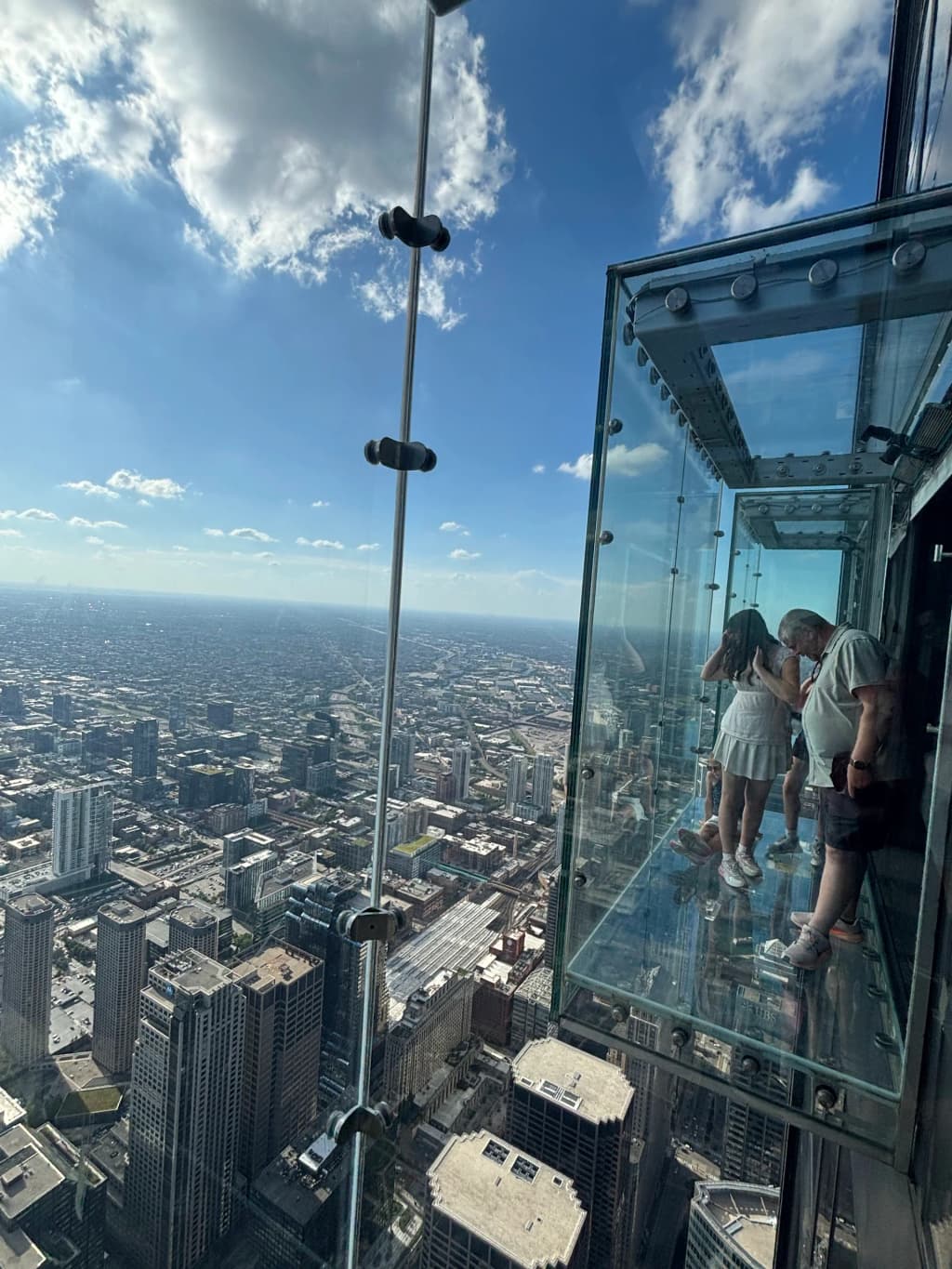
To truly understand the sheer vertical scale of this place, you have to leave the ground. I make my way to the Willis Tower, handing over the thirty-something dollar entrance fee at the desk with the absolute certainty that the perspective will validate the cost. The elevator ride is a rapid, ear-popping ascent that deposits you a hundred and three floors up, high above the low-hanging clouds. Here, you can step out into a glass box that extends outward from the side of the building, suspended entirely by the genius of modern engineering. Standing on the transparent floor, I look down at the tiny yellow cabs crawling like slow-moving beetles along the grid. My stomach does a brief, thrilling flip. You are floating above a city of giants, the icy wind howling silently against the thick glass pane that separates you from the abyss.
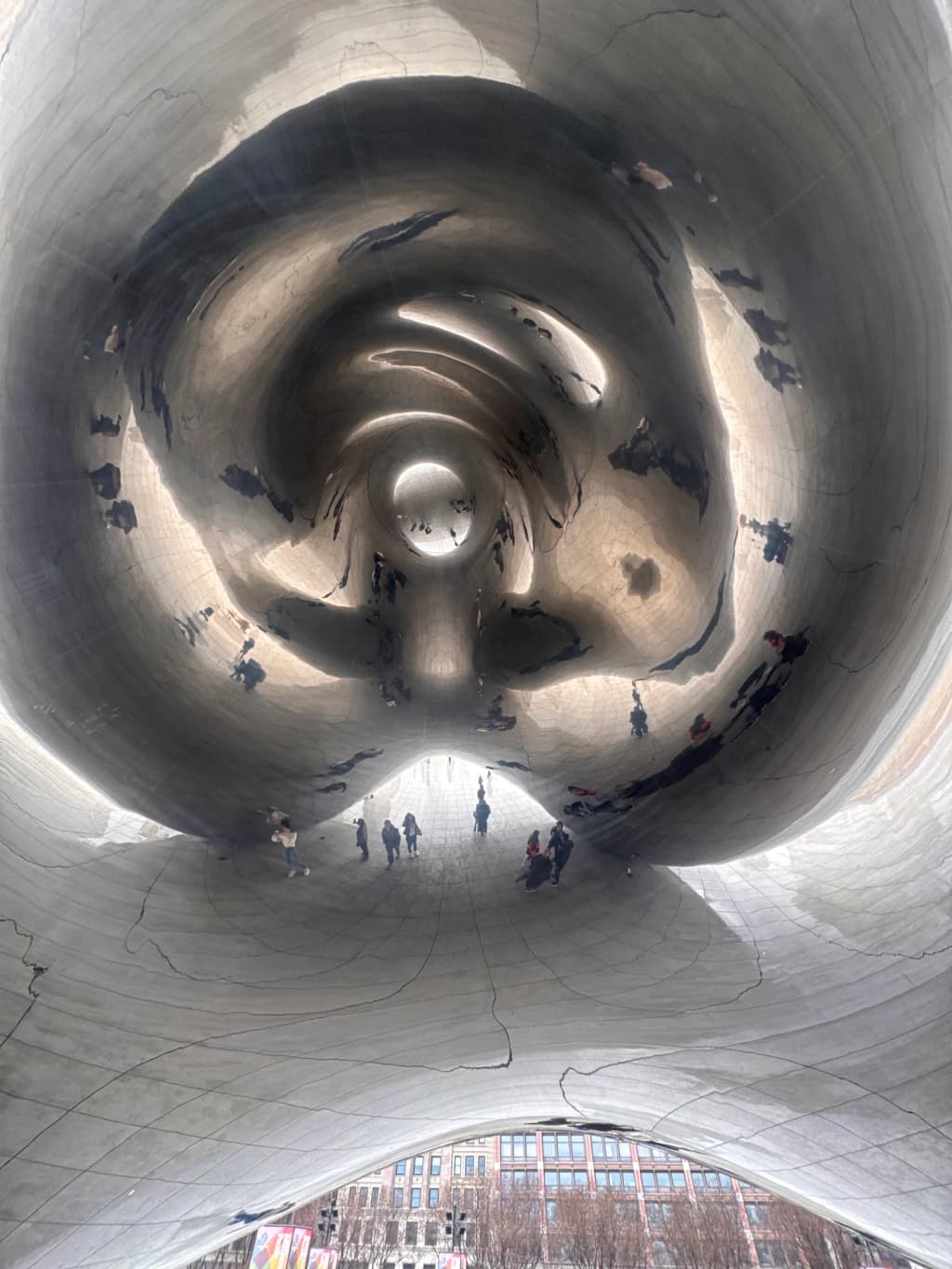
Back on solid ground, the cultural heartbeat of Chicago begins to thump in a different rhythm. This city functions as a sprawling, open-air gallery. I wander into Millennium Park, my boots crunching softly on the frost-kissed pavement, until I am standing beneath the massive, mirrored curve of Cloud Gate—affectionately known by everyone here as the Bean. The smooth silver surface warps and reflects the jagged skyline and the gray winter sky, pulling the massive city into a single, fluid drop of steel. Not far from here, the Art Institute houses some of the most famous paintings in the world. I arrive just as they are unlocking the heavy doors, and the ticket price feels insignificant once I am standing inches away from Seurat's pointillism and Hopper's late-night diner. But you do not need a ticket to experience Chicago's art. It is in the murals splashed across brick walls in Pilsen, the Broadway-caliber marquees glowing in the theater district, and the mournful, beautiful wail of a saxophone spilling out from a basement blues club. This was the cradle of electric blues and jazz, a destination for southern musicians migrating north. You can still hear the ghosts of those early pioneers in the rhythm of the streets, in the way the trains clatter against the tracks, and in the low hum of the city at midnight.
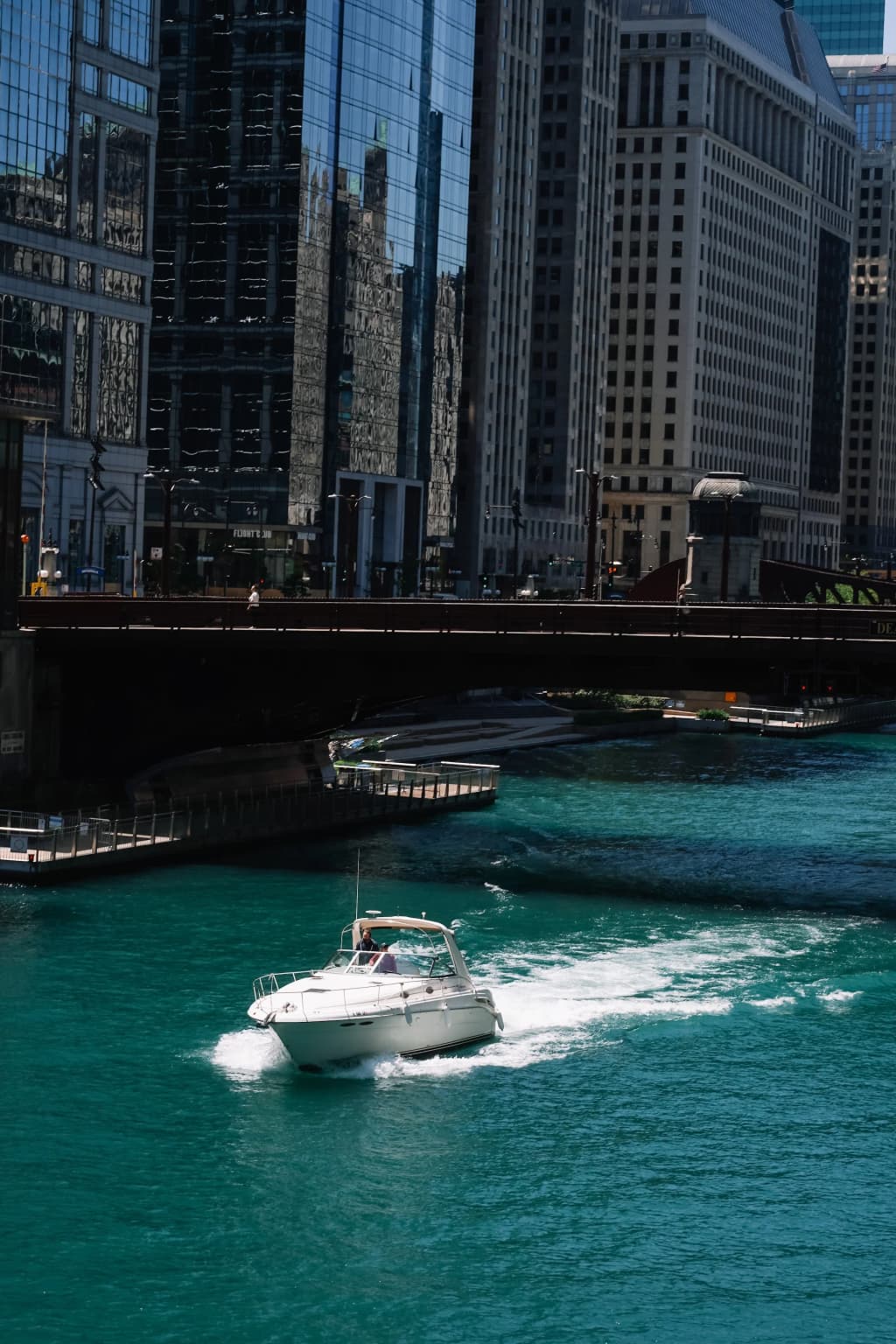
I walk east until the concrete and steel suddenly give way to water. Lake Michigan is so vast, so endlessly blue and turbulent, that calling it a lake feels like a geographical lie. It is an ocean in the middle of the American Midwest. Waves crash heavily against the concrete barriers, sending icy spray into the air that stings my cheeks. In the summer, locals tell me these shores are lined with sandy beaches and volleyball nets, a surreal sight against the backdrop of towering skyscrapers. Right now, in the grip of winter, it looks like a scene pulled straight from a movie. And perhaps it is. As I watch the water churn, I recognize the cinematic backdrop of Gotham City from Batman, the dystopian ruins of Divergent, and the nostalgic, snow-covered streets from Home Alone. You walk through Chicago with the constant, lingering sensation that you have been here before, living inside a film you loved long ago. The wind whips up again, carrying the scent of freshwater and impending snow. Even in the biting cold, runners jog along the paved lakefront path, their breath pluming in the freezing air, proving that Chicagoans do not hide from their weather—they embrace it.
As dusk settles, the city transforms. Millions of tiny, twinkling lights wrap around the bare branches of the trees along Michigan Avenue, turning the imposing urban jungle into a glowing winter fairy tale. The direct flight from Brazil was a long haul, but stepping into this crisp, magical Midwestern air makes the hours in transit vanish entirely. Despite being the third largest city in the United States, there is a profound, unexpected tranquility here. The people I pass on the street nod, smile, and hold heavy doors open against the wind. They possess a warmth that directly defies the freezing temperatures. I pull my collar up one last time, listening to the distant roar of a crowd cheering at a nearby sports bar, and realize that Chicago is not just a place you visit. It is a city that gets under your skin, settles deep in your bones, and quietly asks you to stay just a little bit longer.
More Photos
More Adventures
 $150 - $300/day 1-2 days
 Conquer Epcot: The Ultimate High-Speed Global Gauntlet
Think Epcot is a slow stroll? Think again. It's a high-speed, globe-trotting gauntlet. Hack the rides, taste the world, and push your limits in Orlando.
 $75 - $250/day 7-14 days
 The Ultimate Month-by-Month International Travel Guide
Stop gambling with your PTO. Discover the exact best (and worst) international destinations for every month of the year to optimize budget and weather.
 $200 - $450/day 1-2 days
 Chasing the Magic: An Immersive Day Inside the Kingdom
Experience the sensory overload and quiet corners of Magic Kingdom, from sunrise coaster rides to peaceful escapes across the Seven Seas Lagoon.
 $50 - $150/day 5-10 days
 Finding the Rhythm of Bahia: From Porto Seguro to Trancoso
Experience the sensory magic of Brazil's Costa do Descobrimento, from the chaotic nightlife of Porto Seguro to the barefoot luxury of Trancoso's beaches.