
Finding the Rhythm of Bahia: From Porto Seguro to Trancoso
Experience the sensory magic of Brazil's Costa do Descobrimento, from the chaotic nightlife of Porto Seguro to the barefoot luxury of Trancoso's beaches.
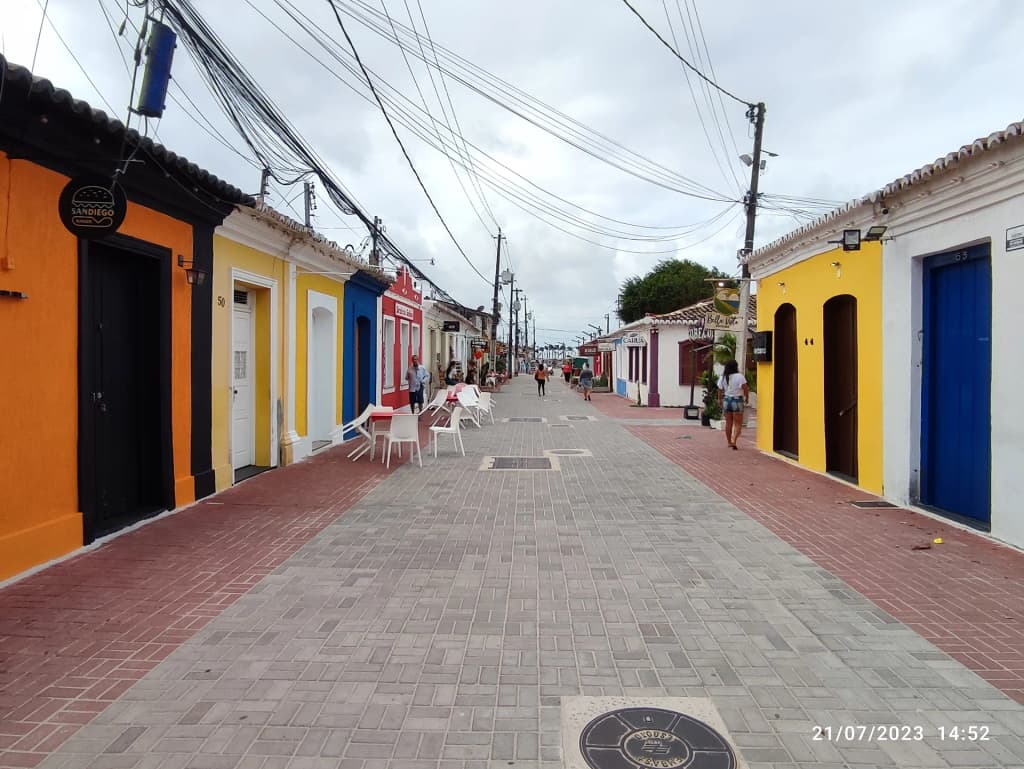
The pastel facades of the old fishermen’s houses blur into a wash of mango yellow, faded indigo, and coral pink under the blinding Bahian sun. The cobblestones radiate heat straight through the thin soles of my canvas shoes. This is the Passarela do Descobrimento in Porto Seguro, though if you ask anyone who has lived here long enough, they still call it by its former, more notorious name: the Passarela do Álcool. Right now, in the midday lull, it is a sleepy stretch of artisan shops and empty patios. The salt air off the Atlantic mixes with the faint, lingering scent of dried coconut and old wood from the former warehouses that line the street. It is quiet. Almost too quiet. But that is the trick of the Costa do Descobrimento—it lulls you into a state of absolute relaxation before the sun goes down, saving your energy for what is to come.
Fast forward six hours, and the transformation is absolute. The quiet street is now a pulsing artery of sound, smoke, and bodies moving to a relentless beat. The wooden carts have been rolled out, positioned shoulder to shoulder, their awnings strung with bare incandescent bulbs that cast a warm, golden glow over the crowds. The smell of melting butter on hot iron griddles competes with the sharp, sweet tang of tropical fruits being mashed into plastic cups. Laughter spills out from the open-air bars, weaving through the rhythmic thumping of a distant drum and the clatter of ice in aluminum shakers.
"You are looking, but you are not drinking," the man behind a brightly painted cart observes. His hands are a blur of motion, tossing crushed ice and brightly colored liquids into a tall metal cup.
"I am pacing myself," I tell him, raising my voice over the hiss of a nearby tapioca grill. "I heard about the drinks here. I need to survive the night."
He flashes a brilliant, gap-toothed smile and taps a heavy glass bottle of vodka against the wood of his cart. "Pacing is for the big cities, meu amigo. Here in Bahia, we have the Capeta. The Devil. It will make you dance even if you have no rhythm." He slides a plastic cup across the counter, a thick, frothy concoction of vodka, condensed milk, cinnamon, and raw guaraná powder. "On the house. To welcome you to the south."
The drink is dangerously sweet, coating the tongue with sugar and spice before the alcohol burns its way down the throat. It tastes like poor decisions and perfect memories, exactly the kind of fuel required for a night on the Passarela.
The next morning requires an entirely different kind of fortitude. The climb up to the Centro Histórico, the upper city, is steep enough to leave me panting, a thin layer of sweat prickling at my collar. The physical effort, born of too many Capetas and a sheer lack of preparation, is a small price to pay. When you finally crest the hill, the wind catches you instantly—cool, constant, and carrying the endless expanse of the blue ocean.
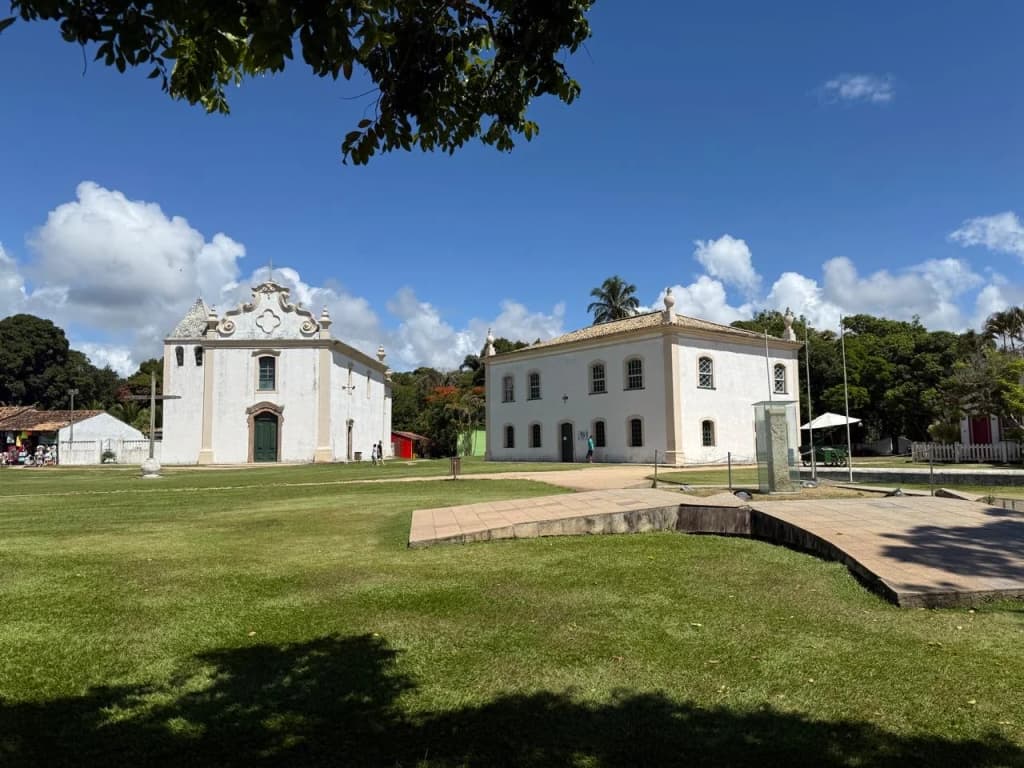
This is one of the oldest settlements in Brazil. Centuries ago, the wealthiest families built their homes up here, safely elevated above the working port below, commanding the absolute best views of the coast. The grassy square is flanked by bone-white colonial churches and low-slung historical buildings that seem to glow against the saturated blue of the sky. I run a hand along the rough, sun-baked plaster of an old wall, feeling the centuries of history baked into its uneven surface. It is peaceful up here. The chaotic, relentless energy of the lower town feels miles away.
Looking out over the water, where the Portuguese ships first dropped anchor so long ago, it is easy to understand why someone would claim this land and never want to leave. In fact, there is a running joke among travelers here: if you want to win someone's heart permanently, you buy them a ticket to Bahia. The region does the rest of the work for you. The combination of the heat, the history, and the gentle rhythm of the ocean is a potent romantic cocktail.
But Porto Seguro, for all its historic charm and nocturnal intensity, is merely the gateway. I pack my bags and move further south down the coast. While you can certainly base yourself in the city, the true rhythm of Bahian relaxation is found a short ferry ride across the river in Arraial d'Ajuda, or further down the winding roads to Trancoso. These are the places where the infrastructure bends entirely toward the art of lingering.
The ferry ride across the Buranhém River takes barely ten minutes, but it feels like crossing into another time zone. The engine hums a low, steady vibration through the metal deck, and the salty spray kicks up over the railing, cooling the midday heat. On the other side, Arraial d'Ajuda waits with its steep, winding streets and cascading bougainvillea. But I push further south, letting the local vans, the vans alternativas, rattle me down the dirt roads toward Trancoso.
The transition is immediate and physical. The paved streets give way to sandy paths. The frantic calls of the night vendors are replaced by the gentle rustle of palm fronds and the rhythmic crash of the tide against the shore. In Trancoso, the famous Quadrado—a rectangular grassy square lined with colorful, impossibly chic boutiques and restaurants—feels like a secret village hidden at the edge of the world. There are no streetlights here; when night falls, the square is illuminated only by lanterns hanging from the ancient almond trees and the soft glow of candlelight spilling from open doorways. I drop my bags at a small pousada and head straight for the water. The sand is powder-soft, burning the tops of my feet before I plunge into the warm, emerald-green waves of the Atlantic.
Sitting on the beach as the late afternoon light turns the sky into a bruised canvas of violet and orange, I watch a local fisherman drag his small wooden boat onto the sand. The air smells of salt, wet earth, and roasting garlic from a nearby beach shack firing up its kitchen for the evening. The Costa do Descobrimento isn't just a place you visit to check historical markers off a map. It is a total sensory immersion. It is the burn of cinnamon in a midnight drink, the ache in your calves after climbing centuries-old steps, and the absolute stillness of a hammock swaying in the evening breeze. You don't just see Bahia. You feel it settle deep into your bones, and long after you pack your bags and leave, the rhythm remains.
More Photos
More Adventures
 $40 - $80/day 2-4 days
 Boa Vista: Exploring the Amazon's Fan-Shaped Frontier City
Experience the unexpected beauty of Boa Vista, Roraima. Discover Macuxi indigenous crafts, the unique Lavrado biome, and sunset boat tours on the Rio Branco.
 $150 - $300/day 1-2 days
 Conquer Epcot: The Ultimate High-Speed Global Gauntlet
Think Epcot is a slow stroll? Think again. It's a high-speed, globe-trotting gauntlet. Hack the rides, taste the world, and push your limits in Orlando.
 $50 - $120/day 3-5 days
 Chasing Echoes and Gold Dust in Tiradentes, Brazil
Experience Tiradentes, Brazil through a sensory journey of colonial architecture, deep-rooted history, and the rich culinary traditions of Minas Gerais.
 $50 - $150/day 1-2 days
 Conquer the Serra Verde Express: Brazil's Wildest Train
Ditch the tourist traps and ride the Serra Verde Express from Curitiba to Morretes. Discover ticket tips, seating secrets, and the best Barreado.