
Silence and Stone: A Sensory Journey Through the Italian Dolomites
A narrative road trip through the Italian Dolomites, from the emerald waters of Lago di Braies to the luxury of Alpe di Siusi and the peaks of Tre Cime.
The rain here doesn't just fall; it hangs. It clings to the spruce trees and obscures the peaks of Val di Fiemme in a thick, brooding mist. I step out onto the balcony of the Hotel Bellamonte and the air tastes entirely different from the Italy I left behind this morning. Gone is the warm garlic and charcoal of the Mediterranean south. In its place is pine resin, damp earth, and a coldness that scrubs the lungs clean.
This is the gear shift I was promised. We have driven three hours from the chaotic humidity of Milan into the stoic silence of the Alps. As if on cue, the clouds begin to tear themselves apart on the jagged ridges above, revealing the pale limestone that gives these mountains their name. The sun breaks through, washing the wet valley in a sudden, blinding gold.
To chase the light here, you need a car. The region is vast, and the public transport, while efficient, cannot keep pace with the whims of the weather. We drive deeper into the Paneveggio Pale di San Martino park, trading the open valley for a canopy so dense it swallows the sound of our engine. We are here to meet Martina, a local guide who knows these woods better than she knows the city streets.
We cycle on e-bikes toward the deer reserve, the electric hum barely audible over the crunch of gravel. "They are shedding now," Martina whispers, stopping near a wire fence. She points to a stag standing motionless in the shadows. "Shedding fur?" I ask. "No, the antlers," she says, her voice full of reverence. "Every year they fall, and every year they grow back. It is a heavy crown to wear, so nature lets them put it down for a while."
We ride on through the "Violin Forest," a name that feels hyperbolic until you learn that Stradivarius himself sourced his spruce wood here. The trees grow slow and straight in the cold, creating wood with resonance so perfect it sings. With the wind rushing past my ears, the forest does seem to hum.
The driving itself becomes the destination. The road winds upward, hairpin after hairpin, until we reach Lago di Carezza. They call it the "Rainbow Lake," and standing at the edge, the name feels inadequate. The water is a hallucination of teal and emerald, a flawless mirror for the Latemar mountains looming behind it.
It is smaller than the photos suggest, a precious jewel dropped into the dark forest, but the visual impact is massive. I walk the perimeter trail, watching the reflection shift with every step. It is a place of legends—stories of a sorcerer who threw a rainbow into the water to woo a mermaid—and looking at the impossible color, the myths feel more plausible than the geology.
We climb higher still, aiming for the vast plateau of Alpe di Siusi. This is Europe's largest high-altitude alpine meadow, sitting at nearly 2,000 meters, and it is guarded like a fortress. The road is closed to private traffic between 9:00 AM and 5:00 PM to preserve the silence. We timed our arrival for late afternoon, showing our reservation at the checkpoint to let the barrier rise.
Checking into the Como Alpina Dolomites feels less like entering a hotel and more like stepping into a modern gallery where the art is the landscape itself. Glass walls frame the Sassolongo peaks, bringing the jagged rock right into the lounge.
"You must try the Baba," the waiter insists. He sets down a plate that looks like a traditional Neapolitan dessert, but the scent is wrong. "Is that... gin?" I ask. He smiles. "Gin and pistachio cream. The rum is for the sailors. Up here, we use the spirits of the mountains." It is sharp, sweet, and crunchy—a sophisticated twist that mirrors the environment outside: refined luxury perched on the edge of raw wilderness.
The next morning demands an early start. We leave the comfort of the plateau for Val di Funes, stopping briefly to see the church of San Giovanni. It stands alone in a rolling meadow, a tiny speck of human defiance against the overwhelming scale of the Odle mountains. It is quiet here, the kind of quiet that rings in your ears.
From there, we race the clock to Lago di Braies. We arrive before 8:00 AM, paying the parking fee and walking to the water's edge before the tour buses descend. The lake is famous, perhaps too famous, but at this hour, it is still ours. We rent a wooden rowboat for an hour. The fifty euros feels steep until we push off from the dock and drift into the center of the emerald expanse.
Rowing is a physical conversation with the water. My arms burn in the chill morning air as I try to find a rhythm. "You're going in circles," my partner laughs from the stern, camera in hand. "I'm taking the scenic route," I lie, correcting my stroke. The silence out here is absolute, broken only by the splash of the oars and the distant, melodic clanging of cowbells from the high pastures. It feels cinematic, not in the way of a blockbuster, but like an indie film where nothing happens and yet everything changes.
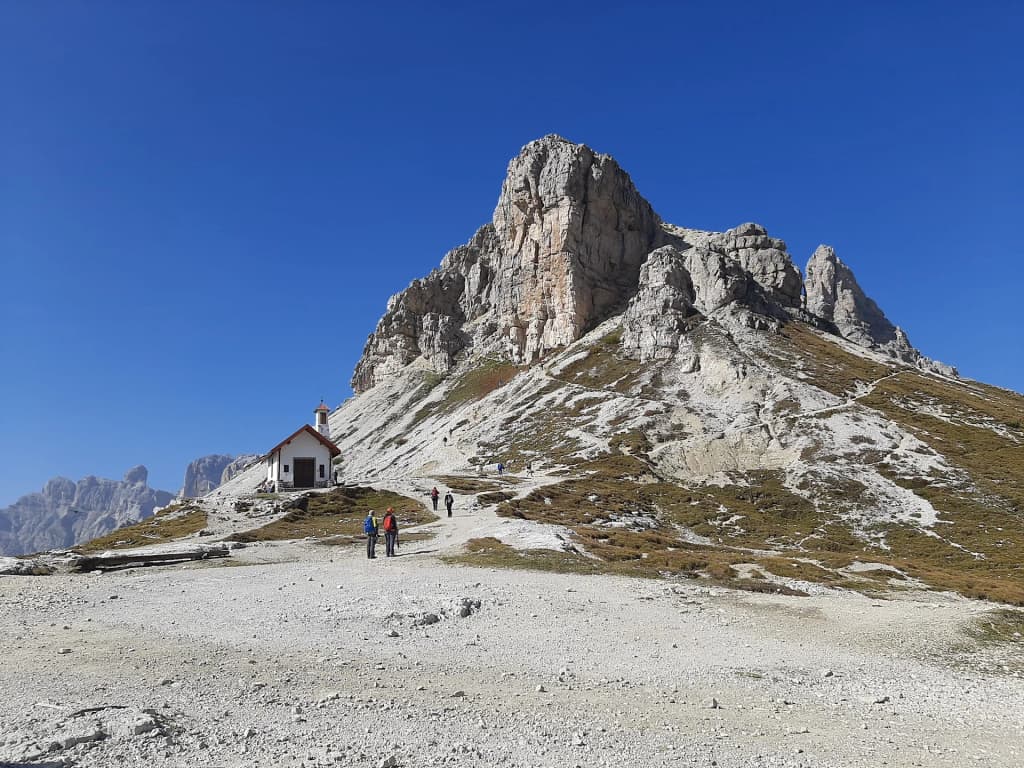
Our final ascent is to the symbol of the Dolomites: Tre Cime di Lavaredo. The toll road up is expensive—30 euros for a car—but the fee becomes irrelevant the moment you step out at 2,400 meters. The air is thin and crisp.
The hike is not a solitary experience; the path is wide and filled with families, dogs, and serious trekkers. Yet, the scale of the place swallows the crowds. We walk past the Rifugio Lavaredo, where patches of snow still cling to the shadows despite the summer sun.
"The winter was long," a local hiker tells me as we pause to catch our breath near a ridge. He points his walking stick at a drift of white. "Two weeks ago, you could not walk here without snowshoes." "And now?" "Now," he grins, "we enjoy the window that nature gives us."
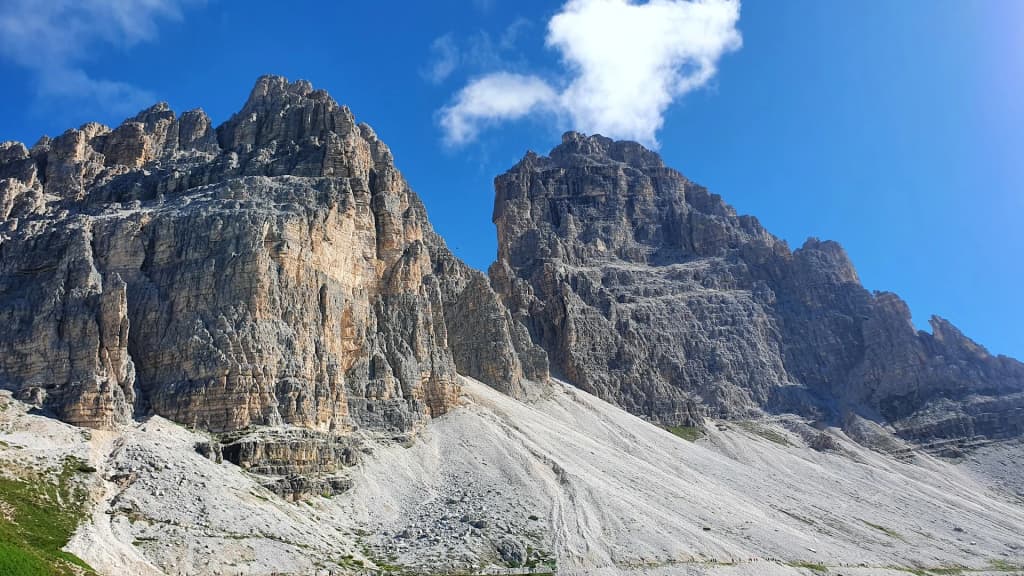
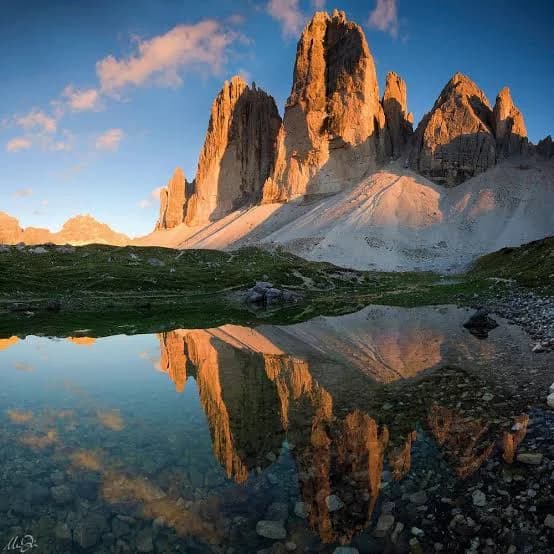
Rounding the final corner, the Three Peaks erupt from the scree. They are three massive monoliths of vertical rock, standing shoulder to shoulder like ancient titans. We find a spot away from the path to sit and just look. There is no need for photos, though we take them anyway. Sitting here, with the wind whipping my hair and the world falling away into the valleys below, I feel small. It is a comforting insignificance. The mountains do not care that we are here, and in a world that demands our constant attention, that indifference is the greatest luxury of all.
More Photos
More Adventures
 $50 - $150/day 3-5 days
 Misty Peaks and Wood-Fired Feasts in Visconde de Mauá
Experience the misty mountains of Visconde de Mauá, Brazil. Discover steep trails, cozy rain-lashed cabins, and the rich culinary heritage of Minas Gerais.
 $75 - $250/day 7-14 days
 The Ultimate Month-by-Month International Travel Guide
Stop gambling with your PTO. Discover the exact best (and worst) international destinations for every month of the year to optimize budget and weather.
 $150 - $300/day 3-5 days
 Conquer the Ice: A Raw Guide to Perito Moreno Glacier
Skip the tourist traps. Rent a car, brave the wild Patagonian weather, and trek across the jagged, electric-blue ice of the Perito Moreno Glacier.
 $120 - $250/day 1-2 days
 Hack the Alps: Milan to St. Moritz Day Trip on a Budget
Discover how to travel from Milan to St. Moritz on a budget. Skip the Bernina Express, take the regional train, and experience the Swiss Alps like a pro.