
Misty Peaks and Wood-Fired Feasts in Visconde de Mauá
Experience the misty mountains of Visconde de Mauá, Brazil. Discover steep trails, cozy rain-lashed cabins, and the rich culinary heritage of Minas Gerais.
The burn hits the lungs first, a sharp, metallic reminder of the altitude, followed quickly by the heavy, dull ache in the thighs. The damp earth of the Atlantic Forest clings stubbornly to the soles of my boots as I grip a thick, mud-slicked rope tied to an exposed tree root. After nearly two hours of hauling myself up the steep incline of the Pedra Selada trail, the dense, humid canopy finally breaks. The cold mountain wind slaps my face, carrying the faint, sweet scent of alpine vegetation and wet granite. I step onto the rocky summit, standing 1,755 meters above sea level, and the world opens up into a sprawling canvas of deep, saturated green. In the distance, the jagged silhouette of Pico das Agulhas Negras pierces the bruised sky. The fifteen reais handed over at the wooden trailhead gate, plus the ten for parking, feels like a ridiculous bargain for the sheer, dizzying scale of the valley stretching out below.
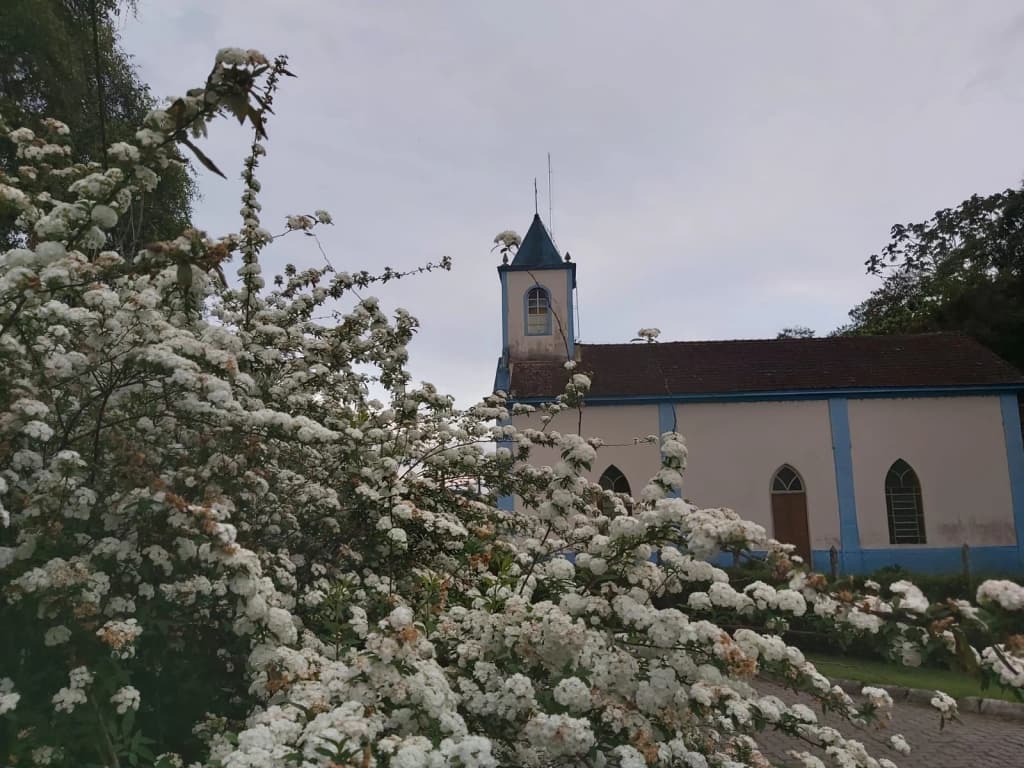
Down in the valley, the geography of Visconde de Mauá plays a quiet trick on the senses. The region is not a single town, but rather a trio of distinct villages—Visconde de Mauá, Maromba, and Maringá—strung together by winding dirt roads and the constant rush of water. It is in Maringá where the atmosphere shifts entirely. The air here smells perpetually of woodsmoke, wet pine needles, and roasting meats. I walk down the uneven cobblestone street, pulling my collar up against the descending mist, and cross a small, unassuming yellow bridge suspended over a rock-strewn river. The water roars beneath the wooden planks. Just like that, with a single footstep across the Rio Preto, I have left the state of Rio de Janeiro and crossed into the culinary heartland of Minas Gerais.
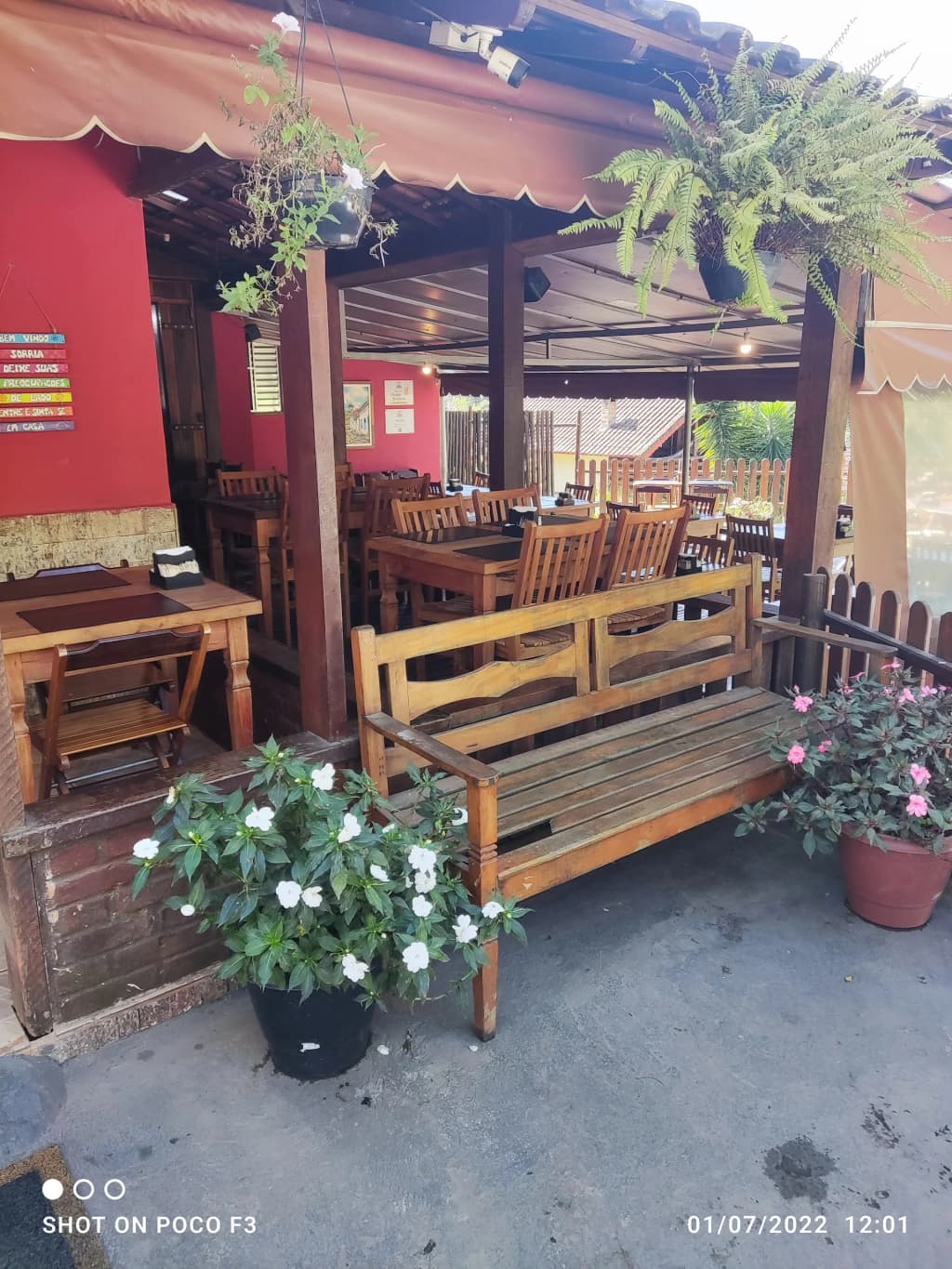
The radiant heat of a massive wood-fired stove pulls me out of the creeping mountain chill and into Restaurante Trem de Minas. The heavy iron pots bubble and hiss. Inside them, dark, rich feijão tropeiro simmers alongside shredded collard greens glistening with garlic, and thick, deeply spiced local sausages that pop in their own rendered fat. I load a ceramic plate—the vintage mechanical scale at the counter reads sixty-nine reais and ninety centavos per kilo, a number I completely forget the moment the first bite of crispy, golden torresmo shatters loudly between my teeth.
"Everything here is a family secret," the chef says, wiping his hands on a pristine white apron as he walks over to my table. He carries a heavy wooden tray lined with small, glass bottles glowing with amber, ruby, and deep violet liquids.
"Even these?" I ask, gesturing to the colorful homemade liqueurs catching the dim light.
He laughs, a deep, booming sound that seems to echo the physical warmth of the dining room. "Especially these. Banana, jenipapo, fig, rapadura. But you must try the jabuticaba."
He pours a small, precise measure into a shot glass. The dark purple liquid is sweet, incredibly tart, and coats the throat with a slow-burning heat. It settles in the chest, making the gray, drizzly afternoon outside feel like a profound blessing rather than a ruined itinerary.
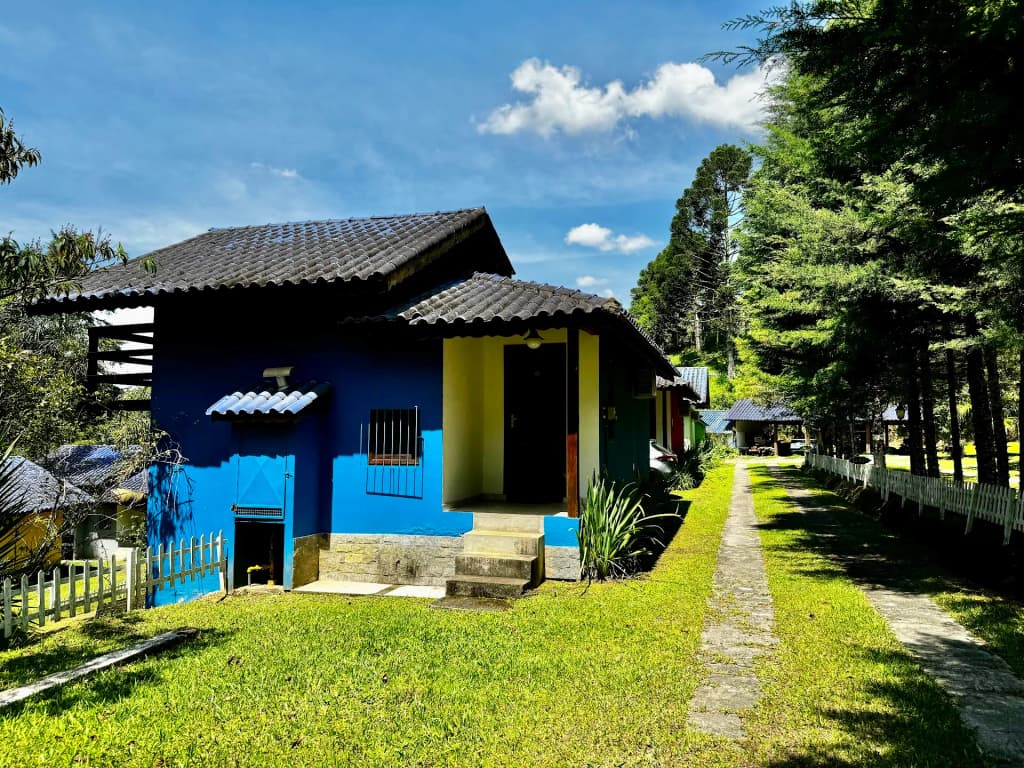
By the time I return to Pousada Rio dos Cristais, the sky has bruised into a deep, stormy purple, and the rain begins to fall in heavy, rhythmic sheets against the tin roof. I am staying in Chalet Ágata, a wooden sanctuary perched high enough on the hillside to make me feel like I am floating among the swaying eucalyptus and pine treetops. The stone fireplace is already crackling, filling the spacious room with the comforting, sharp scent of burning wood. There is a massive, family-sized soaking tub positioned perfectly by the panoramic windows. I turn the heavy brass taps, letting the steaming water fill the basin, and sink in just as the sun dips below the clouded horizon. The heat of the water contrasts sharply with the cool draft seeping through the window frames, casting a muted, silvery twilight over the mountains. The famous local waterfalls will have to wait for another trip. Right now, this quiet, rain-lashed cabin is the only world that matters.
The evening demands a return to the damp, glowing streets of the village, this time stepping into the warm embrace of Cogumelo Bistrô. The interior is dim and intimate, smelling intensely of earthy truffles, roasting garlic, and melting butter. The waiter brings out a dark stone slab sizzling with a variety of locally foraged mushrooms, melting artisanal cheeses, and tender cuts of filet mignon. But the true revelation comes in a glass. He sets down two locally brewed mushroom beers—one a crisp, golden pilsen, the other a dark, opaque stout. I take a sip of the stout. The earthy, umami undertones of the fungi weave through the roasted chocolate malt in a way that feels entirely foreign yet deeply comforting. I finish the night with a mushroom-infused dessert, marveling at how a single, humble ingredient can effortlessly carry the weight and complexity of an entire meal.
Morning breaks gray and stubborn. The rain continues to tap a gentle, unhurried rhythm against the glass doors of the chalet, firmly crossing the region's legendary waterfalls off the day's agenda. But as I sit in the warmly lit dining room of the pousada, surrounded by a sprawling, decadent breakfast spread of freshly baked corn cakes, steaming pão de queijo that pulls apart in stretchy, cheesy strands, and strong, dark coffee, the disappointment fades entirely. Travel is so often a frantic pursuit of checkboxes, summits, and clear skies. Yet, as I wrap my hands around the hot ceramic mug and watch the thick white mist roll slowly over the green peaks of Visconde de Mauá, I realize the profound luxury of being forced by the weather to simply sit, taste, and watch the world breathe.
More Photos
More Adventures
 $30 - $60/day 3-5 days
 Skip the Beach: The Mystical Quartz Mountain of São Thomé
Trade the beach for the mountains. Explore São Thomé das Letras, Brazil's off-grid quartz town. Dive into waterfalls, dark caves, and defy gravity.
 $150 - $350/day 3-4 days
 Trancoso Travel Guide: 3-Day Itinerary & Budget Breakdown
Plan a practical 3-day trip to Trancoso, Brazil. Discover the best beaches, UTV tours to Praia do Espelho, and exact costs to optimize your travel budget.
 $100 - $350/day 5-7 days
 Ditch Your Shoes: The Ultimate Jericoacoara Adventure Guide
Skip the tourist traps. Rent an ATV, dive into Buraco Azul, and taste the wild side of Jericoacoara. Your ultimate adventure guide to Brazil's sandy paradise.
 $40 - $100/day 3-4 days
 Campos do Jordão Itinerary: Budget Guide & Hiking Logistics
Plan a practical trip to Campos do Jordão, Brazil's highest city. Get exact costs for state parks, hiking Pedra do Baú, and budget-friendly dining.