
The Taste of Chili and Time Travel: Everyday Magic in Thailand
Immerse yourself in the sensory details of Thailand's deeply rooted culture, from Buddhist calendars and saffron-robed monks to street food rules.
The steam rising from the chipped ceramic bowl hits my face with the intense, funky aroma of fermented fish, bruised lemongrass, and a sharp spike of raw chili that makes my eyes water before I even pick up a spoon. Outside, the early morning traffic of motorbikes hums a chaotic, endless tune, but inside this small open-air guesthouse dining area, the air is heavy and still. I push away the laminated menu offering western pancakes and point instead to the savory noodle soup the locals are eating at the adjacent metal table.
"You want the fish soup?" the server asks, pausing with her notepad, her dark eyes scanning my face for hesitation.
"Yes, please," I say, inhaling the rich, spiced aroma drifting from the open-air kitchen. "Exactly what he is having."
She breaks into a brilliant, ear-to-ear smile, the kind that transforms her entire face. "Tourists never eat the soup for breakfast," she laughs, clearly delighted. "Only toast. I bring you the best soup."
When she sets the bowl down, the broth is an oily, deep red, swimming with tender flakes of white fish and slippery, translucent rice noodles. It is an aggressive, beautiful way to wake up. The heat of the chili spreads across my tongue, a stark contrast to the sweet, milky coffee I am used to pouring back home. It sets a tone for the day—a reminder that here, the rules of everyday life operate on a completely different frequency.
I sign the crumpled receipt for my breakfast, and that is when I notice the date printed at the top. My brain stutters for a second. It does not say the current western year. The ink clearly reads 2566. It feels like a quiet, accidental time travel. Thailand operates on the Buddhist calendar, placing them over five centuries ahead of the western world. It is a subtle detail, but it shifts your entire perspective, a constant reminder that you are moving through a society built on an entirely different spiritual foundation.
Stepping out onto the street, the sun is already baking the pavement. Through the haze of exhaust and frying garlic, a line of monks walks barefoot along the edge of the road. Their saffron robes are a shock of brilliant, saturated orange against the gray concrete. They carry large metal bowls, accepting donations of rice and curries from kneeling shop owners. They only eat what is given to them, and they must finish their meals before eleven in the morning, fasting until the next dawn. It is a life of intense discipline, and yet, it is astonishingly common. Almost every Thai man will spend a period of his life as a monk, usually around the age of twenty, before marrying. It is a way to earn merit for their families, a spiritual rite of passage that weaves the sacred directly into the mundane.
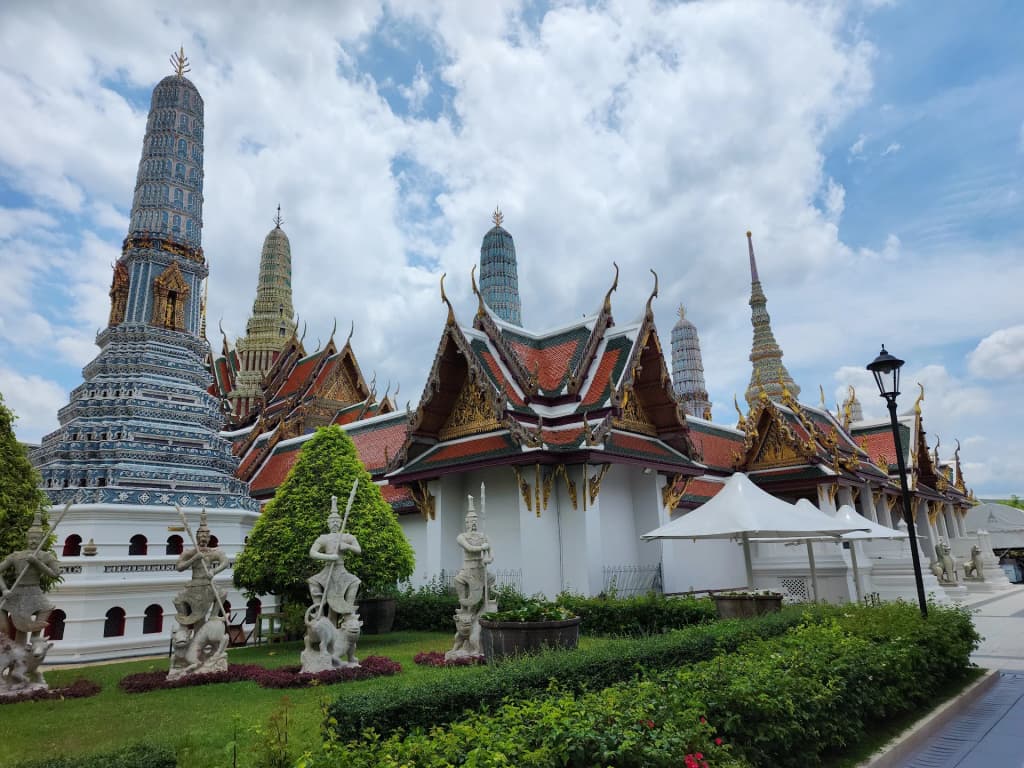
Their presence commands a profound, unspoken respect. I learned this the hard way during a lantern festival a few nights ago. The temple grounds were packed, a sea of bodies sitting on the warm stone floor waiting for a light projection. I squeezed into an empty spot, crossing my legs, completely unaware that two monks were seated directly behind me. Within seconds, a frantic hand tapped my shoulder. The monks themselves were visibly panicking, trying to gesture without making physical contact. A local organizer rushed over, breathless, explaining that women cannot touch monks, nor can they sit directly in front of them or place themselves physically higher. I scrambled to swap places, my face burning with embarrassment, apologizing profusely with pressed palms. The monk offered a gentle, forgiving nod—a silent acknowledgment that I was a foreigner stumbling through the delicate invisible lines of their world.
Bangkok is a city of extreme sensory overload. It is among the most visited cities on earth, a sprawling metropolis where gleaming mega-malls cast long shadows over centuries-old shrines. Yet, despite the millions of footsteps pounding its pavements every day, there is a fierce dedication to cleanliness in the most unexpected places.
I stop at a small pharmacy to buy tiger balm, and the moment I reach the door, I notice a pile of sandals scattered on the sidewalk. Inside, the pharmacist is walking on cool, pristine white tiles in her bare feet. I slip off my shoes, feeling the sharp contrast of the chilled air conditioning and the smooth floor against my soles. It is a deeply intimate act, leaving your shoes on the street to enter a place of business, trusting that they will be exactly where you left them. And they always are.
Back on the street, the humidity wraps around me like a wet, heavy towel. I stop at a glass cart where a vendor is slicing fresh pineapple and pomelo. She hands me a small plastic bag of fruit along with a tiny packet of what looks like pink sand. I dip a piece of the pale yellow pineapple into the powder and bite down. It is sugar, salt, and finely crushed fiery chili. The explosion of flavors—the sweet, cold juice of the fruit colliding with the sharp, salty burn of the chili—is intoxicating. It makes my lips tingle. I sit down at a nearby plastic table to enjoy it, reaching for a napkin to wipe my sticky fingers. Instead, sitting perfectly in the center of the table in a plastic dispenser, is a standard roll of toilet paper.
It is incredibly practical, pulling soft sheets from the center of the roll to wipe the chili sugar from my mouth. You quickly learn that toilet paper here belongs on dining tables, while public bathroom stalls often lack it entirely. I have learned to always carry a small pack of tissues in my bag, navigating the wet floors and manual bidet hoses of public restrooms with the hyper-awareness of a seasoned traveler.
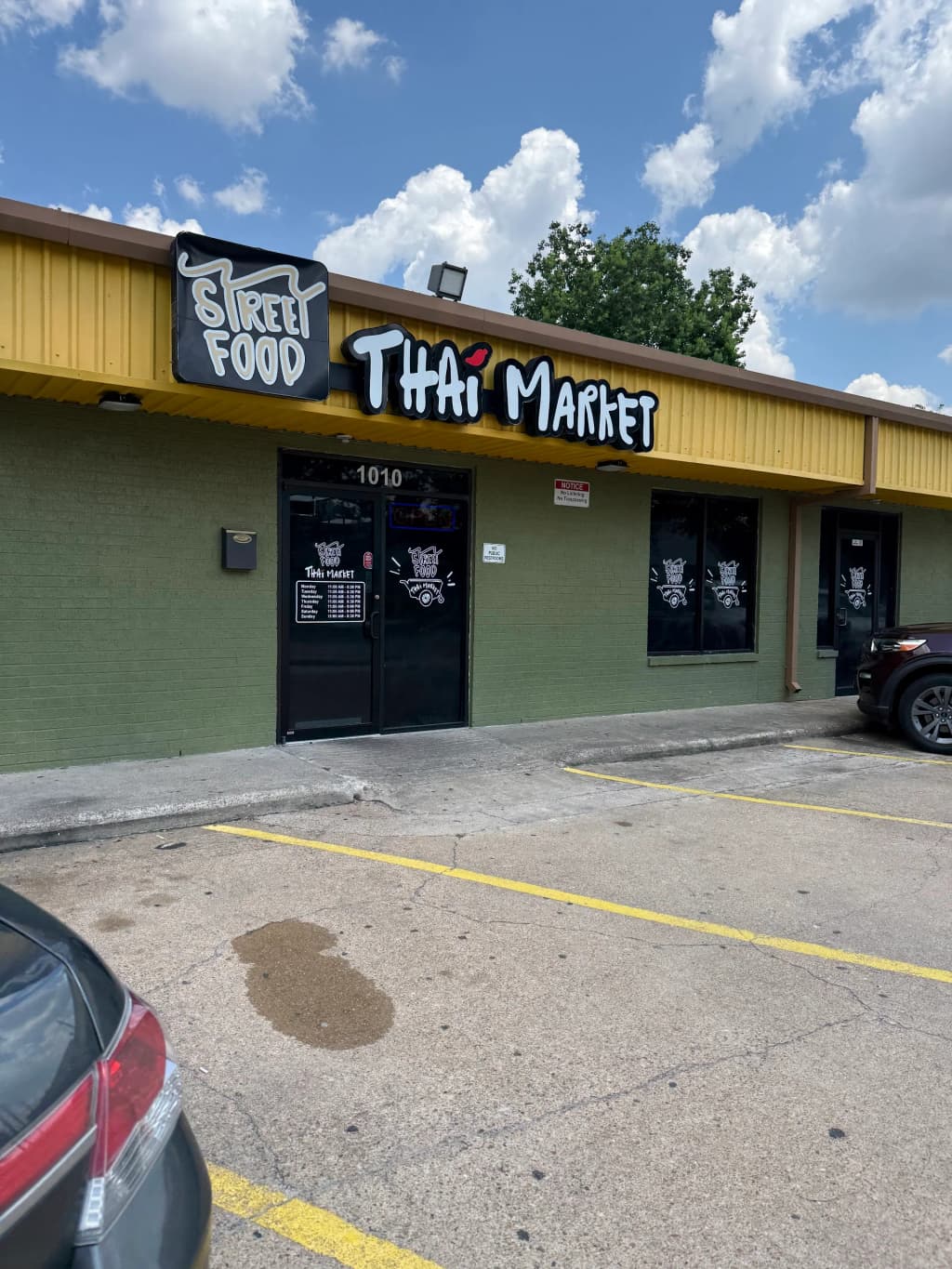
For lunch, I order Pad Thai from a woman working a massive, blackened wok over an open flame. The smell of tamarind, fish sauce, and roasting peanuts is heavy and sweet in the air. When she hands me the plate, she gives me only a fork and a spoon. There are never knives on the table here. Knives are considered weapons, deeply inauspicious to have present during a meal. Instead, the fork is used merely as a pusher, guiding the noodles and tofu onto the spoon, which is the true vehicle for eating.
As I scoop up the tangled rice noodles, I think about the history of this dish. Despite feeling like an ancient, quintessential piece of Thai culture, Pad Thai was actually invented in the 1930s by the Prime Minister to establish a unified national identity. Thailand, unlike every other nation in Southeast Asia, was never colonized. There are no French baguettes here like in Vietnam, no Spanish architecture like in the Philippines. The culture is entirely, unapologetically its own.
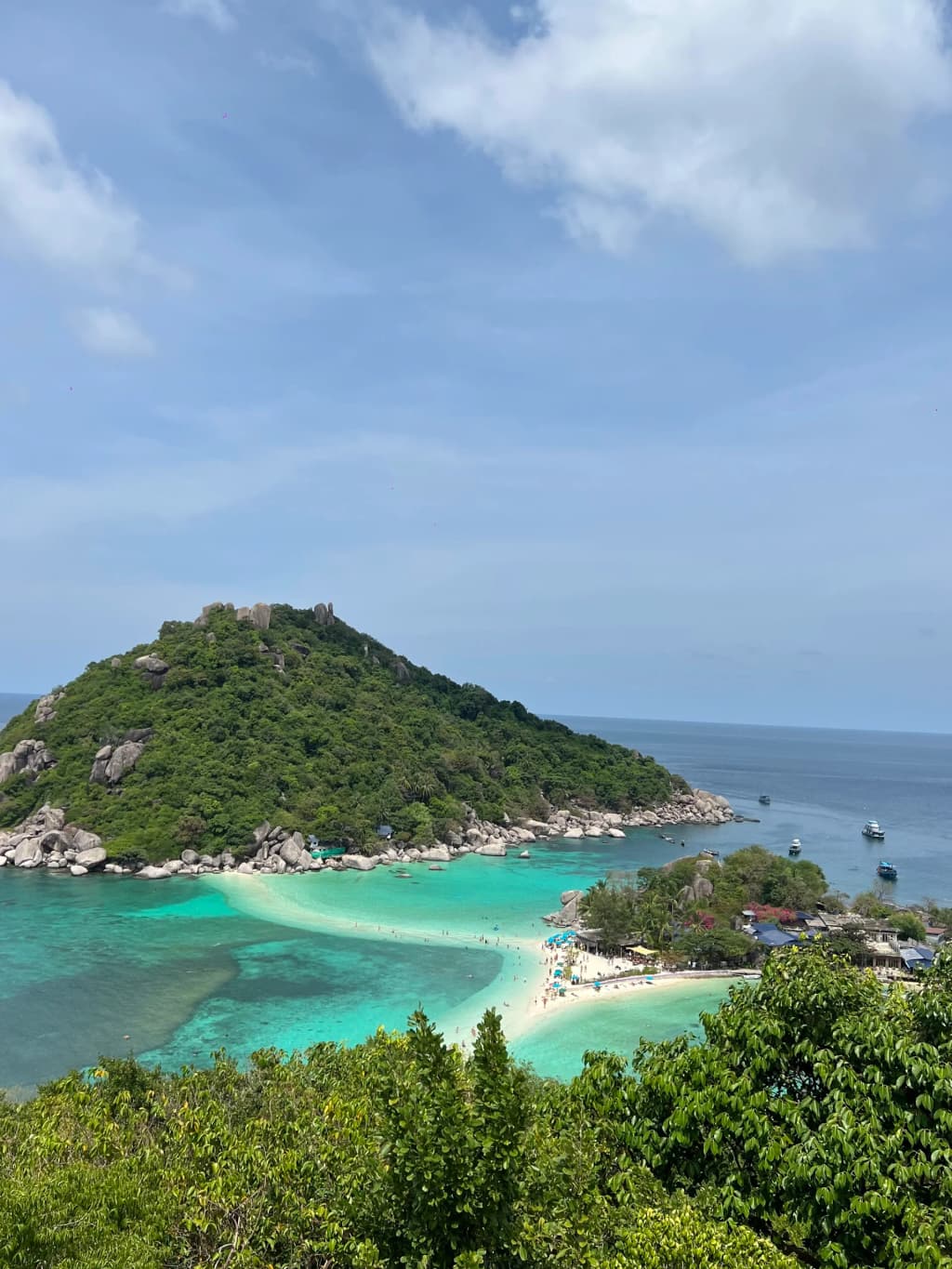
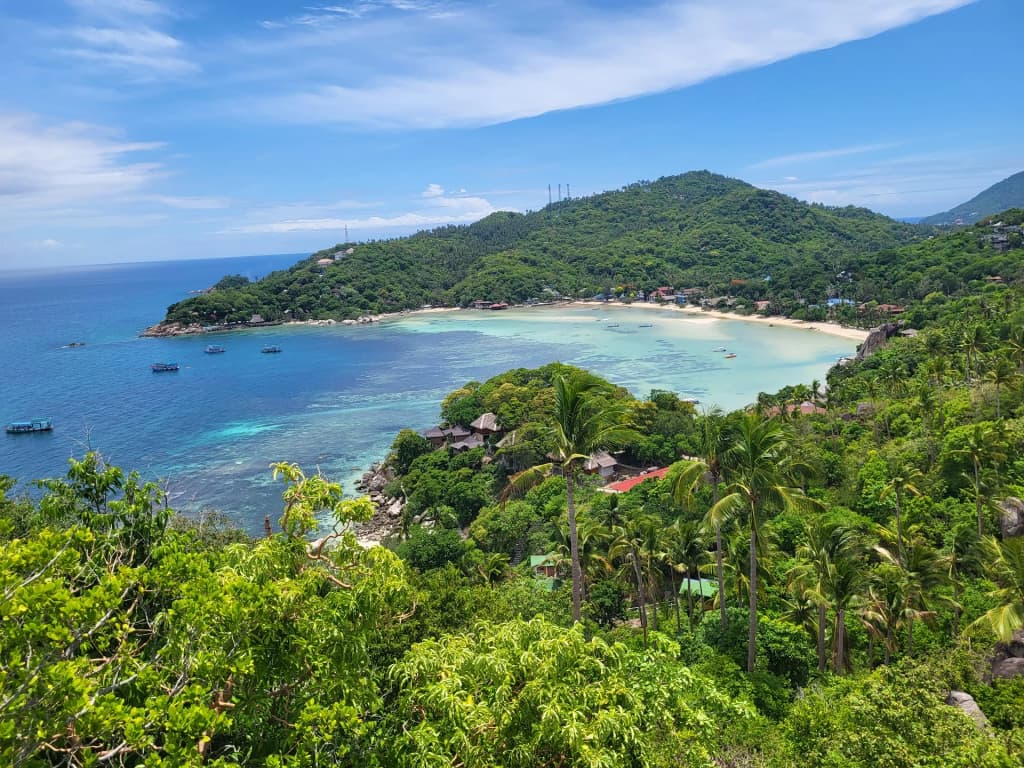
Days later, the heavy concrete of Bangkok gives way to the soft, powdery sands of Koh Tao. The air here tastes of salt and coconut oil. As the sun dips below the horizon, painting the sky in bruised purples and fiery oranges, the island transforms. The quiet, spiritual mornings are replaced by a chaotic, neon-lit nightlife.
Small wooden shacks open up along the beach, displaying dozens of brightly colored plastic sandcastle buckets. I watch a bartender tear open a small bottle of local whiskey, pour it over ice directly into a green plastic bucket, top it with a can of Thai energy drink, and hand it to a backpacker with three long straws. It is a ridiculous, purely tourist-driven invention, yet it has become a staple of the island experience.
I skip the bucket and instead buy a warm portion of mango sticky rice from a woman pushing a wooden cart through the sand. The glutinous rice is soaked in thick, salted coconut cream, paired with the brightest, sweetest yellow mango I have ever tasted. I sit on the cooling sand, listening to the rhythmic crash of the waves and the distant thumping bass of a beach bar. I scoop the sweet, sticky rice with my plastic spoon, watching the stars begin to pierce through the dark velvet sky. The beauty of this country lies in these exact contrasts—the deeply sacred temples and the neon beach buckets, the spicy morning soups and the sweet bean pastries at the local convenience store. It is a culture that has preserved its soul precisely because it has never had to compromise it.
More Photos
More Adventures
 $100 - $300/day 1-3 days
 Escape the Airport: Conquer Your Luanda Layover
Think a layover in Luanda means killing time at the airport? Think again. Discover the fortress, island sunsets, and the ultimate Angolan adventure.
 $150 - $300/day 1-2 days
 Conquer Epcot: The Ultimate High-Speed Global Gauntlet
Think Epcot is a slow stroll? Think again. It's a high-speed, globe-trotting gauntlet. Hack the rides, taste the world, and push your limits in Orlando.
 $50 - $150/day 5-10 days
 Finding the Rhythm of Bahia: From Porto Seguro to Trancoso
Experience the sensory magic of Brazil's Costa do Descobrimento, from the chaotic nightlife of Porto Seguro to the barefoot luxury of Trancoso's beaches.
 $120 - $350/day 2-3 days
 Disneyland Paris Strategy: Ride Hacks & Coaster Secrets
Think you know Disney? Think again. Discover the underground secrets, massive coasters, and insider hacks to conquer Disneyland Paris like a pro.