
Gramado and Canela: Finding the Soul of Serra Gaúcha
Discover the authentic heart of Gramado and Canela, Brazil. Experience Murano glassmaking, deep canyons, and rich culinary traditions in the Serra Gaúcha.
The heat radiating from the furnace hits like a physical wall, a localized inferno smelling faintly of burning minerals and human sweat. Marcelino, a master artisan who has spent twenty-six years dancing with molten glass, hands me a heavy iron rod. At the end of it glows a viscous, fiery orb.
"You have to keep it moving," Marcelino instructs, his eyes never leaving the glowing crystal. "If you stop, it shatters."
I turn the rod, feeling the immense weight of the material and the centuries of Venetian tradition transplanted here, to the southern highlands of Brazil. "Like the city itself," I offer.
He chuckles, a low, warm sound over the roar of the flames. "Exactly. We never stop."
This is Cristais de Gramado, a sanctuary of Murano glassmaking high in the Serra Gaúcha. Most travelers arrive in Gramado and its sister city, Canela, expecting a simple slice of Europe. After flying into Porto Alegre and navigating the winding two-hour mountain ascent, the coastal heat of Brazil vanishes. You step out of the car into a crisp, pine-scented breeze that demands a light jacket, especially during the golden-hued autumn months of April and May. With a combined population of just over eighty thousand, these towns have built an empire on alpine architecture, fondue, and winter festivals. But if you look closer, past the half-timbered facades and the chocolate shops lining Avenida Borges de Medeiros, you find a pulse that is entirely its own.
I wander toward Lago Negro as the morning mist begins to lift off the dark, mirror-like water.
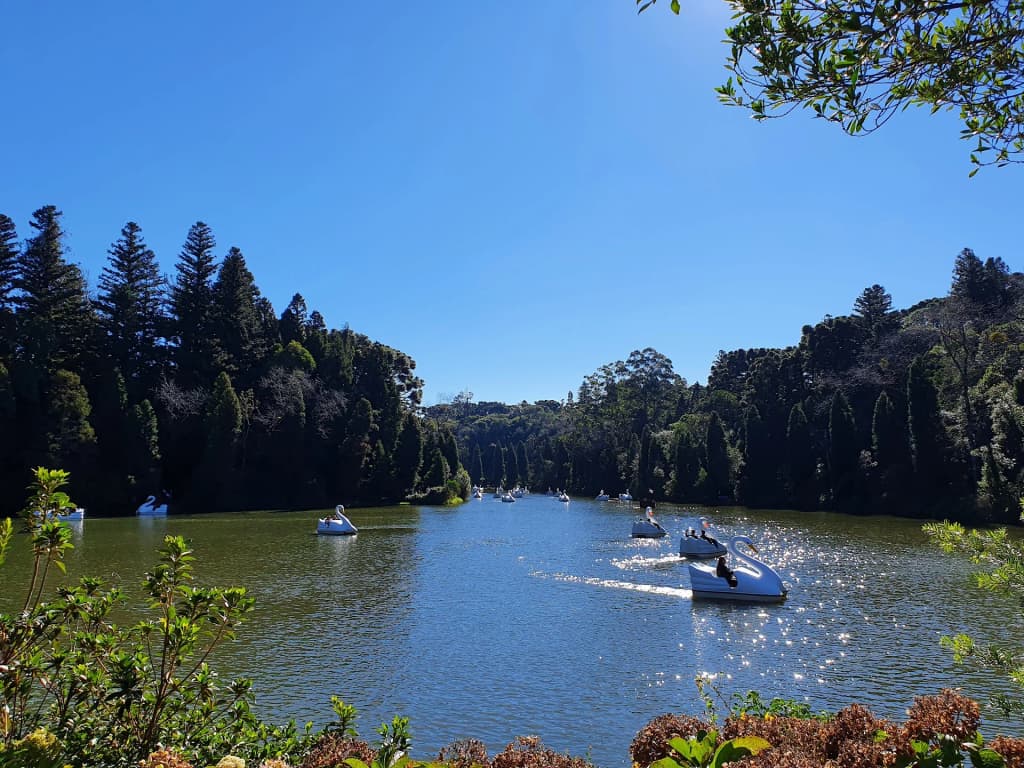
The lake is entirely artificial, yet it feels ancient. Following a devastating fire decades ago, the area was replanted with seedlings brought directly from Germany’s Black Forest. Today, the towering pines cast long, dramatic shadows across the walking paths. I hear the gentle splashing of swan-shaped pedal boats and the soft murmur of Portuguese from families sharing thermoses of hot chimarrão—the traditional bitter mate tea of the south. The contrast is intoxicating: a Bavarian landscape filled with the warmth of Brazilian culture. I fill my own bottle at one of the public dispensers that offer both ice-cold water and boiling water specifically for mate, a small but profound reminder of where I actually am.
That intersection of cultures is most evident on the plate. At Ocre, a restaurant tucked inside the cosmopolitan Hotel Wood—where I drop my bags for the week—the scent of charcoal smoke and roasting meats fills the dining room. Chef Roberta Sudbrack champions a return to real, affective food. I tear into a piece of slow-roasted caipira chicken and drag it through a pool of creamy, stone-ground polenta that tastes of earth and fire. The flavors are rustic, but the execution is flawless, much like the hotel itself, which blends modern art with warm timber textures.
You could easily spend your entire trip eating. Just down the road, at a tiny, unassuming spot called Casa Lovato e Sartori, the illusion of being in a rural Tuscan cantina is absolute. The shelves groan under the weight of regional cheeses and cured meats.
"You found us," the woman behind the counter says, sliding a wooden board loaded with a smoked picanha panini toward me.
"It feels like Italy in here," I tell her, taking in the scent of fresh focaccia and rich espresso.
She beams, wiping down the counter. "The blood is Italian, but the soil is pure Brazilian."
I take a bite of the sandwich, the sweet caramelized onions cutting through the rich, smoky meat, followed by a slice of warm ricotta pie that tastes like a Sunday afternoon at a grandmother's house. Later, I wander over to Miró, a bean-to-bar chocolate factory facing Lago Negro. They grind coffee beans and cacao together, producing a forty-two percent milk chocolate that melts on the tongue with a complex, dark, and fruity finish that ruins ordinary chocolate for you forever.
But the Serra Gaúcha is not just a place to indulge; it is a place to breathe. Leaving the manicured streets of Gramado behind, I take a four-by-four deep into the Atlantic Forest. The air grows noticeably cooler, heavy with moisture and the scent of damp earth.
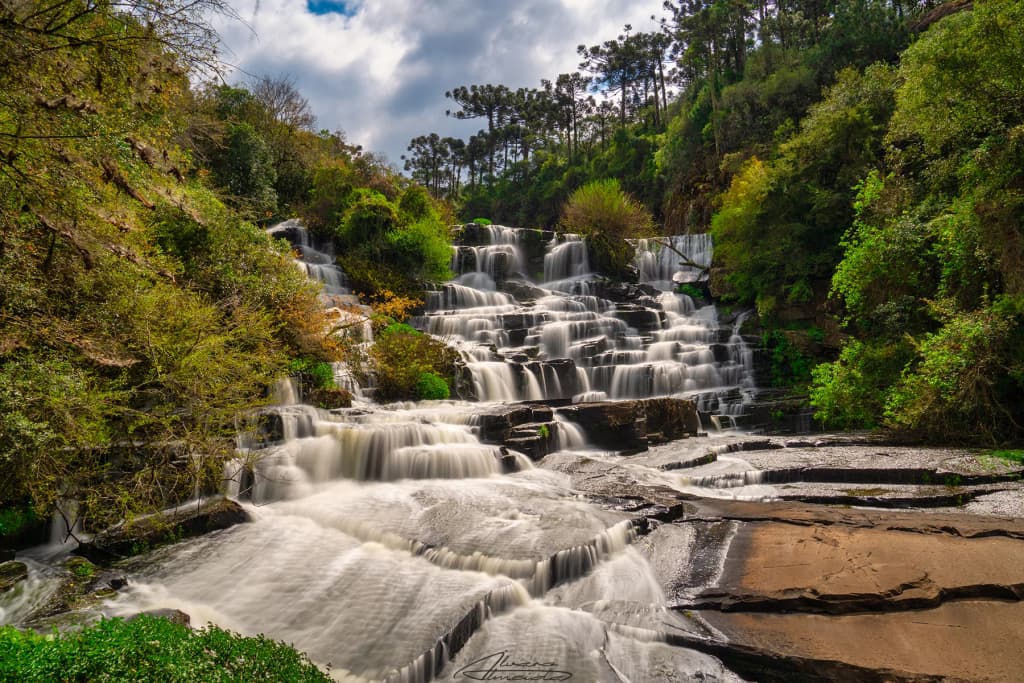
We hike a gentle trail until the roar of water drowns out the crunch of our boots. Cascata do Caracol reveals itself suddenly—a violent, beautiful cascade plunging one hundred and thirty-one meters into a verdant gorge. Standing at the base, the mist coats my skin. The guide tells us that the moving water releases negative ions, reducing stress and resetting the nervous system. Whether it is the science or simply the sheer scale of the waterfall, I feel an immediate lightness in my chest.
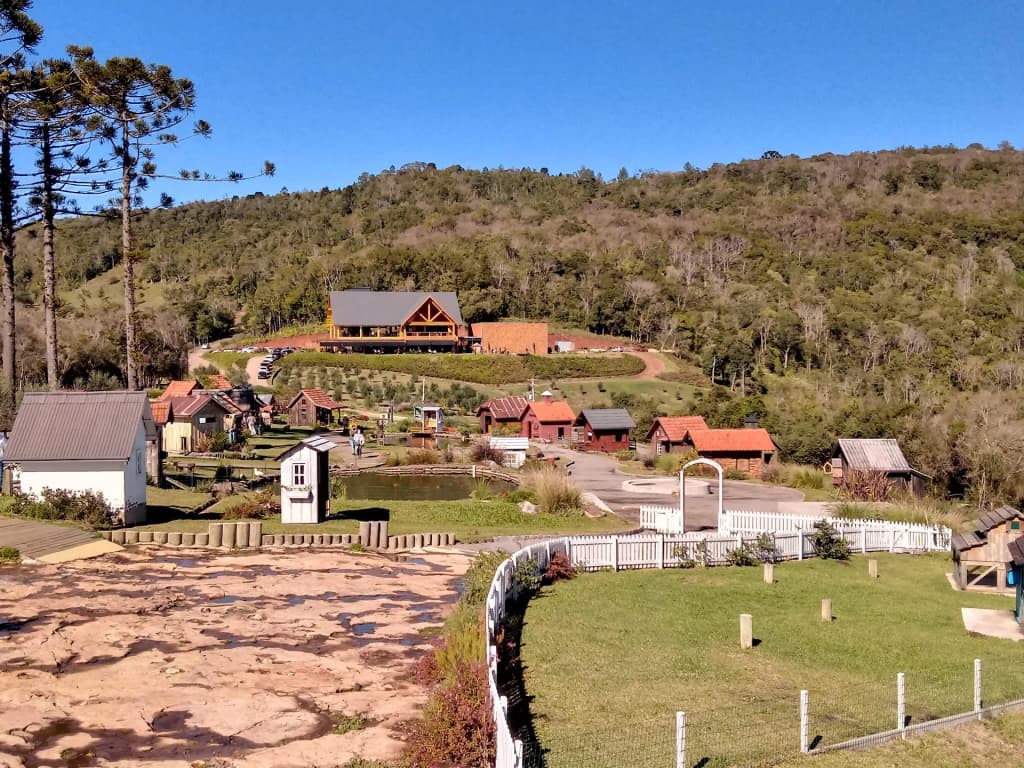
This connection to the land continues at Olivas de Gramado, a sprawling estate perched atop a canyon lined with quartz crystals. Walking among the twelve thousand olive trees, I find myself standing before a gnarled, three-hundred-and-fifty-year-old olive tree brought over from Uruguay. It is a living monument. As the late afternoon sun dips below the canyon rim, casting the valley in shades of bruised purple and fiery orange, a DJ plays a soft, rhythmic set. I sip a cocktail infused with fresh basil and taste their award-winning olive oil—peppery, grassy, and bright—while the sky puts on a show.
The magic bleeds seamlessly into Canela, Gramado's quieter sister city. The drive down the highway connecting the two towns is a parade of towering araucaria trees and eccentric museums. I stop at Castelinho Caracol, a historic wooden residence built by early German immigrants. The wooden floorboards creak underfoot, and the scent of cinnamon and baking apples is inescapable. They serve an apfelstrudel baked in a century-old oven, drowned in fresh cream. It is hot, sweet, and comforting against the chill of the mountain air.
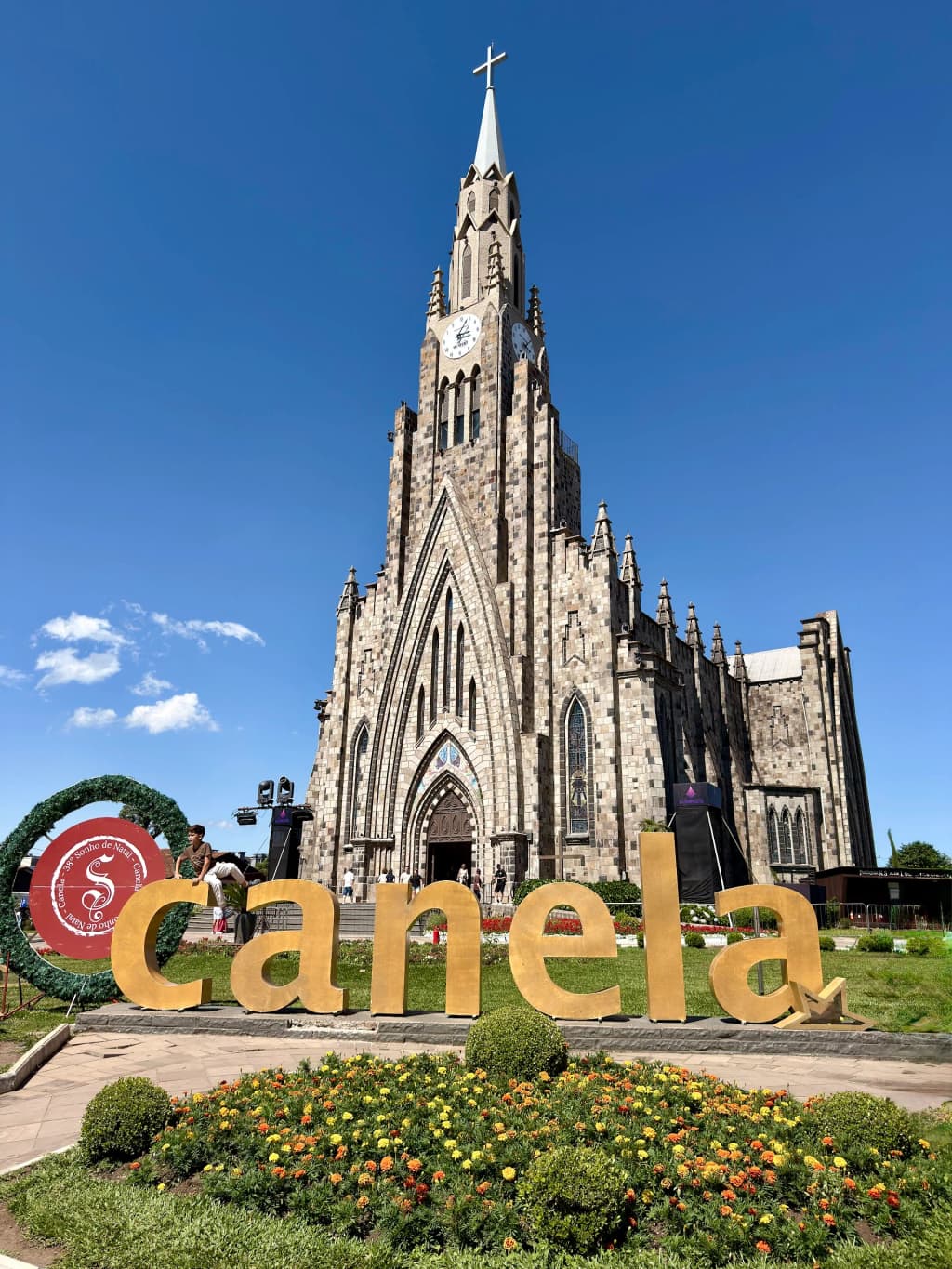
As night falls, I find myself standing in the center of Canela, craning my neck upward. The Catedral de Pedra—the Cathedral of Stone—towers sixty-five meters into the dark sky. Built in the English Gothic style, its illuminated spires look like they were carved from light itself. The twelve bronze bells chime, the sound echoing off the surrounding cafes and cobblestone streets.
It is easy to dismiss places like Gramado and Canela as mere theme parks of European nostalgia. But standing here, listening to the bells, feeling the warmth of the chimarrão, and tasting the lingering spice of local olive oil, you realize that this region isn't pretending to be anything. It is a loving, breathing monument to the people who crossed oceans to build a home in these mountains. They brought their seeds, their recipes, and their architecture, but they planted them in Brazilian soil. The result is something entirely its own—a destination that doesn't just replicate the old world, but reimagines it with a warmth you can only find here.
More Photos
More Adventures
 $40 - $100/day 3-4 days
 Campos do Jordão Itinerary: Budget Guide & Hiking Logistics
Plan a practical trip to Campos do Jordão, Brazil's highest city. Get exact costs for state parks, hiking Pedra do Baú, and budget-friendly dining.
 $50 - $150/day 1-2 days
 Conquer the Serra Verde Express: Brazil's Wildest Train
Ditch the tourist traps and ride the Serra Verde Express from Curitiba to Morretes. Discover ticket tips, seating secrets, and the best Barreado.
 $40 - $80/day 3-5 days
 Into the Wild: Surviving Roraima's Macuxi Territory
Skip the tourist traps. Plunge into the raw culture of the Macuxi tribe in Roraima, Brazil. Experience fire-hot stews, sacred rituals, and wild borders.
 $40 - $120/day 3-5 days
 Shadows and Gold: Walking the Living History of Ouro Preto
Wander the steep cobblestone streets of Ouro Preto, where Baroque masterpieces, subterranean gold mines, and a dynamic culinary scene breathe life into history.