
Shadows and Gold: Walking the Living History of Ouro Preto
Wander the steep cobblestone streets of Ouro Preto, where Baroque masterpieces, subterranean gold mines, and a dynamic culinary scene breathe life into history.
The cold mountain air carries the sharp scent of woodsmoke and damp, centuries-old stone. Beneath my boots, the notoriously uneven cobblestones of Ouro Preto demand a slow, deliberate pace. You don't just walk here; you negotiate with the terrain. I look up at the towering Baroque facades that cling impossibly to the steep hillsides. The city reveals itself in layers of terracotta roofs and white-washed walls, framed by the dramatic, rolling peaks of Minas Gerais. It feels less like arriving in a municipality and more like stepping onto an open-air stage where the play has been running uninterrupted since the eighteenth century.
I make my way toward the Church of Saint Francis of Assisi, its intricate soapstone medallion looming above the heavy wooden doors. The five reais I drop into the wooden box at the entrance feels like a trivial offering for the sensory overload waiting inside. The interior is a masterclass in Brazilian Baroque and Rococo. The air is thick with the smell of melting wax and the quiet hum of whispered Portuguese prayers. I trace the cold, smooth curves of the soapstone carvings, marveling at how a city built on the ruthless extraction of wealth could produce such transcendent, enduring beauty.

Outside, the heavy wooden doors close behind me, and the town refuses to act like a museum. Ouro Preto was once the most populous city in the Americas, teeming with prospectors, merchants, and enslaved people drawn to the promise of the earth. The gold they pulled from these mountains was often coated in a dark layer of iron oxide—literally "black gold," giving the city its name. When the veins dried up, the masses left, preserving the colonial architecture in a sort of amber. But the silence didn't last. Today, the historic mansions house university students living in repúblicas, communal homes that maintain their own intense, fiercely guarded traditions. Passing by the República Aquarius, I hear the thumping bass of a midday gathering mixing with the metallic tolling of the eighteenth-century bells from the nearby Church of Our Lady of Carmel. It is this friction—the sacred and the profane, the ancient and the youthful—that keeps Ouro Preto's blood pumping.
I wander down toward the Casa dos Contos, a massive colonial mansion that once served as the royal mint and a prison. Pushing through the entrance—which is surprisingly free, a rare gift in a town of heavily ticketed attractions—I find a fascinating collection of old currency mapping the rise and fall of the region's wealth. The thick stone walls hold a heavy silence. I run my hand along the cold iron bars of the lower levels, feeling the profound weight of the history that underpins every golden altar in the city.
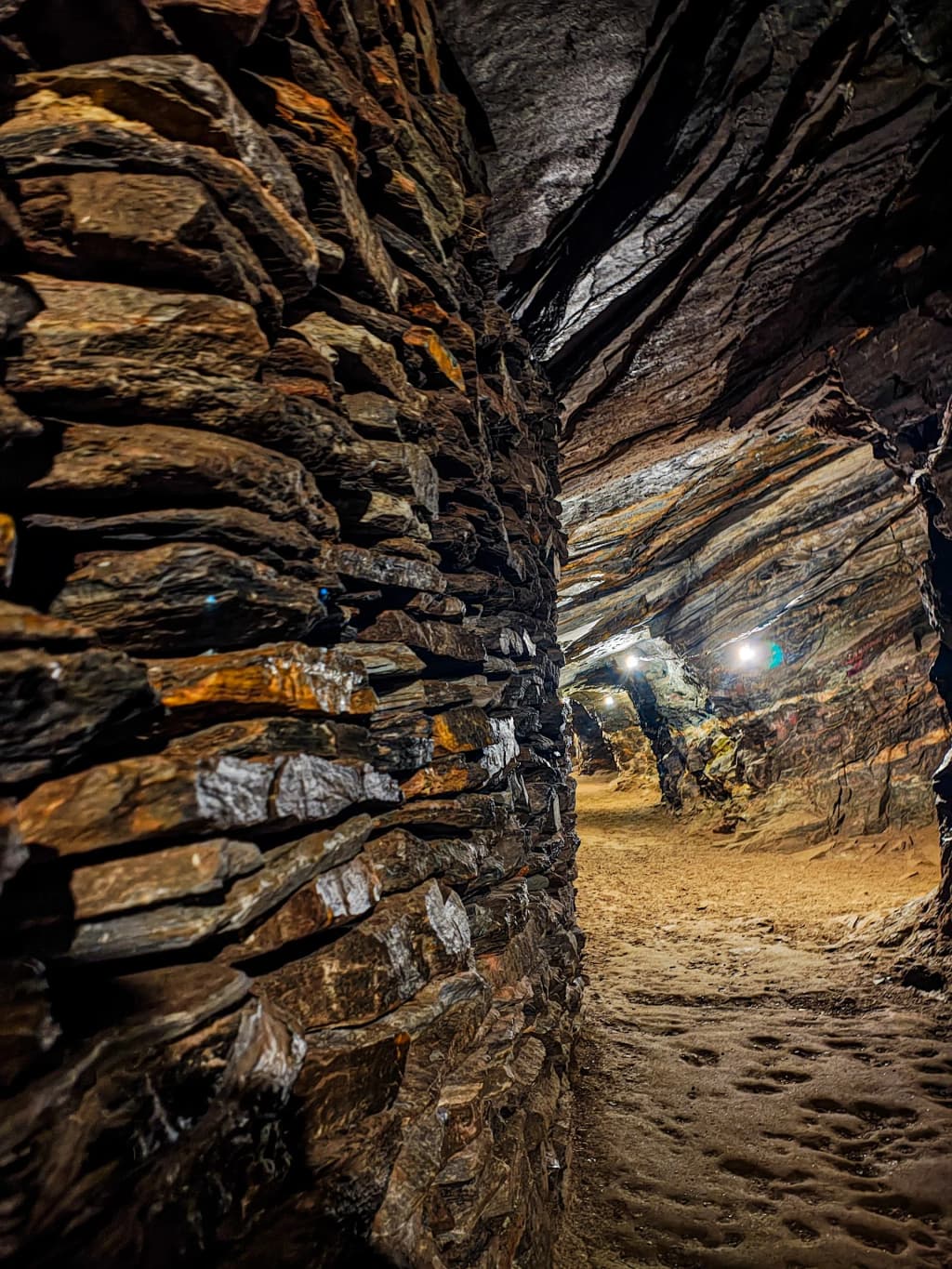
The desire to understand the origin of all this wealth pulls me out of the city the next morning. A short, winding twenty-minute drive brings me to Mariana, Ouro Preto's quieter, older sister. My destination is the Mina da Passagem, the largest open-to-the-public gold mine in the world. Handing over two hundred reais for the ticket stings for a moment, but the experience is immediately visceral. I board an antique, rusted trolley that plunges straight into the dark throat of the mountain. The descent is steep and rattling, a 315-meter plummet into the earth.
The temperature drops instantly, raising goosebumps on my arms. The air smells of wet earth, oxidized iron, and ancient dust. As the trolley groans to a halt at a depth of 120 meters, I step out into the cavernous tunnels. Our guide's flashlight beam cuts through the gloom, illuminating the sheer scale of the excavation—over thirty-five tons of gold were dragged from these jagged walls. The silence down here is absolute, broken only by the rhythmic dripping of water. At the end of the tunnel lies a subterranean lake, its waters so crystal-clear and still that it perfectly reflects the jagged rock ceiling. It is stunning, yet suffocating, a beautiful tomb that claimed countless lives in the relentless pursuit of empire.
Returning to the surface and the blinding afternoon sun, I crave warmth and life. Back in Ouro Preto, I find a wooden table on the balcony of Café das Flores. The view stretches out over the valley, a sea of colonial rooftops turning burnt orange in the late light. I order a coffee, which they roast themselves, and a portion of pão de queijo—not the standard cheese bread, but one sliced open and stuffed with a rich, slow-cooked rib ragout.
"The secret is in the curing process," the barista tells me, setting down a steaming porcelain cup that smells of dark chocolate and toasted nuts. "We age the Canastra cheese ourselves."
"It's incredible," I say, tearing off a piece of the warm, doughy bread. The savory, buttery taste of the meat cuts perfectly through the sharp, salty bite of the cheese.
He smiles, wiping down the wooden counter with a slow, practiced motion. "My grandmother's recipe. History here isn't just in the churches, you know. We bake it into the food."
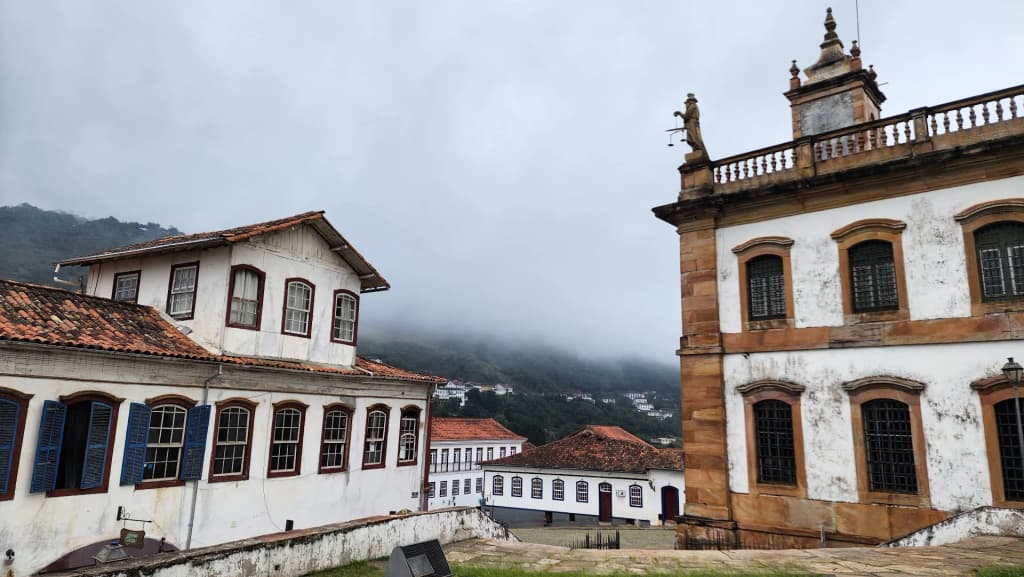
As evening falls, the streetlamps cast long, flickering shadows across Praça Tiradentes, the geographic and spiritual center of the city. The square is dominated by the imposing Museu da Inconfidência, a grand building that tells the story of the failed 1789 rebellion against the Portuguese crown. It was here, on this very cobblestone, that the severed head of the movement's martyr, Joaquim José da Silva Xavier—known as Tiradentes—was displayed as a gruesome warning.
But tonight, the square is alive with laughter and the clinking of glasses. I follow the sound of a saxophone down a narrow alley to O Passo Pizza Jazz, dropping into a seat just as the band starts a slow, smoky set. Later, I find myself at Jair Boêmio, a newly opened bar, tasting a velvety sweet corn pudding that tastes like pure rural comfort.
I step back out into the cool night air, the jazz still echoing faintly behind me. I look up at the illuminated spire of the Church of Santa Efigênia in the distance, built by the wealth of freed slaves. Ouro Preto is a city of ghosts, undoubtedly, but they are not quiet. They are in the ringing of the bells, the scent of the roasting coffee, and the gold that still catches the moonlight on the highest peaks. You don't just observe the past here; you walk on it, you breathe it, and if you linger long enough, you become a part of its ongoing story.
More Photos
More Adventures
 $50 - $120/day 3-5 days
 Chasing Echoes and Gold Dust in Tiradentes, Brazil
Experience Tiradentes, Brazil through a sensory journey of colonial architecture, deep-rooted history, and the rich culinary traditions of Minas Gerais.
 $50 - $150/day 1-2 days
 Conquer the Serra Verde Express: Brazil's Wildest Train
Ditch the tourist traps and ride the Serra Verde Express from Curitiba to Morretes. Discover ticket tips, seating secrets, and the best Barreado.
 $60 - $150/day 7-14 days
 Brazil's Rhythms: From the Discovery Coast to the Cerrado
Experience Brazil's contrasting landscapes. Journey through the rustic Discovery Coast, the white dunes of Lençóis Maranhenses, and the mystical Chapada.
 $60 - $200/day 4-7 days
 Between the Andes and the Ocean: Unraveling Santiago
Experience the striking contrasts of Santiago, Chile. Discover historic dive bars, the soaring Andes in Cajón del Maipo, and the colorful hills of Valparaíso.