
Between the Andes and the Ocean: Unraveling Santiago
Experience the striking contrasts of Santiago, Chile. Discover historic dive bars, the soaring Andes in Cajón del Maipo, and the colorful hills of Valparaíso.
The floor of La Piojera is delightfully sticky, a collage of spilled wine and crushed peanut shells built up over decades. The air inside this historic dive bar smells of stale beer, roasting meats, and something cloyingly sweet. The bartender, a man whose apron bears the stains of a thousand busy nights, slides a plastic cup across the battered wooden counter. It is filled with a bizarre concoction of cheap white wine, pineapple ice cream, and fernet. They call it a terremoto—an earthquake.
"Drink it slow," he warns, his Spanish thick and rapid.
"I've survived earthquakes before," I reply, taking a sip. The sugary chill of the ice cream hits my tongue first, masking the raw, metallic bite of the alcohol.
He laughs, a deep, rumbling sound. "Not this kind, my friend. Two of these, and the ground will move on its own."
This is the raw, beating heart of Santiago's historic center. Outside, the streets are a frenetic blur of motion. Street vendors shout their prices over the low rumble of diesel buses, and businessmen in sharp suits weave past stray dogs sleeping in the afternoon sun. I spend the morning wandering past the imposing stone facade of Palacio La Moneda, watching the rigid changing of the guard, before losing myself in the dense crowds near the Plaza de Armas.
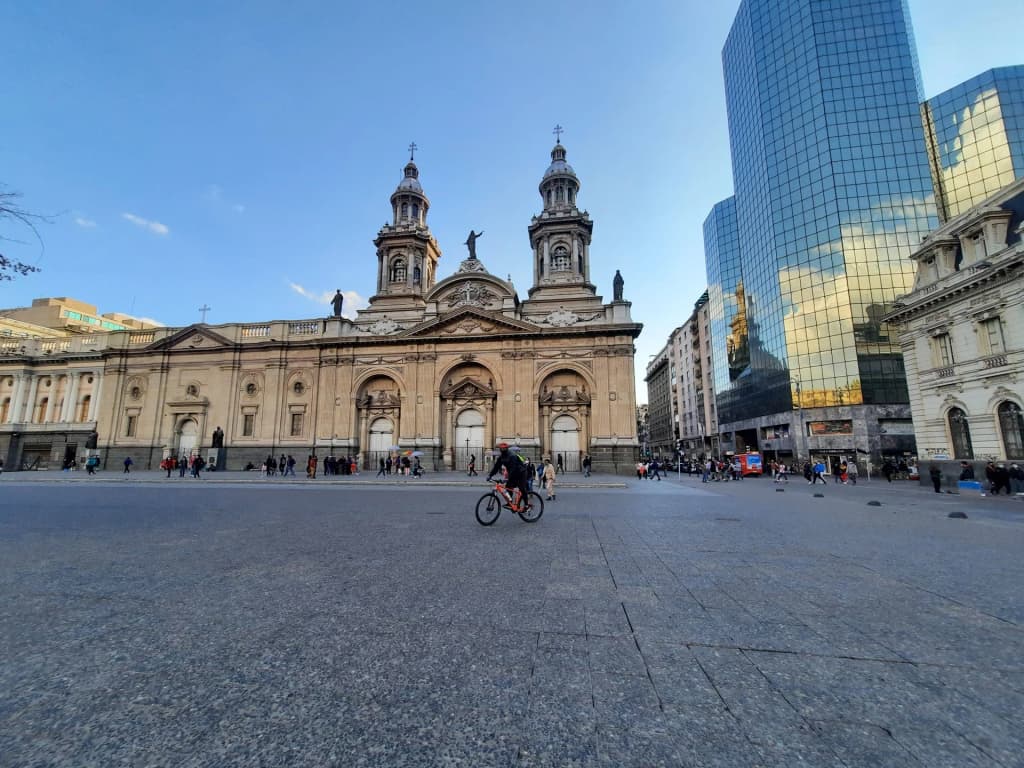
The downtown area is fascinating by daylight, but as the shadows lengthen across the colonial squares, the energy shifts, taking on a frantic edge that feels less welcoming. It is precisely why I chose to base myself in Providencia. After a quick tap of my phone to summon an Uber—the app operates in a gray area here but remains the safest, most reliable way to avoid the aggressive taxi touts that swarm the airport and city center—I retreat to my neighborhood. Providencia is all leafy avenues, charming cafes, and a quiet safety that makes evening strolls a pleasure rather than a calculated risk.
The next afternoon, I seek higher ground. Santiago is a city defined by its geography, trapped in a massive valley and watched over by the imposing Andes. To truly understand its scale, you have to climb.
I arrive at the base of Cerro San Cristóbal just as the sun begins to soften. The funicular, a creaking, slanted wooden train, waits at the bottom. I hand over my digital travel card—a practical lifesaver that instantly converts my dollars to Chilean pesos without the exorbitant fees of traditional exchange houses—and take a seat on the polished wooden bench.
The heavy gears groan. The car jerks upward. With every meter we climb, the noise of the city fades into a gentle, indistinct hum. The air up here feels different; the heavy smog of the valley gives way to the crisp, medicinal scent of eucalyptus. From the summit, the sheer density of Santiago is staggering. A sea of concrete stretches out, abruptly halted by the jagged, snow-dusted teeth of the Cordillera. I decide to take the cable car back down, floating silently over the treetops as the city begins to light up below.
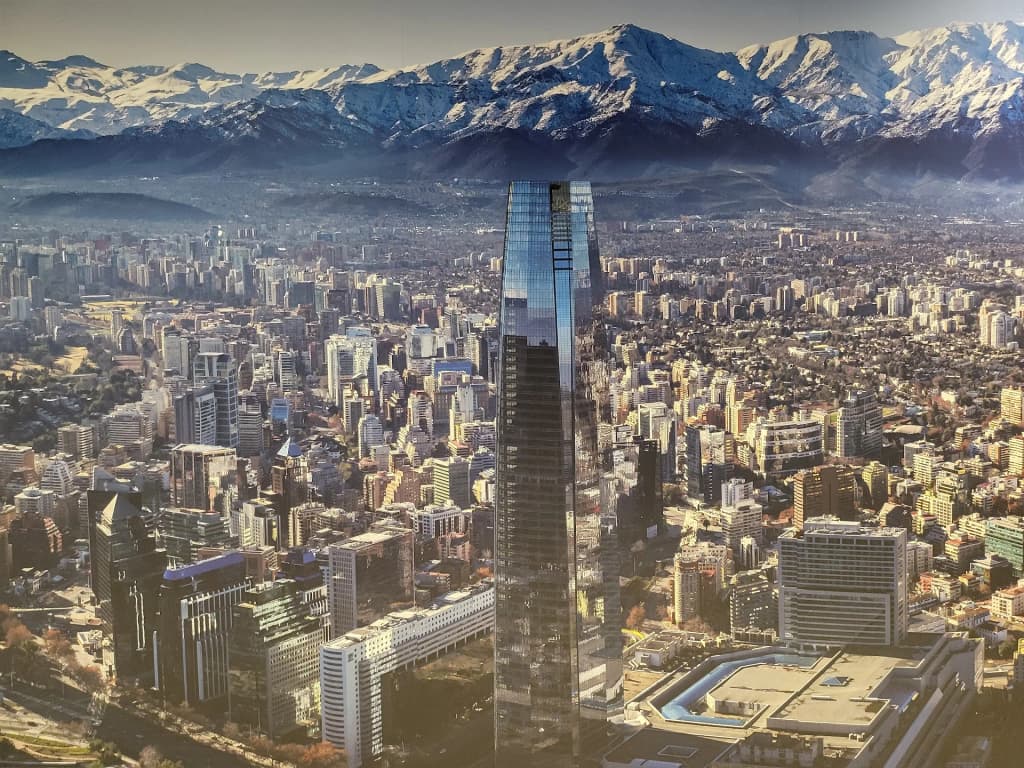
The descent drops me perfectly within walking distance of the Sky Costanera Center. It is a jarring transition from the natural tranquility of the hill to the gleaming, sterile heights of South America's second-tallest building. I ride the high-speed elevator to the observatory just in time for sunset. Pressing my hand against the cold glass, I watch the sky cycle through bruised purples and fiery oranges. The Andes catch the dying light, glowing like embers before fading into dark silhouettes. It is a view that easily justifies the steep entry fee.
If the mountains look beautiful from the city, they are utterly humbling up close. By seven in the morning, I am in a van winding its way up the sheer cliffs of Cajón del Maipo.
I had briefly considered renting a car, but watching our local driver expertly navigate the treacherous, narrow curves with terrifying ease, I am profoundly grateful I handed over the keys. This is wild country. The temperature drops sharply, and the thin air bites at my cheeks when we finally pull over at the edge of a gorge.
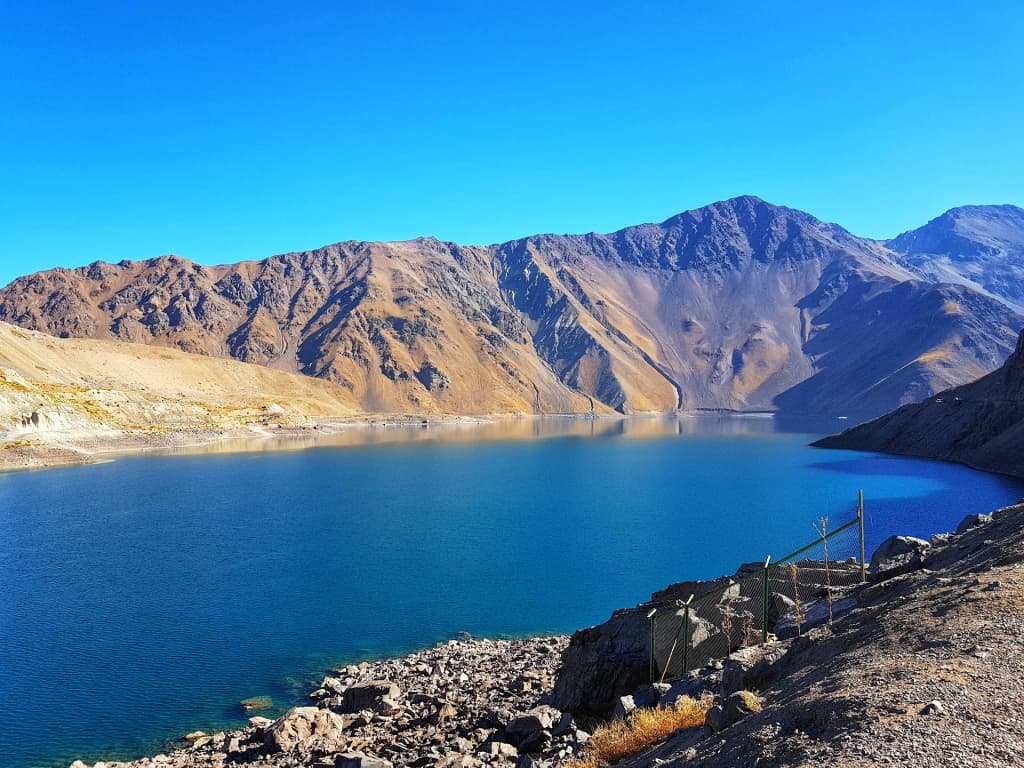
The landscape is aggressively beautiful. Massive, barren peaks cradle deep turquoise reservoirs that look almost unnatural against the gray rock. The silence is absolute, broken only by the crunch of gravel beneath my boots and the distant, rushing echo of glacial meltwater. Our guide drops the tailgate of the van, producing a wooden board piled high with local cheeses and a bottle of Carmenère. We stand in the freezing, brilliant sunshine, drinking dark red wine at ten in the morning, entirely dwarfed by the ancient rock around us. It is the kind of morning that makes you feel very small, and very alive.
You cannot understand this region without touching the ocean, so I dedicate my final full day to the coast. The drive west takes just under two hours, leaving the mountains behind for the chaotic, colorful hills of Valparaíso.
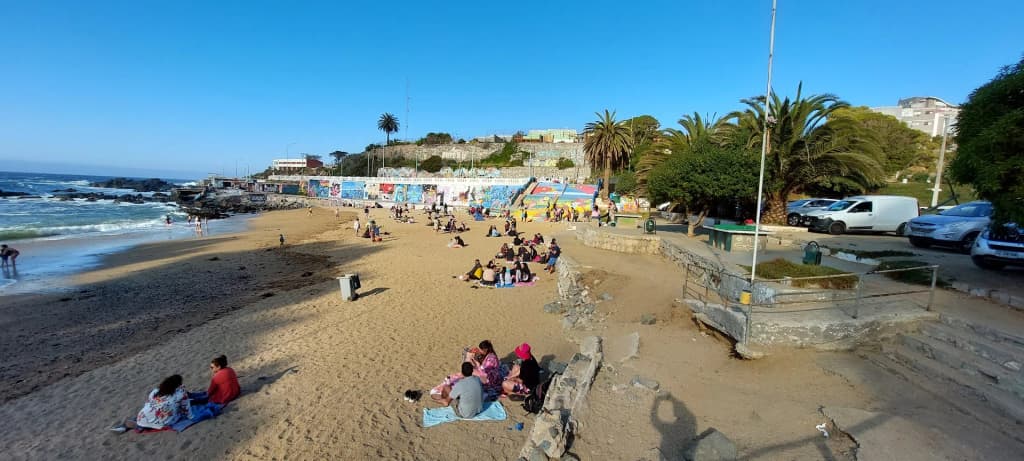
Valparaíso does not care if you find it beautiful, though it undeniably is. It is a labyrinth of crumbling mansions, wild street art, and rusted funiculars clinging to impossible inclines. I explore with a local guide, a necessity not just to navigate the dizzying maze of staircases, but to feel secure in a port city that still roughs up its edges. We wander past walls dripping in spray-painted murals, the salty breeze carrying the sharp scent of the Pacific and frying empanadas from a corner stall.
By late afternoon, we move to neighboring Viña del Mar. The contrast is immediate. Where Valparaíso is a bohemian tangle, Viña is manicured lawns and sweeping promenades. I walk down to the beach. The sand is dark, the water a deep, menacing blue that promises a freezing shock to anyone brave enough to swim. I don't go in. Instead, I sit on the seawall, listening to the heavy, rhythmic crash of the waves, letting the coastal chill seep into my jacket.
My last night finds me back in Santiago, wandering through the Bellavista neighborhood. The area is waking up, warm string lights glowing over the courtyards of Patio Bellavista. The air is thick with the smell of grilled steak and the sound of clinking glasses.
I find a quiet table at the edge of a bustling restaurant and order a final glass of wine—a robust local red that tastes of dark berries and woodsmoke. The waiter leaves the bottle, nodding to the acoustic guitar music spilling out from a nearby bar.
I think about the bartender at La Piojera and his sweet, devastating terremotos. I think about the icy wind in Cajón del Maipo and the tangled, painted streets of Valparaíso. Santiago is not a city that reveals itself in a single, neat package. It demands that you climb its hills, navigate its chaos, and occasionally, let the ground shake beneath your feet. I take a slow sip of the wine, letting the warmth spread through my chest, perfectly content to stay exactly where I am.
More Photos
More Adventures
 $75 - $250/day 7-14 days
 The Ultimate Month-by-Month International Travel Guide
Stop gambling with your PTO. Discover the exact best (and worst) international destinations for every month of the year to optimize budget and weather.
 $60 - $150/day 7-14 days
 Brazil's Rhythms: From the Discovery Coast to the Cerrado
Experience Brazil's contrasting landscapes. Journey through the rustic Discovery Coast, the white dunes of Lençóis Maranhenses, and the mystical Chapada.
 $40 - $80/day 2-4 days
 Boa Vista: Exploring the Amazon's Fan-Shaped Frontier City
Experience the unexpected beauty of Boa Vista, Roraima. Discover Macuxi indigenous crafts, the unique Lavrado biome, and sunset boat tours on the Rio Branco.
 $40 - $150/day 20-30 days
 Conquer Thailand: The Ultimate 20-Day Blueprint
Skip the tourist traps. Grab your backpack. This is your high-energy, no-BS guide to dominating Thailand in 20 days. Get ready to sweat.