
Greece Island Hopping: A Meticulous Logistics Guide
Master Greece island hopping with this meticulous guide. Learn how to optimize your budget, navigate ferry logistics, and build a foolproof 14-day itinerary.
Navigating Greece's complex island logistics, seasonal closures, and notoriously expensive hotspots requires a tactical approach. In this guide, you will learn exactly how to optimize your daily budget, map out efficient ferry routes, and build a foolproof 10-to-14-day island-hopping itinerary without falling into common tourist traps.
Quick Facts
- Best Time to Visit: Mid-May to early June, or September (Shoulder Season)
- Budget Range: $150 - $350+ USD per day (depending on island selection)
- Recommended Duration: 10 to 14 days minimum
- Currency: Euro (€)
Essential Pre-Trip Logistics
Before you look at a single sunset photo, we need to handle the paperwork and finances. Greece is not a destination where you can just wing the logistics.
- Documentation & Insurance: Greece is part of the Schengen Zone. You need a valid passport, and crucially, you must have international travel insurance with a minimum medical coverage of €30,000. You can find comprehensive policies for as low as $7 to $10 USD per day using online comparison tools.
- The Currency Hack: Do not use traditional credit cards with 4.5% foreign transaction fees, and avoid airport currency exchanges. Open a global digital account (like Revolut or Nomad) before you leave. You will convert your local currency to USD/Euros at the commercial exchange rate, paying a spread of just 1.2%.
- Connectivity: Purchase a prepaid international eSIM with a "Europe Plan" before departure. You will need immediate access to Google Maps and translation apps the second you land at the airport.
Pro Tip: While digital cards are accepted at 90% of establishments, always withdraw €100-€200 in physical cash from an airport ATM upon arrival for small vendors, tipping, and emergency situations where card machines are down.
Strategic Timing: When to Visit
Timing your trip to Greece is a mathematical equation balancing weather, cost, and crowds.
- The Peak (July - August): This is the apex of the European summer. Temperatures regularly exceed 35°C (95°F), prices double, and the islands are packed. Avoid this 60-day window if you are strictly budgeting.
- The Sweet Spot (May, early June, September): This is exactly when you should go. The weather is warm enough for swimming, all beach clubs and restaurants are fully operational, and you will save 30-40% on accommodation costs.
- The Off-Season (October - April): While Athens is a great winter city break, do not attempt to visit the islands. Most ferries stop running, and hotels, restaurants, and tours completely shut down.
Decoding the Destinations
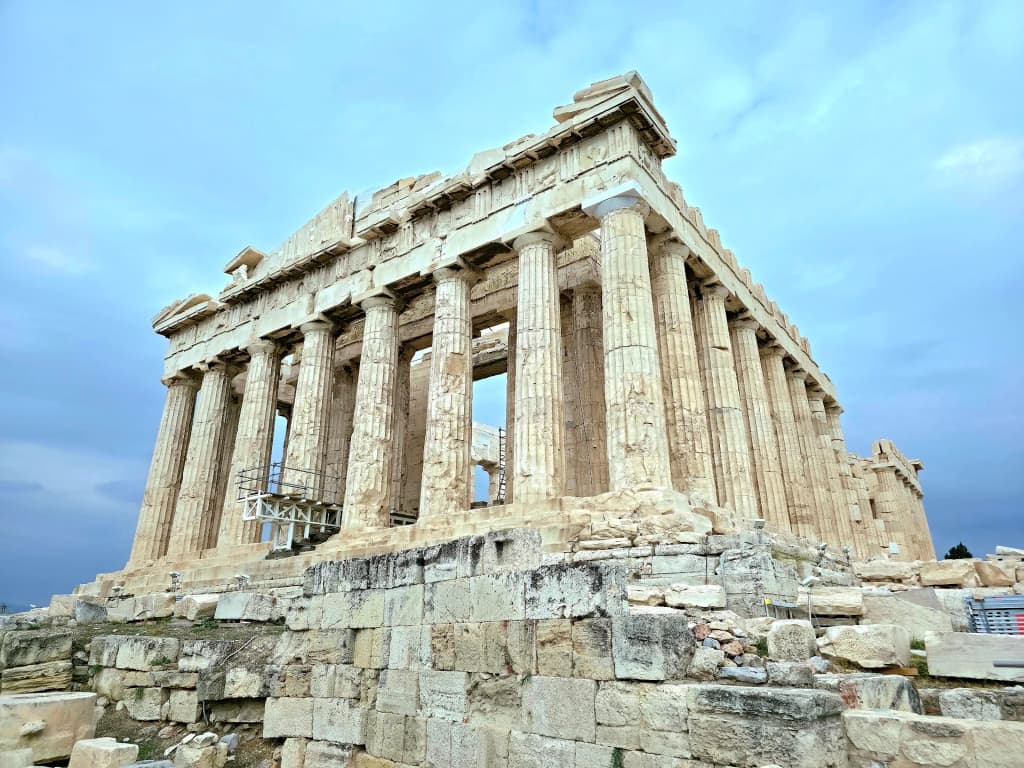
Your itinerary should always start in Athens. It is the primary international hub and significantly cheaper than the islands. Plan for exactly 2 to 3 days in Athens—dedicate one full 8-hour day to the Acropolis and the surrounding historical sites, and the rest to recovering from jet lag.
Once you leave Athens, you must choose your islands strategically. Grouping islands within the same archipelago (like the Cyclades) saves both transit time and ferry costs.
The Big Three: An Analytical Comparison
Island Vibe & Best For Cost Level Ideal Duration Key Highlight Santorini Romance, Photography, Views $$$$ 3-4 days World-famous caldera sunsets Mykonos Nightlife, Beach Clubs, Luxury $$$$ 3-4 days High-energy parties & pristine beaches Crete Adventure, Budget, Road Trips $$ 7-8 days Massive scale, Balos & Elafonissi beaches⚠️ Watch Out: Santorini does not have the powdery white sand beaches you might expect. The beaches are volcanic (black or red sand). Go to Santorini for the visual spectacle; go to Mykonos or Crete for actual beach days.

Inter-Island Transit: Ferries vs. Flights
Moving between islands is where most travelers bleed time and money. You have two options: ferries and domestic flights.
Ferries are massive vessels with airline-style seating. However, they are not always the cheapest or most efficient option. A flight from Santorini back to Athens might take 45 minutes and cost $60 USD, while a ferry could take 5+ hours and cost $80 USD.
Ferry Survival Rules:
- Book in Advance: Use dedicated ferry comparison sites to lock in routes at least 4 weeks prior to departure.
- Mind the Ports: Port names often differ from the island names (e.g., the port in Santorini is Thira/Athinios). Double-check your tickets to avoid missing your departure.
- Medicate: The Aegean Sea gets choppy. If you are prone to motion sickness, take Dramamine 30 minutes before boarding. You will sleep through the ride, but you won't be miserable.
On-Island Transportation Tactics
Let me be very clear: public transportation on the Greek islands is severely lacking. Relying on local buses will cost you hours of waiting in the sun.
The Car Rental Strategy: Renting a car is essential, particularly on larger islands like Crete where beaches are a 1 to 2-hour drive from the main towns.
- You must obtain an International Driving Permit (IDP) from your home country prior to arrival. Many rental agencies will flat-out refuse you without it.
- Book cars in advance and pick them up directly at the port or airport to save on taxi transfers.
The Scooter Warning: Many tourists rent ATVs or scooters. Unless you are a highly experienced motorcycle rider, I strongly advise against this. Greek island traffic is chaotic, roads are narrow, and there is a high prevalence of tourists driving under the influence after leaving beach clubs.
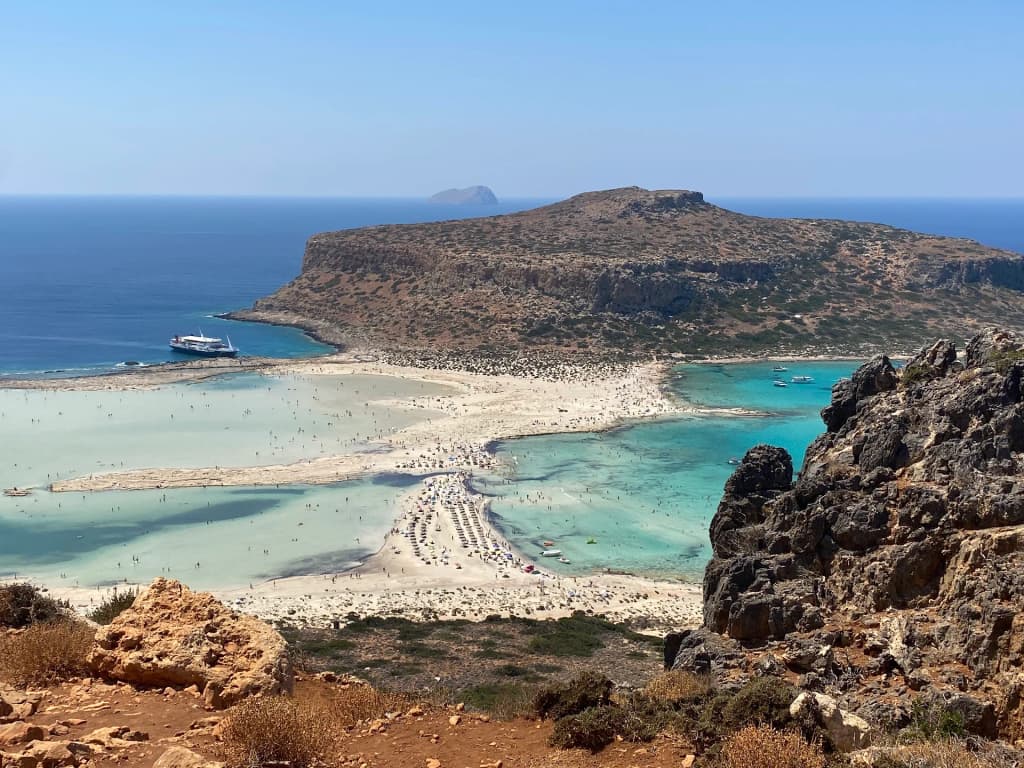
⚠️ Watch Out: The access roads to top beaches can be terrifying. For example, the drive to Balos Beach in Crete involves steep, unpaved mountain roads with sheer drops. If you are an anxious driver, skip the rental car for that day and book an affordable boat tour instead.
Common Mistakes to Avoid
- The 1-Night Stand: Never book just 1 or 2 nights on an island. Checking in, renting a car, and getting oriented takes half a day. Your minimum stay should be 3-4 days per island.
- Ignoring Boat Tours: You might think a boat tour is a luxury, but it is often the most cost-effective way to see inaccessible beaches. Group tours are surprisingly affordable and eliminate the stress of driving.
- Fearing the Language Barrier: The Greek alphabet is impossible to read for most tourists, but the locals are incredibly hospitable and patient. Download Google Translate for offline use, and you will navigate just fine.
Next Steps for Your Build
To execute this trip perfectly, follow this exact sequence:
- Pinpoint your travel dates (aim for the May or September windows).
- Book your round-trip flights into Athens.
- Select a maximum of two islands (e.g., Mykonos + Santorini, OR just Crete) to pair with your 2-to-3-day Athens stay.
- Lock in your ferry routes and car rentals immediately after booking your hotels.
By following this structured, methodical approach, you will bypass the logistical nightmares and focus entirely on enjoying the crystal-clear waters of the Aegean.
More Photos

More Adventures
 $40 - $100/day 4-7 days
 Skip the Tourist Traps: The Ultimate Fortaleza Adrenaline Guide
Think you know Brazilian beaches? Think again. Discover the chaotic markets, massive beach clubs, and extreme dune rides of Fortaleza, Brazil.
 $150 - $400/day 7-14 days
 Forget What You Know: The Raw Truth About Iceland
Think you know Iceland? From elf-dictated roadwork to freezing outdoor thermal pools, discover the wildly bizarre reality of the world's safest island.
 $600 - $2500/day 4-7 days
 Chasing the Wind and Luxury in St. Barts
Experience the striking contrasts of St. Barts. This narrative guide takes you from the wild hikes of Colombier to the uncompromising luxury of Gustavia.
 $80 - $250/day 5-10 days
 Conquer Malta: Cliff Jumps, Sea Caves, and Ancient Fortresses
Skip the tourist traps. Dive into Malta's rugged cliffs, sea caves, and ancient fortress cities. This is your ultimate adventure guide to the Mediterranean.