
Chasing the Wind and Luxury in St. Barts
Experience the striking contrasts of St. Barts. This narrative guide takes you from the wild hikes of Colombier to the uncompromising luxury of Gustavia.
The salt spray hits you first, sharp and stinging, followed immediately by the heavy, shuddering thud of the hull slamming into another Caribbean swell. They call this forty-five-minute ferry crossing from St. Martin the "St. Barfs" express, and as the boat pitches violently to the left, it is easy to understand why. The air smells of diesel exhaust and churning saltwater. I keep my eyes locked on the horizon, waiting for the jagged green peaks of Saint Barthélemy to emerge from the morning haze.
Suddenly, the violent rocking ceases. We slip past the breakwater into the harbor of Gustavia, and the contrast is so sharp it gives you whiplash. The wild, unforgiving ocean is replaced by water as smooth as glass, reflecting the gleaming, multi-story mahogany and chrome hulls of superyachts.
Inside the small terminal, the air conditioning is a sudden, freezing relief. I hand my passport to the immigration officer behind the glass.
"You survived the crossing," he says, his accent a melodic blend of French and West Indian. He stamps the booklet with a knowing smirk. "Most people look a lot greener when they step off that boat."
"I kept my eyes on the horizon," I admit, wiping a stray bead of saltwater from my forehead.
He laughs, sliding the passport back across the counter. "Good strategy. Welcome to St. Barts. The hard part is over."
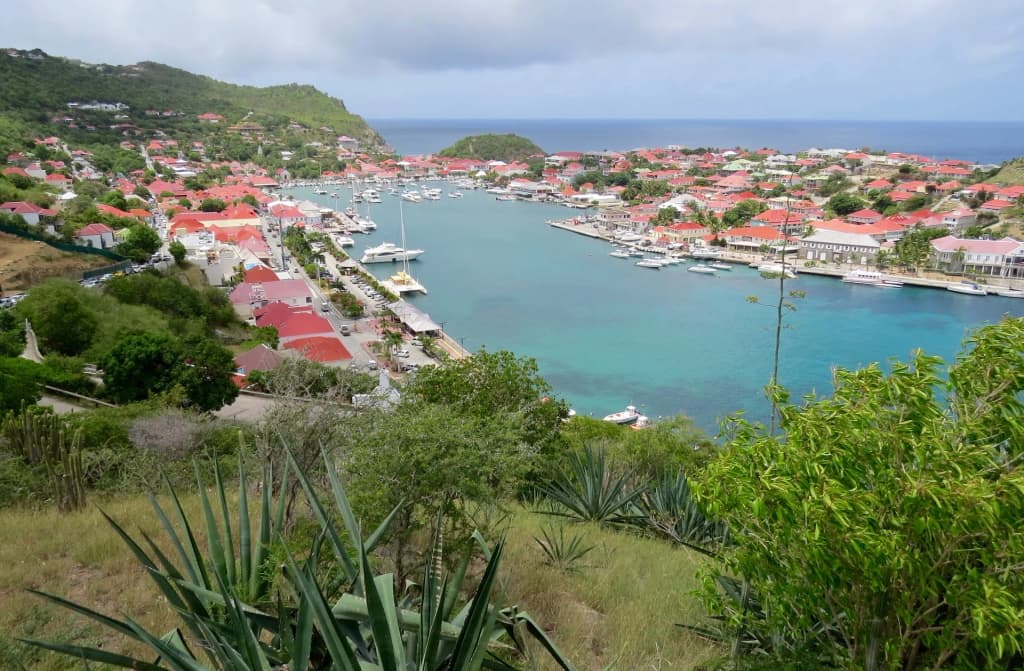
With the keys to a rented convertible Mini Cooper in hand, I drop the top and let the island's thick, warm air rush in. Gustavia is a town that feels entirely plucked from a European daydream and dropped into the tropics. Red-roofed buildings cling to the steep hillsides, looking down at streets lined with Louis Vuitton and Hermès boutiques. But if you look closely at the street signs, you will see a ghost story written in the margins. The names are Swedish. For nearly a century, this tiny rock was a Scandinavian colony—the only one in the Caribbean—before the French bought it back after an 1877 referendum.
The steering wheel grows hot under my palms as I navigate the winding, impossibly narrow roads out of the capital. The island reveals itself in flashes of brilliant bougainvillea and glimpses of impossible turquoise through the gaps in the stone walls.
I pull into Saint Jean Bay just as the afternoon is hitting its stride. The bass from Nikki Beach thumps through the floorboards of the car before I even turn off the engine. Walking onto the sand, the sensory overload is immediate. The smell of truffle oil and chilled champagne mixes with coconut sunscreen. People recline on plush white daybeds, their laughter cutting through the deep house music spinning from the DJ booth.
Just next door sits Eden Rock, the island's most legendary five-star hotel, perched defiantly on a rocky promontory jutting into the sea. Built by the eccentric Caribbean aviator Rémy de Haenen, it feels like a monument to the island's glamorous mid-century awakening. Suddenly, a shadow passes over the beach, accompanied by a deafening roar. I look up just in time to see a small commuter plane drop terrifyingly fast over the hilltop, seemingly inches from the traffic circle, before bouncing onto the infamous 2,100-foot runway that ends mere steps from the water. The beachgoers barely look up from their oysters.
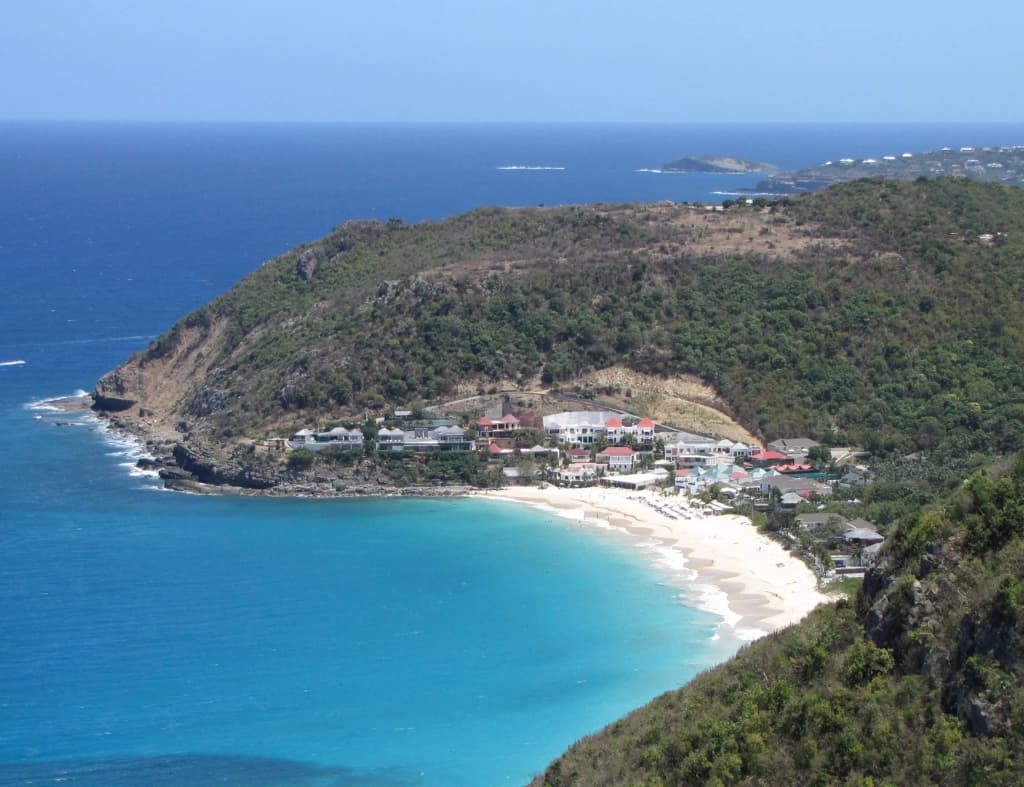
Seeking an escape from the pulsing energy of Saint Jean, I drive north toward Flamands Beach. The sand here is different—fine, powdery, and blindingly white. It squeaks softly beneath my bare feet. At the edge of the beach sits the Cheval Blanc, an LVMH-owned sanctuary where the scent of expensive perfume wafts from the open-air La Case restaurant. But I am not stopping here.
At the far end of Flamands, civilization abruptly ends, replaced by a rugged, rocky trail. For thirty minutes, I hike through dense coastal scrub. The sun beats down relentlessly, the heat radiating off the exposed stones. The only sound is the wind whipping through the dry grass and the distant crash of the waves.
Then, the path crests a hill, and Colombier Beach reveals itself below. It is a perfect, untouched crescent of sand. There are no villas here, no beach clubs, no roads. Just a few sailboats anchored in the protected cove. Walking down to the water, the silence is heavy and profound, a stark, beautiful contrast to the champagne-soaked revelry just a few miles away.
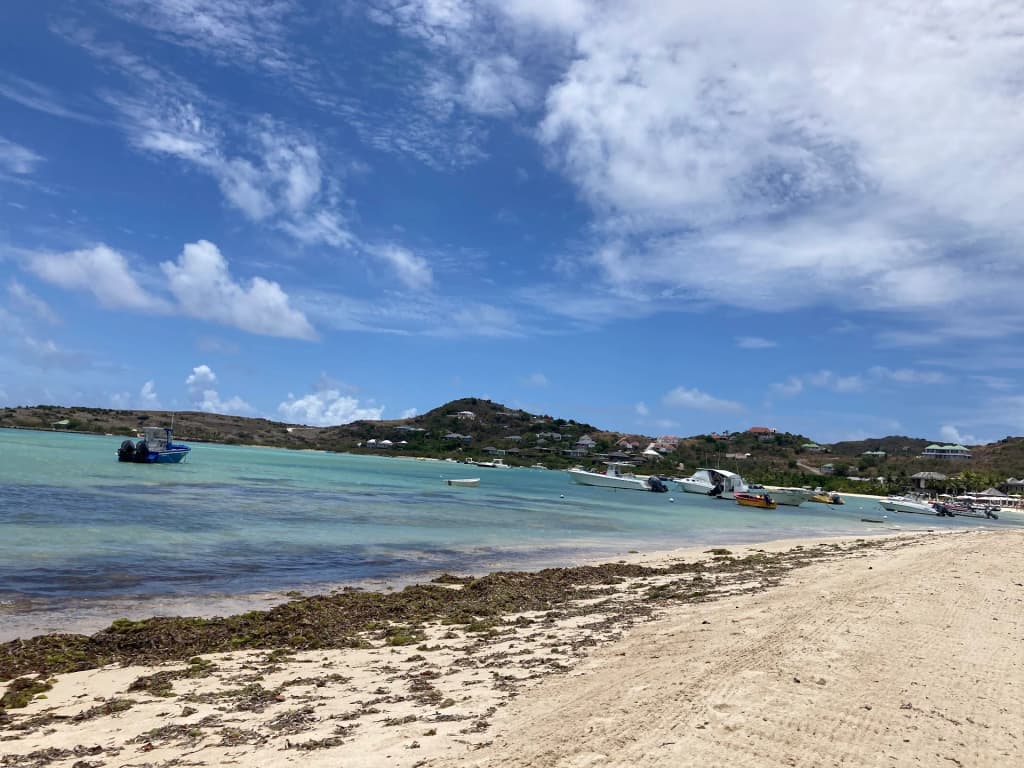
By late afternoon, the trade winds pick up, driving me toward the eastern edge of the island. Grand Cul-de-Sac is a massive, sweeping bay protected by an offshore barrier reef. The water here is a startling shade of cyan, and more importantly, it is shallow and perfectly calm.
I wade in, the warm water barely reaching my waist. Fifty yards out, colourful kitesurfers tear across the surface, catching the wind and launching themselves into the sky. I dip my head underwater. The visibility is absolute. Out of the corner of my eye, a shadow glides over the ribbed sandy bottom. A sea turtle, massive and ancient-looking, paddles lazily past my legs, entirely unbothered by my presence. We share the warm, shallow bath for a few quiet minutes before it disappears into the deeper blue toward the reef.
I dry off on the hood of the Mini, looking out toward Petit Cul-de-Sac just around the bend—a quiet, secluded curve of the island that feels like a secret kept only by the locals and the wind.
Evening falls fast in the Caribbean. By the time I navigate the steep, winding descent back into Gustavia, the sky is bruised with deep purples and burnt oranges. The mega-yachts in the harbor have turned on their underwater lights, casting an eerie, beautiful neon glow into the dark water.
I walk up the wooden steps to Bonito, a restaurant perched on the hillside overlooking the harbor. The air smells of charred citrus and woodsmoke. The dining room feels like the living room of an impossibly chic friend. I order a plate of the catch of the day, cured in lime and chili, and lean against the railing.
Looking down at the twinkling lights of the capital, listening to the clinking of heavy silver on porcelain and the soft hum of multiple languages blending into the night air, the magic of St. Barts snaps into focus. It is an island that demands a toll—whether it is the churning stomach of the ferry ride, the terrifying plunge of the airplane landing, or the steep prices of its perfection. But standing here, tasting the sharp, bright citrus of the seafood and feeling the cool night breeze off the harbor, every single cost feels entirely justified.
More Photos
More Adventures
 $1500 - $4500/day 4-7 days
 A Masterclass in Island Elegance: Inside Rosewood Le Guanahani
An insider's look at the reborn Rosewood Le Guanahani St Barth, where barefoot luxury meets French Caribbean heritage on a secluded private peninsula.
 $1500 - $3500/day 4-7 days
 Finding Barefoot Elegance at Le Sereno in St Barts
Experience the minimalist luxury of Le Sereno in St Barts. Explore Grand Cul-de-Sac's tranquil waters, exquisite Italian dining, and barefoot elegance.
 $2500 - $4000/day 4-7 days
 Finding French Elegance on the Wild Shores of St. Barts
An immersive journey into Cheval Blanc St-Barths, where French Riviera sophistication meets the raw beauty of the Caribbean on Flamands Beach.
 $2500 - $5000/day 5-8 days
 Barefoot Elegance: Inside Four Seasons Landaa Giraavaru
Discover the refined luxury of Four Seasons Landaa Giraavaru. An insider's perspective on Michelin-caliber dining, Ayurvedic wellness, and architectural mastery.