
Holambra: Finding a Slice of Holland in Tropical Brazil
Explore Holambra, Brazil's City of Flowers. Discover authentic Dutch immigrant history, towering windmills, flower fields, and a unique cultural fusion.
The scent of warm caramel and cinnamon hangs heavy in the humid tropical air. My brain is still trying to process the visual dissonance. I am standing on a brick-paved sidewalk in the heart of São Paulo state, yet the buildings around me are crowned with stepped gables straight out of Amsterdam. A woman behind a small street cart hands me a freshly pressed stroopwafel. The thin waffle is hot against my palm, the syrup inside gooey and sweet. I take a bite, then a sip of the dark, intensely roasted Brazilian coffee in my other hand. The pairing is perfect. This is Holambra.
The town’s name is a portmanteau—Holanda, America, Brasil. Founded in 1948 by Dutch Catholic immigrants fleeing the devastation of World War II, they arrived in this red-dirt pocket of South America with cattle, seeds, and a desperate hope to rebuild. They didn't just survive; they cultivated an empire of petals. Today, this municipality of barely fifteen thousand people produces nearly half of all the flowers sold in Brazil. You feel that agricultural pulse everywhere. It is in the dirt under the fingernails of the locals, in the deep greens of the manicured squares, and in the constant, quiet hum of irrigation systems working in the distance.
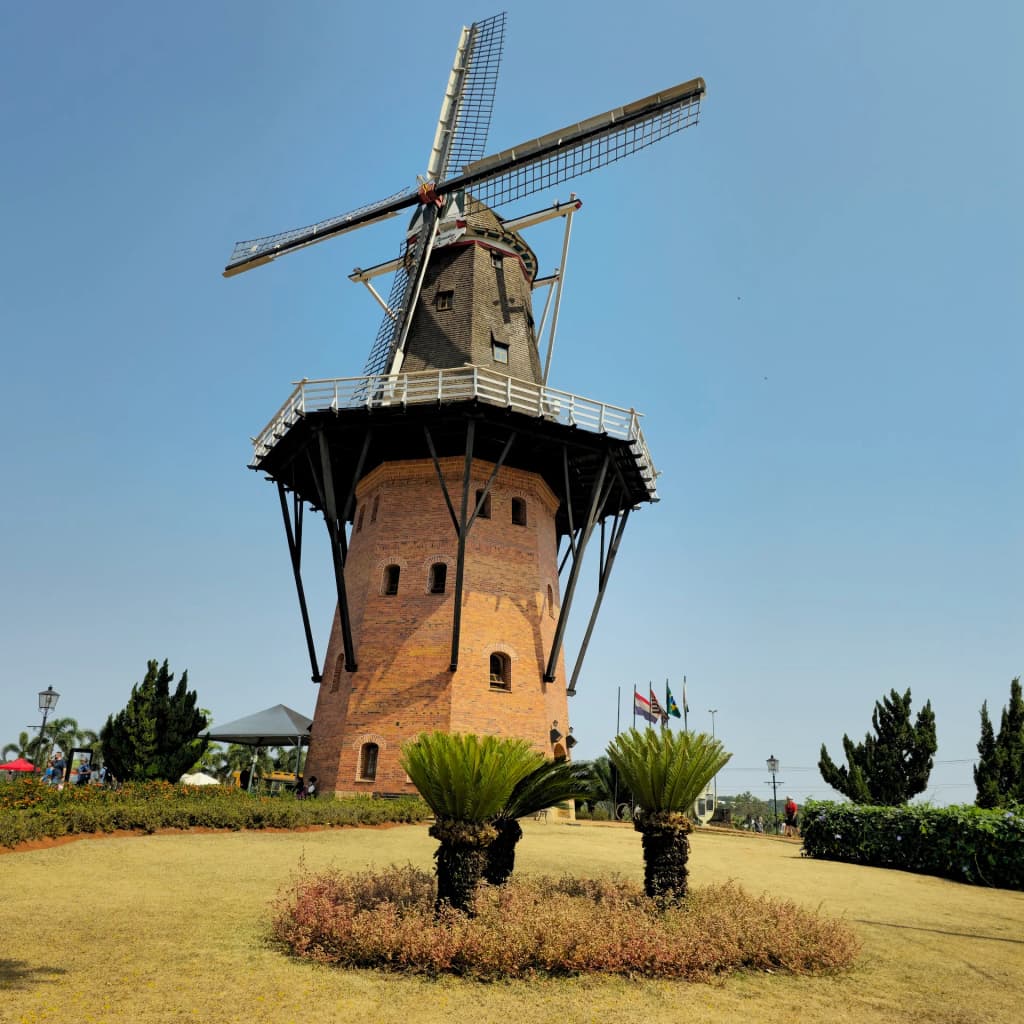
"It’s a replica, of course," a voice says beside me, pulling my attention away from the massive wooden blades cutting through the blue sky.
I turn to see an older man with sun-weathered skin and bright, pale blue eyes. He is wiping his hands on a canvas apron, leaning against the wooden railing.
"But the mechanics inside?" he continues, tapping his temple. "Genuine Dutch engineering. Built by an architect from the old country."
"It is magnificent," I say, shielding my eyes from the midday sun to take in the sheer scale of the Moinho Povos Unidos. "Do you come from the original families?"
He smiles, a slow, proud curving of the lips. "My grandfather was on one of the first boats. He thought they were crazy to try and farm here. The soil was so acidic. But you know the Dutch. If we can push back the sea, we can tame the dirt."
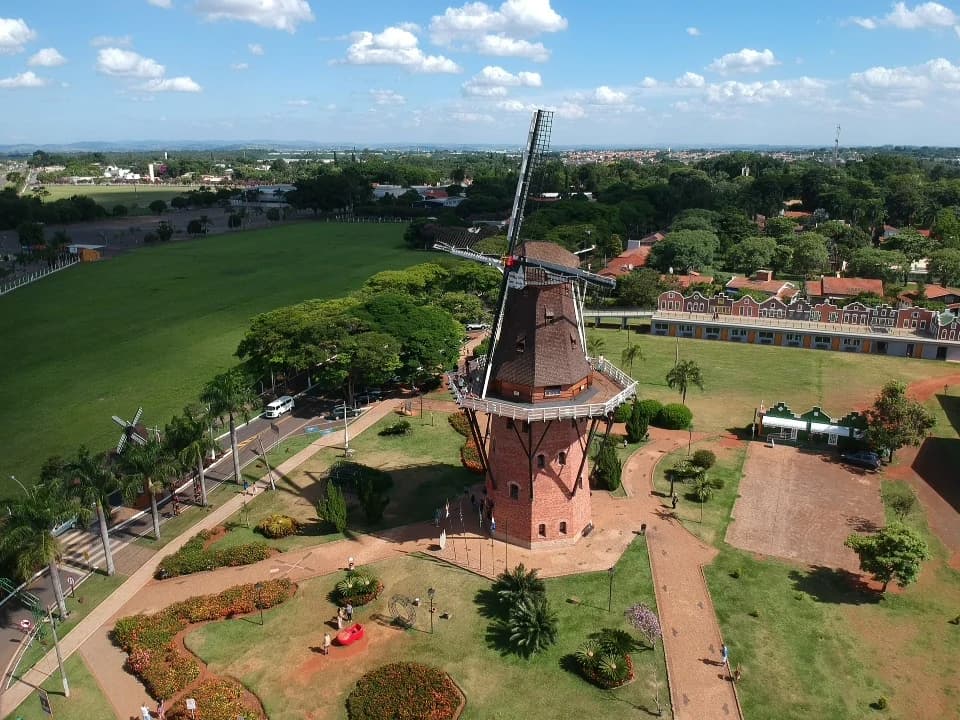
I hand over twelve reais at the small wooden ticket booth at the base—a modest fee that goes toward the mill's upkeep—and begin the climb. The interior smells of raw pine and machinery grease. The wooden stairs are steep, nearly ladders, demanding your full attention. With each of the five floors I ascend, the air grows hotter, but the rhythmic creak of the grinding stones and the groan of the massive gears is hypnotic. When I finally push through the narrow door onto the observation deck, the wind hits my face, carrying the scent of distant rain. Below me, the town unfolds in a patchwork of terracotta roofs, pastel facades, and the endless, shimmering plastic roofs of the greenhouses stretching toward the horizon.
A ten-minute drive from the cobblestones of the center brings you to the source of that agricultural heartbeat. I arrive at Bloemen Park just as the afternoon light begins to turn golden, softening the harsh shadows of the day. The entrance fee of thirty reais feels insignificant the moment I step past the gates.
The visual impact is staggering. Acres of gerberas, chrysanthemums, and roses explode in precise, geometric rows of crimson, violet, and blinding yellow. It is a sensory overload. The air inside the shade houses is thick and damp, smelling of wet peat, crushed leaves, and the intoxicating, heavy perfume of thousands of blooms exhaling in the heat.
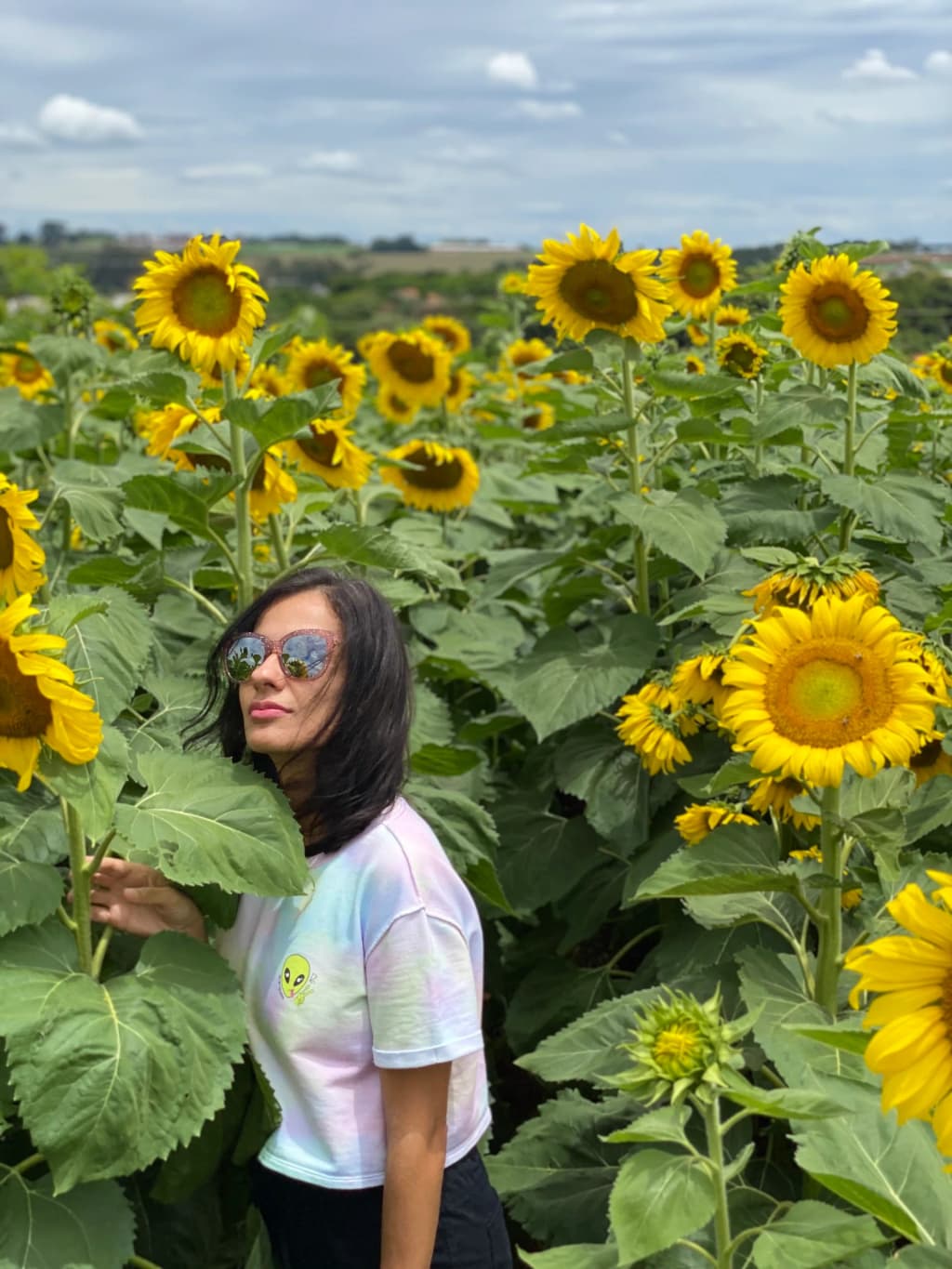
I watch a family wandering through a field of sunflowers that tower above their heads. A little girl in a yellow dress reaches out to touch a massive, seed-heavy blossom, laughing as the velvet petals brush her cheek. The soil here is dark and rich now, decades of careful cultivation having transformed the once-hostile Brazilian dirt into some of the most fertile ground in the state. You can spend hours just walking these rows, losing yourself in the labyrinth of color. There is a quiet reverence here, an unspoken understanding that these flowers are more than just a crop; they are the legacy of a people who refused to let their culture fade in a new world.
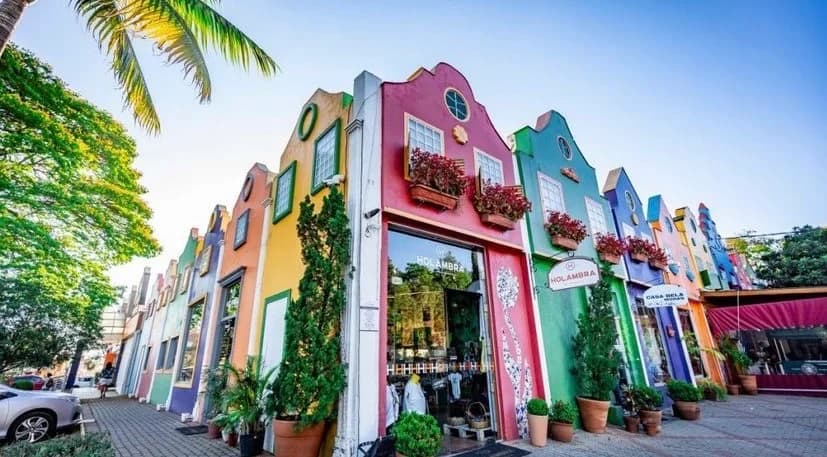
By evening, the heat finally breaks, giving way to a balmy, comfortable twilight. The streetlamps flicker on along the Boulevard Holandês, casting a warm, amber glow over the pastel-painted shops and restaurants. The town quiets down. The day-trippers from Campinas and São Paulo have packed back into their cars, leaving the streets to the locals and the slow travelers.
I find a table outside a small corner restaurant, the wrought-iron chair scraping against the pavement. The menu is a fascinating reflection of the town's dual identity. I order a plate of bitterballen—deep-fried Dutch meat ragout croquettes—and pair it with a dangerously smooth caipirinha, the national cocktail of Brazil, sharp with lime and raw cachaça.
The crunch of the croquette gives way to savory, rich meat, perfectly cutting the tart, icy bite of the cocktail. It shouldn't work, this blending of cold North Sea comfort food and tropical exuberance. But it does. It works beautifully.
I lean back in my chair, listening to the chatter from the adjacent tables. I hear Portuguese, fast and melodic, but peppered occasionally with a guttural Dutch surname or a shared laugh that transcends language. Holambra isn't a theme park. It isn't a manufactured slice of Europe designed just to sell tickets. It is a living, breathing community that has managed to graft the roots of one continent onto the soil of another.
The ice in my glass clinks as I take the last sip. The sky above the gabled roofs turns a deep, bruised purple. You travel far enough, and you realize that home isn't necessarily a place you are born. Sometimes, it is a place you build from the dirt up, planting seeds from the past to see what beautiful, unexpected things might bloom in the future.
More Photos
More Adventures
 $50 - $150/day 1-3 days
 Conquer Canoa Quebrada: Buggies, Ziplines & Red Cliffs
Skip the lazy beach days. Discover the adrenaline-fueled shores of Canoa Quebrada with dune buggies, massive ziplines, and electric local night markets.
 $60 - $120/day 3-5 days
 Leaving Pavement Behind: The Sand-Swept Soul of Jericoacoara
Explore the wind-sculpted beauty of Jericoacoara. Discover Lagoa do Paraíso, the accidental Buraco Azul, and the bare-foot charm of Brazil's sandy village.
 $60 - $150/day 4-7 days
 Fortaleza Unleashed: The Ultimate High-Octane Coastal Guide
Skip the resort chairs. Discover Fortaleza's towering red cliffs, high-speed dune buggy rides, and relentless kitesurfing winds. Get ready to sweat.
 $50 - $120/day 2-4 days
 Conquer Campos do Jordão: Brazil's High-Altitude Playground
Skip the beaches. Head up to Campos do Jordão for mountain biking, rugged trails, and massive alpine meals in Brazil's highest city.