
Hungary: Where the Earth Breathes Fire and History
A sensory journey through Hungary, from the steam of Budapest's thermal baths to the silence of the Great Plain. Discover a land where East meets West.
The smell of sulfur is faint but unmistakable, mingling with the earthy scent of wet stone and the sharp, clean aroma of winter air. Steam rises in thick, lazy columns from the water, turning the bathers into silhouettes against the morning light. Here at the Széchenyi baths, old men play chess on floating boards, their brows furrowed in concentration, oblivious to the tourists snapping photos. They sit immersed in water that has bubbled up from deep beneath the earth's crust, a ritual that feels less like leisure and more like a necessity. I hand over my ticket—bought online to skip the morning queue—and step into the heat. This is how Hungary welcomes you: with warmth rising from the ground itself.
This land is a geological anomaly. Sitting in the heart of Central Europe, it floats on a thin crust over a sea of thermal activity. It is a place where the earth breathes. From the Roman legions to the Ottoman pashas, everyone who has conquered this territory has eventually surrendered to its waters. It shapes the rhythm of life here. You don't just visit Hungary; you soak in it.
Budapest demands your attention not with a shout, but with a heavy, imperial gaze. The Danube slices the capital in two, a silver scar running north to south. On one bank, Buda rises on the hills, aristocratic and ancient, crowned by the Castle and the Fisherman's Bastion. On the other, Pest sprawls flat and energetic, a grid of grand boulevards that recall Paris and Vienna, yet possess a gritty soul entirely their own.
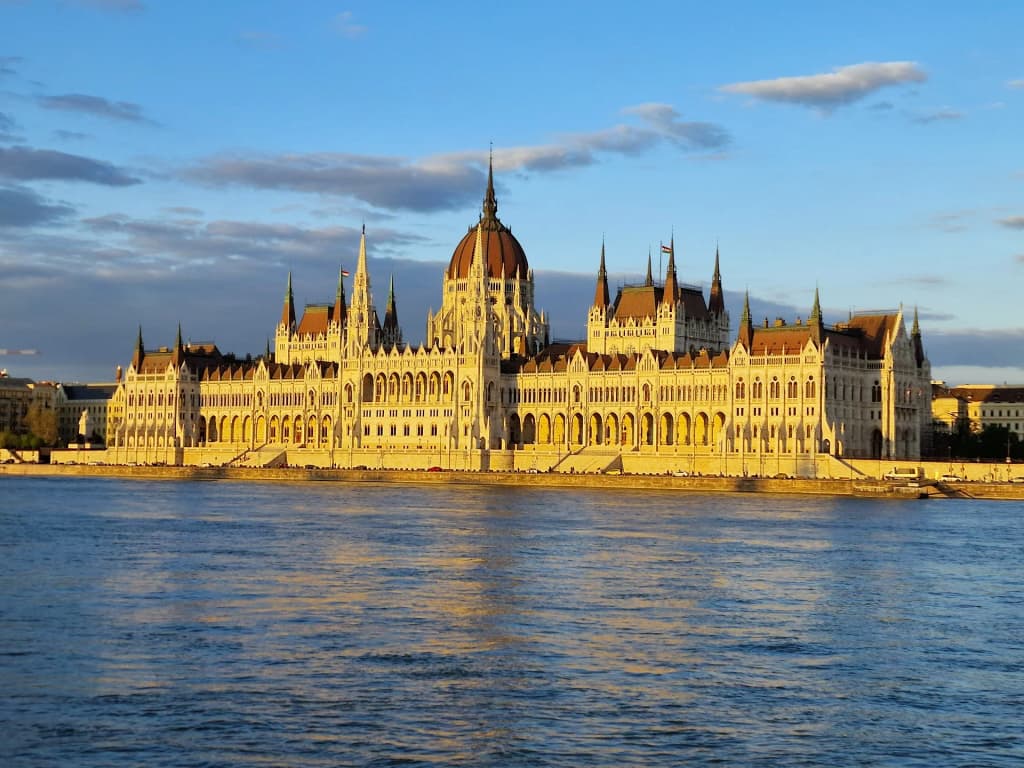
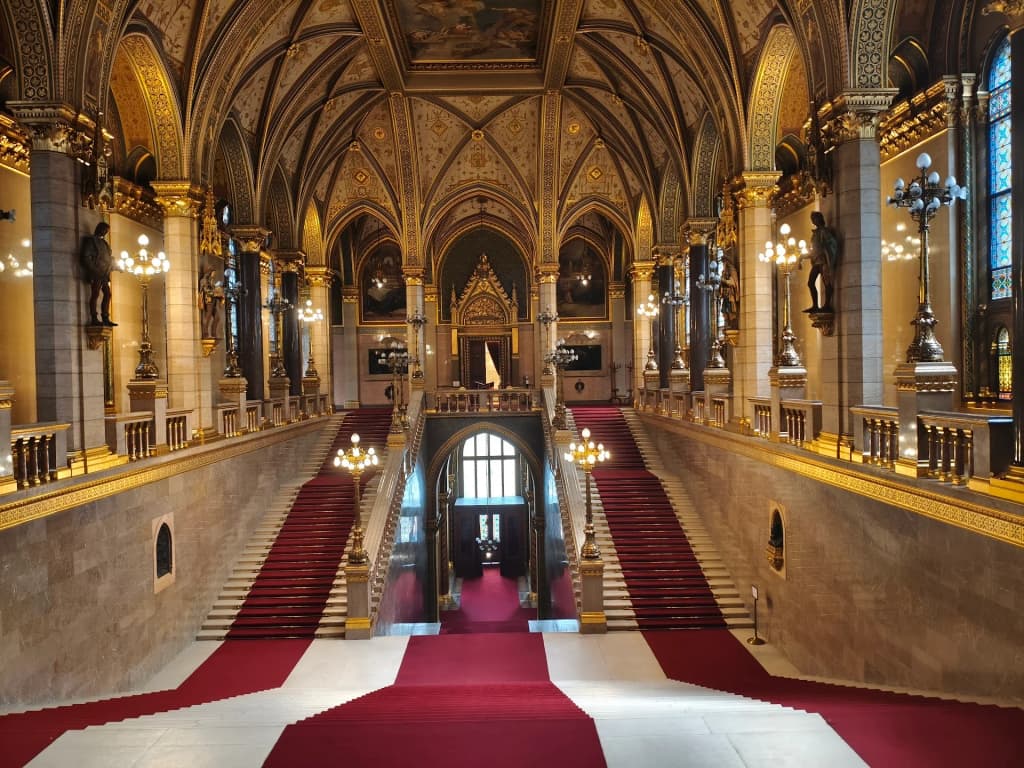
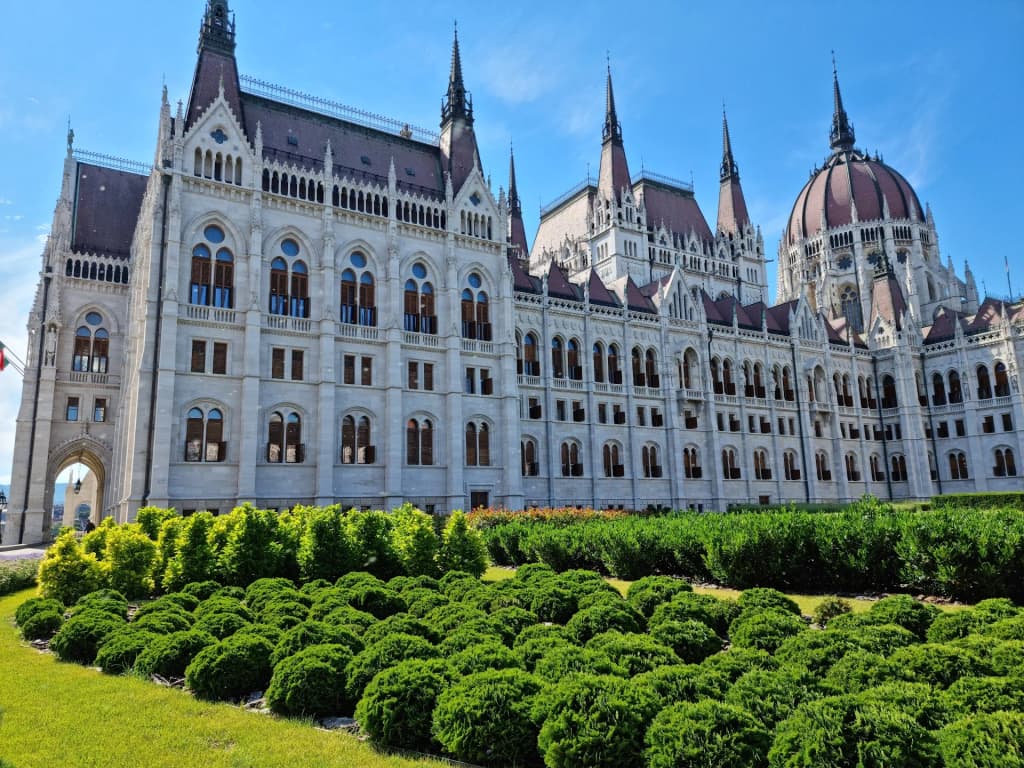
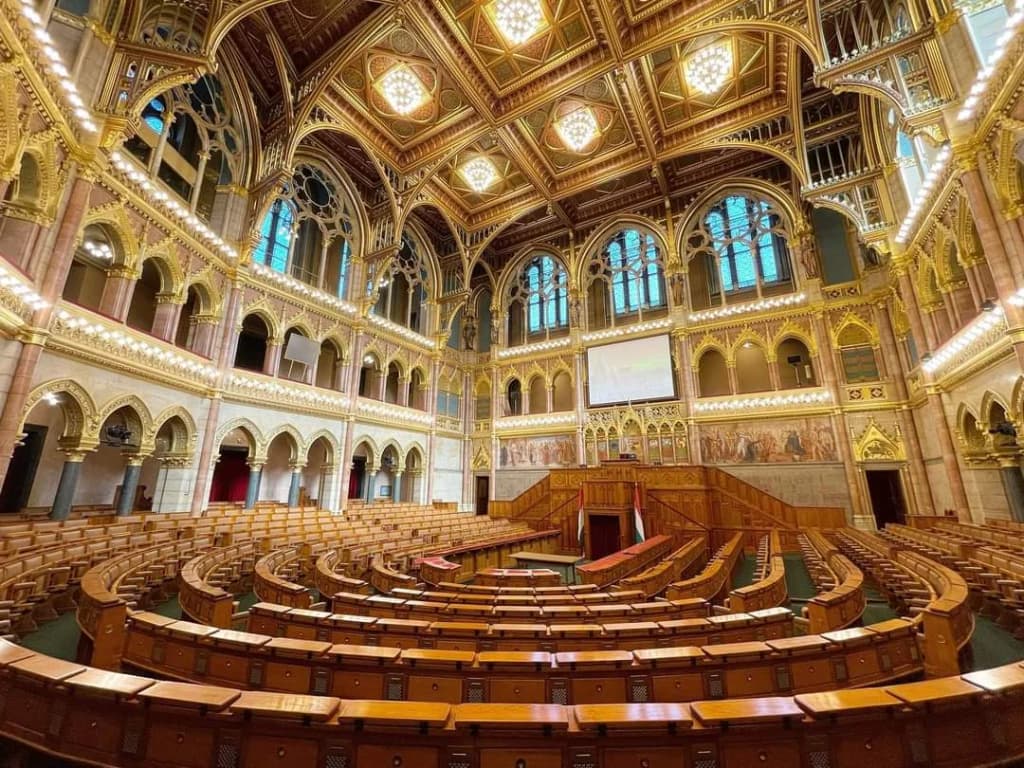
I walk across the Chain Bridge, the stone lions watching stoically. It wasn't until 1873 that these two distinct worlds formally became one city, but the personality split remains. In Pest, the energy is frantic. The Parliament building reflects off the river, a gothic revival masterpiece that seems almost too large for a country of this size. It dominates the bank, a reminder of a time when this city ruled half of Europe.
"The building is like our history," a student tells me later in a ruin bar, shouting over the noise of indie rock. We are drinking fröccs, a wine spritzer that costs less than two dollars but tastes like summer. "It is beautiful, spiked, and reflects everything around it."
Leaving the capital, the landscape flattens into an aggressive, infinite horizontal line. This is the Great Pannonian Plain, the Puszta. There are no mountains to catch your eye, no valleys to hide in. Just grass, sky, and the occasional sweep of a shadoof well silhouetted against the horizon. In Hortobágy, the silence is physical. It presses against your ears.
This vast flatness dictated a unique way of life. The villages here didn't cluster together for warmth; they spread out, dictated by agriculture and the needs of livestock. I watch a csikós, a Hungarian cowboy, ride two horses simultaneously, standing on their backs as they gallop through the dust. It looks like a circus trick, but it’s a skill born of centuries of herding on the open steppe. The wind here blows from Siberia, carrying no scent of the ocean, only the smell of dry grass and sun-baked earth. It is a stark contrast to the city, and renting a car to get here feels essential to truly grasp the scale of this emptiness.
The train rattles eastward toward Tokaj. The landscape shifts again, rising into terraced hills that catch the autumn sun. This is the region responsible for the "King of Wines," a sweet, golden nectar that Louis XIV supposedly adored. I find myself in a cool, damp cellar—a pince—carved directly into the volcanic rock. Mold coats the walls like black velvet, feeding on the alcohol fumes.
The winemaker, a man with hands stained purple and a face weathered by the vineyard sun, pours a glass of amber liquid. It's thick, almost like oil.
"You are not from here," he says, more observation than question, his English heavily accented.
"No," I admit. "I'm just passing through."
He smiles and slides a plate of cheese toward me. "The grapes, they suffer to make this. They need the mist from the river and the rot. The 'noble rot,' we call it. Without the struggle, there is no sweetness. It is very Hungarian, I think."
He is right. The wine tastes of apricots and honey, but there is an underlying acidity, a backbone of stone that keeps it from being cloying.
To the west lies the "Hungarian Sea." Lake Balaton is vast and shallow, its waters warming quickly under the summer sun. It feels like a riviera from another era. In Tihany, on a volcanic peninsula jutting into the lake, the scent of lavender is overwhelming. It drifts from the fields surrounding the ancient Benedictine abbey. The village houses are whitewashed, their thatched roofs thick and neat. It feels Mediterranean, a trick of the light and the microclimate.
Not far away is Hévíz, a thermal lake that defies the seasons. Even in the dead of winter, when the air bites at minus twenty degrees, the lake steams, its surface covered in tropical water lilies. It is a surreal sight—swimming outdoors while snow dusts the banks. A day pass here is affordable, roughly fifteen dollars, granting access to a sensation you cannot find anywhere else in Europe. It reinforces that feeling that in Hungary, the heat comes from within.
The deeper you travel, the more you realize that this country is a palimpsest. In Pécs, I descend into early Christian burial chambers, only to surface and walk past a mosque converted into a Catholic church, the crescent moon and cross sharing the same spire. In Eger, the castle walls still whisper of the 1552 siege where a handful of defenders held back the Ottoman tide. And in Esztergom, the massive Basilica stares across the Danube at Slovakia, marking the place where the first Hungarian king was crowned a millennium ago.
Even the language sets you apart here. Magyar is an island, related to Finnish and Estonian but intelligible to neither. It sounds like a secret code, rhythmic and vowel-heavy. It isolates the culture, preserving traditions like the Busójárás masks or the intricate embroidery of the Matyó people, keeping them safe from the dilution of neighboring Slavic and Germanic influences.
I end my journey on the banks of the Danube in Visegrád, looking down at the bend where the river turns sharply south. The sun is setting, painting the water in shades of violet and charcoal. Hungary is not a place you understand quickly. It is a land of contradictions—flat plains and volcanic hills, freezing winds and boiling waters, a history of being conquered and a fierce, unyielding identity. It is a place that, much like its thermal waters, seeps into your bones and stays there.
More Photos
More Adventures
 $150 - $300/day 1-2 days
 Conquer Epcot: The Ultimate High-Speed Global Gauntlet
Think Epcot is a slow stroll? Think again. It's a high-speed, globe-trotting gauntlet. Hack the rides, taste the world, and push your limits in Orlando.
 $50 - $120/day 3-5 days
 Chasing Echoes and Gold Dust in Tiradentes, Brazil
Experience Tiradentes, Brazil through a sensory journey of colonial architecture, deep-rooted history, and the rich culinary traditions of Minas Gerais.
 $50 - $150/day 1-2 days
 Conquer the Serra Verde Express: Brazil's Wildest Train
Ditch the tourist traps and ride the Serra Verde Express from Curitiba to Morretes. Discover ticket tips, seating secrets, and the best Barreado.
 $100 - $250/day 3-7 days
 Beyond the Turnstiles: An Orlando Summer Sabbatical
Escape the Orlando theme park crowds and discover the sensory magic of Celebration, the Mall at Millenia, and the neon-soaked shores of Universal CityWalk.