
Barefoot in the Sand: The Slow Rhythm of Jericoacoara
Discover the barefoot rhythm of Jericoacoara, Brazil. Explore the intense blue waters of Lagoa do Paraíso, hike to Pedra Furada, and watch dune sunsets.
The tires of the 4x4 deflate with a sharp hiss, a necessary surrender to the shifting dunes that guard this isolated stretch of the Brazilian coast. You don't just drive into Jericoacoara; you sink into it. The girl at the entrance checkpoint takes my environmental tourism tax—a mandatory daily fee of a few reais that keeps this fragile ecosystem from collapsing under its own myth—and hands me a paper receipt.
"You can leave your shoes in your bag," she says, noticing my heavy boots. Her Portuguese is soft, rounded at the edges.
"For how long?" I ask.
"Until you leave," she laughs. "There is no pavement in Jeri. Only sand."
She is entirely right. Stepping out into the village, the ground is soft and warm, a golden powder that spills into the lobbies of charming pousadas and the floors of candlelit restaurants. Dogs sleep lazily in the middle of the thoroughfares, undisturbed by the occasional dune buggy rolling past. Shop owners sweep golden grains from their doorsteps, a Sisyphean task they perform with a smile. The smell of grilled fish and burning charcoal drifts from a nearby corner, mixing with the heavy, sweet scent of sea salt. It is a place that demands you slow down to its barefoot rhythm.
The next morning, the wind whips across the open back of a dune buggy. My driver, an older local named Marcos with sun-deepened wrinkles around his eyes, navigates the massive sand walls with the casual grace of someone driving to the local grocery store. The landscape shifts dramatically from dense, low-lying scrub to vast, Sahara-like expanses. The wind is relentless, carrying fine grains of sand that sting the cheeks but offer a welcome relief from the equatorial heat. We are heading toward the famous lagoons—Tatajuba and Paraíso.
"We can stop to look for the seahorses in the mangrove," Marcos yells over the roar of the engine. "But I will tell you the truth. Sometimes they are here, sometimes they are in China. It is a matter of luck."
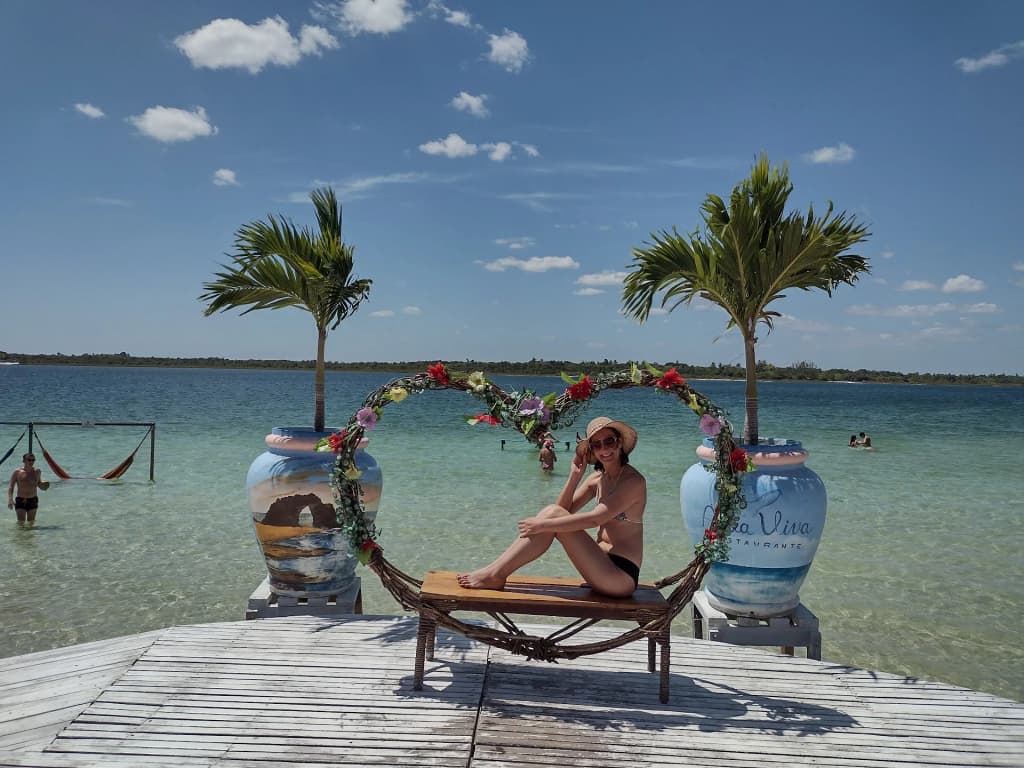
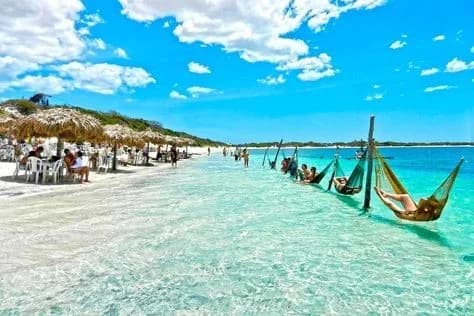
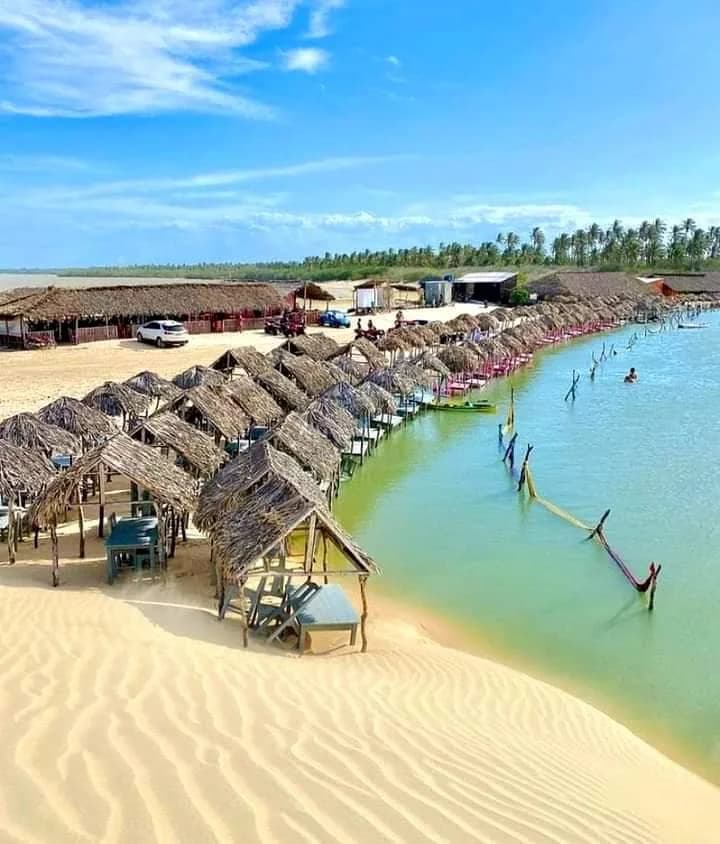
We skip the elusive seahorses and push forward to the water. When Lagoa do Paraíso finally appears over the crest of a white dune, the blue is so intense it almost hurts the eyes. The water is impossibly clear, lapping gently against the wooden stilts of rustic beach clubs. I hand over twenty reais at the entrance of one of the main enclaves, a small price for the scene that unfolds inside. Brightly colored hammocks are strung between wooden poles directly in the shallows of the lagoon. People lounge in the water, half-submerged, condensation dripping from the cold drinks in their hands. I order a caipirinha made with local cachaça and fresh passion fruit, the tartness cutting through the heavy afternoon heat. The water is lukewarm, the texture of the submerged sand like wet silk against the soles of my feet.
But Jericoacoara is not just about passive lounging; it makes you work for its most famous views. By mid-afternoon, the buggy drops me off at what feels like the edge of the earth.
"This is as far as the engine goes," Marcos says, gesturing down a rugged, rocky path that hugs the coastline. "It is about a thousand meters on foot to Pedra Furada. Take water. The sun does not forgive."
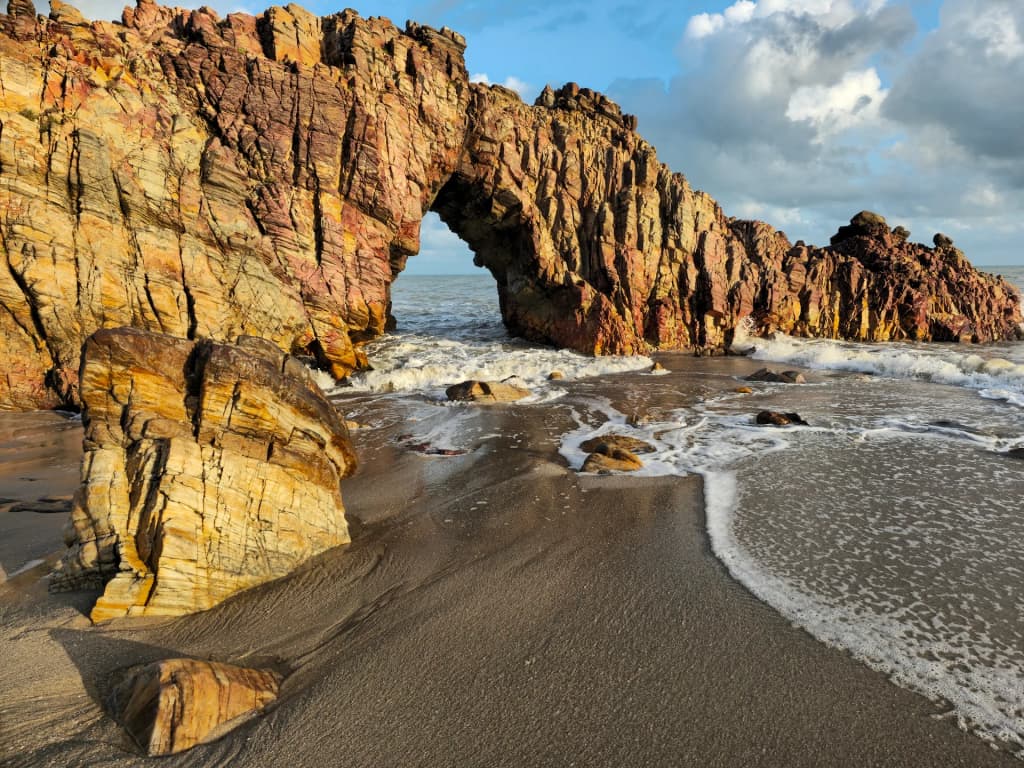
The walk is a sensory heavy-hitter. The heat radiates from the red cliffs, and the crashing waves send a fine mist of salt into the air that settles sticky on my skin. The tide pools along the way are teeming with tiny, skittering crabs and small silver fish trapped until the next high tide. When the pierced rock—Pedra Furada—finally comes into view, its massive archway framing the crashing Atlantic, there is already a line. Dozens of people stand patiently in the blazing sun, waiting for their fifteen seconds to stand beneath the arch for the perfect photograph. It is the modern pilgrimage. If you have patience, you wait. You listen to the mix of Spanish, Portuguese, and English chatter mingling with the roar of the tide. You watch the light shift from harsh white to a softer, golden hue as the afternoon wanes.
The day in Jeri always ends the same way, drawn by an invisible magnetic pull. As the sun begins its final descent, the entire village empties out and begins the slow, collective climb up the massive Duna do Pôr do Sol. I find a spot in the cool sand, my legs aching pleasantly from the day's trek. Couples lean into each other, and solo travelers sit with their knees pulled to their chests, all eyes fixed westward. The sky turns violently orange, then bruised purple, then a soft, dusty pink. No one speaks loudly. The wind carries the faint, rhythmic sound of a capoeira berimbau from the beach below. When the glowing orb finally dips below the ocean horizon, the entire dune erupts into spontaneous applause. It is a strangely moving ritual, clapping for the sun, a beautiful reminder that in this sandy corner of Brazil, nature is the only clock that truly matters.
More Photos
More Adventures
 $150 - $400/day 4-7 days
 Skip the Resorts: The Ultimate Wild Guide to Trancoso
Ditch the tourist traps and explore the wild side of Trancoso, Bahia. Wade across rivers, hike to secluded natural pools, and experience the real Brazil.
 $60 - $120/day 3-5 days
 Leaving Pavement Behind: The Sand-Swept Soul of Jericoacoara
Explore the wind-sculpted beauty of Jericoacoara. Discover Lagoa do Paraíso, the accidental Buraco Azul, and the bare-foot charm of Brazil's sandy village.
 $60 - $150/day 3-5 days
 Get Lost in Bento Gonçalves: The Real Brazilian Wine Country
Skip the beaches. Rent a car and dive into Brazil's Italian wine country. Discover century-old mills, wild boar salami, and epic vineyards in Bento Gonçalves.
 $50 - $300/day 10-21 days
 Skip Rio: 10 Wild Brazilian Paradises You Need to See
Ditch the tourist buses. Explore Brazil's untamed edges, from the desert lagoons of Lençóis Maranhenses to car-free islands. Find your next adventure.