
Chasing the Ghost of Mount Fuji: Quiet in Kawaguchiko
Escape the chaotic photo spots and day-tripper crowds to find quiet lakeside walks, hot stone beef, and traditional ryokans in the shadow of Mount Fuji.
The scent of woven rush grass hits you the moment the sliding doors click shut. It is an earthy, sweet aroma that seems to settle directly into your bones, a quiet announcement that you have finally arrived. I slide my boots off at the entrance, trading them for the soft hotel slippers that shuffle quietly across the immaculate floor. This is a traditional Japanese ryokan in the town of Fujikawaguchiko, and the room is a minimalist dream of tatami mats and sliding paper doors. In the center sits a low wooden table where green tea is poured, but by nightfall, the space transforms. The staff silently clear the center to lay out the thick, cloud-like futon beds. Outside the wide glass window, the night is pitch black, but you can feel the immense presence of Lake Kawaguchiko just beyond the glass, lapping gently against the unseen shore.
Before sleep, there is the onsen. Slipping into the authentic thermal waters requires stripping away more than just your clothes; you leave your modesty and your exhaustion in the woven basket by the door. The women's bath is thick with sulfurous steam that coats the lungs. The scalding, therapeutic water bites at first, turning my skin flushed and pink, but within minutes, the six-hour, four-train journey from Hiroshima melts entirely out of my muscles. It is a quiet, collective vulnerability, an unspoken understanding among strangers soaking in the heat.
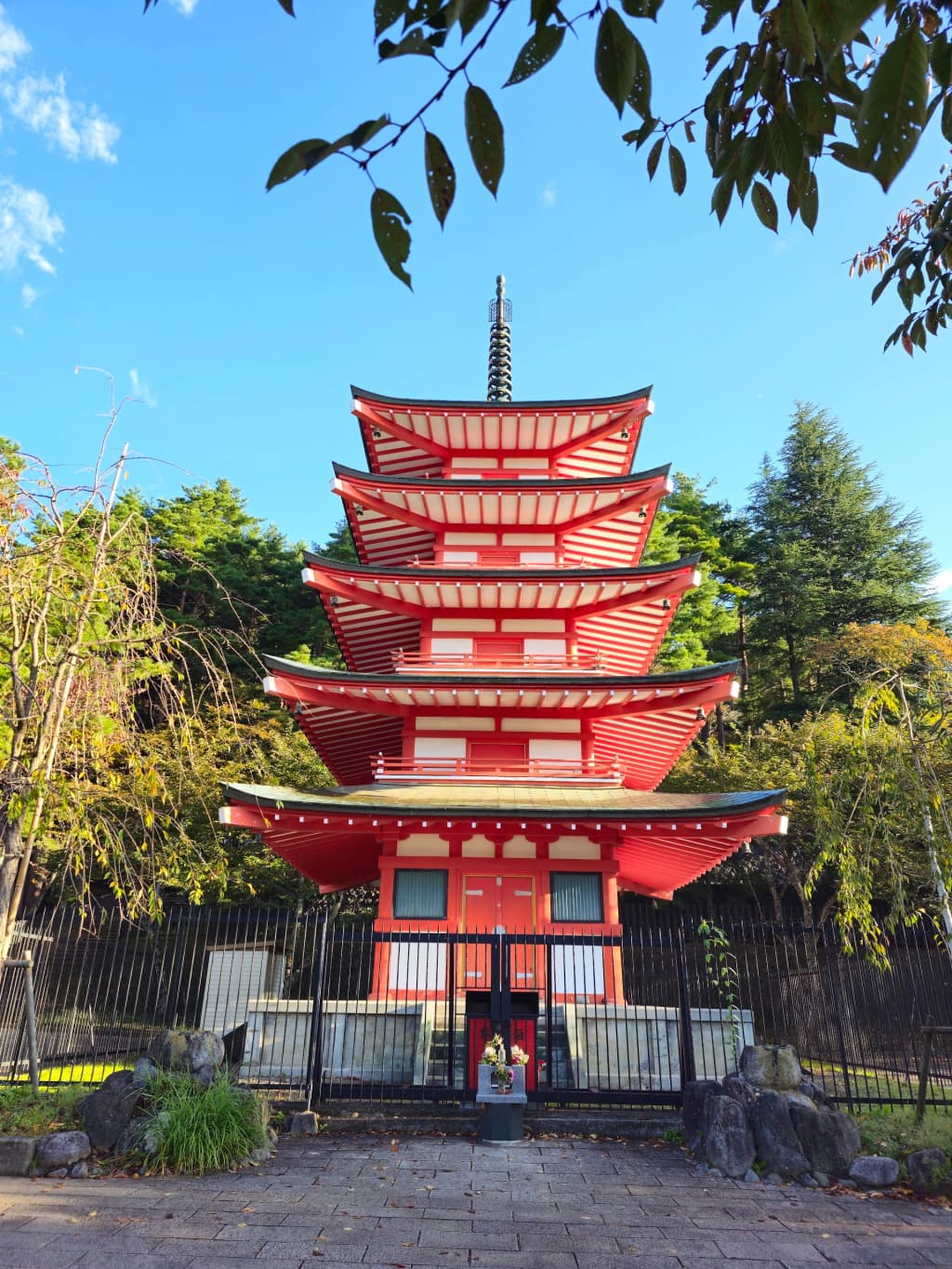
The next morning, the air is sharp and biting, hovering just above freezing. We board the 9:15 train from Kawaguchiko Station, swiping the same Suica transit cards we used in the neon labyrinth of Tokyo. The ride is brief, dropping us at the base of the mountain where the famous Chureito Pagoda awaits. At the trailhead, a vendor's cart is piled high with impossibly bright fruit.
"Five hundred yen," the fruit vendor says, his breath pluming in the crisp mountain air as he hands me an apple the size of a softball.
"Is it really from here?" I ask, feeling the heavy, cold weight of the fruit in my palms.
"Original Fuji," he nods proudly, gesturing toward the endless stairs ahead. "Eat it on the way up. You will need the energy."
He isn't wrong. The climb is steep, a relentless upward march through the cold air that quickly has me shedding my thermal layers. With every pause to catch my breath, I turn around, and the view of Mount Fuji grows more imposing, its snow-capped peak cutting sharply against the cloudless blue sky. We are incredibly lucky; Fuji is notoriously shy. Locals will tell you that the mountain creates its own weather, hiding behind thick banks of clouds even on the sunniest of days.
But reaching the top shatters the illusion of a serene mountain pilgrimage. The reality of the famous pagoda viewing deck is pure chaos. It is a tiny, cramped space, overflowing with a dense thicket of tourists and tripods. People jostle for an inch of railing, holding up phones and cameras, completely ignoring the roped-off sections to get the perfect social media shot. The pagoda itself is smaller than you might expect, but when aligned just right with the mountain in the background, it creates the quintessential image of Japan. I buy a beautifully embroidered amulet for good health for 800 yen from the nearby temple, stepping away from the frantic crowd to find a quiet corner beneath a bare cherry blossom tree. I realize quickly that to truly experience this place, you cannot arrive at nine in the morning. You must be on these steps by seven, long before the day-trippers arrive from Tokyo.
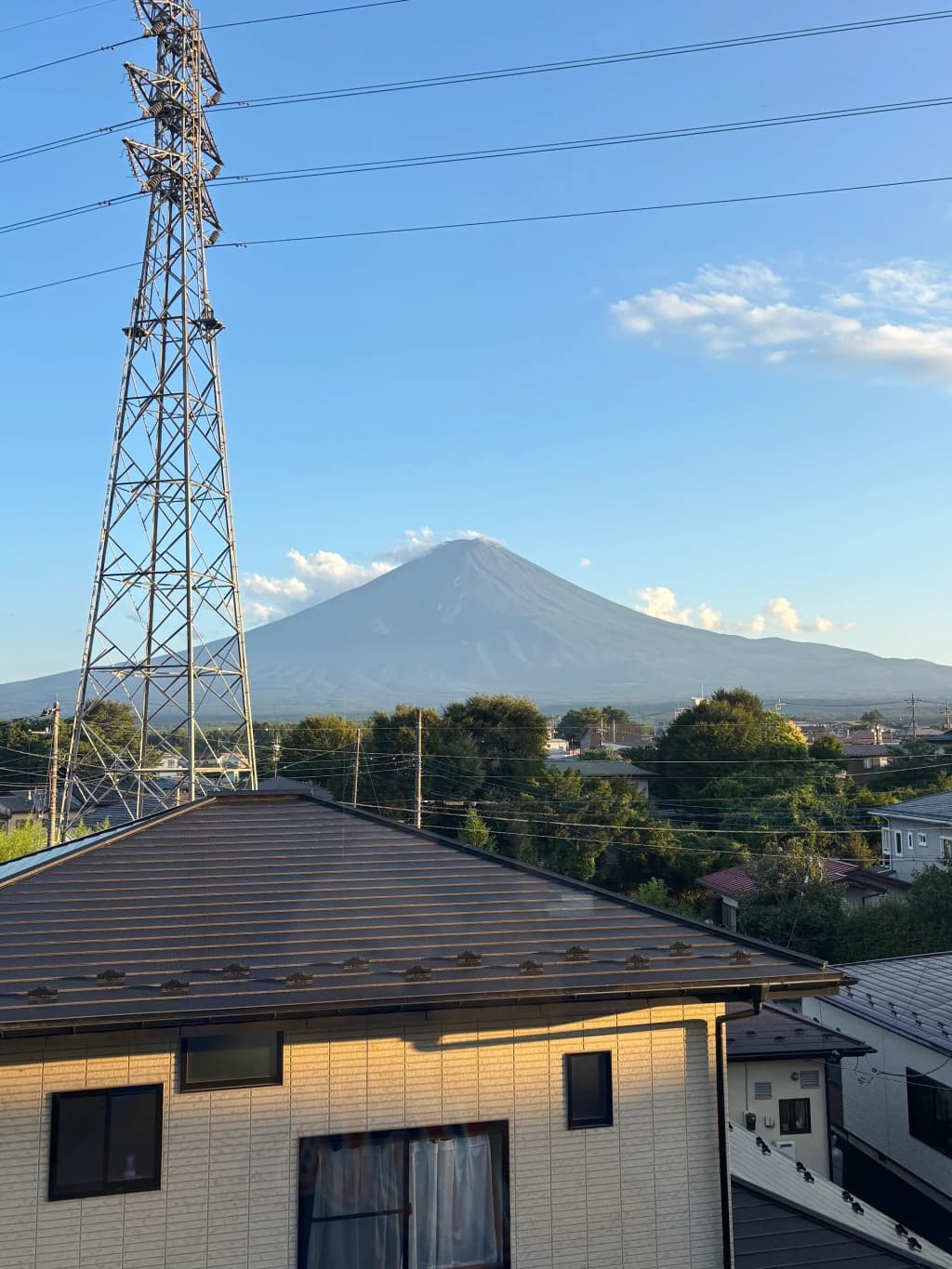
The obsession with the perfect photo follows us back down into the town. We walk toward a famous intersection where the urban street seems to lead directly into the base of the mountain. It is a striking juxtaposition of power lines, convenience stores, and the ancient volcano. But the street is a mess. Photographers spill off the sidewalks, standing dead in the middle of the pedestrian crossing while the light turns red. A local guard blows a whistle, waving a glowing baton to herd people back onto the curb. It is stressful, loud, and entirely disconnected from the majesty of the landscape. We walk a few blocks higher up the hill. The angle changes slightly, but the stress vanishes. The air is quiet again, save for the hum of a passing bicycle.
Lunch brings a different kind of sensory overload. We find a small restaurant specializing in hot stone cooking. The waitress brings a plate of deeply marbled, practically raw beef, accompanied by a mountain of shredded cabbage and a dark, savory onion sauce. You cook the meat yourself on the sizzling black stone in front of you. The sound of the fat rendering and hissing against the rock fills the warm room, smelling of salt and smoke. Dipped in the onion sauce, the beef dissolves instantly on the tongue, rich and heavy.
We wander through the station's souvenir shop afterward, a shrine to Japan's ability to turn absolutely anything into a mascot. There are chopsticks shaped like Mount Fuji for 1,100 yen. There are Fuji hair clips, Fuji earrings, and a large blue towel for 4,180 yen that, when draped over your shoulders, turns you into a walking, fluffy replica of the mountain. I buy a bizarre, bright blue soda with the mountain on the label. It tastes faintly of warm bubblegum and lacks carbonation, but it feels like a necessary part of the experience.
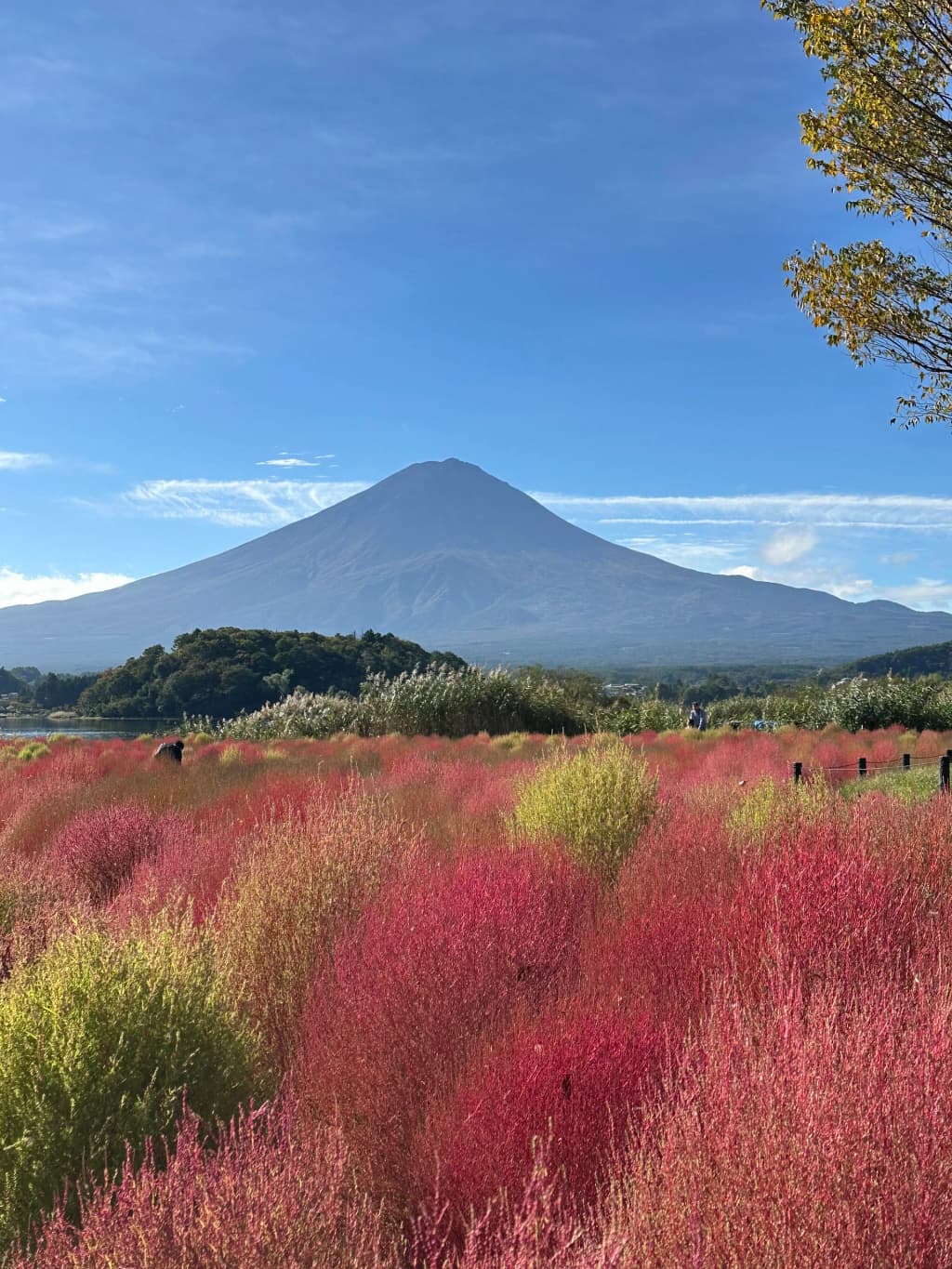
In the late afternoon, we tap our transit cards on the Red Line bus, riding it to the furthest stop at Oishi Park. The bus is efficient, arriving every fifteen minutes, but as we pass patches of tall pampas grass and quiet coves, I realize the bus moves too fast. We decide to walk the entire perimeter of the lake back to our hotel. It is the best decision we make on the trip.
The crowds disappear entirely. It is just us, the freezing wind coming off the water, and the mountain. The fading sunlight turns the snow on the peak a soft, bruised purple. As we round a quiet bend, we spot a couple standing on the rocky shore. He is down on one knee, holding a small box, the massive silhouette of the volcano bearing witness to the moment. It is so quiet you can hear the water lapping against the stones.
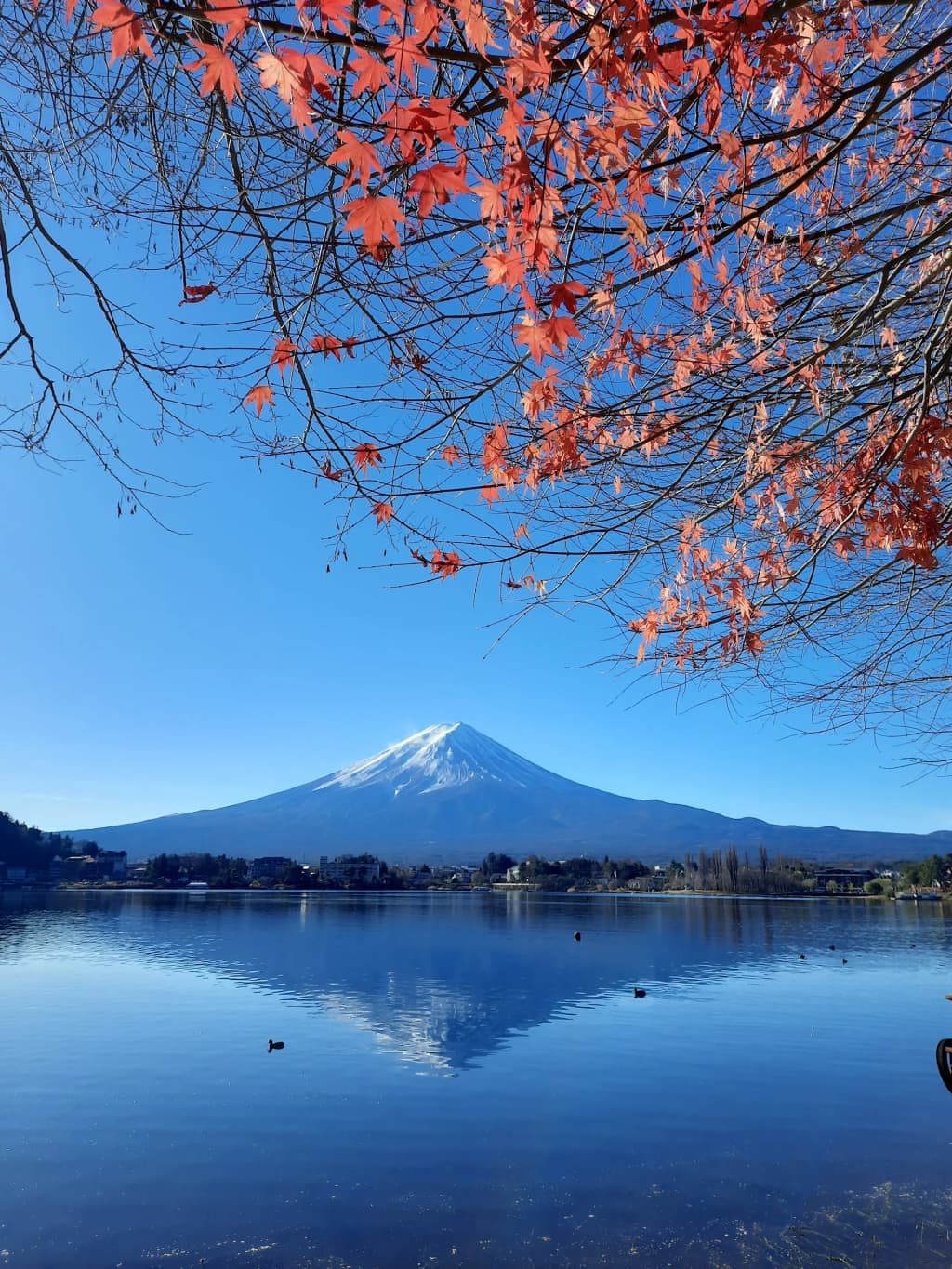
On our final morning, we delay our return to Tokyo as long as possible. The sky is impossibly clear again. We walk down to the water's edge right in front of our ryokan. The shoreline here isn't sand; it is dark, porous volcanic rock, ancient lava flows from the very mountain we are staring at. Above us, the autumn leaves of the momiji trees are a blinding, fiery red, perfectly framing the snow-capped peak.
So many travelers treat this region as a frantic day trip from the city, rushing in on a bus, snapping the viral photos, and leaving before sunset. But standing here, listening to the wind rattle the red leaves, I know that is a mistake. You need three days here. You need time to let the mountain hide and reveal itself. You need time to soak in the scalding onsen, to cook your own beef on a hot stone, and to walk the long, quiet way home along the edge of the water. The mountain demands patience, and if you offer it, the reward is entirely unforgettable.
More Photos
More Adventures
 $100 - $250/day 5-7 days
 A Summer Road Trip Through Bariloche and the Seven Lakes
Trade snow for crystal lakes and winding mountain roads on a summer road trip through Bariloche and Villa La Angostura in Argentine Patagonia.
 $150 - $350/day 3-5 days
 Conquer Dubrovnik: The Ultimate Adventure Survival Guide
Skip the massive cruise ship crowds. Discover the raw, adventurous side of Dubrovnik by attacking the city before dawn and exploring beyond the walls.
 $60 - $150/day 4-7 days
 Conquer Buenos Aires: The Ultimate 7-Day Itinerary
Ready to conquer Buenos Aires? Skip the tourist traps and dive into this high-octane 7-day itinerary. Discover the real heart of Argentina's capital.
 $300 - $1500/day 3-5 days
 Conquer Aspen: Deep Snow, High Peaks, and Zero Excuses
Think Aspen is just for billionaires? Think again. Grab your heavy gear and dive into this raw, freezing, adrenaline-fueled Aspen winter adventure.