
A Summer Road Trip Through Bariloche and the Seven Lakes
Trade snow for crystal lakes and winding mountain roads on a summer road trip through Bariloche and Villa La Angostura in Argentine Patagonia.
The wind hits you the moment you step out of the airport terminal, carrying the sharp, pine-heavy scent of the Andes and a chill that completely ignores the calendar. It is supposed to be summer in Argentine Patagonia, but the temperature hovers near six degrees Celsius. I pull my jacket tighter, watching the rental car attendant hand over the keys to the SUV we booked. The extra space and comfort cost a premium, but as we load our bags into the trunk, I know the winding mountain roads ahead will demand a sturdy ride.
"You brought a heavy coat, I hope?" the attendant asks, noticing my shiver as he points toward the exit.
"I thought December meant summer," I admit with a laugh.
He smiles, leaning against the cold metal of the car. "Patagonia does what she wants. Summer just means the lakes are liquid instead of ice. Drive safe."
We pull out onto the road, leaving Bariloche behind for now, aiming our compass toward Villa La Angostura. It is an eighty-kilometer drive that traces the edge of Lake Nahuel Huapi, where the water is a deep, impossible navy blue. The town, when we arrive, feels plucked from a romance novel. It is a tiny village built entirely of heavy stone and dark, polished wood, sitting quietly among towering evergreen trees.
I wander into the local tourist center, marked by a simple wooden 'i' sign. The woman behind the counter hands me a QR code to scan, sending a flurry of maps and ferry schedules directly to my phone via WhatsApp. It is a modern touch in a place that feels beautifully lost in time. Armed with digital maps, we set out the next morning onto the legendary Route 40, beginning our journey along the Seven Lakes Route.
The crunch of gravel beneath the tires is the only sound as we pull onto the shoulder at the Lago Espejo viewpoint. Mirror Lake. The name makes perfect sense. The water is so still and crystal clear that you can count the smooth, round pebbles on the lakebed from the cliff above.
Down on the beach, the sun finally breaks through the clouds, warming the dark sand. I kick off my shoes and step into the water. The cold is immediate and electric, biting into my ankles like tiny needles. A few brave souls are plunging fully in, their gasps echoing across the quiet cove, but I am content to simply stand at the edge, feeling the icy purity of the glacial meltwater.
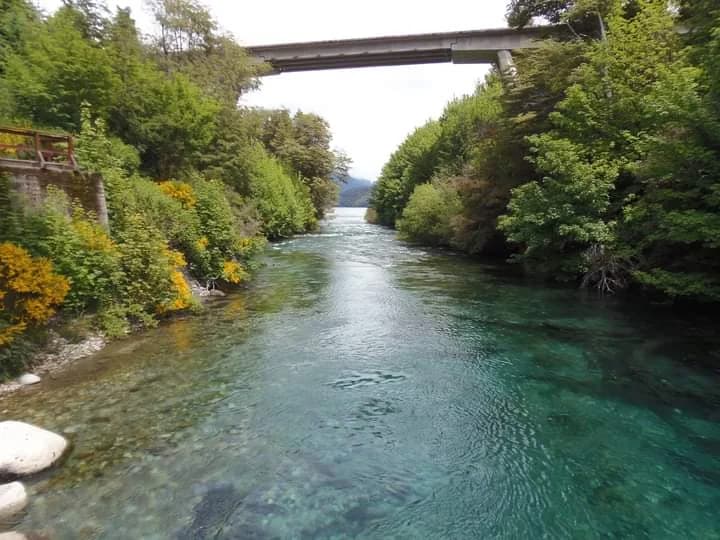
Further down the road, we park near the Correntoso River. Walking across the high, dizzying bridge, the wind whips through my hair. Below, one of the shortest rivers in the world rushes violently between two lakes, churning the water into a brilliant, foamy turquoise. You can lose hours just leaning against the railing, watching the current carve its way through the earth.
The catamaran rocks gently at the wooden pier of Bahia Mansa. For seventy thousand pesos—plus a small park fee paid at a charming little wooden tollhouse—we board the enclosed boat, seeking refuge from the biting wind. The engine hums, a low vibration you can feel in your chest, as we glide across the bay toward the Bosque de Arrayanes.
Stepping off the boat, the forest feels almost alien. The Arrayán trees reach upward like grasping fingers, their bark a striking, peeling cinnamon color that feels cool and smooth to the touch. Some of these trees have stood here for over six hundred years. The air smells damp, like moss and old earth. It is beautiful, undeniably, yet as I walk the wooden pathways, I can't help but feel a quiet disconnect. The forest is heavily curated, the paths crowded. Sometimes, the raw, unmapped beaches along the highway hold more magic than the famous attractions.
Back in town, we warm our hands around mugs of hot chocolate at a local cafe, swiping our Wise cards to pay. The multi-currency card has become the modern traveler's best friend in Argentina, effortlessly bridging the gap between the official and parallel exchange rates without the shady dealings of back-alley money changers.
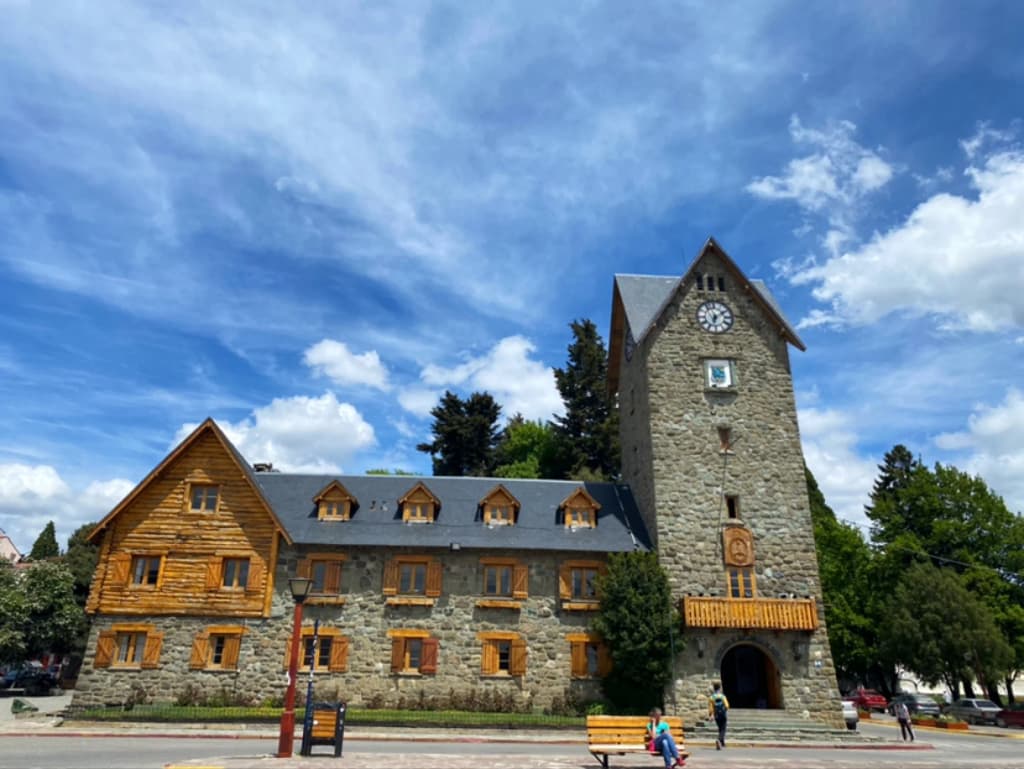
We pack the car and head back to Bariloche, transitioning from a quiet forest village to a bustling, Swiss-influenced city. The Civic Center is a marvel of stone archways and heavy timber, opening up to a sweeping view of the lake.
Mitre Street smells overwhelmingly of sugar and roasted cocoa. Chocolate shops line the sidewalks, their windows displaying towering sculptures of dark and milk chocolate. We step into Rapanui, a local institution that somehow houses not only a sprawling cafe and chocolate counters but a full indoor ice-skating rink. The noise is joyful—skates scraping against ice, espresso machines hissing, families laughing.
I order a little paper cup of Franui. It is a simple creation that went viral online: a frozen, tart raspberry encased in white and milk chocolate. The pop of the sour fruit against the sweet, creamy chocolate is a revelation. I sit on a wooden bench outside, letting the chocolate melt on my tongue while watching the city move around me.
The Circuito Chico is a sixty-five-kilometer loop of road that demands to be driven slowly. We roll the windows down, letting the crisp air fill the car. The route winds through dense forests, past quiet beaches like Villa Tacul, and up to elevated viewpoints that force you to pull over just to verify that the landscape is real.
By midday, the smell of malt and roasting meat draws us to the Patagonia Brewery. For a ten thousand peso entry fee, which cleverly includes your first beer, you gain access to a sprawling outdoor deck perched high above the lakes. I order a dark stout and a sandwich, sitting at a wooden picnic table. The mountains stretch out in every direction, their peaks still dusted with white snow despite the summer sun.
We are careful not to leave anything visible in the car when we park. The locals are warm and the city feels incredibly safe to walk at night, but petty theft from parked cars is a known reality here. An empty backseat is the best insurance policy.
On our final day, the sky finally clears into a brilliant, unblemished blue. The landscape transforms, the colors turning up to maximum saturation. It is the perfect weather for Cerro Campanario.
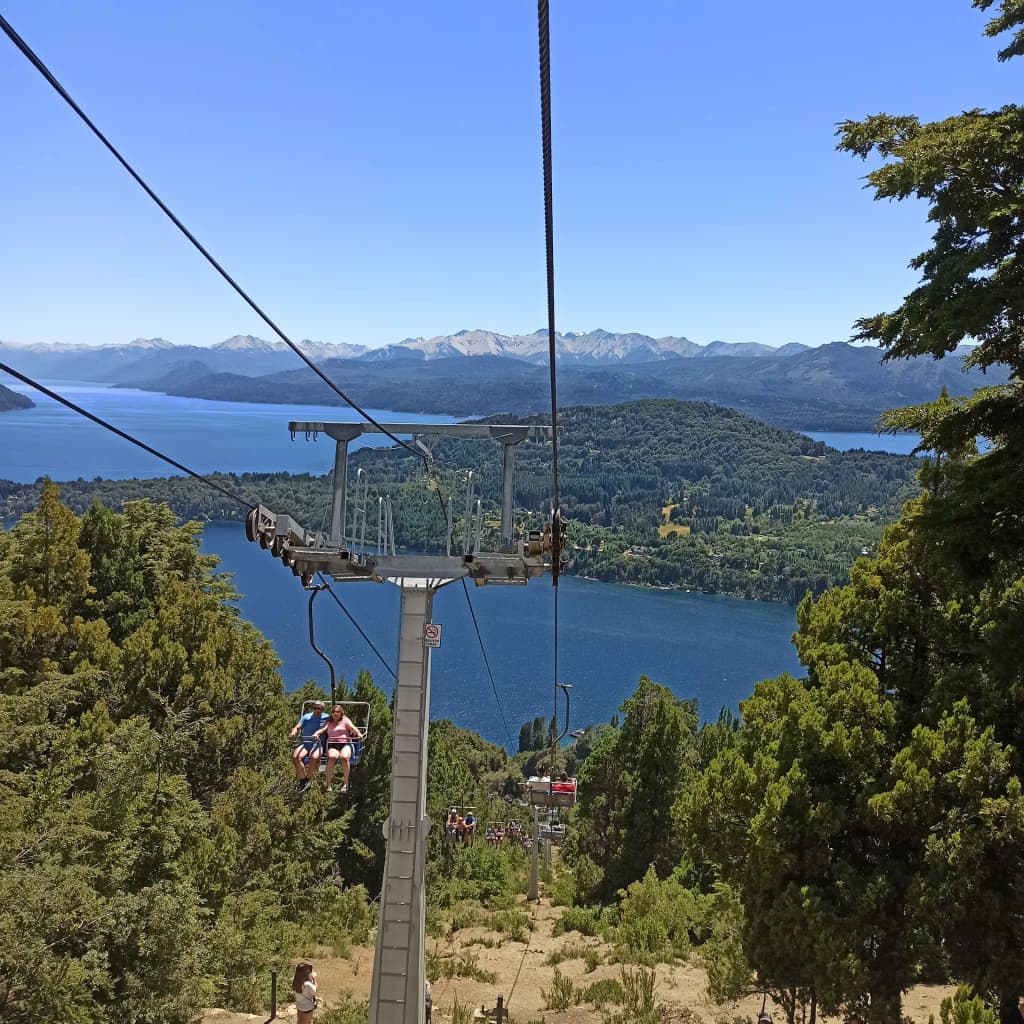
The open-air chairlift costs twenty-two thousand pesos, and for eight minutes, you dangle above the treeline, ascending silently into the sky. The wind is fierce at the summit, whipping my jacket around me, but the cold is entirely forgotten the moment I reach the viewing deck.
The world falls away into a 360-degree panorama of jagged peaks, deep green forests, and lakes so blue they look painted. I lean against the metal railing, the wind roaring in my ears, and take a long, slow breath. This is the reward for taking the winding roads, for enduring the unexpected summer chill, for traveling at a pace that allows you to feel the texture of a place. Patagonia doesn't just show you its beauty; it makes you feel it in your bones.
More Photos
More Adventures
 $150 - $300/day 3-5 days
 Shattered Ice and Woodsmoke: An Immersive Journey Through El Calafate
Step onto the ancient, groaning ice of the Perito Moreno glacier and into the warm, woodsmoke-filled parrilladas of El Calafate in this sensory Patagonian journey.
 $50 - $150/day 3-5 days
 Urubici: The High-Altitude Brazilian Adventure You Need
Skip the beach. Rent a 4x4. Conquer Urubici's extreme altitudes, massive 200-meter waterfalls, and the freezing, fog-covered peaks of Morro da Igreja.
 $100 - $400/day 14-21 days
 Conquer Patagonia: The Ultimate Extreme Travel Guide
Stop dreaming and start driving. Here is your ultimate, no-excuses guide to conquering Patagonia's jagged peaks, massive glaciers, and wild trails.
 $30 - $100/day 3-5 days
 Conquer Laguna Esmeralda: Ushuaia's Ultimate 10km Mud Trek
Skip the tourist traps. The Laguna Esmeralda trek in Ushuaia delivers 10km of rugged mud, glacial lakes, and pure Patagonian adventure. Get ready to walk.