
Shattered Ice and Woodsmoke: An Immersive Journey Through El Calafate
Step onto the ancient, groaning ice of the Perito Moreno glacier and into the warm, woodsmoke-filled parrilladas of El Calafate in this sensory Patagonian journey.
The crunch underfoot sounds exactly like shattered tempered glass. I press my steel crampon into the translucent, electric-blue ridges of the Perito Moreno glacier, feeling the biting wind slice across my cheeks. The air up here smells of pure, unfiltered winter, a sharp metallic cleanness that fills your lungs and wakes up your blood, even though it is technically the height of the Patagonian summer. The sky above is a pale, bruised gray, threatening rain but delivering only a relentless, freezing breeze.
"Keep your knees bent," the guide calls out, his voice barely rising above the deep, guttural groan of the shifting ice field beneath us. It sounds like a sleeping giant turning over in its bed, a low, resonant cracking that reverberates through the soles of my boots.
I nod, trusting the grip of the steel spikes. I am wearing enough layers to survive a deep freeze—a breathable base, thermal leggings engineered to trap body heat, waterproof shell pants to block the dampness of the melting surface, and a heavy fleece topped with a windbreaker. In El Calafate, the weather does not care what month the calendar displays. It is five degrees Celsius out here on the ice, and without these thick, insulated gloves, my hands would be numb within minutes.
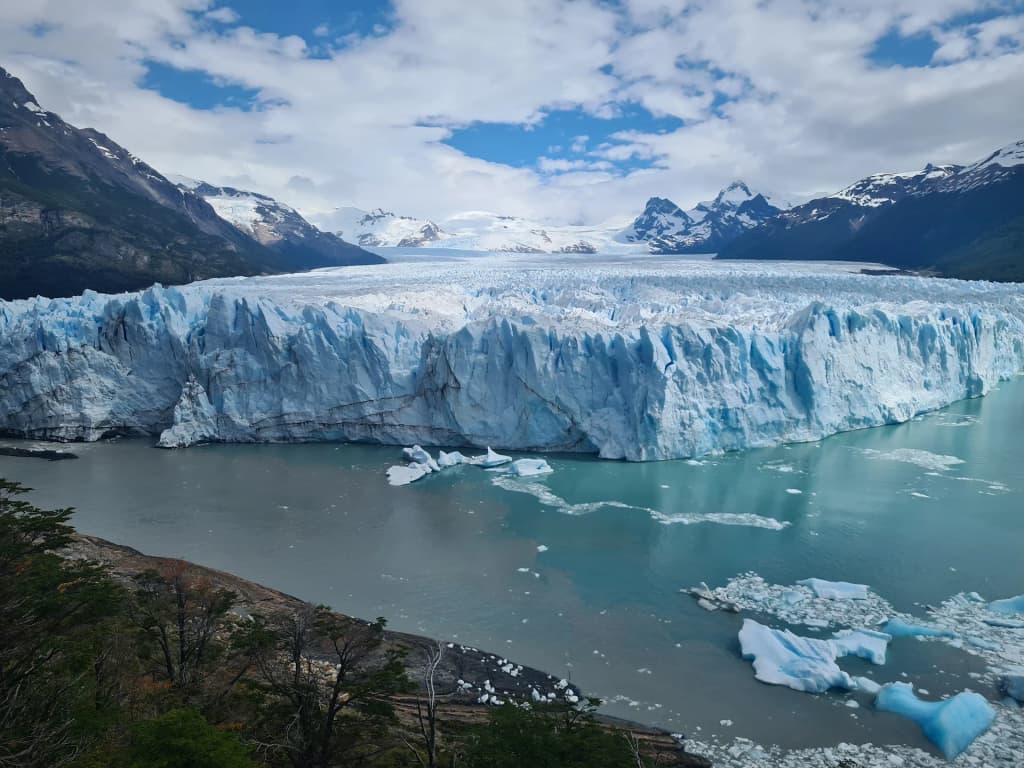
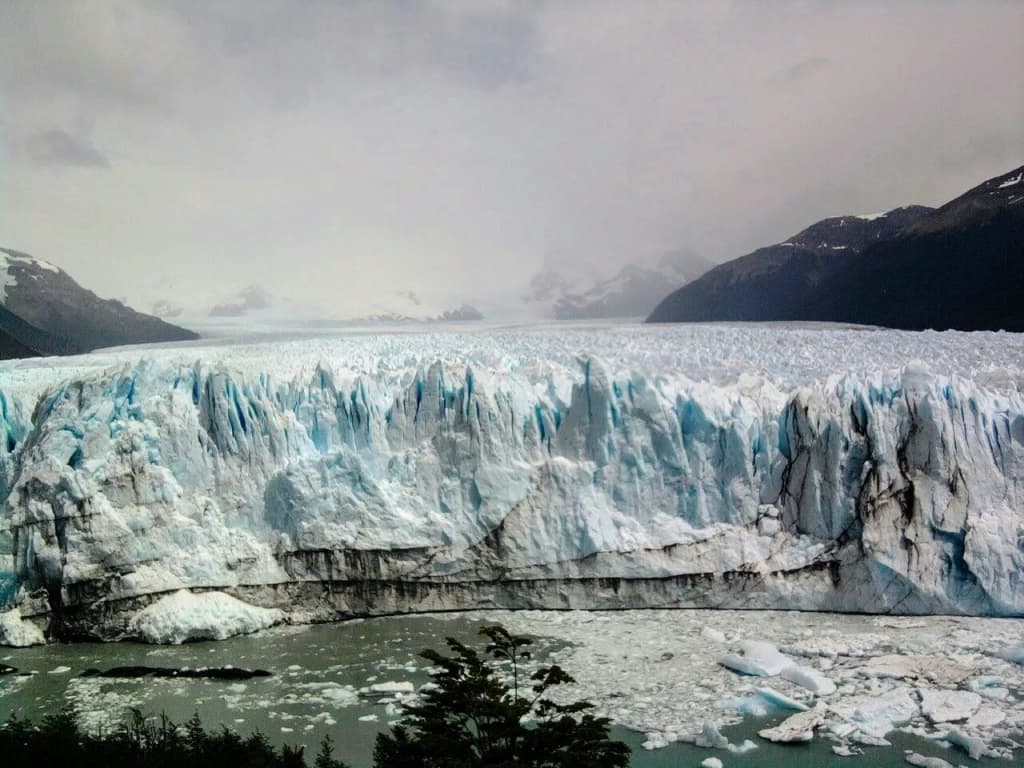
Walking on a glacier is an exercise in profound humility. Earlier this morning, as our van pulled up to the entrance of Los Glaciares National Park, the guide had advised us to bring cash. The card machines out here at the edge of the world are as temperamental as the wind, and the 5,500 peso entry fee is a small toll to cross from the modern world into a geologic epoch. Now, standing on top of it, the scale is incomprehensible. This is the third-largest ice field on the planet, a sprawling kingdom of frozen water that stretches out until it blurs into the horizon.
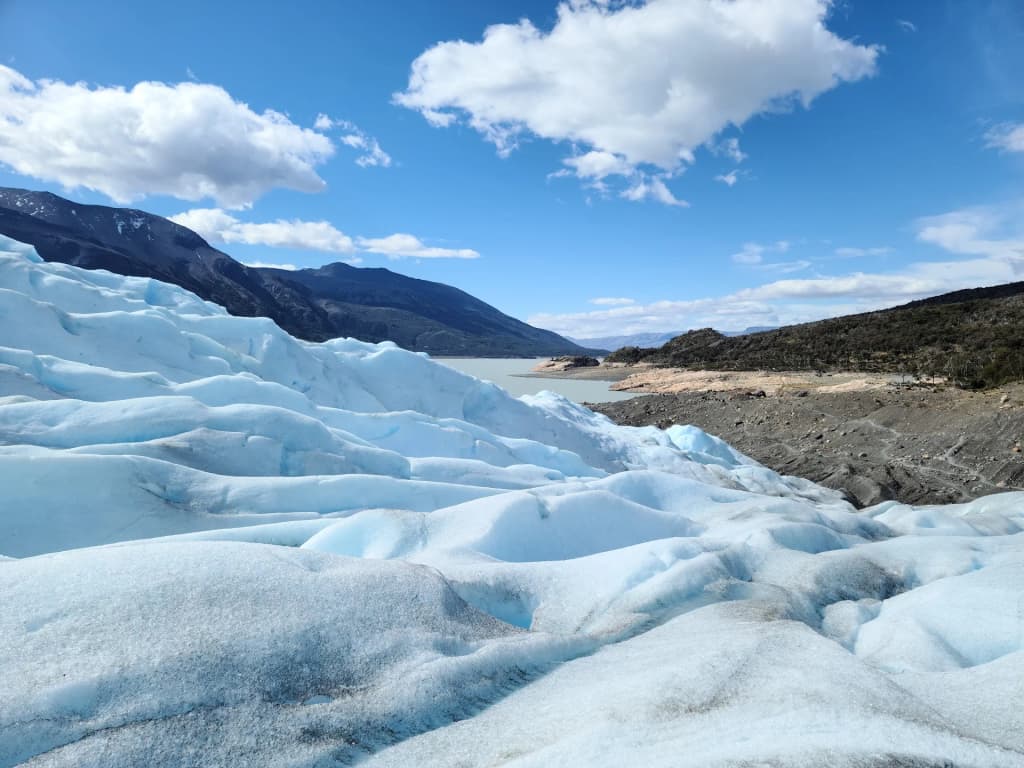
The guide stops near a small crevasse where a stream of impossibly clear meltwater rushes over the blue ice. He chips away a few shimmering chunks with a small pickaxe, dropping them into heavy lowball glasses before pouring a generous measure of amber whiskey over them. The ice clinks against the glass. It is five hundred years old. I take a sip. It tastes like earth, cold, and time itself, the sharp burn of the alcohol melting into the pure, ancient water.
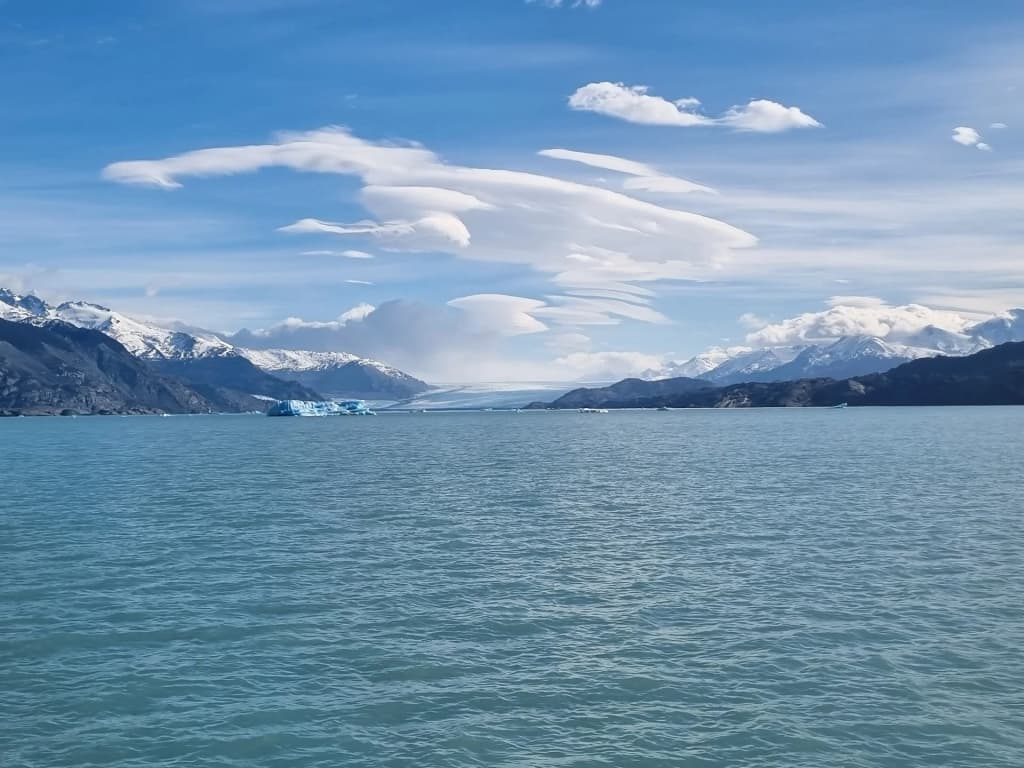
The catamaran rocks gently on the milky, turquoise surface of Lago Argentino. The water gets its surreal, opaque color from "glacier milk"—fine sediment ground down by the immense weight of the ice scraping against the mountainside over millennia. We are navigating the Todos los Glaciares route, pushing deeper into the Patagonian Andes where the water grows colder and the silence grows heavier.
I lean against the metal railing of the outer deck, the wind whipping my hair into my eyes. Up ahead, a massive iceberg floats silently in the channel. It is the size of a small apartment building, glowing with a soft, internal blue light that seems to pulse against the gray sky.
"You are only seeing ten percent of it," a crew member says, leaning on the rail beside me. He points down into the opaque water, his jacket collar pulled up tight against his chin. "The rest is hiding down there in the dark."
"It's hard to process the scale," I admit, pulling my own collar up against the chill.
He smiles, eyes crinkling against the harsh glare of the sun reflecting off the water. "Wait until you see Upsala."
When we finally reach the Upsala Glacier, the largest in South America, the sheer magnitude of the ice wall leaves the entire boat in silence. It is a river of frozen time spilling down from the mountains, jagged and scarred by gravity. We drop anchor near Refugio Spegazzini, stepping off the boat to wander through the quiet, damp forest. The contrast is staggering. One moment you are staring at an unforgiving wall of ancient ice, and the next, you are sitting inside a heated wooden lodge, unwrapping a packed lunch of warm sandwiches and hot coffee, watching the icebergs drift past the panoramic windows like slow, frozen ghosts.
The smell hits you the moment you push open the heavy wooden doors of La Tablita. Woodsmoke, rendering fat, and the unmistakable, rich aroma of slow-roasting meat. After a day spent entirely in the realm of ice and wind, the sudden heat of the parrillada feels like a physical embrace.
El Calafate is a town built for returns. It exists to warm you up after the glaciers have chilled you to the bone. At nine o'clock in the evening, the sky outside is still stubbornly bright—a quirk of the extreme southern summer—but inside, the dining room is a cavern of glowing embers and clinking wine glasses. I had taken the complimentary hourly shuttle from my hotel, a quick five-minute ride into the bustling center, arriving just as the dinner rush began to swell into a loud, joyful cacophony of Spanish and English.
Gonzalo, the owner, manages the chaotic floor with the grace of a seasoned conductor. He weaves between the tightly packed tables, carrying massive wooden boards piled high with Patagonian lamb.
"You must eat it while the fat is hot," Gonzalo instructs, setting a board down on my table with a heavy thud. The meat is still sizzling, the skin blistered and crisp from hours over the open wood fire.
I pull a piece apart with my fork. It offers no resistance, melting entirely on the tongue. It tastes of the wild, wind-swept steppes, deeply savory and rich, carrying the distinct flavor of the smoke it was cooked over. At around 8,300 pesos for a platter that could easily feed a family, it is an absolute steal, a feast designed specifically to restore the calories stolen by the glacial winds.
To wash it down, the bartender slides a coupe glass across the counter. The drink is a pale, frothy purple, sweating slightly in the warmth of the room.
"Calafate Sour," he explains, wiping down the polished wood with a white towel. "It's made with the local berry. The one the town is named after."
I take a sip. The thick foam of egg white gives way to a tart, earthy sweetness, cut sharply by the bite of the liquor. Legend says that anyone who eats the Calafate berry will invariably return to Patagonia.
I walk back out into the cool night air, the heavy meal settling warmly in my stomach. The wind has died down to a gentle breeze, carrying the faint scent of pine and distant woodsmoke from the restaurants lining the avenue. Somewhere out there in the dark, miles beyond the glow of the streetlights, the Perito Moreno is still moving. It is still groaning, still cracking, still inching its way forward as it has for centuries, entirely indifferent to the people who come to stare at it.
We come to Patagonia to look at the ice, to marvel at its scale and its cold permanence. But we stay for the warmth—for the slow-roasted lamb, the bold red wine, and the quiet camaraderie of strangers huddled together against the chill of the end of the world. I taste the lingering tartness of the Calafate berry on my tongue, and I know the legend is right. I will be back.
More Photos
More Adventures
 $300 - $800/day 3-5 days
 Zermatt, Switzerland: Matterhorn Views and Alpine Silence
Experience the sensory contrasts of Zermatt, Switzerland. Wander 15th-century Hinterdorf chalets, ride the Gornergrat Railway, and face the Matterhorn.
 $50 - $150/day 3-5 days
 Urubici: The High-Altitude Brazilian Adventure You Need
Skip the beach. Rent a 4x4. Conquer Urubici's extreme altitudes, massive 200-meter waterfalls, and the freezing, fog-covered peaks of Morro da Igreja.
 $60 - $150/day 4-7 days
 Fortaleza Unleashed: The Ultimate High-Octane Coastal Guide
Skip the resort chairs. Discover Fortaleza's towering red cliffs, high-speed dune buggy rides, and relentless kitesurfing winds. Get ready to sweat.
 $50 - $120/day 2-4 days
 Conquer Campos do Jordão: Brazil's High-Altitude Playground
Skip the beaches. Head up to Campos do Jordão for mountain biking, rugged trails, and massive alpine meals in Brazil's highest city.