
Chasing the Ephemeral Lagoons of Lençóis Maranhenses
Experience the seasonal miracle of Lençóis Maranhenses National Park, where torrential rains transform a Brazilian desert into crystalline blue lagoons.
The engine groans as the modified Hilux—a jardineira, the locals call it—lurches into another deep rut of pale sand. The wind whips hot across my face, carrying the scent of dry earth and the faint, unexpected promise of fresh water. Beside me, fellow travelers grip the metal roll bars, knuckles white, as we navigate the deeply etched tracks leaving the town of Barreirinhas. Every bump sends a jolt up my spine, but nobody is complaining. We are all leaning forward, squinting against the fierce equatorial glare, waiting for the landscape to break.
"You came at the exact right time," the driver shouts over the roar of the diesel engine, catching my eye in the rearview mirror. His skin is deeply creased, mapping decades of life under this relentless sun.
"It feels like we're driving to the end of the earth," I call back, pulling a light cotton scarf over my mouth to block the swirling dust.
He laughs, a rich, resonant sound that momentarily drowns out the engine. "Wait until November. The sun drinks all the water, and this whole place becomes just another dry desert. Right now, it's a miracle."
He isn't exaggerating. As the truck crests a massive, sweeping ridge, the horizon suddenly cracks open. The collective gasp in the back of the truck is audible. Stretching out for miles in every direction is a chaotic, blindingly white ocean of silica sand dunes, their valleys filled with thousands of brilliant, sapphire-blue pools.
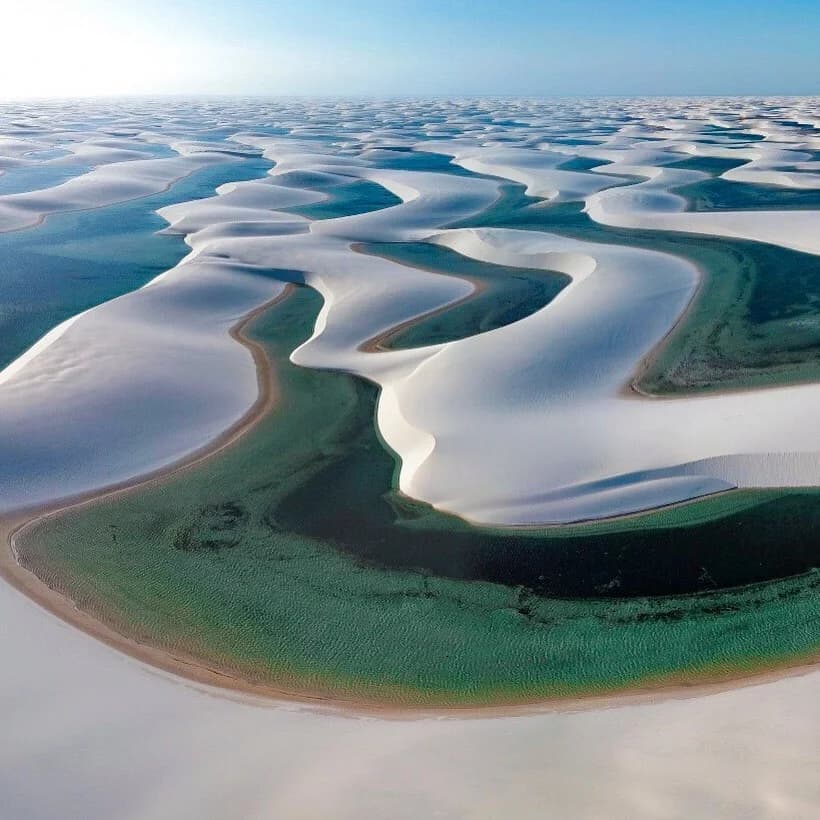
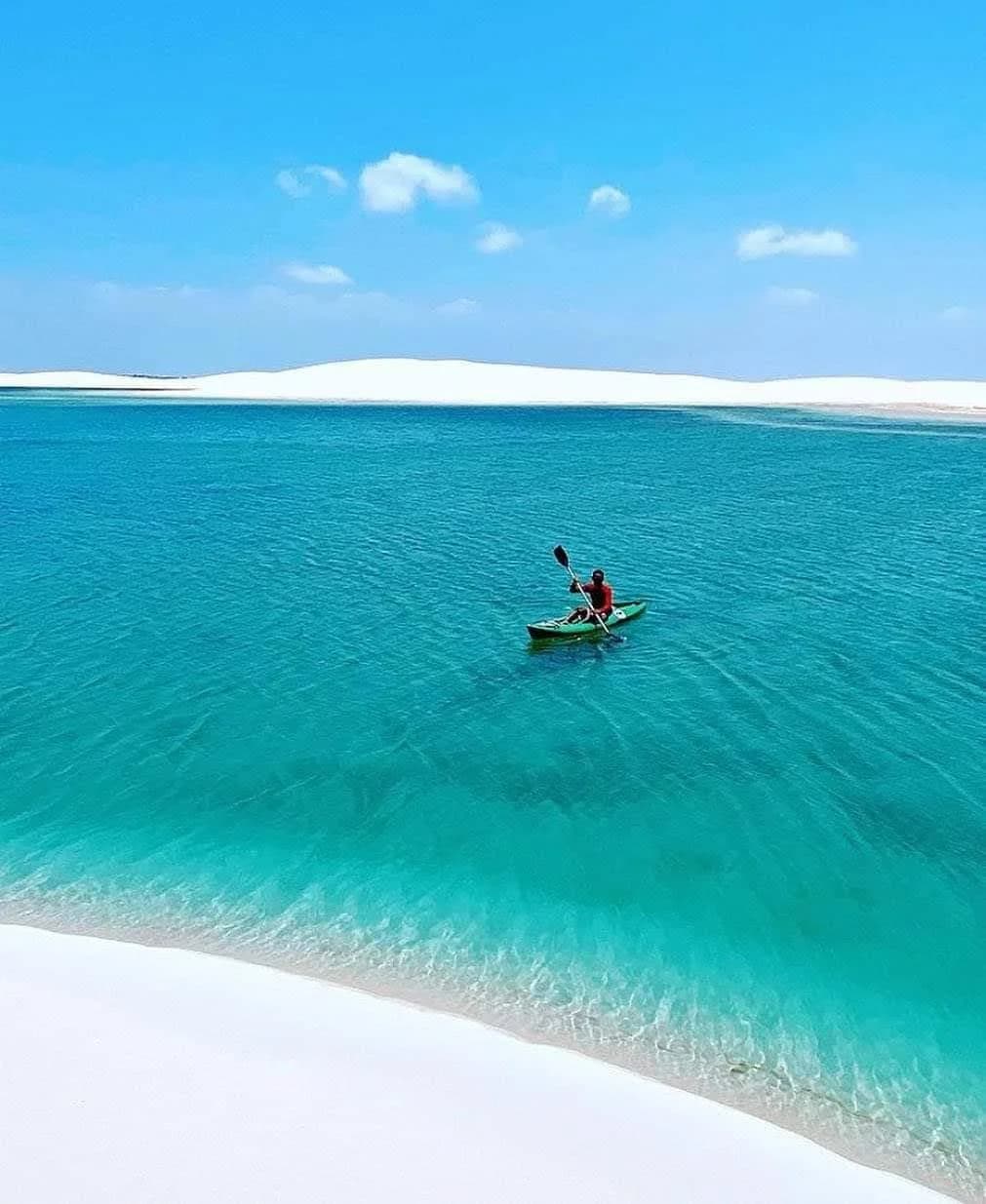
This is Parque Nacional dos Lençóis Maranhenses. Stepping off the truck, the sand is surprisingly cool against my bare feet, a stark contrast to the heavy heat pressing down on my shoulders. I walk to the edge of the nearest pool—Lagoa Azul—and wade in. The water is crystalline, perfectly still, and sweet to the taste. It is entirely composed of rainwater that fell intensely between February and May. Now, in the sweet spot of July, the lagoons are brimming, their depths a sharp contrast to the stark white dunes. By October, they will begin to shrink, and by December, they will vanish completely, leaving only the shifting sands behind. It is a landscape defined entirely by its own impermanence.
Getting to this fleeting paradise is a pilgrimage that naturally filters out the faint of heart. The journey begins four hours away in the colonial capital of São Luís. From there, you surrender to the rhythm of shared vans and municipal buses, handing over about sixty reais to watch the urban sprawl melt into dense, green interior scrubland. There is no point in renting a car here; the paved roads eventually give way to soft, treacherous sand that demands a rugged 4x4 and a driver who can read the dunes like a sailor reads the sea.
We arrive back in Barreirinhas just as the sky begins to bruise purple. This is the main artery of the region, the bustling hub where the vast majority of travelers drop their bags. The streets are alive with the hum of live music spilling out from open-air bars. The air smells heavily of garlic, charcoal, and roasting meat. I find a small wooden table near the riverfront and order a plate of local grilled fish. The meat is tender, perfectly charred, and a massive platter meant for two barely touches one hundred and thirty reais. I wash it down with a glass of beer so cold the condensation instantly pools on the table.
While Barreirinhas offers the comfort of cold drinks and easy logistics, it requires a forty-minute jolting ride in the jardineiras just to reach the park gates. Some travelers, chasing a different rhythm, push further to Atins. That tiny village at the mouth of the river is a haven for kite surfers, where the streets are made of deep sand and the atmosphere is decidedly rustic-chic. There, you can spend your evenings in beach clubs, eating gourmet seafood as the ocean breeze cools the night. Others retreat to Santo Amaro, a sleepy, dirt-road town with almost zero nightlife but unparalleled access to the dunes, placing you mere minutes from the water's edge.
I decide to invest in solitude. While the standard four-hour excursions to Lagoa Bonita are undeniably beautiful, they are shared with dozens of other trucks. For about a thousand reais, split among a small group, you can hire a private guide and vehicle for the day. It is a sum that feels entirely justified the moment our truck veers away from the well-worn tracks and plunges into the untouched expanse of the park.
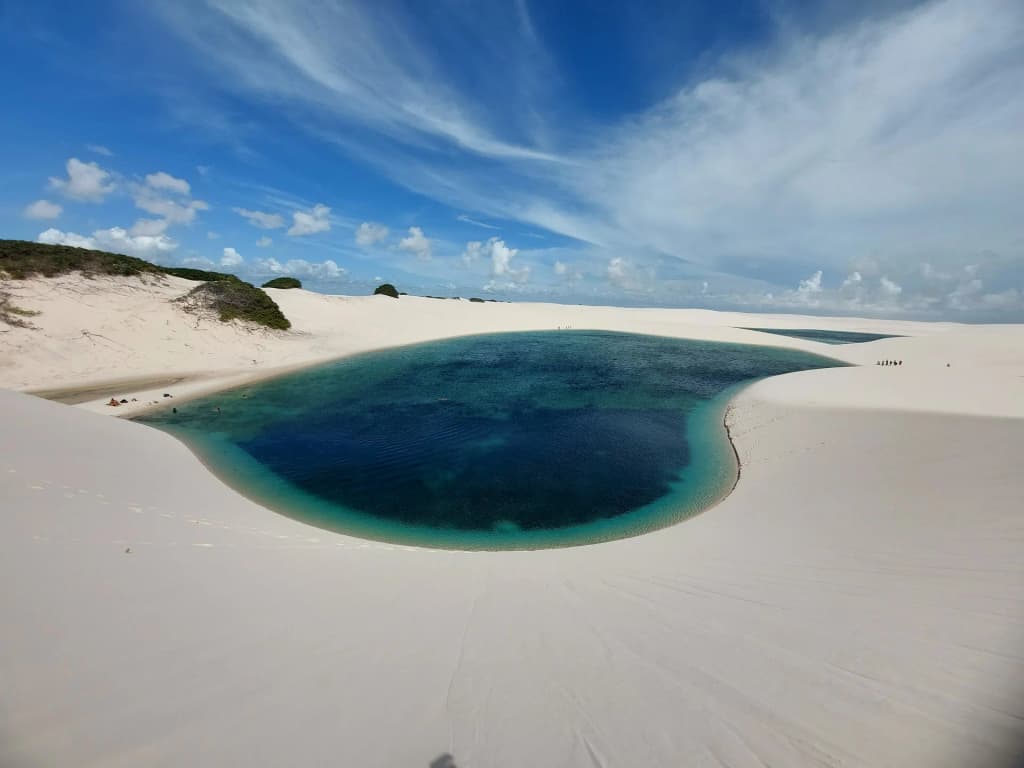
We spend the afternoon hiking toward Lagoas Emendadas. It is a brutal, spectacular trek. For three hours, we walk across the shifting ridges. My calves burn with every step, the soft sand absorbing half my momentum. The silence out here is absolute, broken only by the rhythmic crunch of our footsteps and the constant, low whisper of the wind reshaping the dunes. When we finally reach the interconnected lagoons, there isn't another human soul in sight. The water is so clear I can see the intricate ripples in the sand far below the surface. I strip down to my swimsuit and dive into the cool, fresh water, washing away the sweat and grit of the hike. Floating on my back, staring up at the cloudless sky, the sheer scale of this desert feels almost incomprehensible.
As late afternoon approaches, we make our way toward the towering vantage point of Lagoa Bonita. The hike up the final, massive dune requires a rope left by the guides, pulling yourself hand-over-hand against the steep incline. My breath is heavy, my skin coated in a fine layer of salt and silica.
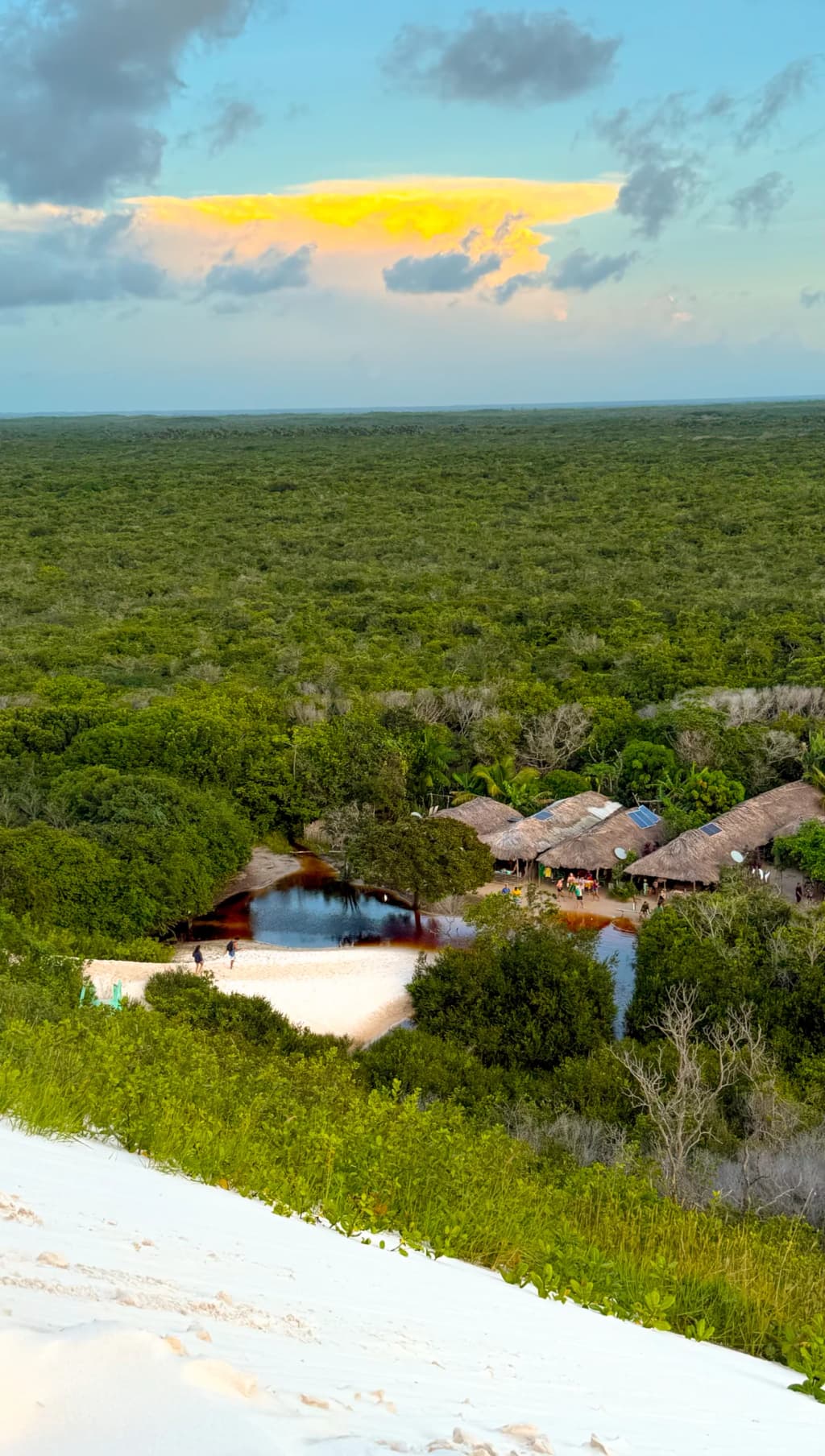
But reaching the crest erases all fatigue. The sun is beginning its descent, casting long, dramatic shadows that highlight the fierce curves of the desert. The brilliant blues of the water slowly shift to deep indigo, while the white sand catches the fading light, glowing in shades of peach, gold, and ultimately, fiery orange. The temperature plummets almost instantly as the sun dips below the horizon, raising goosebumps on my sunburned arms.
I sit in the cooling sand, watching the colors bleed out of the sky. In a few months, this exact spot will be bone dry, the water evaporated, the landscape entirely rewritten by the wind. It is a profound reminder that the most beautiful things in the world are often the ones we cannot hold onto. You don't come to Lençóis Maranhenses to capture it; you come simply to be lucky enough to witness it before it disappears.
More Photos
More Adventures
 $150 - $350/day 3-4 days
 Trancoso Travel Guide: 3-Day Itinerary & Budget Breakdown
Plan a practical 3-day trip to Trancoso, Brazil. Discover the best beaches, UTV tours to Praia do Espelho, and exact costs to optimize your travel budget.
 $100 - $350/day 5-7 days
 Ditch Your Shoes: The Ultimate Jericoacoara Adventure Guide
Skip the tourist traps. Rent an ATV, dive into Buraco Azul, and taste the wild side of Jericoacoara. Your ultimate adventure guide to Brazil's sandy paradise.
 $45 - $150/day 2-4 days
 Itamambuca Beach Ubatuba: The Ultimate Planning Guide
Plan your trip to Itamambuca Beach in Ubatuba with this practical guide. Compare village vs. condo stays, surf lesson costs, and family river spots.
 $50 - $120/day 3-5 days
 Chasing Echoes and Gold Dust in Tiradentes, Brazil
Experience Tiradentes, Brazil through a sensory journey of colonial architecture, deep-rooted history, and the rich culinary traditions of Minas Gerais.