
Lisbon: A Sensory Guide to the City of Light
A narrative journey through Lisbon's historic districts, from the heights of Alfama to the riverside feasts of Belém, discovering the soul of Portugal.
My calves are burning, and I suspect the old woman watching me from her second-story window knows it. I am standing in the middle of a steep alleyway in Alfama, Lisbon's oldest quarter, gasping for air while the smell of charcoal and grilling sardines swirls around me. The morning light doesn't just shine here; it reverberates, bouncing off the white limestone cobblestones—the famous calçada portuguesa—and bathing the peeling pastel walls in a gold-dust haze.
The woman leans out further, pinning a white sheet to a line that stretches across the street to her neighbor's balcony. She catches me staring.
"Bom dia," she calls out, her voice raspy but warm.
"Bom dia," I reply, shielding my eyes against the glare. "I think I'm lost."
She laughs, a sound that echoes off the tile-covered walls. "In Alfama, nobody is lost. You are just... taking the long way." She points a gnarled finger upward. "The castle is that way. But the good coffee? It's down there."
I take her advice and head down. This is the only way to understand Lisbon: surrender your map, ignore your burning legs, and follow the incline.
The Old Soul on the Hill
Alfama feels less like a city district and more like a village that time forgot to update. The streets are a tangle of veins pumping life through the heart of the city. I wander past the heavy doors of the Cathedral—the Sé de Lisboa—a fortress-like structure that has survived earthquakes and centuries of change. It is somber and cool inside, a stark contrast to the bright heat of the street. Admission is free, though the cloisters cost a few euros—a small price for the silence they offer.
Continuing upward, the air changes. It gets breezier. At the top of the hill sits St. George's Castle. Built by the Moors in the ninth century, it is a place of ruins and ghosts, but mostly, it is a place of perspective. From the ramparts, the terracotta roofs of the city spill down toward the Tagus River like a chaotic red mosaic.
It is here that you realize Lisbon is a city of layers. You don't just look at it; you look through it.
Stone Sentinels of the River
To understand where Lisbon has been, you must go to the water. I take the train west to Belém—a simple fifteen-minute ride from Cais do Sodré station that costs less than a coffee. As we slide along the river, the scale of architecture shifts from the intimate to the monumental. This is the launchpad of the Age of Discovery, where caravels once set sail to map the unknown world.
The Jerónimos Monastery dominates the skyline, a masterpiece of Manueline architecture so intricate it looks like lace spun from stone. I run my hand along a column in the cloister, feeling the cool carvings of ropes and sea monsters—eternal reminders of the ocean's hold on this nation. The line to get in can be long, so I arrive right at 10 AM, slipping in before the tour buses unload.
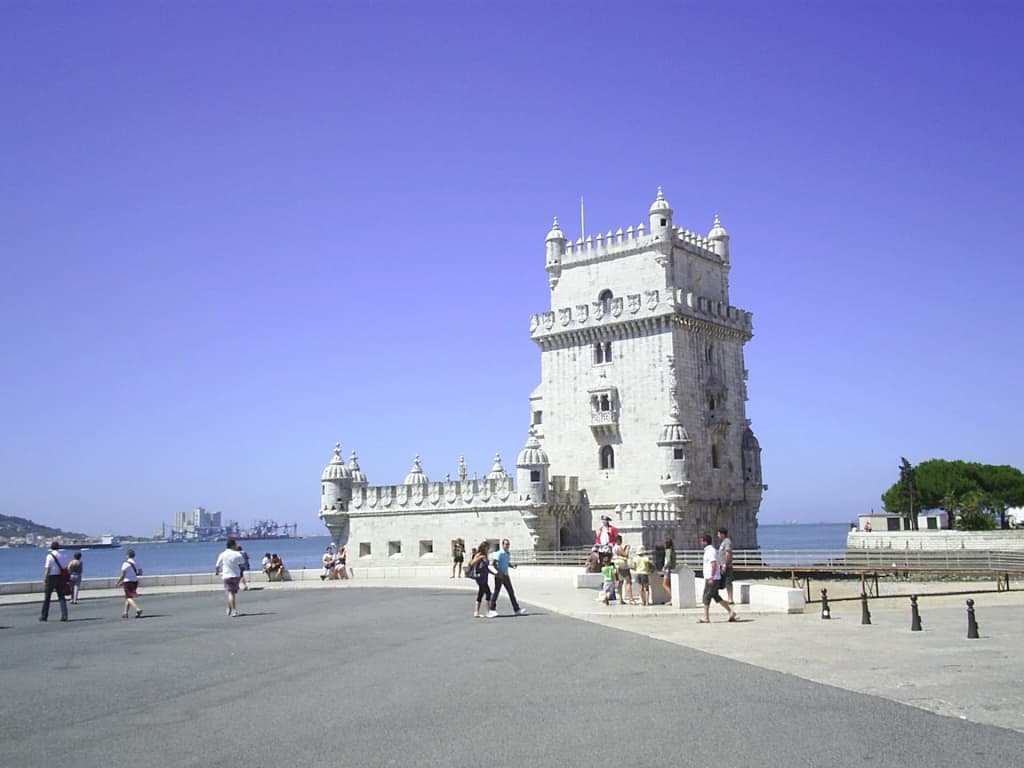
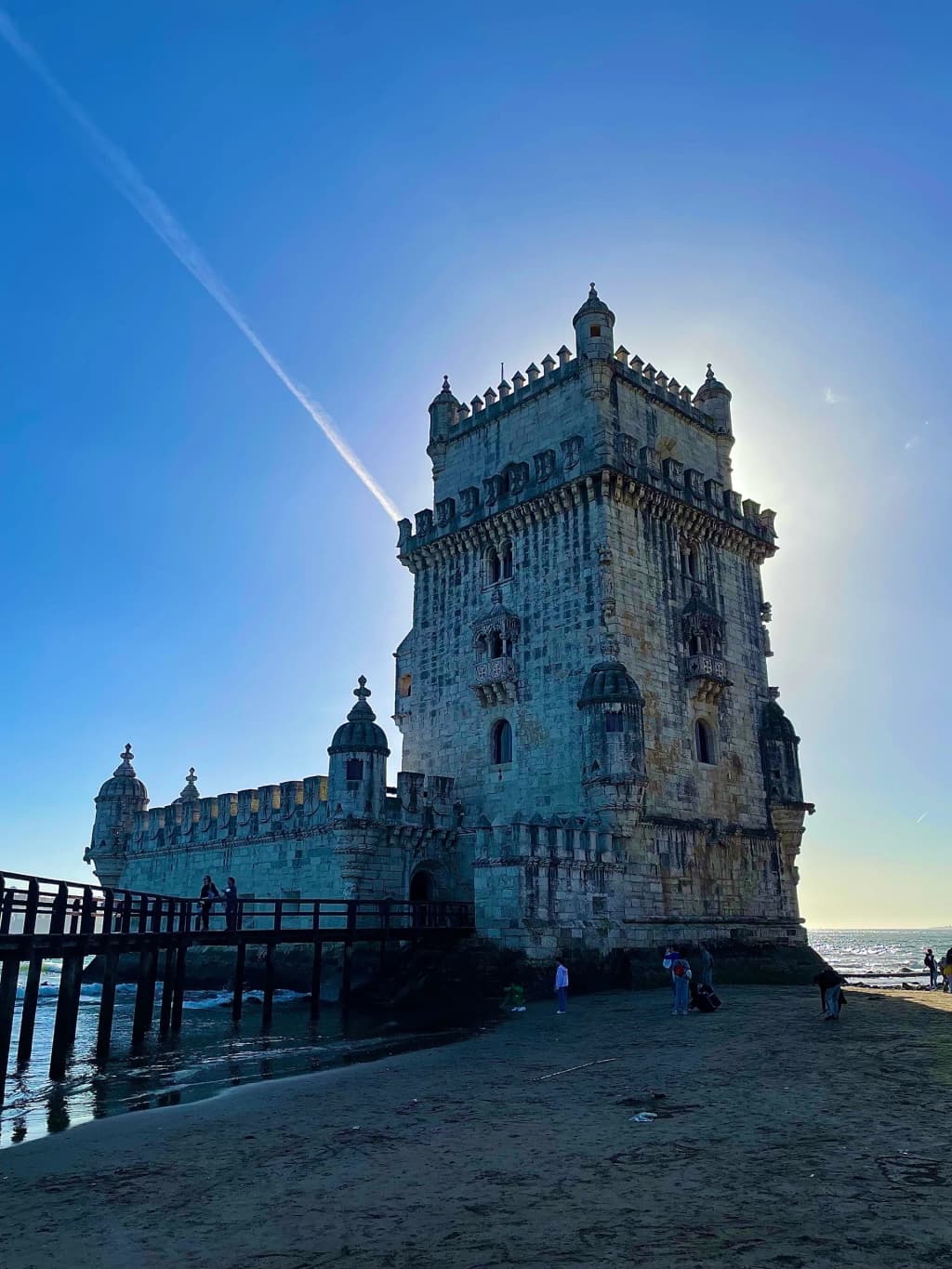
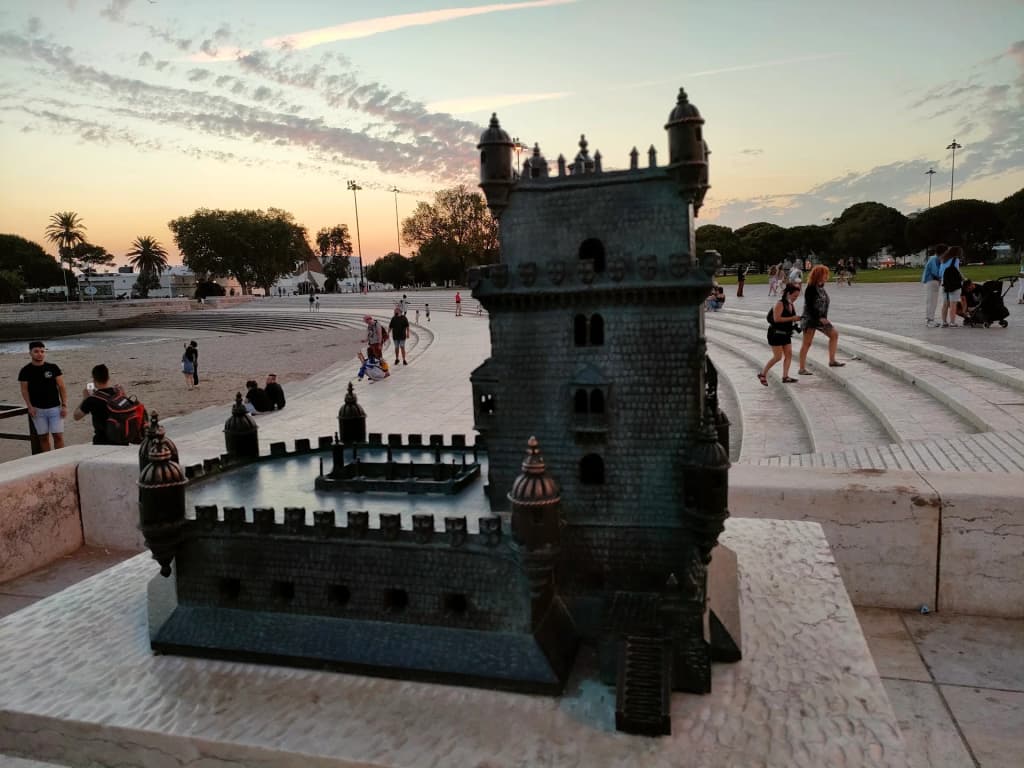
A short walk along the riverbank brings me to the Belém Tower. Standing isolated in the water, it looks lonely, a stone sentinel guarding the entrance to the city. It was the last thing sailors saw when they left and the first thing they saw if they were lucky enough to return.
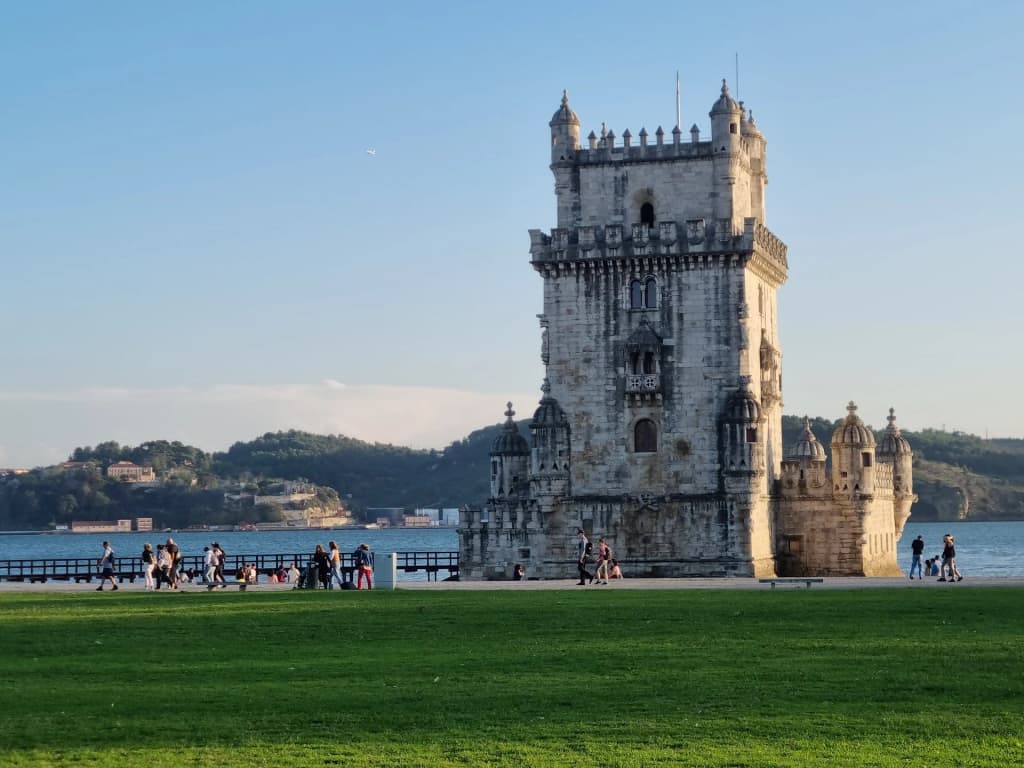
I sit on the stone steps nearby, watching the water lap against the base. The 25 de Abril Bridge stretches across the horizon, a rust-red suspension bridge that hums with the sound of traffic, looking uncannily like its sister in San Francisco. It’s a jarring, beautiful reminder of how this city bridges the ancient and the modern.
The Vertical City
Back in the city center, the challenge is verticality. Lisbon is a workout. To save my legs, I seek out the Santa Justa Lift. It’s an odd, beautiful birdcage of iron and wood, an elevator built in the neo-gothic style that shoots you straight up from the commercial bustle of the Baixa district to the elegant ruins of the Carmo Convent in Chiado.
The ride is creaky and intimate. We are packed in—about twenty of us—shoulder to shoulder. When the doors open at the top, the view of the castle across the valley is startling. You can use your standard transport card here, avoiding the tourist prices if you know how to tap on correctly.
I cross into Chiado, the elegant shopping district, and keep climbing toward Bairro Alto. By day, Bairro Alto is sleepy, its shutters closed against the sun. But I know that in a few hours, when the sun dips below the horizon, these streets will transform into an open-air party, glasses of vinho verde clinking in the twilight.
But before the party, there is the hunger.
A Feast at the Water's Edge
My stomach leads me back down to the river, to the Mercado da Ribeira. It’s a cavernous hall, recently reborn as a temple to gastronomy. Half of it is still a traditional market, smelling of raw fish and fresh greens; the other half is a curated collection of the city's best chefs.
The noise is deafening—a symphony of cutlery, laughter, and shouting orders. I squeeze onto a bench next to a local man nursing a small espresso.
"First time?" he asks, eyeing my plate of grilled sardines.
"Is it that obvious?" I ask.
"You are eating the sardines with a fork and knife," he teases, wiping his mouth with a paper napkin. "But it is okay. The flavor is the same. You must try the bacalhau next. We have 365 ways to cook cod, one for every day of the year."
"And for leap years?" I ask.
He winks. "For leap years, we invent a new one."
I follow his advice and grab a pastel de nata for dessert. The custard tart is warm, the pastry shattering perfectly when I bite into it, dusting my shirt with cinnamon and powdered sugar. It tastes like comfort.
A Fairy Tale Detour
One cannot stay in the city alone. The mountains call. I take a forty-minute train ride to Sintra, a place that Lord Byron once called a "glorious Eden." It's an easy day trip from Rossio station, trains departing every thirty minutes.
He wasn't wrong. Sintra feels like a fever dream of a Romantic poet. The Pena Palace sits atop the highest peak, a riot of yellow and red towers that shouldn't work together but somehow do. It was the summer residence of kings, a place to escape the heat of the capital.
I wander through the surrounding park, a mist rolling in through the ferns and exotic trees. It feels ancient and a little wild. Further down, the Castelo dos Mouros (Moorish Castle) snakes along the ridge, its stone walls merging with the granite of the mountain. Walking these ramparts, with the Atlantic Ocean glittering in the distance, you feel small in the best possible way.
Leaving the Light
My final evening is spent on the famous Tram 28. I boarded early, as advised, to avoid the crushing crowds that fill the yellow carriage later in the day. The wooden tram screeches and rattles, turning corners so tight I feel I could reach out and touch the pedestrians pressed against the walls.
We wind through the districts I've walked—Alfama, Baixa, Estrela. It is a greatest hits tour of a city that refuses to be modernized into boredom.
Lisbon is not an easy city. The pavements are slippery, the hills are relentless, and the summer heat can be unforgiving. But as the tram crests a hill and the river opens up before me, shimmering in the twilight, I understand the Portuguese concept of saudade—a profound, nostalgic longing.
I am not even gone yet, and I already miss this light.
More Photos
More Adventures
 $50 - $150/day 5-10 days
 Finding the Rhythm of Bahia: From Porto Seguro to Trancoso
Experience the sensory magic of Brazil's Costa do Descobrimento, from the chaotic nightlife of Porto Seguro to the barefoot luxury of Trancoso's beaches.
 $80 - $250/day 4-7 days
 Conquer Buenos Aires: Steak, Tango, and Street Chaos
Ready to get lost in Buenos Aires? Discover the best steak, underground tango clubs, and marble graveyards in Argentina's electric capital city.
 $100 - $300/day 1-3 days
 Escape the Airport: Conquer Your Luanda Layover
Think a layover in Luanda means killing time at the airport? Think again. Discover the fortress, island sunsets, and the ultimate Angolan adventure.
 $150 - $300/day 1-2 days
 Conquer Epcot: The Ultimate High-Speed Global Gauntlet
Think Epcot is a slow stroll? Think again. It's a high-speed, globe-trotting gauntlet. Hack the rides, taste the world, and push your limits in Orlando.