
Maragogi's Silent Coast: Walking on Water at Ponta de Mangue
Beyond the crowds of Antunes lies Ponta de Mangue. A guide to the quiet side of Maragogi, featuring ecological water bikes, vanishing sandbars, and local dining.
The water is warmer than the air. It wraps around my ankles, a translucent sheet of liquid glass that doesn't churn or crash, but simply exists. I am standing a hundred meters out from the shoreline, yet the ocean barely reaches my knees. There is no roar of diesel engines here, no wall of amplified pop music shaking the sand. Just the soft, rhythmic lap of the tide against the hull of a small fishing boat and the distant rustle of coconut palms. This is Ponta de Mangue. They call Maragogi the "Brazilian Caribbean," a label that usually promises turquoise water but delivers the chaos of mass tourism. Here, on the northern edge near the Pernambuco border, the color remains, but the noise has vanished.
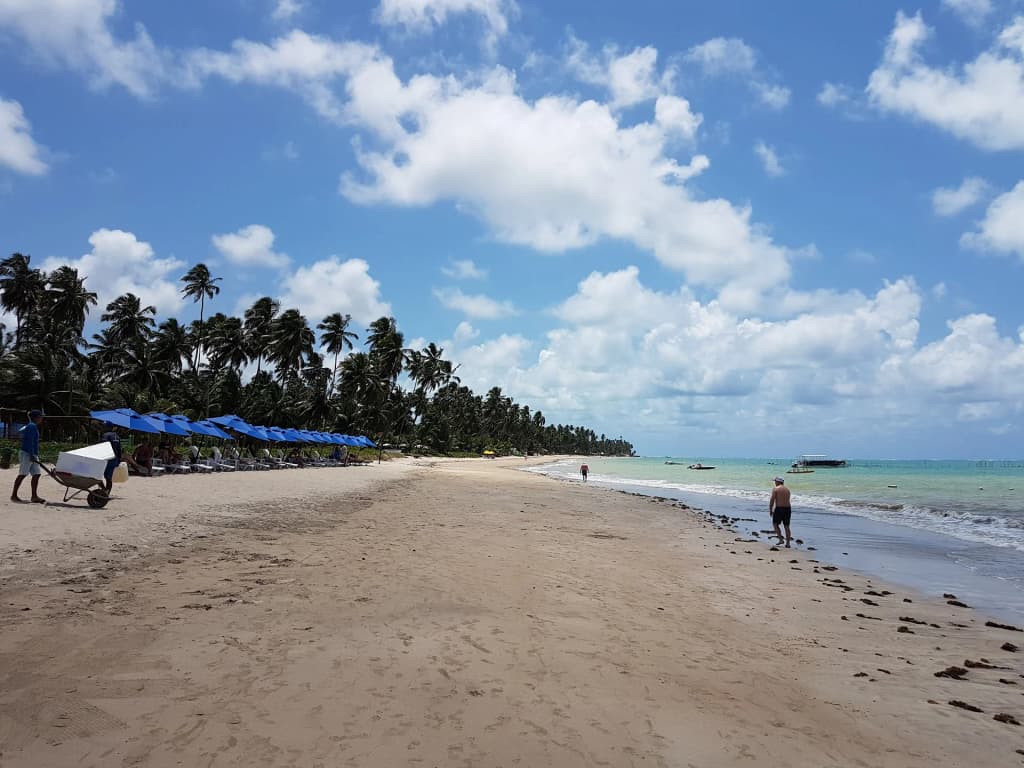
Most travelers stop five kilometers south at Antunes, fighting for a square meter of sand. I’ve pushed further north to find the cinematic quiet I was promised. The sun breaks through a morning drizzle, painting the water in shades of neon blue that look manipulated even to the naked eye. It is a landscape that demands you slow down to match its pace.
"You need to be at least one meter forty to reach the pedals," Moa says, laughing as he adjusts the seat of the water bike. He vibrates with energy, a man who seems to function on the same frequency as the tides. We are preparing for an ecological expedition, and unlike the crowded catamarans churning up sediment elsewhere, we are powered by our own legs.
Pedaling a bike on the open ocean feels like a glitch in the matrix. The catamaran-style pontoons keep us remarkably stable as we glide over the surface. We make our way toward the coral reef, a journey of two hours that evaporates in what feels like minutes. Because we are silent, the underwater world ignores us. We drift over coral heads, observing the ecosystem without crushing it.
"It’s about leaving something for the next generation," Moa tells me as we pause on a sandbar near the Gran Oca resort. The water is waist-deep here, miles from the confusion of the main village. "We look, we enjoy, but we don't touch. That is the magic."
The ocean here is a trickster. One moment it is a deep swimming pool, and the next, the tide retreats to reveal hidden highways of sand. I walk along the Caminho de Dourado, a path that emerges from the depths, allowing me to walk hundreds of meters out into the sea. The water on either side is calm, warm, and inviting. It is a sensation of complete vulnerability and absolute safety all at once.
Locals also point me toward the Caminho da Bruna at Praia do Xaréu. It’s named for Bruna Lombardi, who immortalized this spot in a photoshoot decades ago. But these paths are ephemeral. You cannot argue with the moon.
"You have to respect the schedule," a fisherman on the shore tells me later, pointing at the horizon where the blue deepens.
"The tide?" I ask.
"She decides," he nods, lighting a cigarette. "0.3 is good. 0.2 is better. But when she starts to rise, you come back. She doesn't rise evenly; she fills the deep channels first to cut you off."
I take his advice to heart. The tide tables here are more important than a watch. When the water is low, the sea becomes a vast, tepid bath. I admit, I am a creature of these calm waters. Some crave the crash of waves, but give me this endless, natural pool any day.
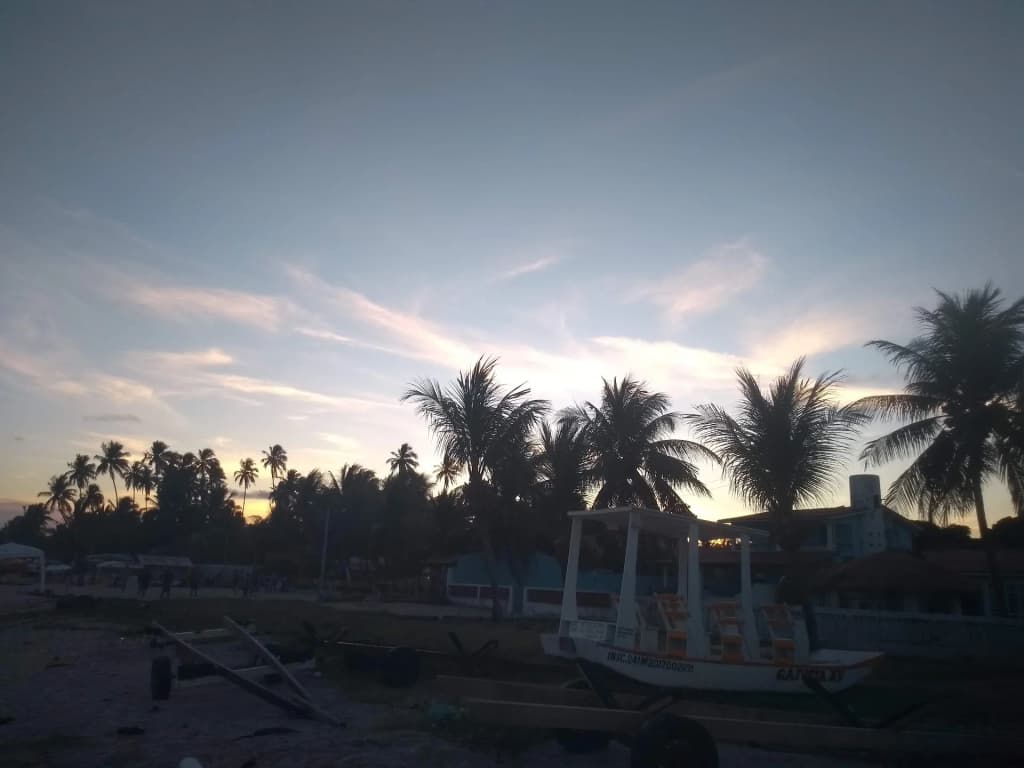
Hunger in Alagoas is a call to explore. I find myself at Restaurante Vila Mar, a spot that feeds the soul as much as the stomach. It’s a cultural space, with walls adorned with the discography of Luiz Gonzaga and art from Pernambuco. The system is simple and honest: I choose the sun-dried meat (carne de sol) and fill my plate with green beans, rice, cassava, and pumpkin farofa. The meat is salty, tender, and carries the distinct smokiness of the region.
For a different energy, I wander over to Point do Rafa. It started as a hub for Hawaiian outrigger canoeing—which still happens daily—but evolved into a restaurant with a distinct personality. I sit with a plate of fresh salmon ceviche, listening to live music. It’s a strange but delightful fusion: the Aloha spirit sitting comfortably inside the warmth of the Brazilian Northeast.
On nights when I crave comfort, I find Tua Casa. It’s a burger joint, yes, but one that takes its craft seriously. The mayonnaise is homemade, the tomato sauce is artisanal, and the atmosphere is welcoming. It’s a short walk from my bed, and after a day in the sun, a good burger feels like a feast.
I am staying at Pousada Marallo, a place that feels less like a hotel and more like the guest house of a tasteful friend. It is intimate—only a few suites—run by Moa and his wife, Pat. They are the kind of hosts who anticipate needs before you articulate them. The entry code buzzes on my phone, the Wi-Fi connects instantly, and the towels are soft enough to embrace you.
The suite is designed for lingering. There is a kitchenette with heavy, quality cookware I feel guilty for even thinking about dirtying, and a balcony with a hammock that catches the breeze. But the highlight is the pool area. In the heat of the Northeast, the water warms up throughout the day. By nightfall, it is like a thermal bath.
"You can stay in there all night," Pat says, seeing me eyeing the water after dinner. "It’s the best time."
She is right. Floating in the warm pool under the stars, knowing the ocean is just 200 meters away, I feel a profound sense of peace. It is quiet here. The party is elsewhere, and I am glad to be missing it.
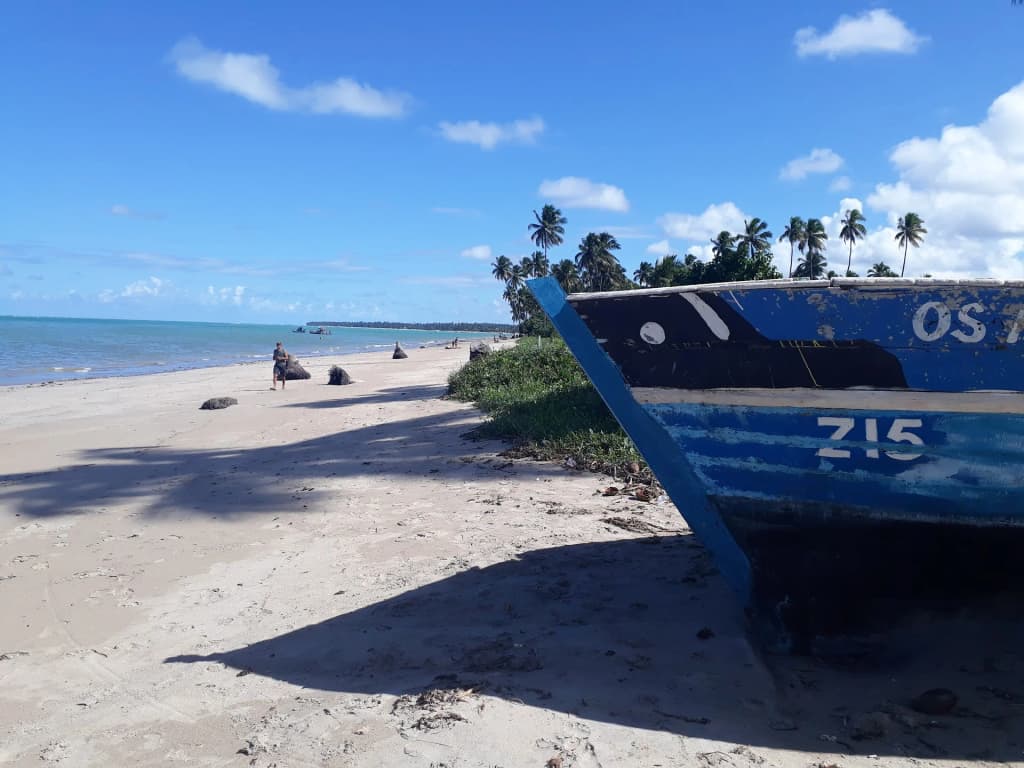
Before I leave, I must see the Croa de São Bento. We take a jangada, the traditional wooden sailing raft of the region. This area is a sanctuary. Speedboats are forbidden here to preserve the sandbanks and the coral. We move slowly, pushed only by the wind, the silence broken only by the creak of the mast.
At the natural pools, the water is crystal clear. I try the Plana Sub, holding onto a small board while being gently towed through the water. It allows me to fly underwater, watching schools of fish dart through the reef without the exertion of swimming. It is meditative. The separation between Japaratinga and Maragogi blurs here; it is just one long stretch of perfection.
As the sun begins to dip, painting the sky in violet and gold, I realize that the quality of Ponta de Mangue isn't about drama or action. It's about the long, slow shots. It's about the stillness. In a world that is constantly rushing, this corner of Brazil insists that you stop, float, and simply be.
More Photos
More Adventures
 $50 - $150/day 5-10 days
 Conquer Ceará: The Ultimate Route of Emotions Road Trip
Ditch the resorts and hit the dunes. Discover the wild side of Ceará, Brazil, from hidden lagoons in Camocim to the electric nightlife of Jericoacoara.
 $50 - $150/day 3-5 days
 Edge of the World: Surviving Brazil's Wildest Border
Forget the crowded beaches. Head to Amapá. Discover untouched Amazon jungle, wild river rapids, and the mind-bending border where Brazil meets Europe.
 $40 - $80/day 2-4 days
 Boa Vista: Exploring the Amazon's Fan-Shaped Frontier City
Experience the unexpected beauty of Boa Vista, Roraima. Discover Macuxi indigenous crafts, the unique Lavrado biome, and sunset boat tours on the Rio Branco.
 $40 - $80/day 3-5 days
 Into the Wild: Surviving Roraima's Macuxi Territory
Skip the tourist traps. Plunge into the raw culture of the Macuxi tribe in Roraima, Brazil. Experience fire-hot stews, sacred rituals, and wild borders.