
Stone, Water, and Silence: A Journey Through Northern Italy's Quietest Villages
Forget the crowds of Venice. Join Marco Silva on a slow journey through Northern Italy's villages, from the Dolomites to the Ligurian coast.
The chisel bites into the pine with a sound like tearing silk. It is the only sound in the workshop, perhaps the only sound in the entire village of Ortisei this early in the morning. Outside, the Dolomites cut a jagged line against a sky so blue it looks painted on, but in here, the air smells of resin and sawdust and patience. I am standing in the shadow of the Alps, far from the industrial hum of Milan or the carnival masks of Venice.
"You are looking at the clock," the carver says. He is an old man with hands that look as gnarled as the wood he shapes. He doesn't look up.
"I have a train to catch in Bolzano," I admit. "I'm trying to see everything before sunset."
He finally pauses, blowing dust off the wooden saint's face. "The mountain does not care about your train," he says, his Italian thick with the German cadence of the South Tyrol. "You tourists, you want the photo. You want the finished thing. But the village... the village is the process. It is slow. Here, we move at the speed of the wood."
He is right. Places like Ortisei, or the sophisticated Courmayeur sitting at the foot of Mont Blanc, demand a different internal rhythm. In Bressanone, I lose an entire afternoon just watching light filter through the cloisters of the cathedral. These alpine villages are fortresses of tradition. You eat the canederli dumplings because they are heavy and warm and exactly what your body craves after walking the steep, cobbled paths. You drink the white wine because it tastes like the minerals in the rock above you. The air up here doesn't just touch you; it bites. It is a slow, deep breath.
Leaving the sharp peaks behind, the landscape softens, dissolving into the hazy blues and greens of the Great Lakes. If the mountains are the backbone of the north, the lakes are its lungs. The ferry cuts through the water of Lake Como, and the wind loses its chill, carrying instead the scent of jasmine and damp earth.
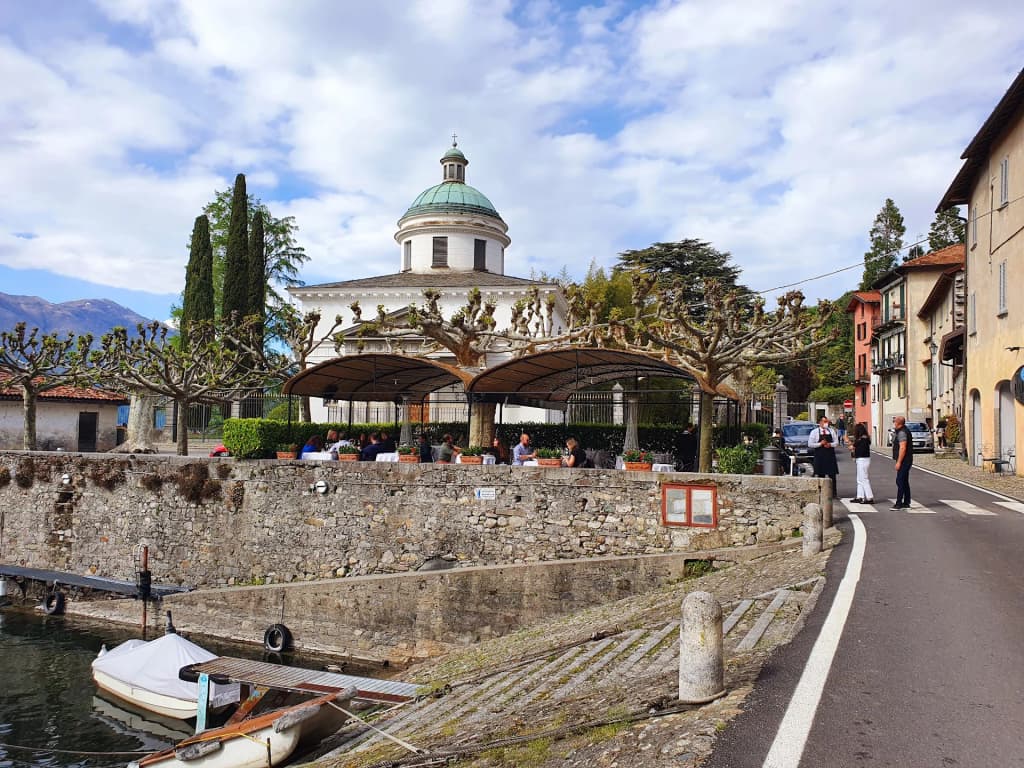
Bellagio approaches like a stage set, almost too perfect to be real. They call it the "Pearl of the Lake," and standing at the intersection of the water’s three branches, the nickname feels earned. The villas here—Villa Melzi, Villa Serbelloni—are not just houses; they are declarations of elegance. I wander up the steep staircases that serve as streets, my hand brushing against sun-warmed stucco. It is crowded, yes, but if you wake up early, before the first ferry arrives, you can watch the mist peel off the water in total silence.
But the lakes are not just about the glamour of Bellagio. Further east, on Lake Garda, Limone sul Garda clings to the cliffs, its lemon houses standing as proof of agricultural ingenuity. And on Lake Iseo, I find Monte Isola—Europe’s largest lake island and a place where cars are banned. The silence there is different from the mountains; it is softer, broken only by the lap of water against the hulls of fishing boats and the whir of bicycle tires.
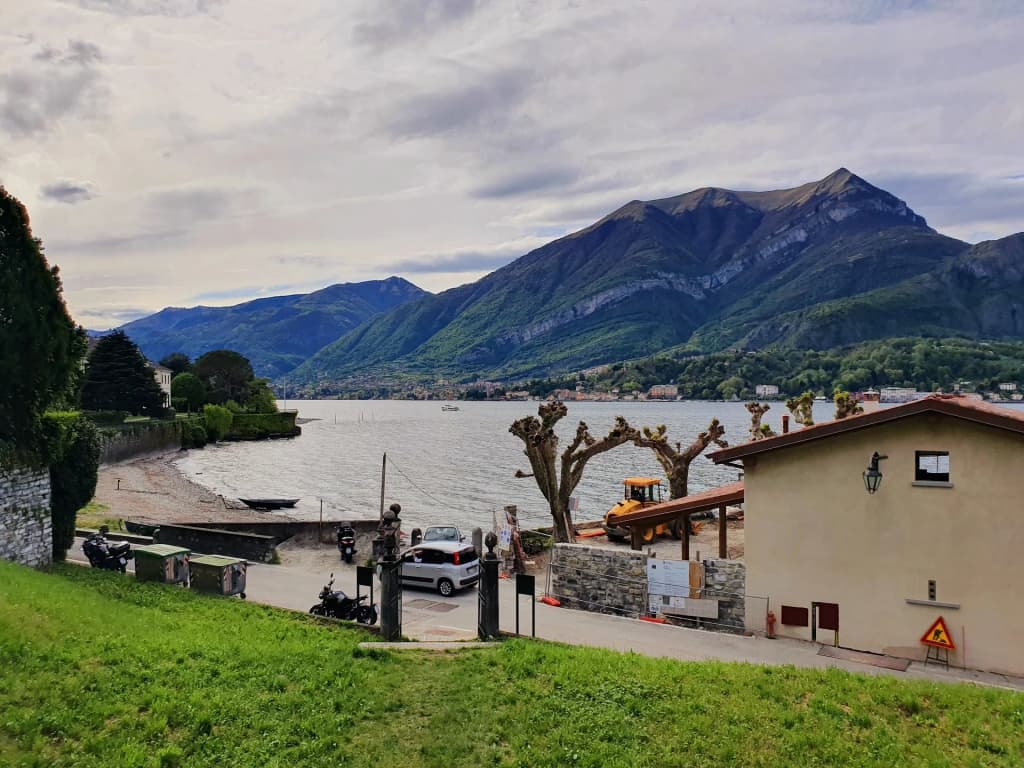
In Varenna, just across from Bellagio, the pace slows even further. The "Walk of Lovers" hangs over the water, a metal grate path clinging to the rock face. I sit at a cafe as the sun begins to dip, turning the lake into a sheet of hammered copper. The waiter brings a plate of risotto with perch fillets—simple, buttery, and tasting of the deep water. This is the seduction of the lakes: they make you believe that life could always be this fluid, this graceful.
The air changes again as I head south toward Liguria. The humidity rises, heavy with salt. The colors shift from the deep alpine greens and lake blues to the riotous palette of the Riviera. This is a vertical world, where villages like Tellaro and the famous Cinque Terre defy gravity, clutching the cliffs as if afraid of sliding into the sea.
Portofino is the jewel here, synonymous with luxury, but I find my heart in the quieter corners. In Camogli, I watch fishermen mend nets that smell of dried seaweed. The houses are painted in trompe-l'œil, fake windows and architectural details added by brushstroke to mimic grandeur. It is a playful, theatrical architecture that contrasts with the rugged reality of the sea.
"It's for the sailors," a woman tells me in a bakery in Vernazza, handing me a slice of focaccia that is glistening with olive oil. "So they can see their house from the boat. Each color is a signature."
I hike the trails connecting these villages, the dust coating my boots. The scent of wild basil and hot pine needles is overwhelming. In Portovenere, looking out from the Church of San Pietro perched on the rocky spur, the Mediterranean stretches out—a vast, breathing blue entity. It feels wilder here than the lakes, less manicured than the Alps.
To understand the full spectrum of the North, one must turn inland, to the rolling hills of Piedmont and Emilia-Romagna. This is the earthiest part of the journey. In the Langhe region, the morning fog clings to the vineyards like wool. I arrive in Barolo, a name that commands reverence in the world of wine. The village is small, dominated by its castle, but the soil here is sacred.
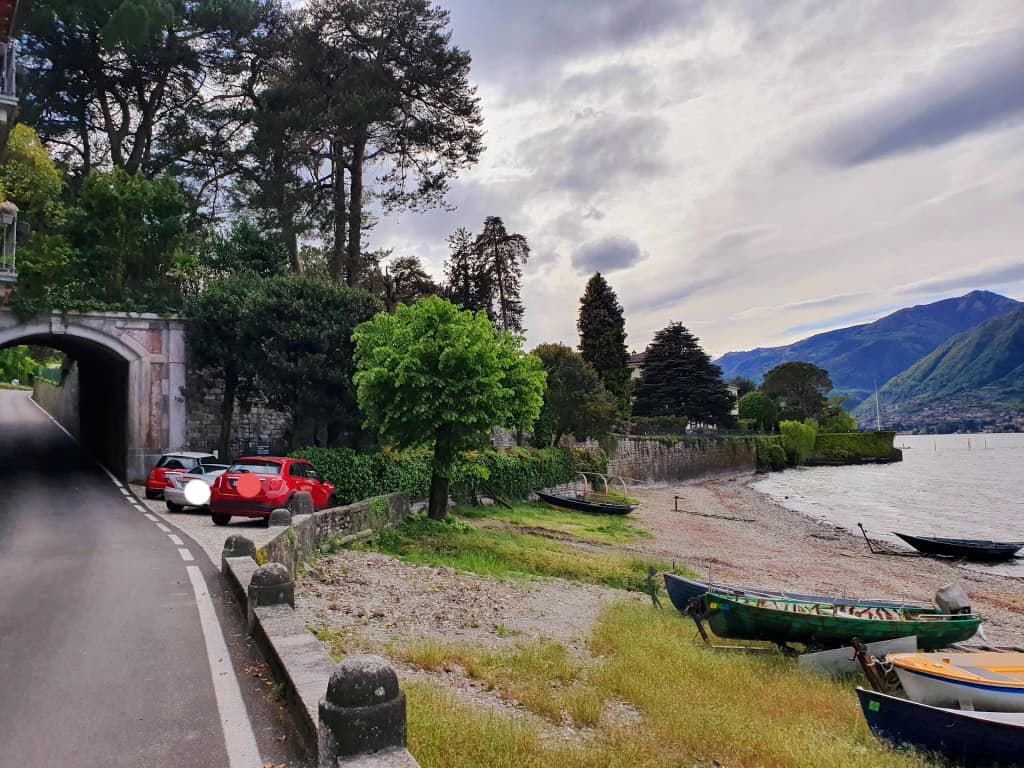
In Alba, the air in autumn smells of wet leaves and the pungent, musky aroma of white truffles. It is a sensory overload. I visit Bobbio in the Trebbia Valley, where the medieval bridge—the Ponte Gobbo—looks like the spine of a sleeping dragon. And in Dozza, near Bologna, the walls themselves speak; murals painted by artists from around the world turn the medieval streets into an open-air gallery.
These villages are the pantry of Italy. In Neive, I sit in a stone cellar and drink a glass of Barbaresco that tastes of cherries and time. There is no view of the sea here, no dramatic mountain peak—just the endless rhythm of the vines and the heavy, comforting food that anchors you to the ground.
Traveling through this region requires a shift in mindset. While the train system in Italy is excellent for connecting major hubs like Verona or Milan to the coast, reaching the heart of these Borghi often requires four wheels. Renting a small car is the key—emphasis on small, as the streets in places like Brisighella or Castell'Arquato were built for donkeys, not SUVs.
Budgeting here is a game of extremes. A coffee in the square of Portofino might cost you five times what it costs in a hilltop village in Emilia-Romagna. I find that $200 a day covers a comfortable, mid-range experience, but you can easily double that if you succumb to the lure of lake-view suites in Bellagio. The shoulder seasons—May and September—are the golden hours of travel here. The August crowds have vanished, but the sun is still warm enough to eat dinner outside.
I end my journey in Grazzano Visconti, a village that blurs the line between history and fantasy. As I walk through its neo-gothic streets, I realize that the North of Italy is not a single destination. It is a collection of micro-worlds. From the German-speaking carvers of Ortisei to the sun-weathered sailors of Camogli, these villages are the guardians of a slower, richer life. They remind us that travel is not about checking names off a list. It is about the feeling of cobblestones through the soles of your shoes, the taste of wine that has never left the valley where it was grown, and the silence that comes when you finally stop moving and just look.
More Photos
More Adventures
 $100 - $350/day 5-7 days
 Ditch Your Shoes: The Ultimate Jericoacoara Adventure Guide
Skip the tourist traps. Rent an ATV, dive into Buraco Azul, and taste the wild side of Jericoacoara. Your ultimate adventure guide to Brazil's sandy paradise.
 $50 - $150/day 3-5 days
 Misty Peaks and Wood-Fired Feasts in Visconde de Mauá
Experience the misty mountains of Visconde de Mauá, Brazil. Discover steep trails, cozy rain-lashed cabins, and the rich culinary heritage of Minas Gerais.
 $30 - $60/day 3-5 days
 Skip the Beach: The Mystical Quartz Mountain of São Thomé
Trade the beach for the mountains. Explore São Thomé das Letras, Brazil's off-grid quartz town. Dive into waterfalls, dark caves, and defy gravity.
 $150 - $300/day 3-5 days
 Conquer the Ice: A Raw Guide to Perito Moreno Glacier
Skip the tourist traps. Rent a car, brave the wild Patagonian weather, and trek across the jagged, electric-blue ice of the Perito Moreno Glacier.