
Paris in Four Days: Rain, Romance, and Rooftop Views
Four days in Paris: rain-soaked streets, glowing rooftops, and the taste of fresh crepes. A sensory journey through the City of Light, with practical tips woven in.
The rain is a fine mist, clinging to my coat as I step off the Eurostar and into the pulse of Paris. The city smells of wet stone and roasted chestnuts, the kind of scent that seeps into your bones and lingers. My suitcase wheels rattle over the slick pavement, echoing in the cavernous Gare du Nord. “You’re here for Christmas?” the customs officer asks, barely glancing at my passport. I nod, and he waves me through. The city is waiting.
Our hotel room is small but bright, a cocoon of warmth against the December drizzle. The bed is crisp, the bathroom modern, and there’s a tiny balcony overlooking a tangle of Parisian rooftops. I press my forehead to the cold glass, watching the city blur in the rain. Down below, a woman in a red scarf hurries past, umbrella bobbing. The room smells faintly of coffee and clean linen. For the next four days, this is home.
The Louvre is chaos and beauty, all at once. We arrive late, shoes squeaking on marble, dodging crowds beneath the glass pyramid. The air inside is thick with the scent of damp coats and old paper. Security ushers us forward, “Allez, allez!”—no time to linger. The Mona Lisa’s room is a crush of bodies, cameras raised, everyone straining for a glimpse. I catch her eye for a heartbeat before being swept along. “Did you get a selfie?” my partner asks, breathless. I shake my head, laughing. “Not a chance.”
Three hours slip by in a blur of marble statues and oil paintings. By the time we emerge, the sky is bruised with evening. Hunger gnaws. We follow the glow of fairy lights to a Christmas market in the Jardin des Tuileries, the air thick with the smell of mulled wine and frying dough. My first Parisian baguette is still warm, the crust shattering between my teeth. Later, we wander to the Galeries Lafayette, where a Christmas tree shimmers beneath a stained-glass dome, and end the night with dinner at a restaurant facing the Eiffel Tower. The lights flicker gold against the rain. Every bite tastes like celebration.
Christmas Eve. The city is quieter, the rain softer. We walk through the Jardin du Luxembourg, where winter has stripped the trees bare and the grass is slick underfoot. “It must be beautiful in spring,” I say to a man feeding pigeons on a bench. He grins, “Ah, but in winter, Paris belongs to the dreamers.”
We skip the Pantheon—thirteen euros to enter, and the dome costs extra. Instead, we find a tiny creperie, Oroyona, where Monsieur Jules makes crepes to order, his hands moving with practiced grace. Two crepes and a drink for less than ten euros, cash only. The crepe is hot, buttery, and gone in three bites. “Bon appétit,” he says, sliding another onto the plate. The warmth fills me from the inside out.
Notre-Dame’s doors are finally open again, but the line snakes around the block. We settle for admiring the gothic spires from the outside, rain streaking the stained glass. The city feels ancient and alive, every stone humming with stories.
Montmartre is a village perched above the city, cobblestones slick with rain, the air tinged with the smell of coffee and wet leaves. We climb the steps to Sacré-Cœur, lungs burning, and the city unfurls below us—a patchwork of slate roofs and distant lights. The basilica is free to enter, but the dome costs a few euros. Today, the view is shrouded in mist, but it’s beautiful all the same.
Souvenir shops spill onto the sidewalks, their windows crowded with miniature Eiffel Towers and snow globes. “Cheaper here than anywhere else,” a shopkeeper assures me, pressing a keychain into my palm. I believe him. We find the Wall of Love, blue tiles spelling out ‘I love you’ in 300 languages. My partner traces the words in Portuguese, smiling. “It’s the most romantic spot in Paris,” she says. I can’t disagree.
We wander back toward the center, ducking into Café Ventura for onion soup and croque monsieur, the cheese bubbling and golden. Outside, the rain turns to sleet, but inside, the world is warm and slow.
The Seine is restless, the water brown and churning beneath the gray sky. We board a Bateaux Mouches river cruise, tickets flexible and easy to buy online. The boat rocks gently as we pass under bridges strung with lights, the Eiffel Tower looming above, half-shrouded in fog. “Not the best day for photos,” the captain jokes, but the city is beautiful in any weather.
Later, we try to climb the Arc de Triomphe, but it’s closed for Christmas. The Champs-Élysées glows with holiday lights, every tree wrapped in gold. We buy macarons from Pierre Hermé—fig and foie gras, chestnut and cassis, caramel, pistachio. Each one is a tiny, perfect world. The flavors linger on my tongue long after we’ve left the shop.
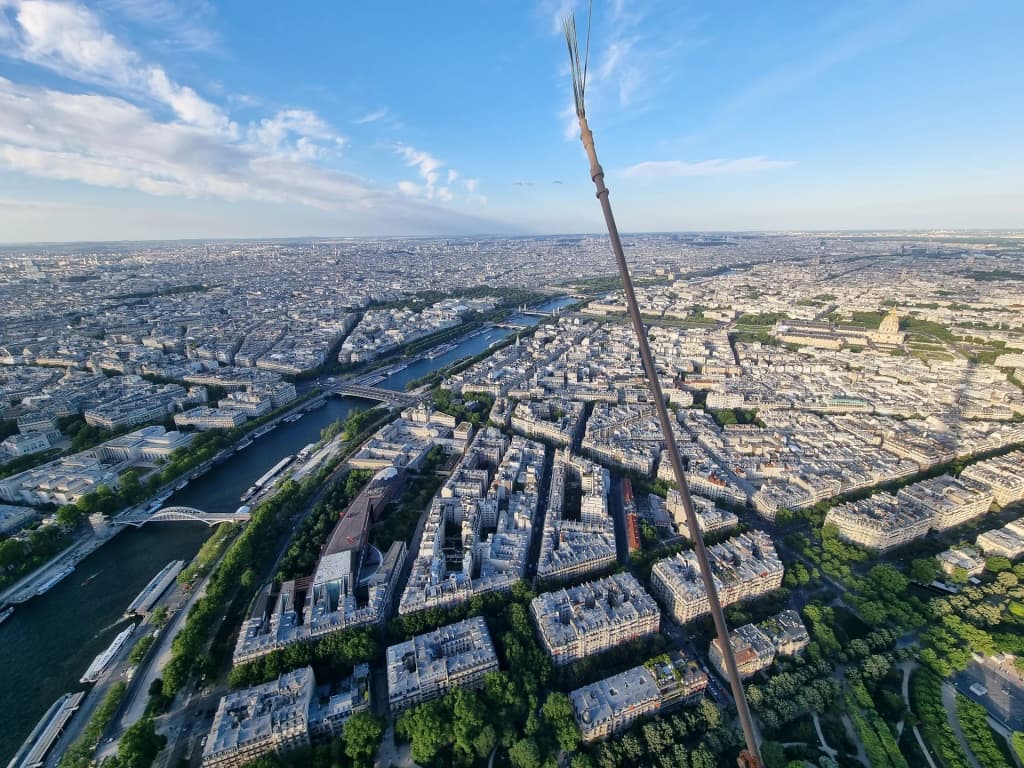
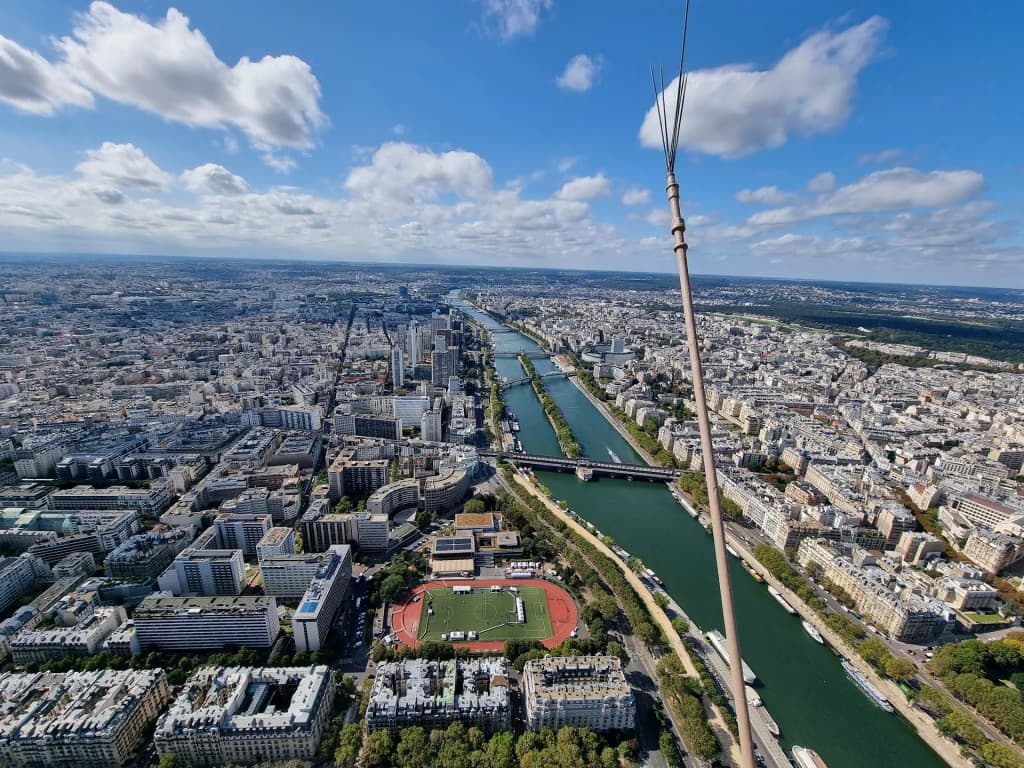
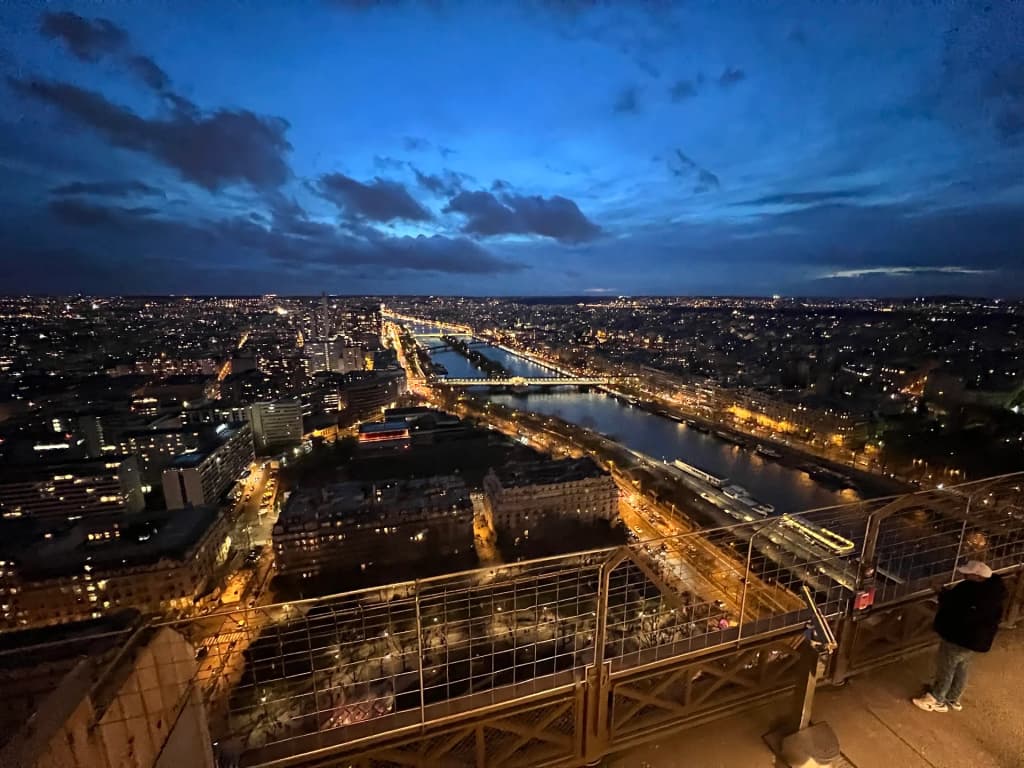
On our last day, the rain finally lets up. We ride the metro to Bir-Hakeim, the station with the postcard view of the Eiffel Tower. The elevator whirs as we ascend, tickets clutched tight—booked weeks in advance, nearly sold out. At the top, the city stretches in every direction, rooftops gleaming in the late afternoon sun. As dusk falls, the tower begins to sparkle, a thousand lights flickering against the blue-black sky. I lean into the wind, breathless.
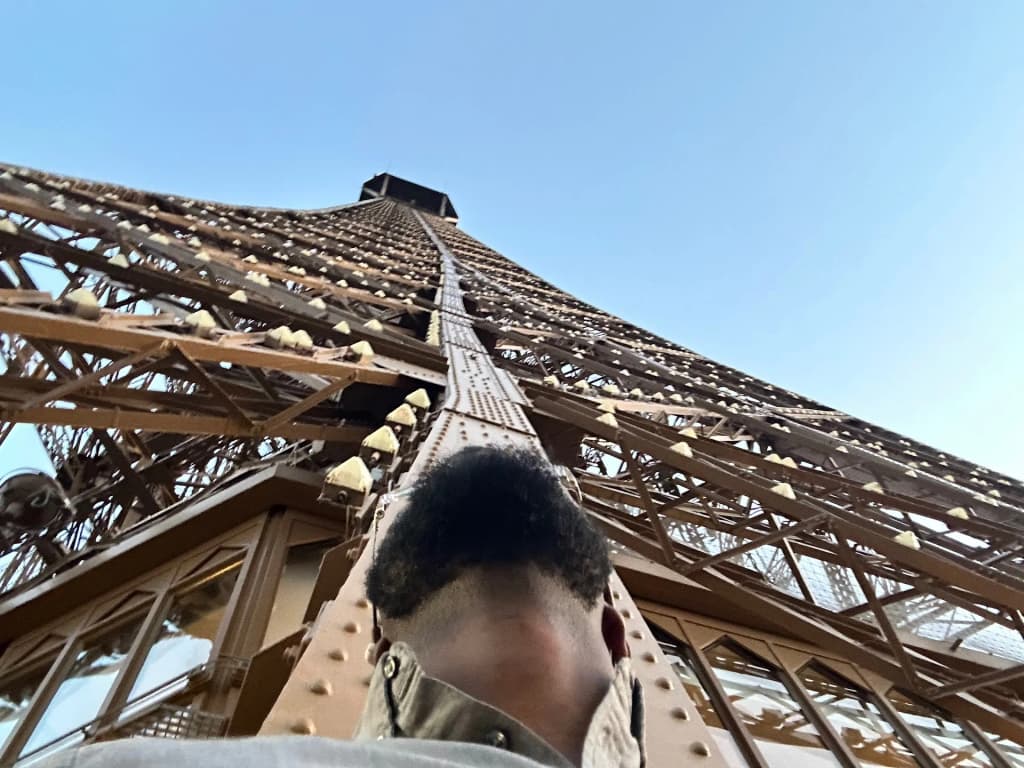
We descend, hearts full, and wander the Champs-Élysées one last time, the air sweet with the scent of pastries and pine. Paris is not a city you can finish in four days. It’s a city that lingers, that seeps into your skin and follows you home. I promise myself I’ll return, someday, to chase the light again.
More Photos
More Adventures
 $120 - $350/day 2-3 days
 Disneyland Paris Strategy: Ride Hacks & Coaster Secrets
Think you know Disney? Think again. Discover the underground secrets, massive coasters, and insider hacks to conquer Disneyland Paris like a pro.
 $150 - $350/day 1 days
 Conquer Disneyland Paris: 2 Parks in 1 Brutal Day
Think you can't conquer both Disneyland Paris parks in a single day? Think again. Here is the ruthless, high-energy strategy to dominate every major ride.
 $150 - $300/day 1-2 days
 Conquer Epcot: The Ultimate High-Speed Global Gauntlet
Think Epcot is a slow stroll? Think again. It's a high-speed, globe-trotting gauntlet. Hack the rides, taste the world, and push your limits in Orlando.
 $50 - $120/day 3-5 days
 Chasing Echoes and Gold Dust in Tiradentes, Brazil
Experience Tiradentes, Brazil through a sensory journey of colonial architecture, deep-rooted history, and the rich culinary traditions of Minas Gerais.