
Tasting the Clouds: A Day at Pedra São Francisco
Discover Pedra São Francisco in the Mantiqueira Mountains, where dramatic viewpoints meet slow-cooked caipira cuisine and quiet mountain trails.
The wind up here tastes like pine and cold earth, biting at your cheeks the moment you step out of the car. It whips across the exposed granite, carrying the faint, smoky promise of a wood-fired stove from somewhere down the ridge. You stand at the edge of Pedra São Francisco, and the world simply falls away. The Paraíba Valley sprawls below like a rumpled green quilt, fading into a hazy, watercolor blue at the horizon. It is that rare, chest-expanding sensation of standing on the exact roof of the world. Just a few hours ago, I was navigating the concrete arteries of São Paulo, the heavy city smog clinging to the windshield. The transition happens so quickly it leaves you slightly breathless. Your ears pop as the winding dirt road forces you to surrender to the mountain's pace, leaving the sprawl of Taubaté and São José dos Campos far behind. The tropical broadleaf trees of the lower elevations have given way to towering Araucaria pines, their umbrella-like branches scraping against a painfully clear sky.
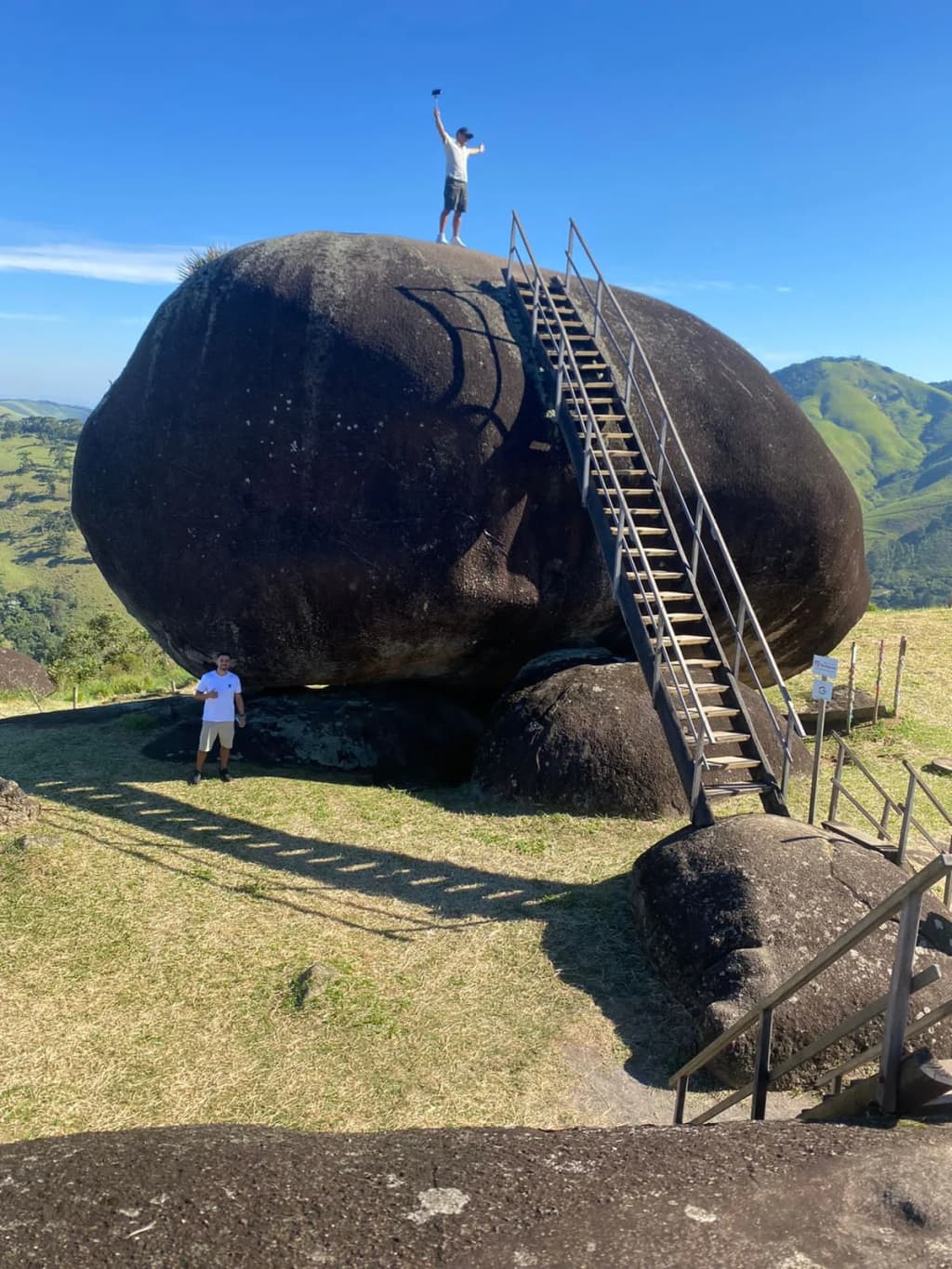
This jagged lookout sits quietly on the border between the small town of Monteiro Lobato and the rural district of São Francisco Xavier. It is a place that demands you slow down. The crunch of boots on the dry dirt trail leads away from the main lookout, winding down toward the sound of rushing water. There is a waterfall concealed in the folds of these hills. The icy spray is a sharp, invigorating shock against the skin, a welcome contrast to the midday sun beating down on the Mantiqueira Mountains.
Somewhere overhead, the metallic zip of a cable breaks the natural quiet. A rider flies past on the zipline, their laughter echoing down the valley before being swallowed entirely by the vastness of the landscape. Nearby, horses graze in a weathered wooden paddock, flicking their tails, waiting for riders who want to trace the ridgeline at a slower, rhythmic pace. You can feel the heartbeat of the mountain here—a steady, unhurried thrum that seeps into your bones the longer you sit on the sun-warmed rocks.
But the true anchor of this altitude isn't just the staggering drop; it is the kitchen. Following the scent of wood smoke brings you to a structure that clings to the hillside, its wide, generous windows framing the jagged peaks. Inside, the warmth is immediate and enveloping. The air is thick with the aroma of roasting garlic, sweet corn, and meats that have been simmering in heavy iron pots since before the sun came up. The menu is a love letter to caipira culture—the traditional, rural soul of the Brazilian interior—executed with a quiet, undeniable sophistication.

"It's a very old recipe," the server says. She sets down a heavy wooden board laden with golden, deep-fried parcels. "But we gave it a little shine."
"The bolinho caipira?" I ask, picking one up. It is almost too hot to hold, the yellow corn flour crust rough and perfectly crisp against my fingers.
"Exactly," she smiles, wiping her hands on her canvas apron. "We have a few different fillings today. Try the one on the left first. And take your time. The mountain isn't going anywhere."
I bite into it, and the crunch gives way to a savory, spiced interior that tastes like centuries of mountain tradition. It is earthy, rich, and deeply comforting. Soon, a tasting menu of soft, buttery polenta arrives in heavy clay dishes. Each portion is crowned with a different, deeply colored ragu. The meat has been cooked down for hours on the iron surface of a wood-burning stove until it surrenders completely, melting into the coarse, stone-ground cornmeal. Every bite feels like a warm embrace against the creeping mountain chill, accompanied by the clinking of glasses and the low hum of relaxed Portuguese from the surrounding tables.
You could easily lose an entire afternoon at one of these rustic wooden tables, nursing a locally distilled cachaça from the bar. The clear liquid burns pleasantly on the way down, leaving a lingering note of sugarcane and oak. It pairs perfectly with a plate of impossibly delicate local desserts—sweet pumpkin preserves and fresh, white cheeses that taste of the high pastures.
Navigating the logistics of this mountain retreat is surprisingly gentle. The gatekeeper at the dirt-road entrance collects a modest fee of thirty-five reais per person to access the private grounds. It feels like a mere token gesture, especially when he casually mentions that the entire amount can be deducted from whatever you spend inside. Whether you put it toward a horseback ride, a cold beer at the bar, or that phenomenal polenta tasting menu, the money flows right back into your experience.
I had learned early on that claiming a table for lunch here requires a bit of foresight. The necessary reservations are quietly managed through a link on their social media pages—a fleeting touch of modern necessity for a place that otherwise feels wonderfully disconnected from the digital world. It is a small hoop to jump through, but the reward is a guaranteed seat before that sprawling, cloud-draped horizon.
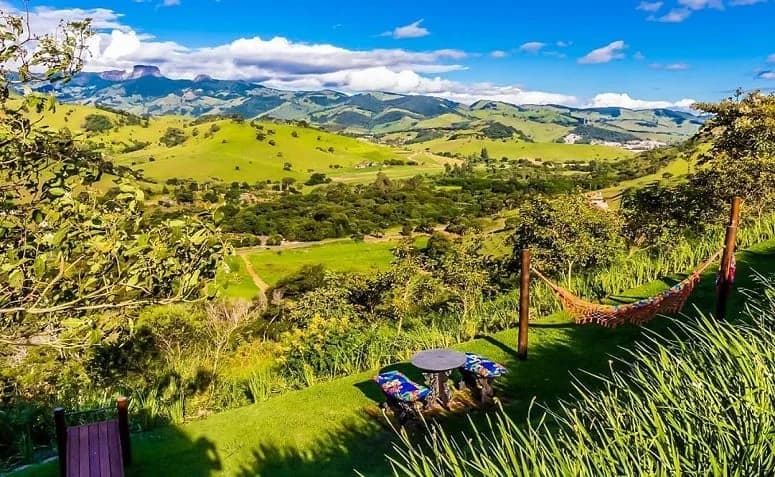
The shadows grow long as the afternoon stretches toward evening. The deep greens of the valley floor shift into cool, bruised purples, while the highest peaks of the Mantiqueira catch the last, golden, horizontal rays of the sun. The temperature drops rapidly, prompting a collective pulling-on of wool sweaters and heavy scarves.
There is a profound, echoing stillness up here that settles into your chest as the day-trippers begin to pack their cars. The smell of the wood-fired stove seems to grow stronger in the cooling air, a final comforting note before the drive back down. Looking out over the edge of Pedra São Francisco one last time, you realize it is more than just a beautiful photograph or a pleasant meal. It is a physical reminder of how small we are, and how much raw, untamed beauty exists just an hour or two away from the noise of our daily lives, waiting quietly on a rocky outcrop in the clouds.
More Photos
More Adventures
 $50 - $150/day 3-5 days
 Nova Friburgo & Lumiar: Silence in Brazil's Mountains
Leave the beaches behind and ascend into Nova Friburgo, a wild Brazilian mountain retreat defined by sweeping cable car views, rich food, and quiet villages.
 $50 - $120/day 3-7 days
 Conquer the Costa da Lagoa Trail in Florianópolis
Ditch the crowded beaches. Hike the Costa da Lagoa trail via Ratones in Florianópolis for wild jungle encounters, stunning views, and epic seafood.
 $50 - $150/day 14-28 days
 Beyond the Ruins: The Ultimate Adrenaline Guide to Peru
Skip the tourist traps. Discover the raw, untamed side of Peru, from the deep Amazon jungle to the towering, glacier-capped peaks of the Andes.
 $40 - $100/day 4-6 days
 Caçapava do Sul: Conquer Brazil's Wild Geopark
Skip the beaches. Discover Caçapava do Sul, Brazil's rugged UNESCO Geopark. Hike ancient canyons, explore ghost towns, and taste award-winning olive oil.