
Nova Friburgo & Lumiar: Silence in Brazil's Mountains
Leave the beaches behind and ascend into Nova Friburgo, a wild Brazilian mountain retreat defined by sweeping cable car views, rich food, and quiet villages.
The wind at four in the morning doesn't just blow; it bites. I pull my collar up against the freezing gusts tearing across the summit of Pico da Caledônia, fighting to keep my balance on the steep, jagged incline. At over fourteen hundred meters above sea level, the air is thin and tastes faintly of pine and damp earth. Below, the city of Nova Friburgo is nothing but a scattering of faint orange embers in the pitch black. The darkness is absolute, but the anticipation of the sun cresting over the jagged peaks of the Serra do Mar keeps my legs moving. This is not the tropical, sun-drenched Brazil of postcards. This is the wild, breathless roof of Rio de Janeiro state.
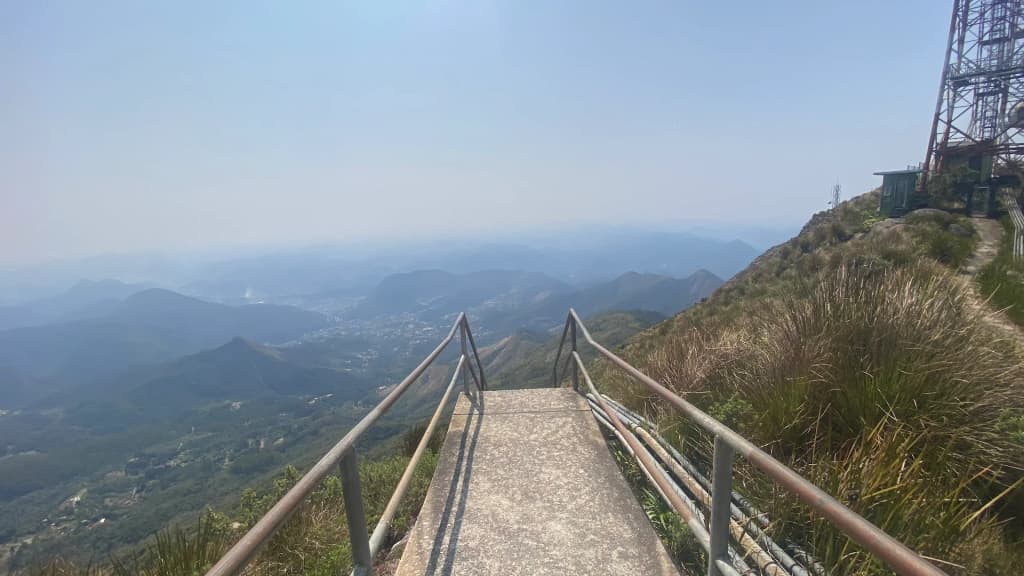
By mid-morning, the biting cold softens into a crisp, sunlit chill. I trade the grueling mountain trails for a different kind of ascent at the Nova Friburgo cable car. I slide sixty reais across the ticket counter—the price for the full ride to the second stage, granting access to the highest chairlift in Brazil. The metal bar clanks shut, and suddenly I am gliding silently above a canopy of impossibly green Atlantic Forest. The scent of crushed leaves and damp bark rises from the valley floor. To my left, the city sprawls out like a miniature model, framed by rolling green giants. The silence up here is heavy, broken only by the rhythmic hum of the cable overhead and the distant call of a bem-te-vi bird echoing through the valley.
At the first stage of the cable car, tucked away down a quiet flight of stairs, I find a space that feels more like a greenhouse than a shop. Eco Modas is a labyrinth of repurposed tires, fire hoses, and bright green seedlings sprouting from discarded sewing thread cones. The smell of rich, wet potting soil fills the room. Alex, the founder, hands me what looks exactly like a dark chocolate truffle.
"It looks delicious, I know, but don't eat it," he laughs, his voice echoing slightly in the cavernous space. "It's a seed bomb. Clay, organic fertilizer, and seeds from native Atlantic Forest trees."
"So I just throw it?" I ask, turning the dense, earthy sphere over in my palm.
"Exactly," he smiles, pointing toward the sweeping valley outside the window. "Throw it back to the forest. When the rains come, the clay melts, and a new tree begins."
I walk out to the recycling garden overlooking the city, the air smelling of impending afternoon rain, and hurl the small sphere into the dense green abyss, a tiny act of reciprocation to the mountain that has given me so much today.
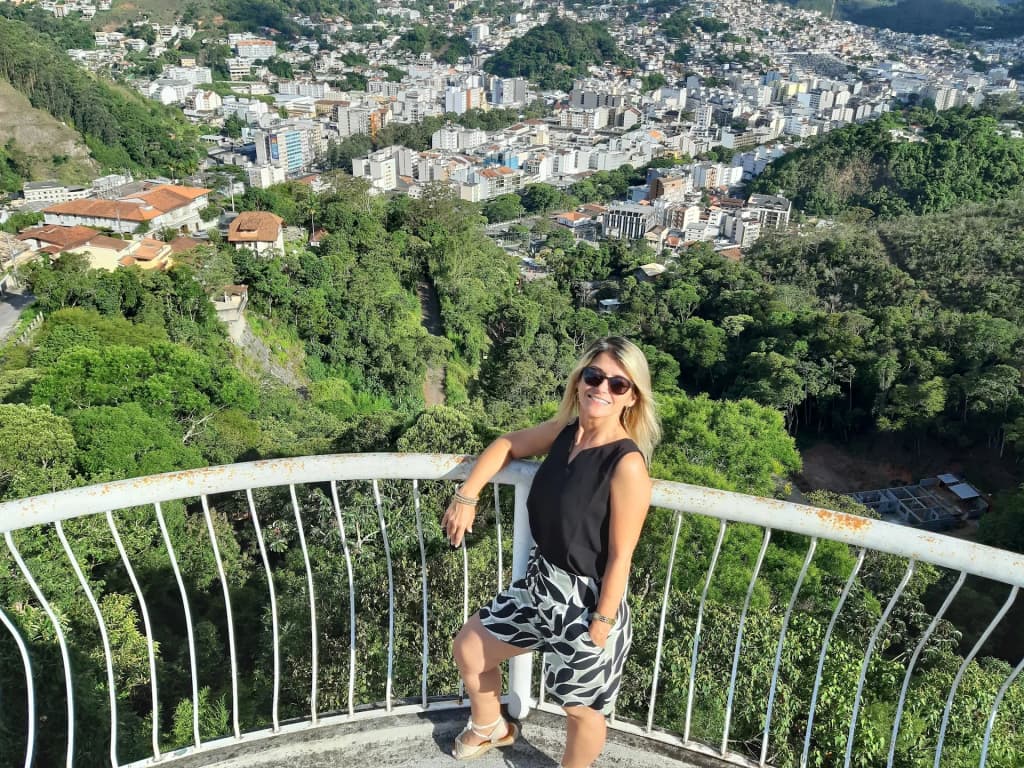
Back down in the valley, the city of Nova Friburgo pulses with a completely different energy. This is the undisputed lingerie capital of Brazil. In neighborhoods like Olaria and Ponte da Saudade, the streets are lined with ateliers and factories humming with the rhythmic clatter of sewing machines. The visual shift is jarring—from wild, untamed nature to bolts of delicate lace and silk displayed in bright storefront windows. Shoppers weave through the sidewalks, bags heavy with wholesale purchases, their rapid-fire Portuguese blending with the roar of passing motorcycles. But I am craving the quiet again, the kind of silence that only exists above the clouds.
The road winds upward once more, cutting through thick patches of fog that cling to the windshield like wet cotton. I am staying at Aloha Caledônia, a secluded cabin sitting at fifteen hundred meters of altitude. The moment I push open the heavy wooden door, the scent of woodsmoke and old paper wraps around me. The cabin is a sanctuary of sensory comforts. I drop my bags, put a scratched vinyl record on the vintage turntable, and listen to the warm, crackling jazz fill the room. Through the massive glass windows, the Atlantic Forest presses in close. Later, I will steam in the sauna and melt chocolate in the fondue pot, but for now, I just sit by the unlit fire pit in the garden, watching the fog swallow the pine trees whole.
The next day brings me down to Lumiar, a tranquil district sitting at a milder seven hundred meters. The air here is softer, warmer, carrying the sweet scent of blooming hydrangeas and roasting garlic from nearby kitchens. The heart of the village is a glassy lake surrounded by small, bustling restaurants and artisan shops. It is the weekend, and the winter season has drawn a lively crowd. Families stroll along the water's edge, their laughter mingling with the soft strumming of an acoustic guitar from a nearby patio.
I find a table on the second-floor balcony of Restaurante Estebanês, looking directly out over the shimmering water. The waiter sets down a plate that demands immediate attention: plump shrimp flambéed in sharp, fiery cachaça, swimming in a bright, acidic Sicilian lemon sauce. The heat of the alcohol hits the back of my throat, perfectly balanced by the rich, buttery zest of the citrus. Next comes a delicate fillet of salmon draped in caper sauce, salty and tender, dissolving instantly on the tongue. I finish with the Taça da Felicidade—a towering glass of warm brownie, melting ice cream, and hazelnut cream that entirely lives up to its name.
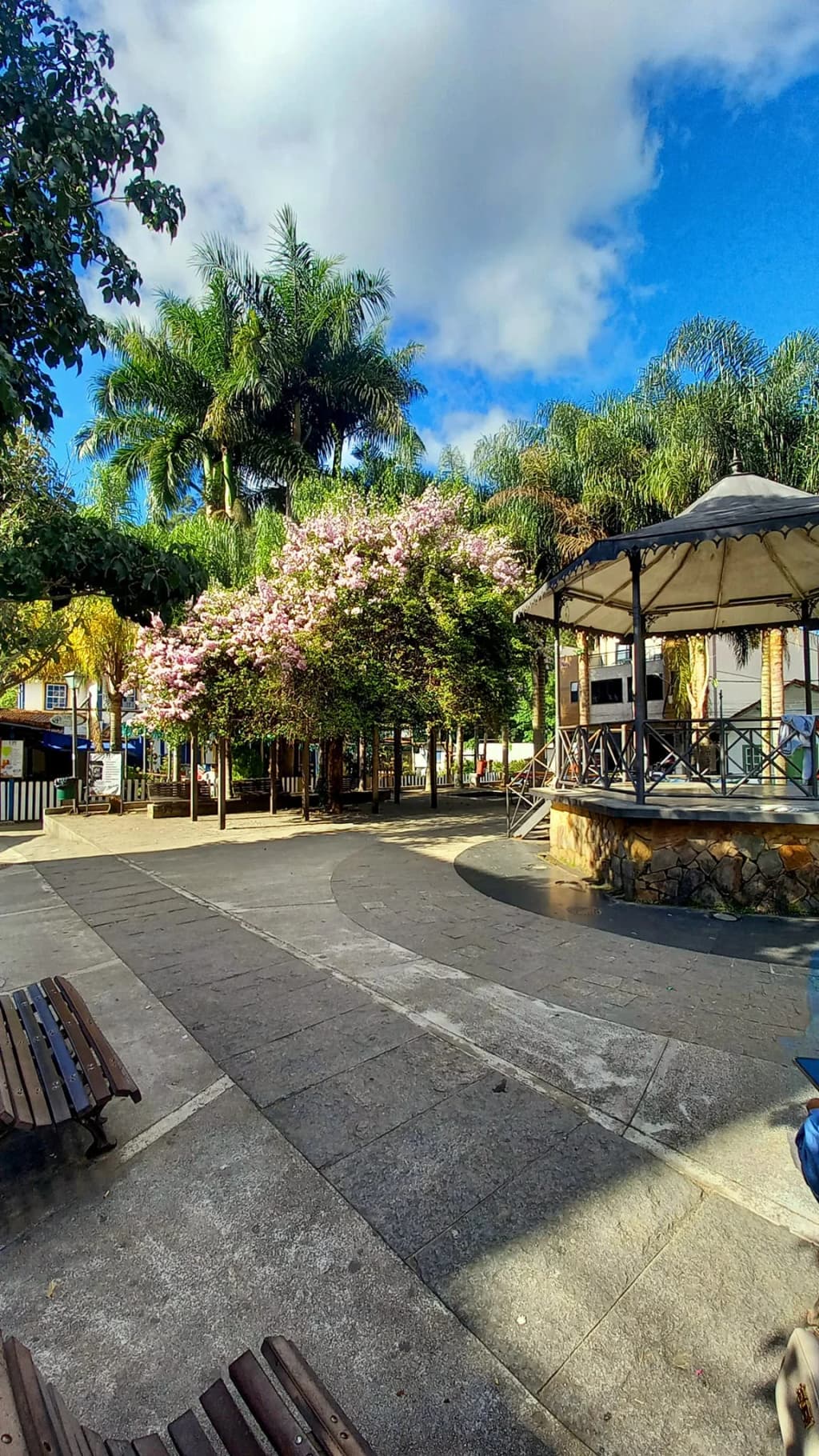
Just fifty meters from the lake, I find Praça do Coreto. The old bandstand sits quietly under the shade of massive trees, surrounded by cafes. I order a dark, bitter espresso and strike up a conversation with an older woman arranging woven baskets at a nearby stall.
"It's peaceful now," she tells me, her weathered hands never stopping their intricate work. "But in the eighties, this square was our entire world. The bars would close early, but nobody wanted to go home."
She pauses, looking up at the bandstand with a soft, nostalgic smile. "We would all gather right there. Someone always had a guitar. We'd listen to live music, singing together, until we simply fell asleep under the stars."
I finish my coffee, the bitter dregs lingering on my palate, and listen to the birds calling from the dense canopy above. Lumiar is surrounded by waterfalls—Poço Belo, Encontro dos Rios—but right now, I have no desire to move. I sit on the edge of the square, feeling the cool mountain breeze brush against my face, and imagine the faint, ghostly strumming of a 1980s guitar echoing through the leaves. Nova Friburgo is a place of beautiful extremes—the biting, breathless winds of its highest peaks, and the warm, sleepy nostalgia of its valley squares. You don't just visit these mountains; you let them seep into your bones, one quiet, soaring moment at a time.
More Photos
More Adventures
 $40 - $100/day 3-5 days
 Skip Rio: Why Brazil's Smallest State is Your Next Big Adventure
Forget the massive crowds. Dive into Sergipe, Brazil's smallest state, for raw wildlife, UNESCO heritage, and mind-blowing untold culinary history.
 $50 - $150/day 3-5 days
 Chasing Tides and Tamarind: The Sensory Rhythm of Aracaju
Explore Aracaju through its disappearing sandbanks, rich seafood, and bustling municipal markets. Discover the soul of northeast Brazil in this journey.
 $40 - $100/day 4-6 days
 Caçapava do Sul: Conquer Brazil's Wild Geopark
Skip the beaches. Discover Caçapava do Sul, Brazil's rugged UNESCO Geopark. Hike ancient canyons, explore ghost towns, and taste award-winning olive oil.
 $50 - $120/day 2-4 days
 Into the Sertão: Outlaws, Canyons, and the Real Brazil
Skip the crowded beaches. Dive into Brazil's Sertão to explore the emerald Xingó Canyons, hike the unforgiving Caatinga, and trace the footsteps of outlaws.