
Chasing Tides and Tamarind: The Sensory Rhythm of Aracaju
Explore Aracaju through its disappearing sandbanks, rich seafood, and bustling municipal markets. Discover the soul of northeast Brazil in this journey.
The smell of salt and ancient mud hits you before you even step onto the wooden deck, mixed with the faint, sweet exhaust of a boat engine. Our catamaran cuts a slow, deliberate path through the turquoise water, the rhythmic thrum vibrating through the floorboards beneath my bare feet. The Top Tur vessel takes its time, respecting both the reduced passenger capacity of the modern era and the inherently slow rhythm of the Brazilian northeast. The air is thick and warm, wrapping around my shoulders like a heavy blanket as we drift away from the mainland of Aracaju.
We are heading toward Ilha dos Namorados, a place born as much from folklore as from geography. The guide, his voice competing with the wind snapping against the canvas roof, tells the story that gives this sandbank its name. A young couple, deeply in love and completely oblivious to the world, moored their small boat here. They wandered into the white sands, lost in each other, forgetting the cardinal rule of this coastline: the tide waits for no one. When the water rushed back in, their boat was swept away, leaving them stranded on this sliver of paradise for two days before rescue arrived.
Looking out at the island now, it is easy to see how one could lose track of time. The sand is blindingly white, contrasting sharply with the deep, glassy green of the river meeting the sea. Coconut palms sway lazily in the distance. Half-submerged hammocks string across the shallows, inviting you to lie suspended just inches above the cool water. I wade in, the water rising to my knees, feeling the soft, shifting sand between my toes. It is quiet here, save for the gentle lap of water against the wooden posts.
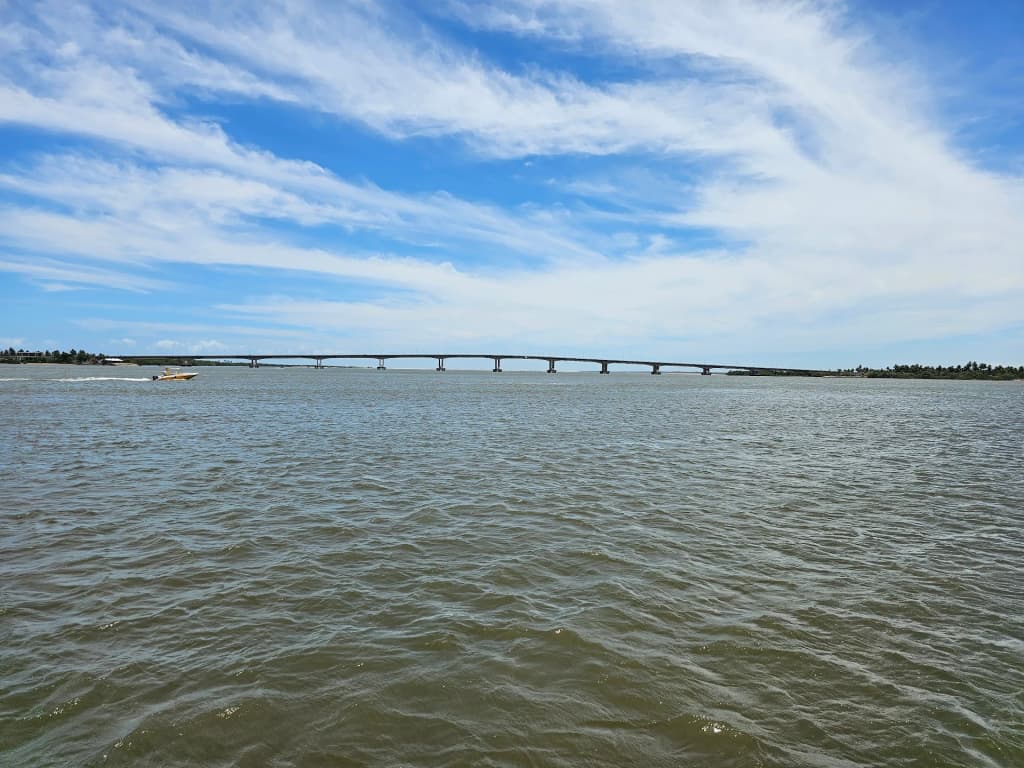
The tide is already beginning to turn by the time we reach Croa do Goré. This is not so much an island as it is a fleeting promise—a sandbank that exists only by the grace of the low tide. Slowly, imperceptibly at first, the water begins to swallow the edges of the dry land.
"Look at him," Rei says, extending his calloused palm. He is our guide, a man whose skin has been baked to a rich mahogany by years on this river. In the center of his hand sits a creature no larger than a coin, its tiny claws raised in a defensive posture. "This is the goré. He is fully grown. He won't get any bigger than this."
"He's tiny," I say, watching the little crab scuttle against his weathered skin.
Rei laughs, a deep, booming sound. "When the tide comes in and the sandbank floods, they all float to the surface to feed. But you have to watch closely, or you miss them."
We watch as the water creeps higher, reclaiming the sand inch by inch. There is something profoundly beautiful about a destination that refuses to be permanent, a place that demands you appreciate it right now, because in an hour, it will simply cease to be.
By midday, the heat demands a retreat, and we find ourselves at the Paraty Beach Club. The owner, Harry, is a towering Dutch expat whose booming laughter and high spirits seem to fill the entire open-air pavilion. The structure is essentially an elevated beach shack, completely open to the sea breeze. The crash of the Atlantic waves provides a relentless, soothing soundtrack.
Lunch is a heavy, glorious affair. We are served vermelho, a local red fish, fried whole until the skin crackles, alongside a steaming clay pot of shrimp and snook moqueca. The broth is rich with coconut milk and dendê oil, staining the rice a brilliant marigold. I spoon the thick, earthy pirão over my plate, the cassava flour base absorbing every drop of the savory stew. The flavors are loud, unapologetic, and deeply comforting. We eat until we are completely full, watching the sky begin to bruise with the purple and orange hues of the approaching evening.
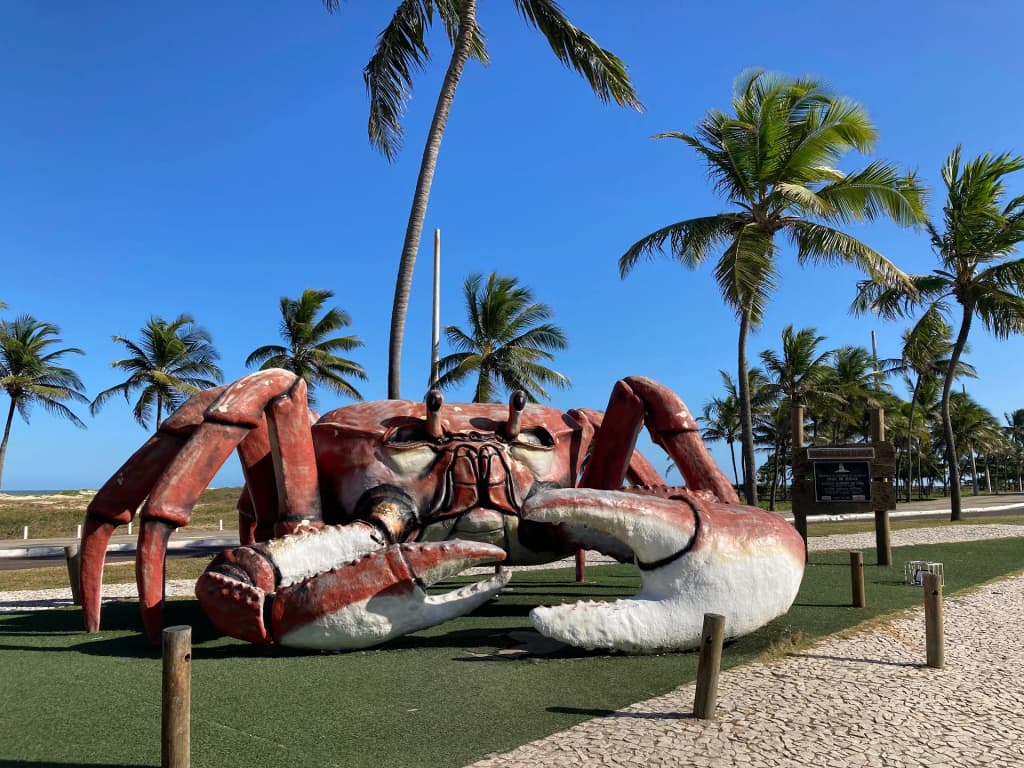
Nightfall in Aracaju belongs to the Passarela do Caranguejo. The Crab Catwalk is a long, pulsing stretch of restaurants and bars that serves as the city's nocturnal heartbeat. The smell hits you instantly—garlic, roasting seafood, and the sharp, fermented tang of spilled beer. A colossal statue of a red crab stands guard at the entrance, a fiberglass monument to the region's favorite delicacy. Locals and tourists bleed together here, sharing cramped tables, cracking crab shells with wooden mallets, and shouting over the sound of live forró music pouring from the open doors.
Just down the coast, the Arcos da Orla rise against the night sky. The iconic concrete arches of Atalaia beach are illuminated, standing like a gateway between the manicured promenade and the dark, restless ocean beyond. The contrast between the chaotic joy of the Passarela and the quiet monumentality of the arches perfectly captures the duality of this coastal city.
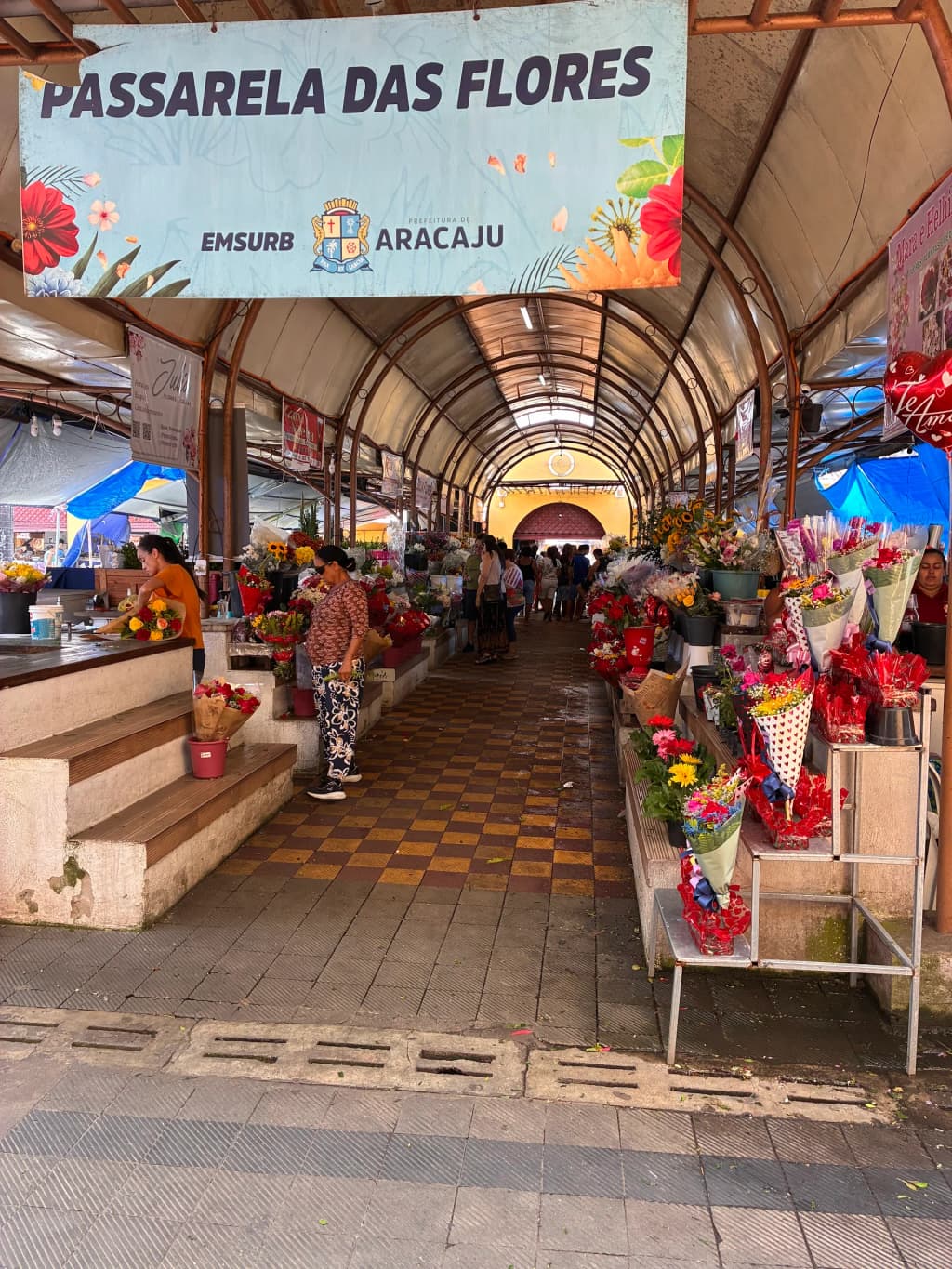
The next morning brings a different kind of sensory overload. The municipal markets of Aracaju are a sprawling, three-building labyrinth of commerce, culture, and pure survival. We start in the Mercado Antônio Franco, the air heavy with the sharp, raw scent of cured leather and dried straw.
Stalls are piled high with intricate lacework, a tradition passed down from Portuguese colonizers, now woven from parent to child in the quiet afternoons of the northeast. I run my fingers over a pair of handmade leather sandals. They are stiff, smelling of earth and tannin.
"Twenty reais," the woman behind the stall says, her hands busy weaving a new straw hat. "If you pay in cash."
I hand her the crumpled bills, slipping the sandals into my bag. A few stalls down, a vendor offers me a small glass of Cachaça Caranguejo, the local spirit burning a fiery, welcome path down my throat. But the most precious find comes quietly. A local historian hands me a book about Maria Bonita, the legendary female bandit of the Cangaço. It is signed by the descendants of Lampião himself. Holding the book, I feel a sudden, heavy connection to the violent, romantic, and fiercely independent history of the Brazilian outback.
We cross into the Mercado Virgínia Franco, and the world shifts from crafts to sustenance. The smell of leather is replaced by the sweet, decaying perfume of overripe fruit and the iron tang of the butcher's stalls. It is a chaotic, beautiful mess of color.
Dark green, spiky maxixe sits in massive woven baskets, waiting to be stewed with dried meat. Bins overflow with okra, which locals lovingly call quiabo.
"Have you tasted this?" a vendor asks, holding up a curved, brown pod.
"No," I admit.
He cracks the brittle shell of the tamarind with his thumb, revealing the sticky, dark pulp inside. "Taste."
I put it in my mouth. It is aggressively sour, then deeply sweet, a flavor that makes my jaw ache in the best possible way. I stand there in the narrow, crowded aisle of the market, the taste of tamarind lingering on my tongue, the hum of rapid-fire Portuguese washing over me.
Aracaju is not a place that stands still. It floods and drains with the tide. It weaves new lace and stews ancient recipes. It gives you an island for a day and takes it back by nightfall. And as I walk out of the market, back into the blistering northeastern sun, I realize I wouldn't want it any other way.
More Photos
More Adventures
 $40 - $100/day 3-5 days
 Skip Rio: Why Brazil's Smallest State is Your Next Big Adventure
Forget the massive crowds. Dive into Sergipe, Brazil's smallest state, for raw wildlife, UNESCO heritage, and mind-blowing untold culinary history.
 $50 - $120/day 3-7 days
 Conquer the Costa da Lagoa Trail in Florianópolis
Ditch the crowded beaches. Hike the Costa da Lagoa trail via Ratones in Florianópolis for wild jungle encounters, stunning views, and epic seafood.
 $40 - $100/day 2-4 days
 Macapá Travel: Finding the Middle of the World
Journey to Macapá, Brazil. Discover the massive Fortaleza de São José, stand on the Equator at Marco Zero, and experience rich Amazonian river culture.
 $150 - $400/day 3-6 days
 Where the Trees Are Made of Steel: Walking Singapore
Walk through the mist of the Cloud Forest, trace the 3.5-kilometer Marina Bay waterfront, and uncover the engineered magic of Singapore's futuristic skyline.