
Where the Trees Are Made of Steel: Walking Singapore
Walk through the mist of the Cloud Forest, trace the 3.5-kilometer Marina Bay waterfront, and uncover the engineered magic of Singapore's futuristic skyline.
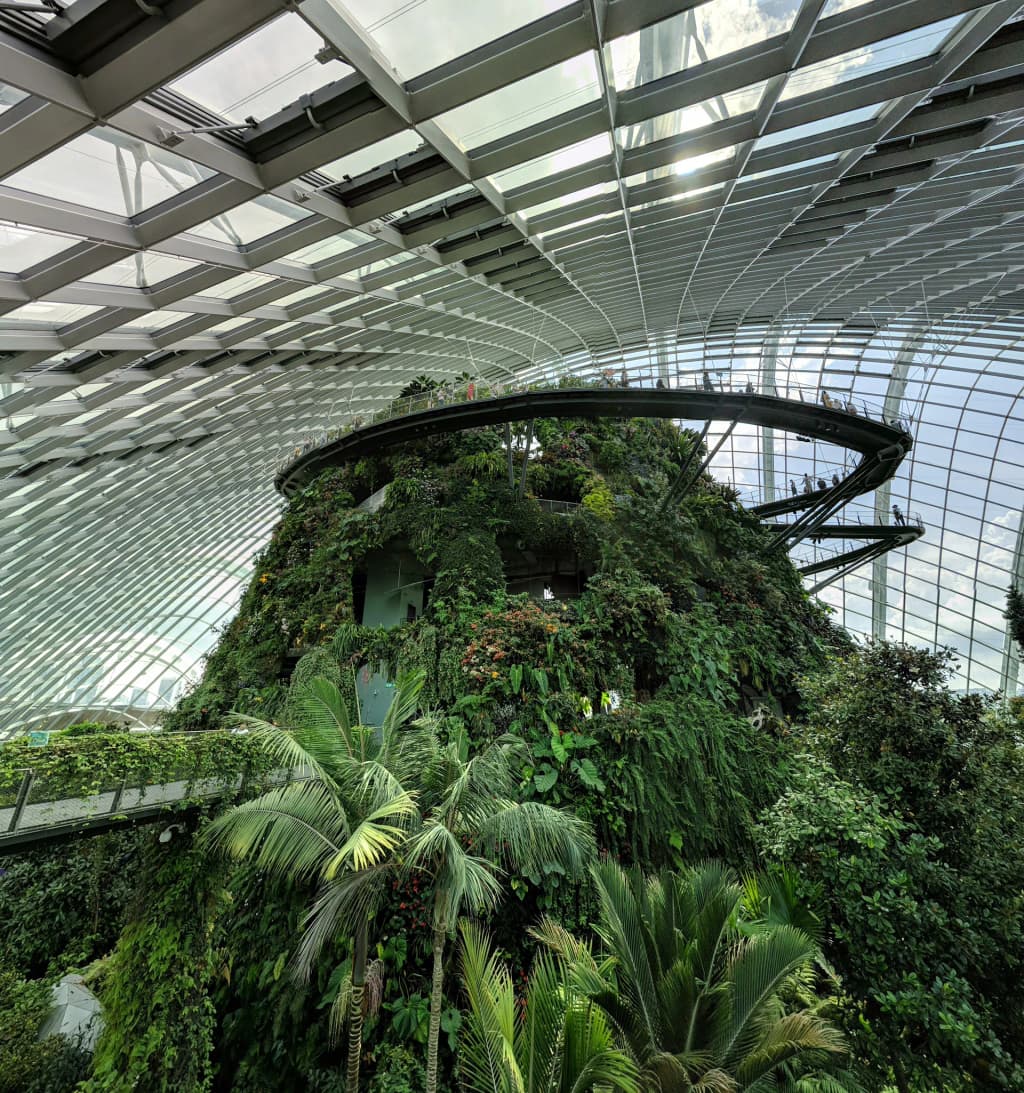
The mist clings to my skin the moment the heavy glass doors seal shut behind me, a startling and welcome contrast to the heavy, sun-baked concrete just outside. It smells of damp earth, crushed ferns, and something faintly sweet that I can't quite identify. I am standing at the base of a 35-meter indoor waterfall inside the Cloud Forest dome, the roar of the rushing water drowning out the murmurs of the morning crowd. This is a high-mountain climate meticulously recreated at sea level, a marvel of engineering that feels entirely organic until a mechanical roar echoes through the fog. Through the dense canopy of rare orchids and broad-leafed tropical plants, an animatronic dinosaur shifts its weight and opens its jaws. It is a temporary Jurassic exhibit, yet it feels oddly fitting here. In a city that has seemingly willed a rainforest into existence beneath a glass shell, the line between the prehistoric and the futuristic is wonderfully blurred.
Stepping back out into the equatorial heat of Gardens by the Bay, the air is thick and still. The transition from the cool, misty dome to the tropical afternoon is an instant reminder that Singapore sits just one degree north of the equator. Before me rise the steel giants of the Supertree Grove. They look like something plucked from a science fiction novel, massive metallic frameworks stretching toward the sky, yet they are completely covered in living, breathing vines and bromeliads. As I walk beneath their massive canopies, I notice the elevated walkway stringing them together, a fragile-looking thread suspended above the lush park floor. These structures aren't just for show. They act as exhaust receptacles for the nearby conservatories, harvest solar energy to light up the night, and collect rainwater to feed the sprawling gardens below. It is a profound display of the city's commitment to a greener urban future, where nature and civic planning are inextricably linked.
I follow the paved path away from the gardens, moving toward the colossal silhouette of Marina Bay Sands. The three towers lean toward one another like a carefully balanced deck of cards, supporting a rooftop deck that stretches longer than the Eiffel Tower laid flat. I think about the sheer audacity of building a 5.6-billion-dollar resort with an infinity pool suspended 200 meters in the air. Down here at ground level, the 3.5-kilometer waterfront promenade wraps around the dark, rippling waters of the bay. The glass facade of a floating Apple store glows like a perfect sphere resting on the tide. I find a wooden bench near the edge of the water, watching a dragon boat slice rhythmically through the bay, the synchronized shouts of the rowers carrying across the breeze.
An older woman in a wide-brimmed linen hat sits at the opposite end of the bench, fanning herself with a folded newspaper.
"They practice every evening," she says, noticing my gaze. Her English is clipped, musical, and offered more as a statement of fact than a conversation starter.
"It looks exhausting in this humidity," I reply, wiping a bead of sweat from my collar.
She laughs, a soft, papery sound that gets lost in the breeze. "Everything here takes effort. You think this city grew out of the mud by accident? We built it all. Even the trees. We used to be a little fishing village called Temasek, you know. Now look at us."
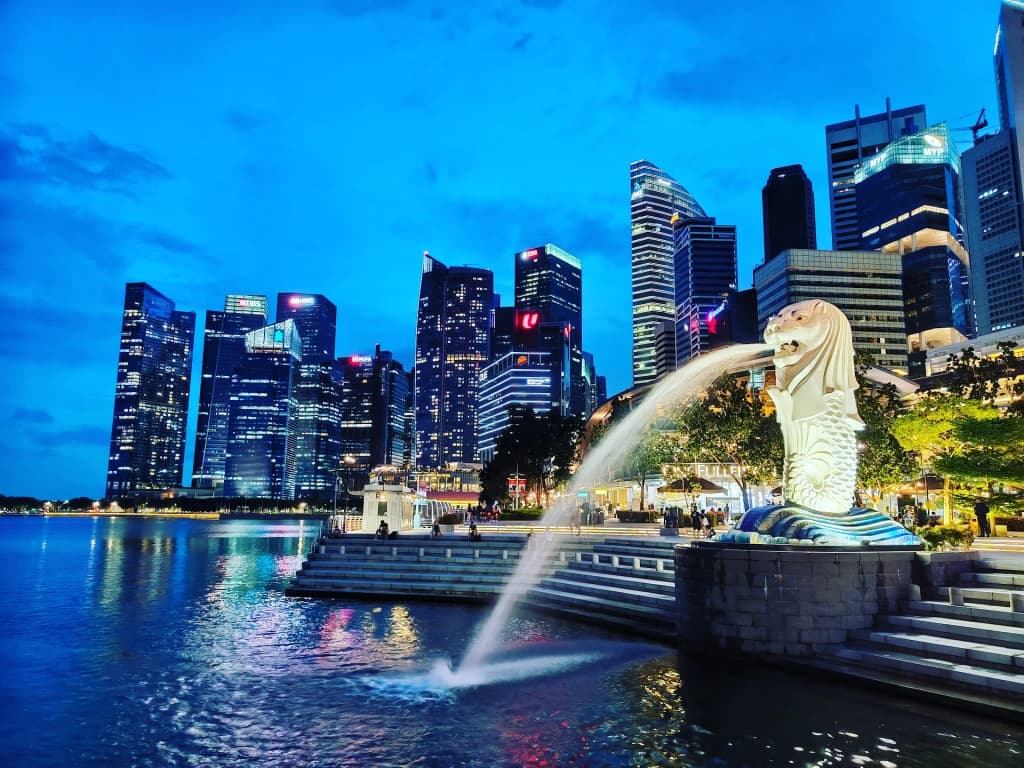
Her words linger as I continue my walk toward Merlion Park, where the mythical half-lion, half-fish statue spouts a continuous arc of water into the bay. It is a monument to those humble fishing roots she mentioned, standing defiantly against a backdrop of towering financial skyscrapers. But the modern glass and steel only tell half the story. A few blocks inland, the gleaming white facade of St. Andrew's Cathedral rises above the Civic District. Built in the nineteenth century during British rule, it is the largest Anglican church in the city, its quiet, cavernous interior a stark contrast to the bustling metro stations just below ground.
Not far from the cathedral, I push through the heavy doors of the Raffles Hotel. The transition is sensory and immediate. The manicured courtyard smells of frangipani, and the air conditioning is a luxurious shock to the system. Opened in 1887 as a modest ten-room coastal inn, it has grown into a sprawling estate of 115 suites. Sikh doormen in immaculate uniforms greet guests with practiced warmth. I sit in the opulent lobby, listening to the delicate clink of porcelain cups and the hushed conversations of travelers partaking in the famous afternoon tea. The buttery taste of warm scones and the aromatic steam of Darjeeling tea offer a fleeting, delicious ghost of the colonial era.
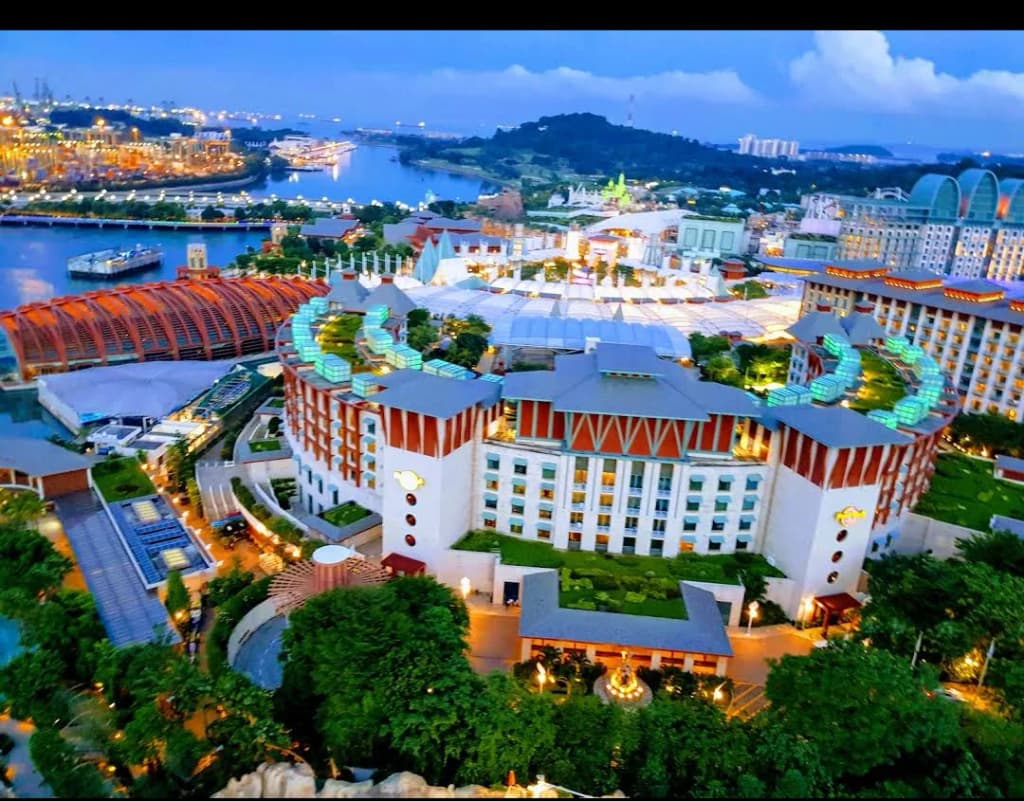
By the next morning, the craving for open water pulls me away from the city grid and out toward Sentosa Island. Once a military base known by the slightly ominous name of Pulau Belakang Mati, it has been entirely transformed into a sprawling playground. I bypass the larger resorts and make my way to Palawan Beach on the southern coast. The sand here is remarkably fine and warm beneath my bare feet. The water is calm, lapping gently at the shore in shades of pale turquoise. I walk across the gently swaying suspension bridge that connects the beach to a tiny offshore islet, supposedly the southernmost point of continental Asia. Standing on the wooden viewing deck, I close my eyes and listen to the rustle of palm fronds and the distant laughter of a family building a sandcastle.
I return to the Marina Bay waterfront just as the sun dips below the horizon, turning the sky the color of bruised plums. The humidity finally breaks, leaving a balmy, comfortable evening in its wake. This is the hour when Singapore truly shows off. The Spectra light show begins, sending laser beams cutting through the dark sky, dancing in time with a booming orchestral soundtrack. The water fountains leap and twirl, catching the light in a million glowing droplets. I stand at the railing, feeling the faint mist of the fountains on my face, watching a city that was once a quiet fishing outpost celebrate its own spectacular reinvention. It is a place that honors its past while relentlessly engineering its future, proving that sometimes, the most beautiful jungles are the ones we plant ourselves.
More Photos
More Adventures
 $50 - $150/day 3-5 days
 Chasing Tides and Tamarind: The Sensory Rhythm of Aracaju
Explore Aracaju through its disappearing sandbanks, rich seafood, and bustling municipal markets. Discover the soul of northeast Brazil in this journey.
 $40 - $100/day 3-5 days
 Skip Rio: Why Brazil's Smallest State is Your Next Big Adventure
Forget the massive crowds. Dive into Sergipe, Brazil's smallest state, for raw wildlife, UNESCO heritage, and mind-blowing untold culinary history.
 $50 - $120/day 3-7 days
 Conquer the Costa da Lagoa Trail in Florianópolis
Ditch the crowded beaches. Hike the Costa da Lagoa trail via Ratones in Florianópolis for wild jungle encounters, stunning views, and epic seafood.
 $30 - $80/day 5-15 days
 5 Cinematic Budget Beaches in Brazil You Need to See
Discover Brazil's best budget beaches. From epic buggy rides in Natal to wild islands in Ubatuba, get insider tips for an action-packed, cheap adventure.