
Three Worlds of Peru: Andes, Desert, and Amazon Journey
Experience the sensory overload of Peru. Discover ancient Inca citadels, floating reed islands, arid Nazca desert lines, and the deep Amazon jungle.
The thin air catches in your throat, sharp and metallic, carrying the faint, earthy scent of roasting corn and damp stone. I am standing in a narrow alleyway in Cusco, tracing my fingers over a wall where perfectly interlocking Inca granite meets the whitewashed plaster of a Spanish colonial balcony. It is a city built in two distinct layers, an architectural ghost story where you only have to look down to see another epoch entirely. A woman wrapped in a deep magenta lliclla shawl notices my heavy, altitude-labored breathing.
"Poco a poco," she says, her Spanish softened by the lilting cadence of Quechua, the ancient tongue still spoken by millions across these highlands.
"It feels like the sky is pressing down," I admit, leaning against the sun-warmed stone.
She laughs, a warm, resonant sound, and hands me a small woven pouch. "Chew the leaves. The mountain demands patience, but the coca gives you strength." The two soles I hand her feel like a trivial exchange for a remedy that works almost instantly. The bitter, herbal taste of the leaves grounds me, making the eleven-thousand-foot elevation slightly more bearable. You realize quickly that before the Spanish ever arrived, this was the center of everything—a vast network of roads stretching from Ecuador to Chile, all radiating outward from these very cobblestones.
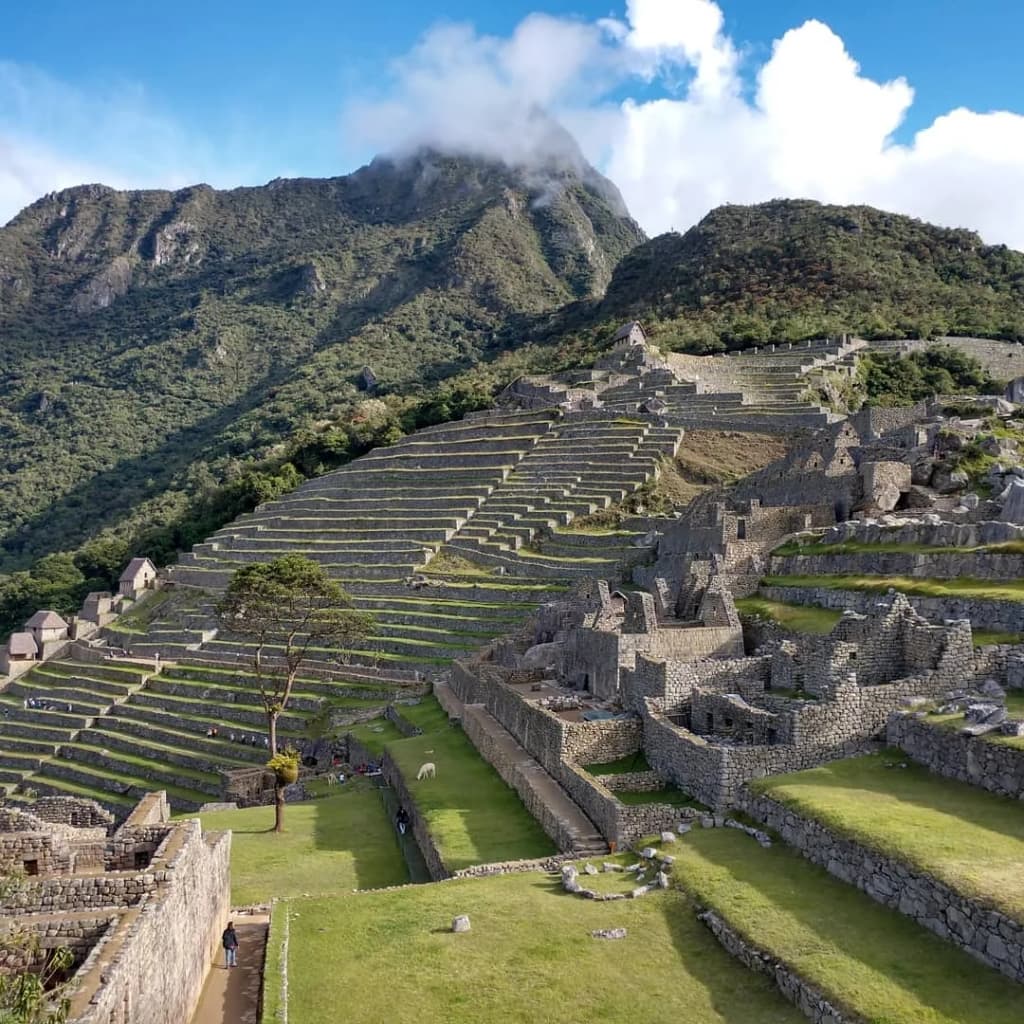
The train journey down into the Sacred Valley is a descent into the clouds. You arrive at the gates of Machu Picchu just as the morning mist begins to burn off, revealing the jagged, emerald peaks that cradle the fifteenth-century citadel. I hand over the entry ticket I secured weeks ago on the government portal—a strict requirement that feels like a mere formality once you step inside the sanctuary. There is no mortar here. The Incas shaped these massive granite blocks to fit so seamlessly that not even a knife blade can slide between them. I walk along the agricultural terraces, listening to the subtle trickle of water beneath the soil. It is an invisible masterpiece of engineering; a subterranean drainage system that still channels away the fierce tropical rains, keeping the city anchored to the precipice centuries after it was abandoned to the encroaching jungle.
Further north, in the Cordillera Blanca, the ice tells a different story. The Huascarán National Park holds the largest concentration of tropical glaciers in the world. Standing before Laguna 69, after a grueling hike to over fifteen thousand feet, the water is a milky, impossible turquoise. The color comes from glacial flour—microscopic rock dust ground down by the retreating ice of the Chacraraju glacier and held in suspension. It is a place of absolute, crystalline silence, broken only by the sharp crack of distant ice shifting under the high Andean sun.
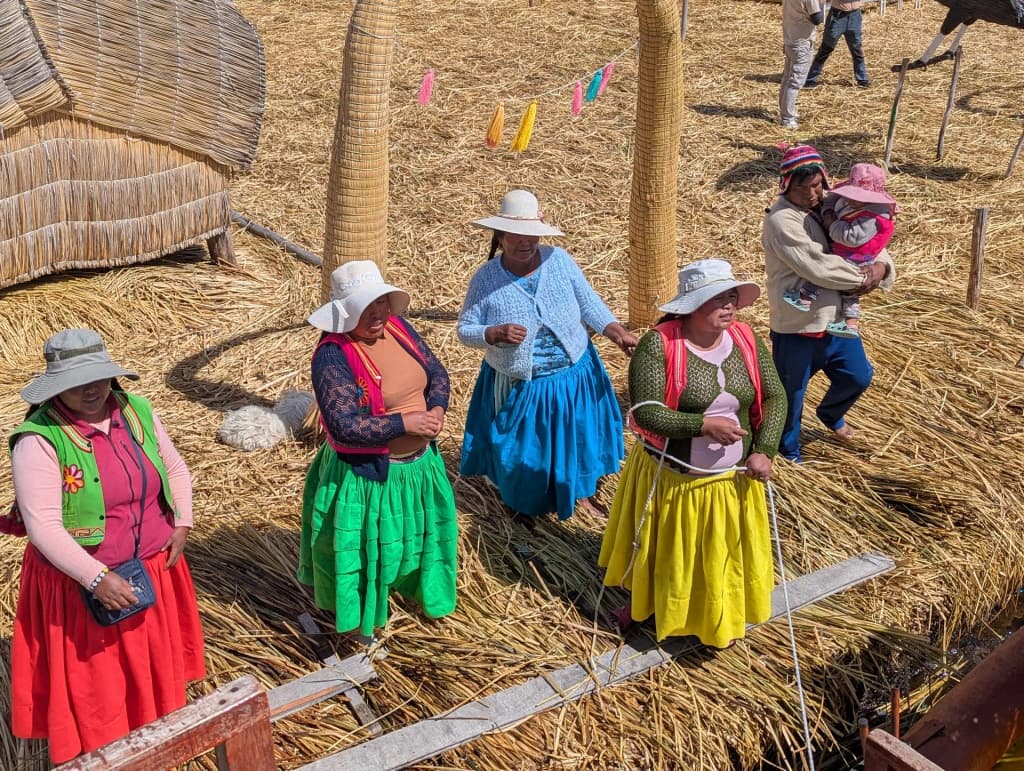
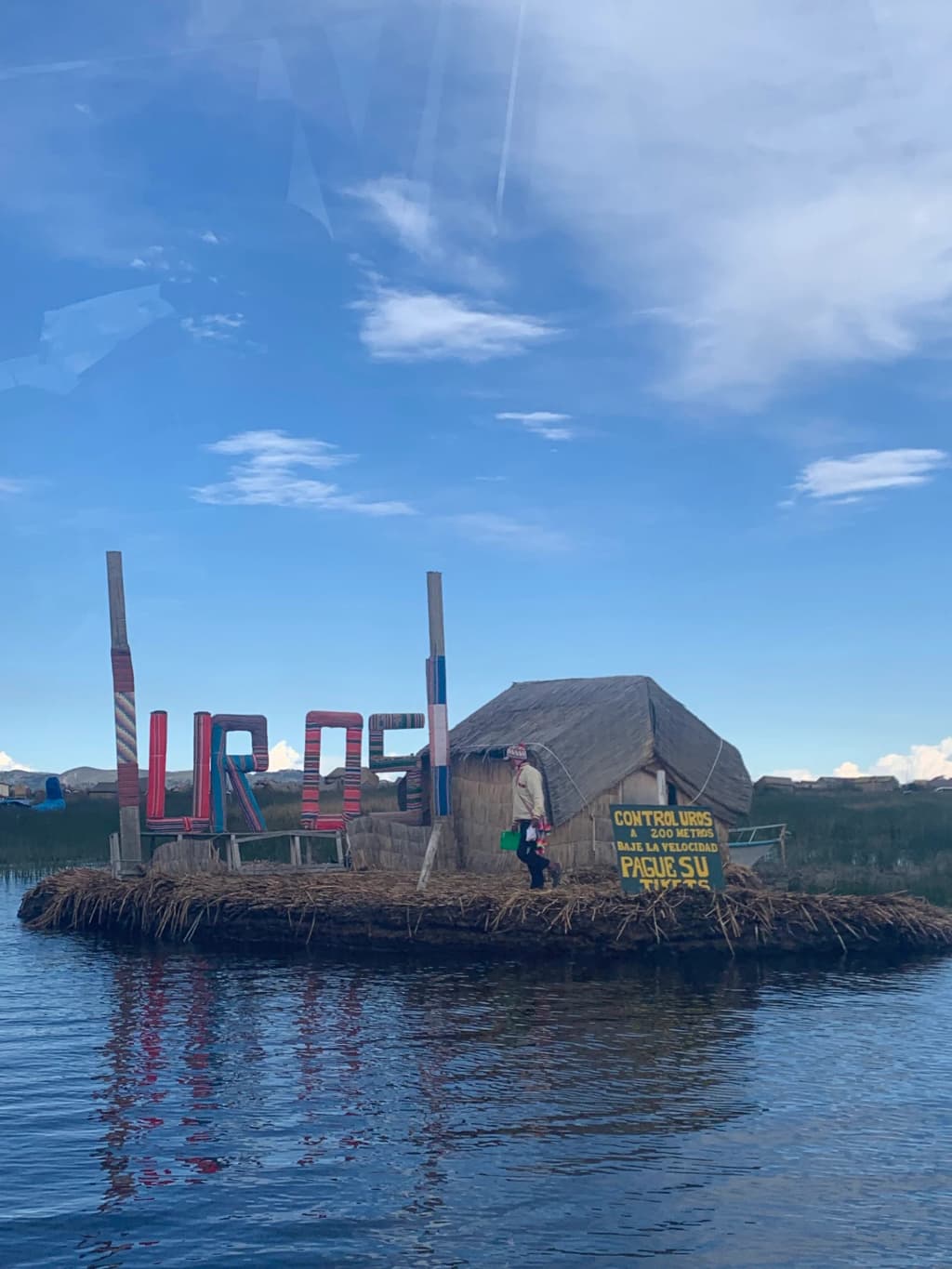
The crunch of dry totora reeds beneath your boots is a sound you feel in your teeth. At twelve thousand feet, Lake Titicaca stretches out like an inland sea, its deep azure surface so vast that the opposite shore is swallowed by the curvature of the earth. Here, the Uros people live on floating islands made entirely of layered reeds. The air smells of fresh water, damp vegetation, and woodsmoke from small cooking fires.
"The lake eats the bottom of our home," a local fisherman explains, his hands calloused and stained yellow from weaving the tough stalks. He is adding a fresh layer of green reeds to the village square, moving with a practiced, rhythmic grace.
"How often do you have to rebuild?" I ask, watching a group of children chase each other dangerously close to the water's edge.
"Every two weeks," he smiles, wiping sweat from his brow. "If we stop working, we sink. It is a simple life, but it requires constant motion."
Taking the two-hour motorboat ride back to the bustling port city of Puno, the cold wind whipping across the deck, you realize this entire country is defined by an incredible capacity for survival and adaptation.
You drop down from the dizzying heights of the Andes, and the world turns to dust. It is the first great paradox of Peru: a coastline bordering the immense Pacific Ocean that is simultaneously one of the driest deserts on the planet. The cold Humboldt Current sweeps up from Antarctica, chilling the air and stealing the rain, leaving behind a lunar landscape of sand and silence.
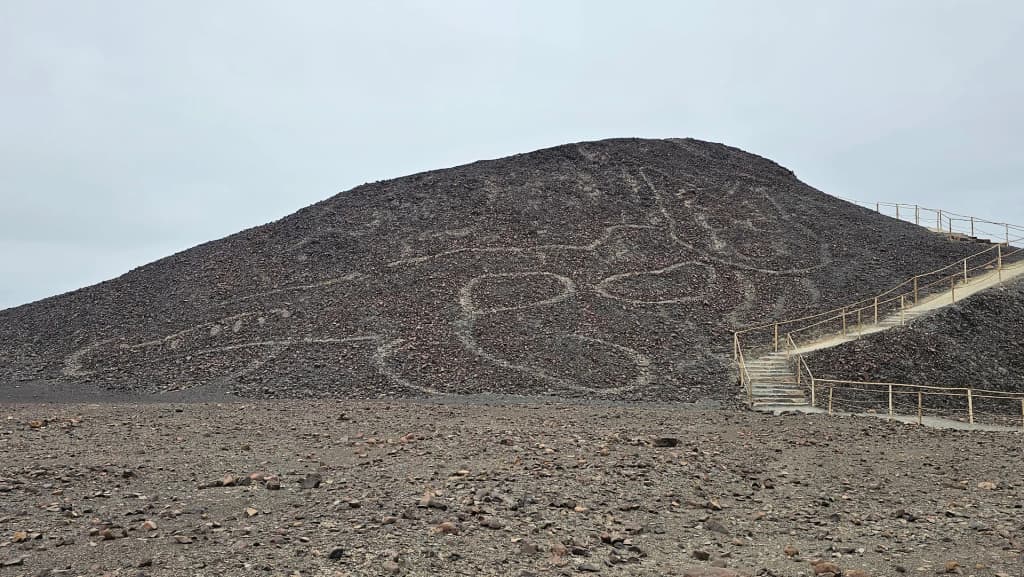
Flying in a small, rattling Cessna over the southern desert, the Nazca Lines suddenly materialize below. A spider, a hummingbird, a monkey—geoglyphs so massive they are invisible from the ground, etched into the dark desert floor by a civilization that simply brushed away the top layer of oxidized rock two thousand years ago. Because there is almost no wind and zero rain, the lines remain untouched, a mystery locked in the arid earth.
Further up the coast, the desert collides with ten million people in Lima. The city shouldn't work, yet it is the undisputed gastronomic capital of South America. Walking along the Malecón in Miraflores, a manicured boardwalk perched on eighty-foot cliffs, the salty sea breeze mixes with the scent of citrus and raw fish pouring from nearby cevicherias. The cold current that starves the land of rain is the exact same current that fills the sea with plankton, bringing an absurd abundance of seafood to the city's tables. Below the cliffs, surfers ride the endless Pacific swells; above, paragliders catch the thermal updrafts, suspended between the gray sky and the sprawling metropolis.
But Peru is not finished. Cross the mountains to the east, and the earth plummets into the Amazon Basin. The Selva covers sixty percent of the country, a sudden explosion of heat, humidity, and deafening noise. Arriving in Iquitos requires a flight or a multi-day cargo boat journey; there are no roads leading to this jungle metropolis of half a million people. Stepping off the plane, the air here is thick and heavy, smelling of decaying leaves, sweet overripe fruit, and rich river mud.
Drifting down a tributary of the Amazon River at dawn, the water is as smooth as dark glass. Pink river dolphins breach the surface with a soft exhalation, their pale bodies stark against the murky water. The sheer density of life in places like the Manu National Park is staggering. The jungle is a living, breathing pharmacy, holding secrets in its canopy that modern medicine is only just beginning to harvest. You feel incredibly small here, swallowed by a green immensity that has thrived on its own terms for millennia.
Sitting on a wooden dock as the sun sinks below the jungle canopy, painting the river in strokes of bruised purple and fierce orange, I think about the sheer impossibility of this nation. Twenty-eight distinct climates out of the thirty-two that exist on Earth are found right here. It is a place where you can freeze on a high-altitude glacier in the morning, cross a bone-dry desert at noon, and sweat in a tropical rainforest by dusk.
The true wealth of Peru isn't in the gold the Spanish sought, nor is it just in the ancient, mortarless stones of the Incas. It is in the silent gifts it has given the world—like the humble potato, born in these high valleys thousands of years ago, altering human history forever. It is a country that doesn't just show you its landscapes; it makes you feel them in your lungs, taste them on your tongue, and carry them in your bones long after you have left.
More Photos
More Adventures
 $50 - $150/day 14-28 days
 Beyond the Ruins: The Ultimate Adrenaline Guide to Peru
Skip the tourist traps. Discover the raw, untamed side of Peru, from the deep Amazon jungle to the towering, glacier-capped peaks of the Andes.
 $100 - $350/day 3-5 days
 Tracing Ghosts on the Himalayan Queen: A Pilgrimage to Shimla
Ride the historic Himalayan Queen toy train into the clouds of Shimla, retracing a century-old family diary through colonial echoes and mountain bazaars.
 $50 - $120/day 2-4 days
 Into the Sertão: Outlaws, Canyons, and the Real Brazil
Skip the crowded beaches. Dive into Brazil's Sertão to explore the emerald Xingó Canyons, hike the unforgiving Caatinga, and trace the footsteps of outlaws.
 $40 - $90/day 2-4 days
 Skip the Beach: The Ultimate Itabaiana Road Trip
Trade the beach for the rugged heart of Sergipe. Discover wood-fired sweets, sustainable cashew co-ops, and rescued birds of prey in Itabaiana.