
Tracing Ghosts on the Himalayan Queen: A Pilgrimage to Shimla
Ride the historic Himalayan Queen toy train into the clouds of Shimla, retracing a century-old family diary through colonial echoes and mountain bazaars.
The smell hits you first. Deep-fried dough, roasted cumin, and the unmistakable metallic tang of the narrow-gauge railway tracks. The vendor at Barog station doesn't look up as he hands a steaming samosa through the open window of the train. I pass him a few rupees, the grease-spotted paper burning my fingertips pleasantly in the crisp mountain air. The pastry shatters on my tongue, fiercely spiced and scalding hot. My brothers, Andrew and Will, are already hunched over a cryptic crossword in the carriage behind me, a tradition inherited from a woman who is the entire reason we are currently suspended between earth and sky.
We are riding the Himalayan Queen, a toy train grinding its way through a fifty-three-mile, four-and-a-half-hour ascent into the clouds. We began our journey in the sweltering, fanatical chaos of New Delhi, transitioning through the brutalist, concrete grid of Chandigarh, before boarding this time machine in Kalka. With every foot of the seven-thousand-foot climb, the landscape outside our window shifts. The smog of the plains dissolves into a sharp, invigorating breeze carrying the scent of cedar and distant snow.
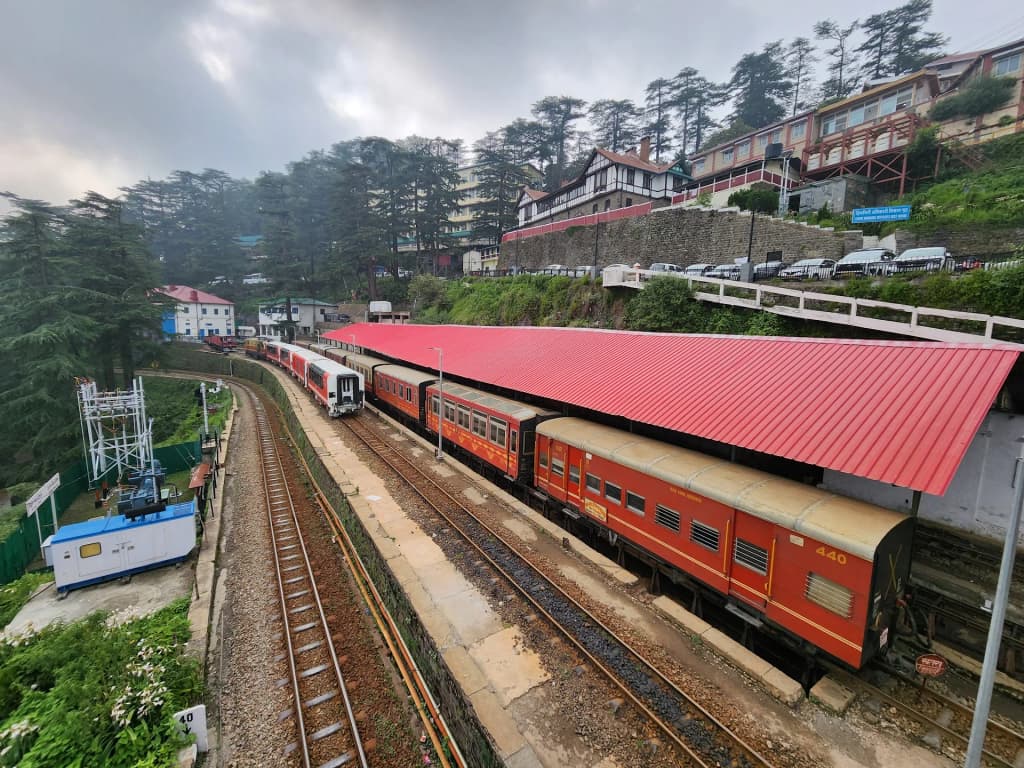
I trace the worn leather of the carriage seat. My grandmother rode this exact route. She was born and raised in Shimla, the former summer capital of British India. In my lap sits a fragile, leather-bound diary from 1944, its pages thin as onion skin, filled with her fastidious, curling handwriting. This isn't just a holiday; it is a pilgrimage to add light, texture, and sound to the stories that shaped our childhoods.
Slowly but surely, Shimla emerges from the haze. It clings impossibly to the steep Himalayan foothills, a city of faded pastel roofs and dark green valleys blushing pink in the late afternoon sun. We disembark and make our way to the Oberoi Cecil, our home for the next few days. The air here is noticeably thinner, cool against my skin, and the silence is a heavy, welcome blanket after the sensory assault of the plains.
My grandmother's 1975 travel journal noted that a stay here cost her £8.90 for meals and rooms. Today, the price reflects its status as a restored grand dame of the mountains, but walking through the heavy wooden doors feels like stepping back a century. It began as a modest cottage where a seventeen-year-old Rudyard Kipling spent five summers escaping the heat of Lahore. I run my hand along the polished mahogany banisters, half-expecting to see him turning a corner. I crack open my room's window to let in the mountain breeze, keeping a wary eye out for the macaques that patrol the rooftops. I've been warned not to leave anything exposed unless I want to fight a monkey for it. A small, absurd part of me hopes one tries.
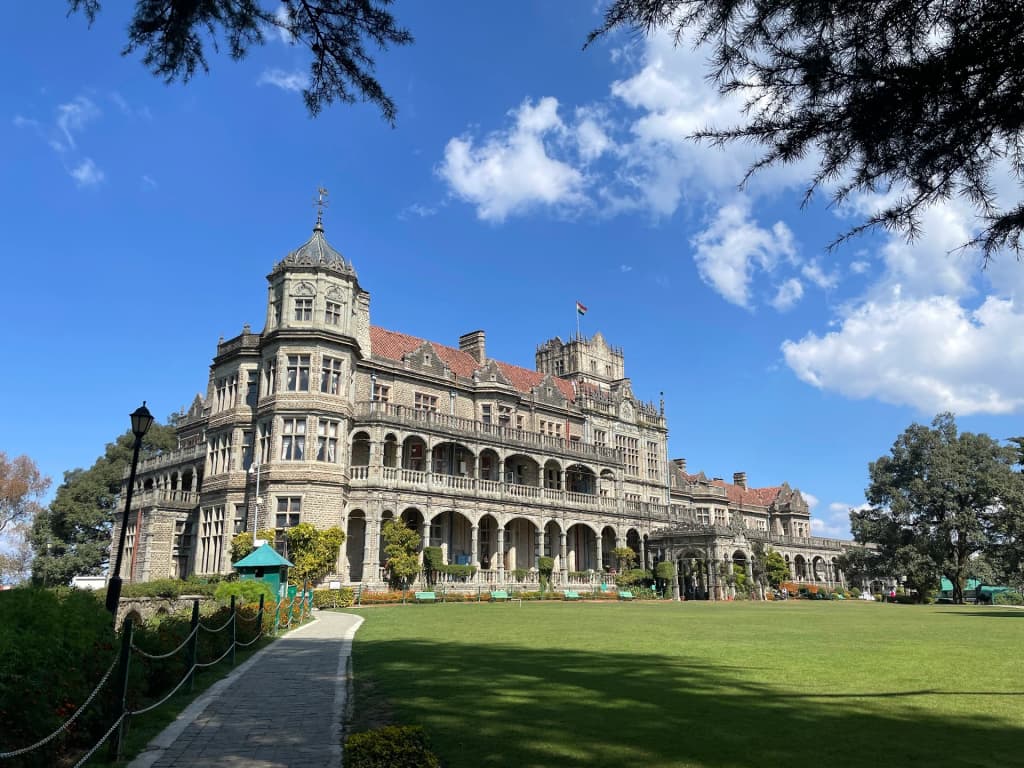
The next morning, the city stirs into life with the distant chime of temple bells and the rhythmic sweeping of brooms against cobblestones. We hike up a steep incline toward the Viceregal Lodge. For sixty years, one-fifth of humanity was ruled from a single room inside this imposing, gray-stone monument to Victorian hubris. It sits heavily on the ridge, an uneasy architectural transplant looking over the Himalayas. Yet, the Indian approach to these relics of colonial rule feels measured. The lodge hasn't been torn down; it has been repurposed into the Indian Institute of Advanced Study. Students now wander the manicured lawns where Gandhi once walked—famously refusing to be carried in a rickshaw pulled by men, preferring to climb the punishing hills on his own two feet.
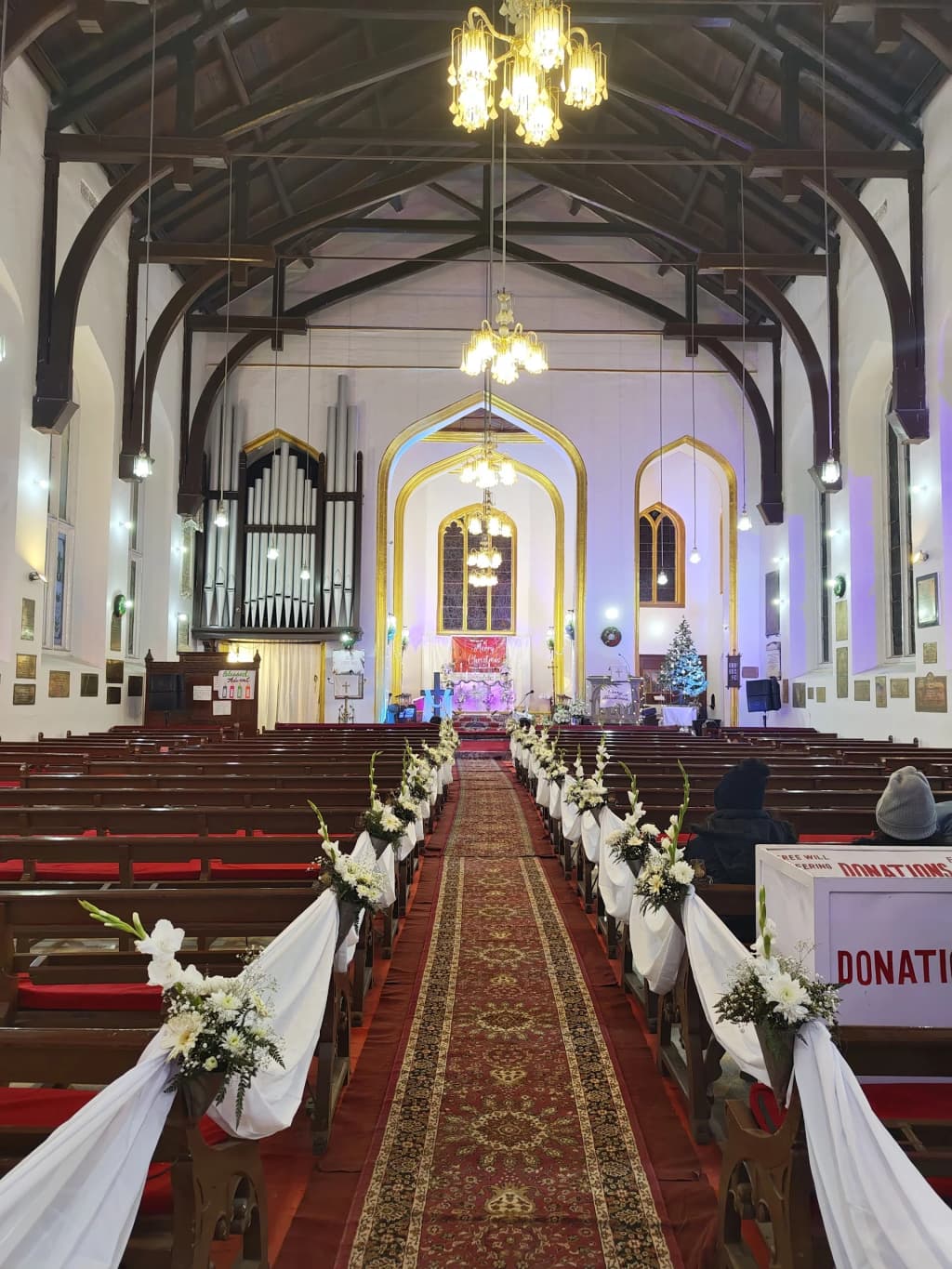
We descend toward The Mall, the beating heart of Shimla. The bazaar is a suspended moment in time, where the scent of roasted corn and bubbling chai mixes with the damp, earthy aroma of the encroaching jungle. At the end of the ridge stands Christ Church, its pale yellow facade glowing against the deep blue sky.
"Great-granny got married there," Andrew says, shading his eyes against the sun.
I nod, flipping to a specific page in the 1975 diary. "Granny wrote about attending a service here," I read aloud. "She noted that it went on 'a little bit'—which in her polite English translation means it was absolutely interminable. Four hours of sermons, alternating line-by-line between Hindi and English."
We laugh, the sound swallowed by the vastness of the valley below. We follow her breadcrumbs down to the Gaiety Theatre, tracing her meticulous reviews of local plays, marveling at how a place can hold so many ghosts so gently.
But there is one final ghost we need to find. The house where she grew up.
We have no address, only a name—Club Cottage—and a faded black-and-white photograph showing a sloped roof and a distinctive veranda. We know it sits somewhere on the sprawling, overgrown grounds of the old United Services Club. We hike into the dense hills behind the club's ruins, the air growing thick with humidity and the smell of wet pine needles. The roads twist into dead ends. Thousands of houses are crammed into the mountainside, a labyrinth of corrugated iron and faded concrete.
An older man pauses his sweeping on a narrow set of concrete stairs, watching the three of us panting in the thin air.
"You're not from here," he says, leaning on his broom. It is an observation, not a question.
"No," I admit, catching my breath. "We're looking for this house." I hand him the photograph. "My grandmother lived here a long time ago. We think it's called Club Cottage."
He squints at the grainy image, his brow furrowing. "You just have a picture? You don't know the address?"
"We only know it's near the old club," Will chimes in, wiping sweat from his forehead.
The man hands the photo back, shaking his head slowly. "There are many houses up here. You can go up this way, but it is a long way." He points a weathered finger up a nearly vertical path disappearing into the trees.
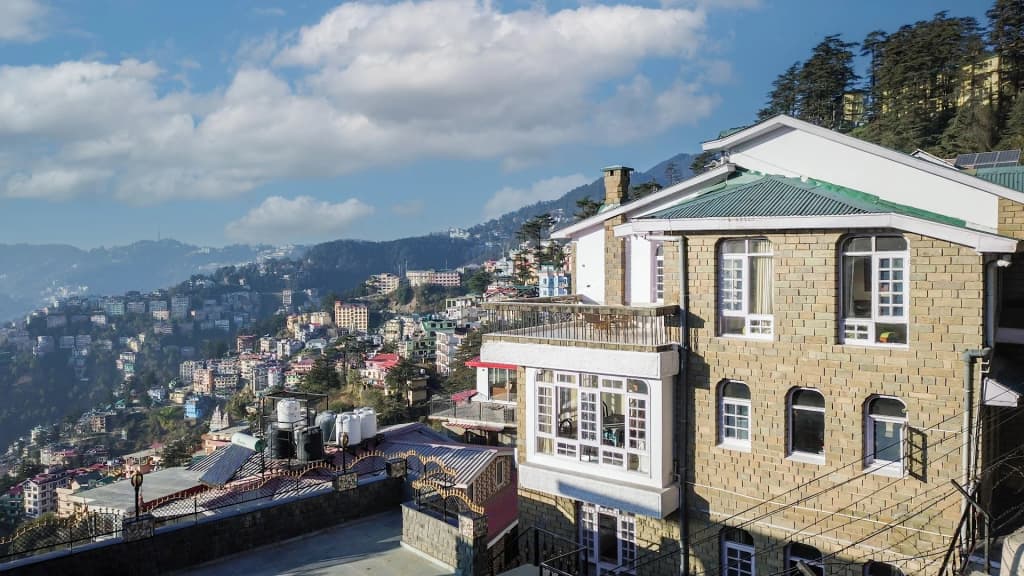
We push upward, our legs burning, the altitude pressing against our chests. I read her description again as we walk: Almost impossible to get to our house as the road is blocked off top and bottom. The garden is just a patch of grass. They have added a green veranda-like bit, otherwise it's just the same.
We walk in circles for an hour. The frustration mounts. We are chasing a phantom that was likely demolished decades ago.
And then, Will stops dead in his tracks.
"Look," he breathes, pointing through a break in the thick canopy.
There it is. Tucked into the hillside, exactly as she described it. The green veranda. The distinctively shaped windows from the photograph. We scramble down a muddy embankment, dodging monkey droppings, until we stand at the edge of the property. The house is empty, locked and quiet, reclaimed by the mountain and guarded by a troop of indifferent macaques.
I press my hand against the rusted metal of the gate. The iron is rough and warm from the afternoon sun. In the overgrown garden, wild hydrangeas are blooming—the exact same flowers she cultivated in her garden back in England until the day she died.
There comes a point in all our lives when the final link tethering us to our childhood, to a past generation, quietly snaps. We are left floating, wondering how to anchor ourselves. Standing here in the cedar-scented air of the Himalayas, listening to the wind rustle through the hydrangeas, I realize she isn't gone at all. She simply passed this mountain down to us, trusting that one day, we would finally know the way home.
More Photos
More Adventures
 $50 - $120/day 2-4 days
 Into the Sertão: Outlaws, Canyons, and the Real Brazil
Skip the crowded beaches. Dive into Brazil's Sertão to explore the emerald Xingó Canyons, hike the unforgiving Caatinga, and trace the footsteps of outlaws.
 $50 - $150/day 14-28 days
 Beyond the Ruins: The Ultimate Adrenaline Guide to Peru
Skip the tourist traps. Discover the raw, untamed side of Peru, from the deep Amazon jungle to the towering, glacier-capped peaks of the Andes.
 $40 - $100/day 4-6 days
 Caçapava do Sul: Conquer Brazil's Wild Geopark
Skip the beaches. Discover Caçapava do Sul, Brazil's rugged UNESCO Geopark. Hike ancient canyons, explore ghost towns, and taste award-winning olive oil.
 $60 - $120/day 4-5 days
 Buenos Aires Itinerary: A Practical 5-Day Planning Guide
Plan the perfect Buenos Aires trip with this meticulous guide. Discover exact costs, walkable neighborhood routes, and budget optimization tips for Argentina.