
Chasing the Atlantic: A Sensory Portugal Coastal Road Trip
Embark on a sensory Portugal coastal road trip, from the sweet cherry liqueur of medieval Óbidos to the giant waves of Nazaré and the romance of Porto.
The chocolate cup melts slightly against the warmth of my thumb. I bring it to my lips, and the dark, bitter cocoa gives way to the sharp, sweet heat of ginjinha, Portugal's famous cherry liqueur. The cobblestones of Óbidos are uneven beneath my boots, worn smooth by centuries of footsteps. The old woman who handed me the tiny edible cup wipes her hands on a pristine white apron, her eyes crinkling against the bright Iberian sun.
"Drink it all at once," she instructs, her English heavily accented but warm. "Then eat the cup. It is the only way."
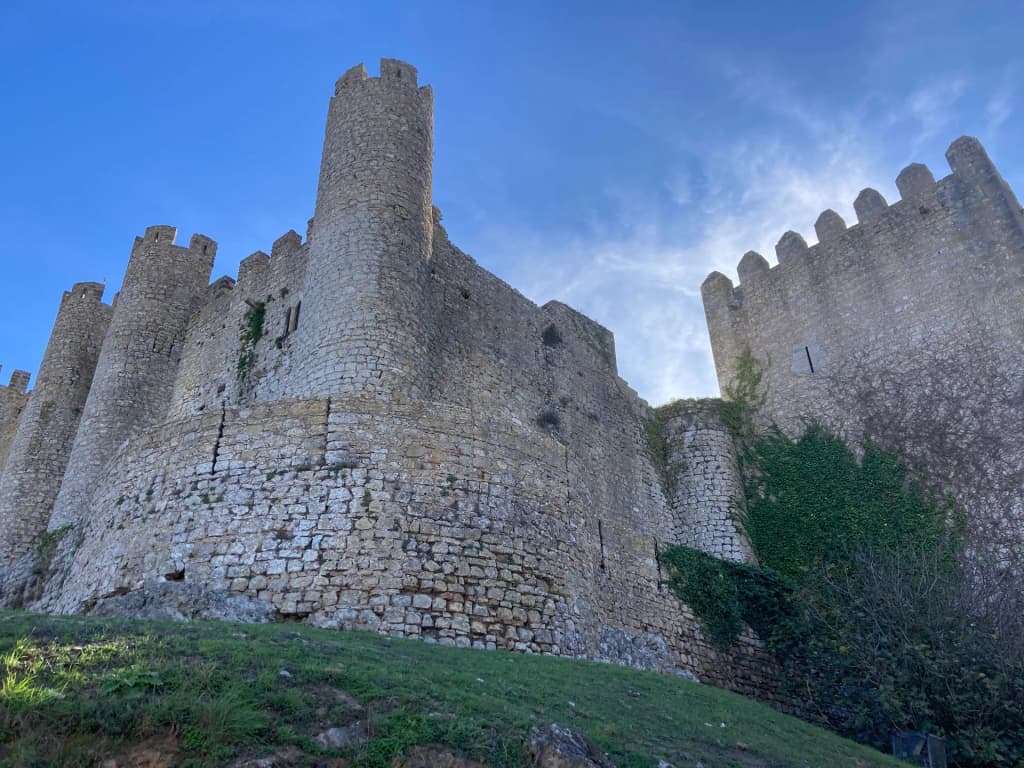
I do exactly as I am told, letting the rush of sugar and alcohol bloom in my chest. It is the perfect fortification for what comes next. I have driven just an hour north from Lisbon, but walking the perimeter of this medieval town is an act of sheer, terrifying beauty. There are no safety rails up here. I step carefully along the narrow stone path of the Castelo de Óbidos, feeling the wind tug at my jacket. A single misstep would send me tumbling down into the terracotta roofs below. But the view—a sea of whitewashed houses spilling out into lush green valleys—makes the vertigo entirely worthwhile. Every angle, every stone archway, demands to be photographed.
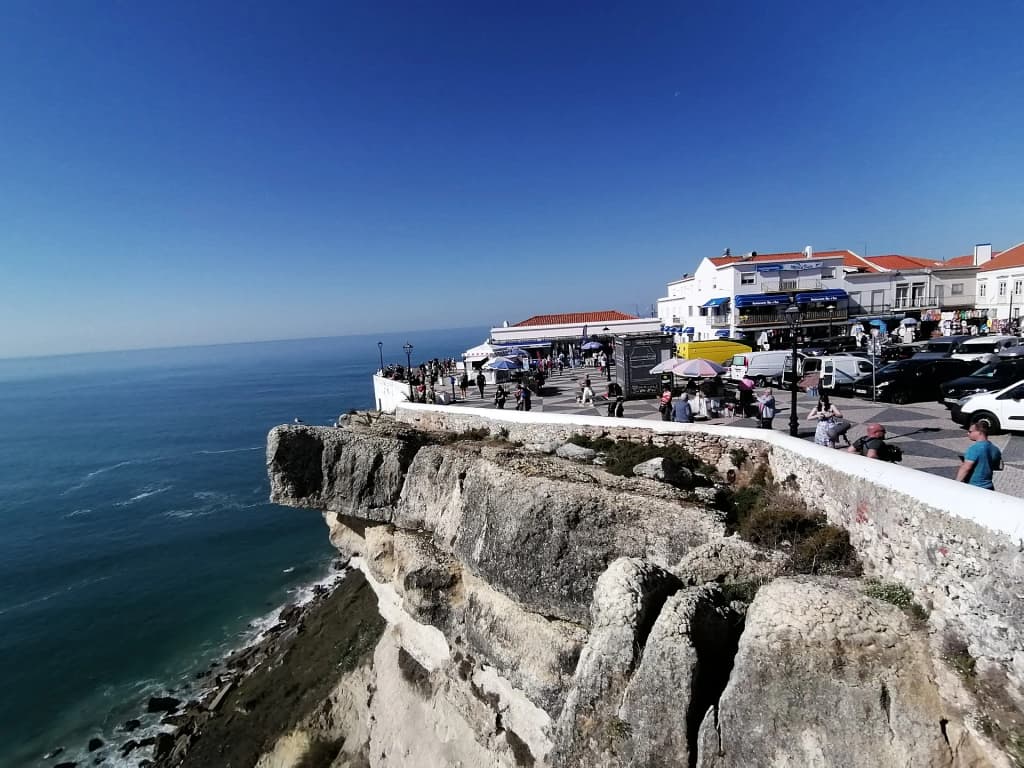
The air changes completely by the time I reach Nazaré. The stillness of the medieval walls is replaced by the violent, magnificent roar of the Atlantic Ocean. Stopping halfway between the Algarve and Porto, I am here to witness the raw power of the water. Nazaré is known as the birthplace of the biggest waves in the world, a place where the ocean floor drops into a massive underwater canyon, funneling swells into towering mountains of water.
Standing at the high viewpoint on the cliffside, the salt spray coats my skin even from this staggering height. The wind howls in my ears, drowning out the chatter of other travelers. I look down at the churning blue expanse, trying to comprehend the scale of it. As evening approaches, the sky bruises into deep purples and burnt oranges. I watch the sunset near the lighthouse, sharing the view with a bizarre, majestic statue of a muscular deer holding a surfboard—a surreal guardian of the cliffs. The light catches the spray of the crashing waves, turning the mist into spun gold.
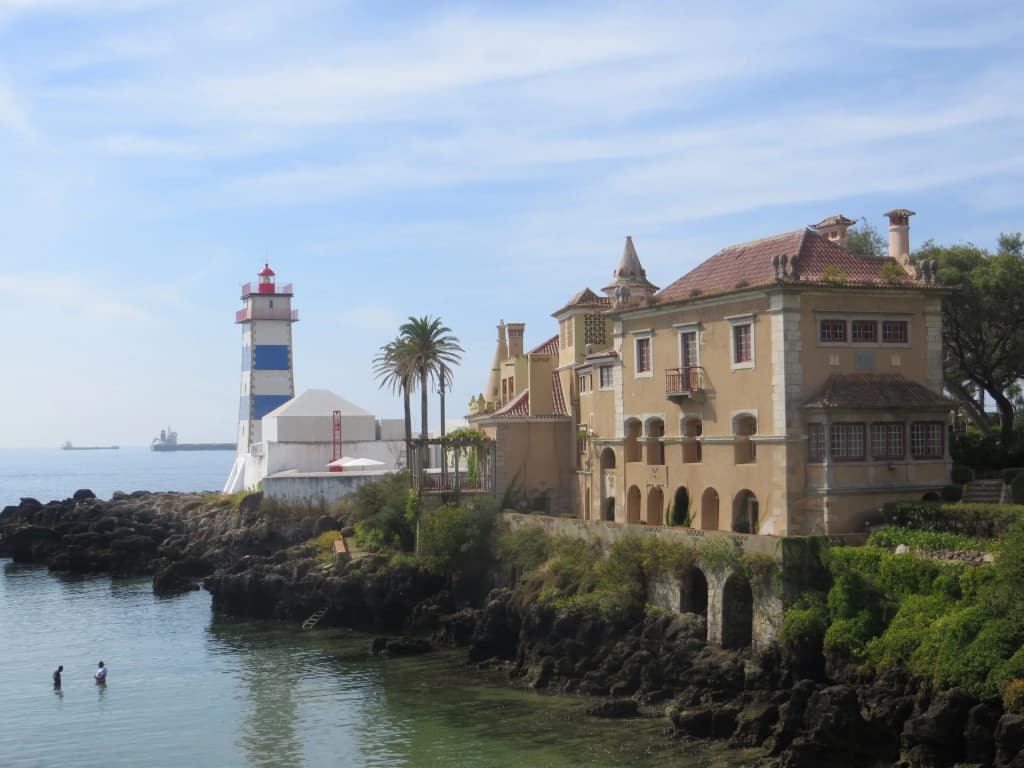
I trade the wildness of Nazaré for the manicured elegance of Cascais. Walking through the center of town, you can feel the ghosts of 19th-century royalty. What was once a humble fishing village transformed into a glamorous summer retreat when the Portuguese royal family decided to build a home here. The scent of grilled sea bass and garlic drifts from open-air restaurants, mingling with the ever-present ocean breeze. It is the kind of place that makes you want to abandon your itinerary and just stay, renting a room with a balcony facing the sea.
But the road calls. A winding, thirty-minute drive along twisting coastal roads brings me to Cabo da Roca, the westernmost point of continental Europe. The wind here is ferocious, nearly ripping the drone controller from my hands. It feels like the edge of the world. The cliffs drop violently into the foaming sea below, and looking out at the endless horizon, you suddenly understand why the Portuguese became a nation of explorers. There is nothing but water between this jagged cliff and the shores of America.
Sintra feels like a fever dream. High in the mist-shrouded mountains, the National Palace of Pena explodes from the lush green pine forest in a riot of mustard yellows and brilliant reds. The architecture is a wildly creative mashup of styles, a literal fairytale castle perched on a peak. The line to get inside the palace winds endlessly along the stone paths. It is a test of endurance, a reminder that every fairytale requires you to pay a toll before you get to the magic.
Instead of waiting, I tackle the Castelo dos Mouros, the 10th-century Moorish Castle nearby. Restored in the 19th century by King Ferdinand, it is a staggering feat of ancient engineering. The climb is brutal. My thighs burn and my lungs heave as I navigate the steep, uneven stone steps that snake along the mountain ridge. The drops are dizzying, but as I reach the highest tower, the sweat cooling on my forehead in the mountain breeze, the entire region stretches out below me like a painted map.
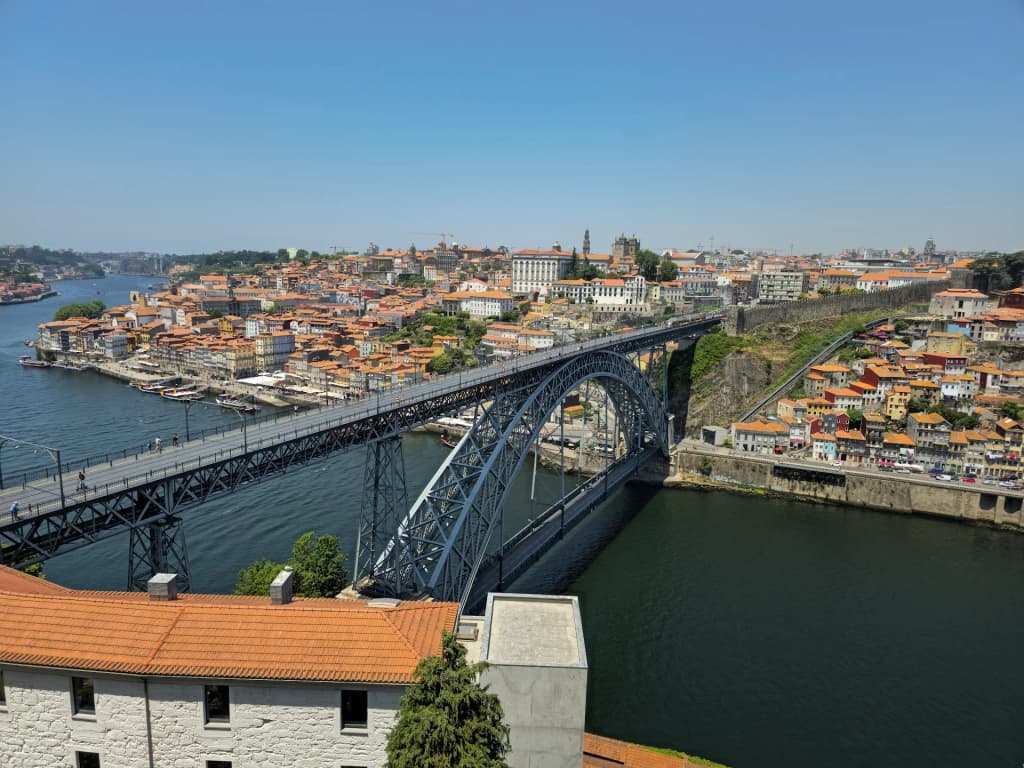
The metallic groan of the Dom Luís I Bridge is the heartbeat of Porto. The iron structure spans the Douro River, a towering masterpiece that connects the steep, historic banks of the city. I meet Sara, a local guide who runs a tour company called Portoalities, right on the waterfront.
"Everyone falls in love with Porto," she says, shouting slightly over the sound of a passing riverboat.
"I think I already have," I admit, watching the golden hour light reflect off the colorful, stacked houses of the Ribeira district.
Sara has spent the last four years showing visitors the true soul of northern Portugal. She tells me about their private tours, weaving through the Douro Valley for Port wine tastings, and organizing day trips to the historic cities of Braga and Guimarães. Seeing a city through the eyes of someone who calls it home changes everything. You stop looking at it as a checklist of monuments and start feeling its rhythm. I walk along the river, the smell of roasted chestnuts and damp stone filling the air, the distant sound of a street musician playing a melancholic Fado tune echoing under the bridge.
My journey eventually circles back toward the southern warmth of the Algarve, dropping anchor in Albufeira. It is one of the region's most famous basecamps, a stark contrast to the moody romance of Porto or the medieval quiet of Óbidos. The night air here is balmy, smelling of blooming bougainvillea and hot pavement.
The streets pulse with life. Live music spills out from open tavern doors, blending with the clinking of glasses and bursts of laughter in half a dozen different languages. I sit back in a wooden chair at a corner café, a cold local beer sweating onto the table in front of me. The exhaustion of the road trip sits deep in my bones, a heavy, satisfying ache. Portugal is not just a place you see; it is a place you physically feel. It is the burn in your legs on a Moorish wall, the salt crusting on your skin in Nazaré, and the lingering, sweet heat of a cherry liqueur long after the glass is gone.
More Photos
More Adventures
 $50 - $150/day 5-10 days
 Finding the Rhythm of Bahia: From Porto Seguro to Trancoso
Experience the sensory magic of Brazil's Costa do Descobrimento, from the chaotic nightlife of Porto Seguro to the barefoot luxury of Trancoso's beaches.
 $150 - $300/day 1-2 days
 Conquer Epcot: The Ultimate High-Speed Global Gauntlet
Think Epcot is a slow stroll? Think again. It's a high-speed, globe-trotting gauntlet. Hack the rides, taste the world, and push your limits in Orlando.
 $80 - $250/day 3-5 days
 Skip the Tourist Traps: The Raw Guide to Conquering Kyoto
Think you know Kyoto? Think again. From golden pavilions to sizzling street food, here is exactly how to tackle Japan's ancient capital like a pro.
 $100 - $300/day 1-3 days
 Escape the Airport: Conquer Your Luanda Layover
Think a layover in Luanda means killing time at the airport? Think again. Discover the fortress, island sunsets, and the ultimate Angolan adventure.